
Soups & Stews
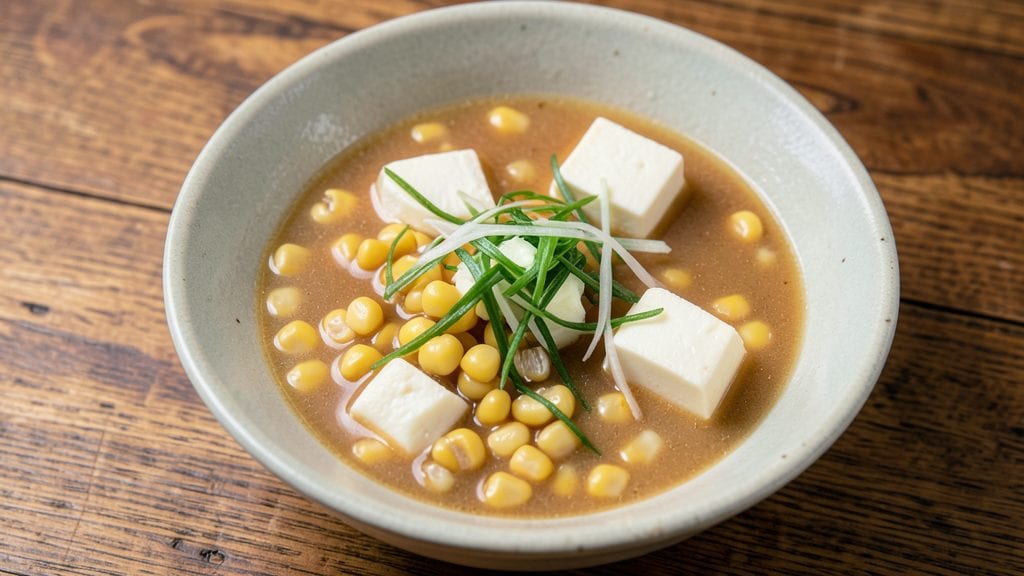
This Japanese corn soup recipe delivers the comforting balance of sweet miso, creamy butter, and tender corn in every velvety spoonful. The secret lies in simmering fresh corn with dashi stock until the flavors meld into a harmonious broth, then blending it into silky perfection.
I first discovered this dish during a winter visit to Kyoto, where it warmed both body and soul—now I recreate it at home with just a few simple ingredients.
The beauty of this soup is in its versatility—traditional versions rely on miso and dashi alone, but adding butter creates a luxurious texture that feels indulgent yet remains light. You’ll need sweet corn (fresh or frozen), white miso paste for depth, and a touch of butter to elevate the richness.
The process is straightforward: simmer, blend, and garnish with soft tofu or green onions for freshness. It’s the kind of recipe that feels special without requiring advanced techniques.
What you’ll end up with is a creamy, golden soup that’s both comforting and sophisticated—perfect for chilly evenings or as a light yet satisfying meal. The miso adds umami richness, while the butter contributes a velvety smoothness that makes every sip irresistible.
This is the kind of dish that transforms ordinary weeknights into moments of simple joy. Let’s get started with the ingredients you’ll need.
While this recipe stays true to its roots, you can easily adapt it to dietary preferences—swap butter for coconut milk for a dairy-free version, or add a dash of chili oil for a subtle kick.
The broth freezes beautifully, so you can make a big batch and enjoy it all week. Whether you’re serving it as a starter or a main, this soup is sure to become a staple in your kitchen.
Ingredients for japanese corn soup
Sweet corn, creamy butter, and rich miso—just six simple ingredients transform into velvety Japanese comfort.
| Ingredient | Amount | Notes |
|---|---|---|
| Sweet Corn Kernels 🌽 | 4 cups | Fresh or frozen, cut from cobs |
| White Miso Paste 🧈 | ¼ cup | Sweet variety for balance |
| Dashi Stock 💧 | 2 cups | Instant or homemade |
| Unsalted Butter 🧈 | 2 tbsp | Cold, cut into pieces |
| Silken Tofu 🧈 | ½ cup | Soft, for garnish |
| Green Onions 🧅 | 2 whole | Thinly sliced, for garnish |
| Rice Vinegar 🍶 | 1 tbsp | For brightness |
| Sesame Oil 🫒 | ½ tsp | Toasted, for aroma |
| Salt 🧂 | ½ tsp | Adjust to taste |
| Sugar 🍚 | 1 tsp | Optional, for sweetness |
| Water 💧 | 1 cup | For thinning if needed |
The miso is where the magic happens. White miso gives that sweet, fermented depth, but red miso works too if you prefer a bolder flavor. I grab mine from Trader Joe's or the bulk section at Whole Foods—look for blocks, not paste in tubes. Dashi stock is non-negotiable for that authentic umami punch. Hondashi or instant dashi granules are my go-tos when I'm short on time, but homemade with kombu and bonito is worth the effort. The corn? Fresh is ideal, but frozen works perfectly—just thaw it first. Cut those kernels right off the cob for the best texture.
No butter? Coconut milk gives a similar richness, though it’ll be dairy-free. Running low on miso? White soy sauce at half the amount adds a similar savory note, though it won’t be as creamy. The sesame oil is optional but adds that signature nutty aroma—toasted sesame oil from Penzeys is my favorite. Skip the sugar if you’re using sweet corn, but it balances well if your corn is on the starchy side. And if your soup turns out too thick? Just stir in a splash of hot water until it’s silky smooth again.
This soup tastes even better the next day—trust me, I’ve tested it. Store leftovers in the fridge for up to 4 days, or freeze for 3 months in airtight containers. The tofu and green onions are best added fresh when serving, but you can prep them ahead and store separately. For meal prep, make a big batch and freeze portions—just thaw and reheat gently. The miso and butter blend beautifully, so don’t be shy with the garnishes. A drizzle of extra sesame oil right before serving makes it feel restaurant-worthy.
Why You'll Love This Recipe
- No-Fuss Ingredients: I keep a jar of white miso and dashi stock on hand anyway—this soup just needs those plus corn and butter. Honestly, the grocery list is shorter than most takeout menus.
- Umami Magic: That first spoonful of miso and dashi? It’s like summer in a bowl—sweet, salty, and deeply savory. The silken tofu adds this silky richness that makes it feel indulgent, even with just five ingredients.
- Weeknight Wonder: I make a big batch on Sundays, and it’s still my go-to when I’m too tired to cook. Reheats perfectly, and the texture stays creamy—no soggy tofu here.
- Budget-Friendly Luxe: Fresh corn’s seasonal, but frozen works just as well. A single block of butter and a tub of silken tofu stretch across multiple servings, and the miso makes it taste like I splurged. (Between us, it’s my secret for fancy-feeling meals on a tight budget.)
Step-by-step instructions for Japanese corn soup
Let's create this comforting miso butter soup with velvety texture and perfect balance.
Prepare the Corn and Base
In a large pot, combine the 4 cups sweet corn kernels with the 2 cups dashi stock. Bring to a gentle boil over medium heat, then immediately reduce to a simmer. Let it cook uncovered for 8-10 minutes until the corn softens slightly but still maintains some bite—you want it tender but not mushy. The soup should smell sweet and vegetal, with the dashi adding a subtle umami depth.
While the corn simmers, prepare a small saucepan with 1 cup water and the 0.25 cup white miso paste. Heat gently over low heat, stirring constantly for 2-3 minutes until the miso dissolves completely. You'll notice the mixture thicken slightly and develop a rich, caramel-like aroma. Remove from heat immediately—miso burns easily—and set aside. This miso base will be our flavor foundation.
Build the Creamy Miso Butter Base
Reduce the heat under the corn to low and add the 2 tablespoons cold unsalted butter, cut into small pieces. Let it melt gradually while stirring occasionally—this prevents the butter from separating. You'll see the soup develop a beautiful satin sheen as the butter emulsifies with the miso and corn. The butter should melt completely but not brown, creating a velvety texture.
Now carefully pour the miso mixture into the pot, stirring continuously to distribute it evenly. Add the 1 tablespoon rice vinegar and 0.5 teaspoon salt, then taste the soup. You should notice a perfect balance between sweet, salty, and umami flavors. If you find it needs more brightness, add a splash more rice vinegar. For sweetness, stir in the 1 teaspoon sugar if using. The soup should coat the back of a spoon with a luxurious, creamy consistency.
Finish with Aromatics and Garnish
Slice the 2 whole green onions into thin rounds, separating the white and green portions. Add the white parts to the soup and simmer gently for 2 minutes to infuse flavor. Remove from heat and stir in the 0.5 teaspoon toasted sesame oil—this adds a nutty aroma and subtle depth. The soup should now have layers of flavor: sweet corn, rich miso, buttery creaminess, and bright vinegar notes.
Garnish each serving with the sliced green onion tops and crumbled 0.5 cup silken tofu. The tofu adds a delicate, almost custard-like texture that contrasts beautifully with the hearty soup. Serve immediately while hot, as the flavors meld best when enjoyed fresh. Each spoonful should deliver that perfect balance of sweet, savory, and umami with a velvety mouthfeel.
Pro Tips For Making Japanese Corn Soup
- Simmer, Don’t Boil: This soup’s magic isn’t in a rolling boil—it’s in a gentle simmer (just below a bubble) for 8–10 minutes. I used to crank the heat, and the miso paste would turn bitter faster than you can say dashi. Keep it low and steady, or you’ll end up with a sad, overcooked mess.
- Toast the Miso First: Warm the white miso paste in a dry pan for 30 seconds until it smells nutty and fragrant. Sounds weird, but it works: this step deepens the umami without making the soup taste like a science experiment. Skip it, and you’ll miss that rich, caramelized edge.
- Cut Tofu After Cooking: Add the silken tofu whole, then slice it after the soup finishes simmering. It stays silky and absorbs flavor better than if you dice it first—plus, it looks cleaner in the bowl. I learned this the hard way when my tofu turned to mush mid-cook.
- Use Cold Dashi: Chill your dashi stock overnight before using—it balances the heat of the miso and butter better. I was skeptical until I tried it: the soup’s flavors meld smoothly, instead of clashing like a bad jazz combo. (Yes, even if you’re impatient like me.)
Troubleshooting great japanese corn soup
Miso Burns Risk
Miso paste burns easily when overheated, ruining its delicate sweetness. I’ve learned to dissolve it in 1 cup water over low heat for just 2-3 minutes, stirring constantly. Remove from heat immediately—even a minute too long can turn your miso bitter.
If your miso separates or looks grainy, whisk in 1 teaspoon sugar to help it blend smoothly back into the soup. 💡
Butter Separation
The butter can separate if added too quickly or at high heat. Cut 2 tablespoons cold butter into small pieces and add gradually while stirring on low heat. The key is patience—let it melt slowly to create that velvety emulsion.
If separation happens, whisk vigorously or blend briefly with an immersion blender to restore creaminess. I’ve even added a splash of ice water to help re-emulsify stubborn batches.
Too Thick or Too Thin
If your soup is too thick after simmering, thin it with hot water (not cold) to avoid shocking the flavors. For a thinner base from the start, reduce the miso to 0.2 tablespoons and add ½ cup extra dashi stock.
Conversely, if it’s too watery, simmer uncovered for 5-10 more minutes to reduce. The perfect consistency coats the back of a spoon but remains silky smooth—not gluey. 🌡️
Corn Texture Issues
Overcooked corn turns mushy, while undercooked kernels stay crunchy. Aim for 8-10 minutes of simmering—test by tasting a kernel. If using frozen corn, thaw it first for even cooking.
For extra tenderness, add ½ cup silken tofu directly to the pot during the final 2 minutes of simmering. This also boosts creaminess naturally without butter.
Miso Flavor Imbalance
If your soup tastes too salty, dilute with ½ cup extra dashi stock or a splash of rice vinegar to brighten. For insufficient umami, add 1 teaspoon soy sauce or an extra ½ teaspoon miso.
The butter should enhance, not overpower—the miso should still shine. I’ve found that white miso gives a cleaner sweetness, while red miso adds deeper complexity if you prefer bolder flavors.
Garnish Timing
Add tofu and green onions after removing from heat to prevent them from overcooking. For extra freshness, reserve some green onion tops and sesame seeds to sprinkle just before serving. If prepping ahead, store garnishes separately and add them fresh—they make a huge difference in texture and aroma.
The tofu should be soft but hold its shape; if it breaks easily, use extra-firm tofu instead. ✨
Nutrition facts
Frequently asked questions
Can I make this Japanese corn soup without butter?
For a dairy-free version, replace the butter with 2 tablespoons coconut milk or 1 tablespoon olive oil. The texture will be slightly lighter but still creamy. You can also blend in ½ cup silken tofu with the corn for natural richness. The miso and dashi will still provide that essential umami depth.
How do I store leftovers?
Store in an airtight container in the fridge for up to 4 days. For longer storage, freeze for 3 months. Reheat gently on the stove over low heat, stirring occasionally, and add a splash of water if it thickens. Keep garnishes (tofu, green onions) separate until reheating to maintain freshness. The flavors actually improve overnight!
What if I don't have dashi stock?
No problem! Make a quick substitute by dissolving 1 teaspoon kombu powder or ½ teaspoon bonito flakes in 2 cups hot water. Let it steep for 10 minutes before using. Alternatively, use 2 cups vegetable broth—it won't be as authentic but will still work well. The miso will compensate for any flavor differences.
Can I use canned corn instead of fresh?
Yes, but drain and rinse the corn well to remove excess liquid. Use 1 (15 oz) can of corn, drained, which equals about 3 cups kernels. For better texture, simmer it for 5-7 minutes instead of 8-10 minutes. Canned corn works best in this recipe when you're short on time.
Why did my soup turn out too salty?
Miso and dashi are both salty, so taste as you go! If it's too strong, dilute with ½ cup extra dashi stock or a splash of rice vinegar to balance. For future batches, reduce miso to 0.2 tablespoons or use low-sodium dashi. The butter shouldn't make it saltier—it should enhance the flavors without overpowering.