
Soups & Stews
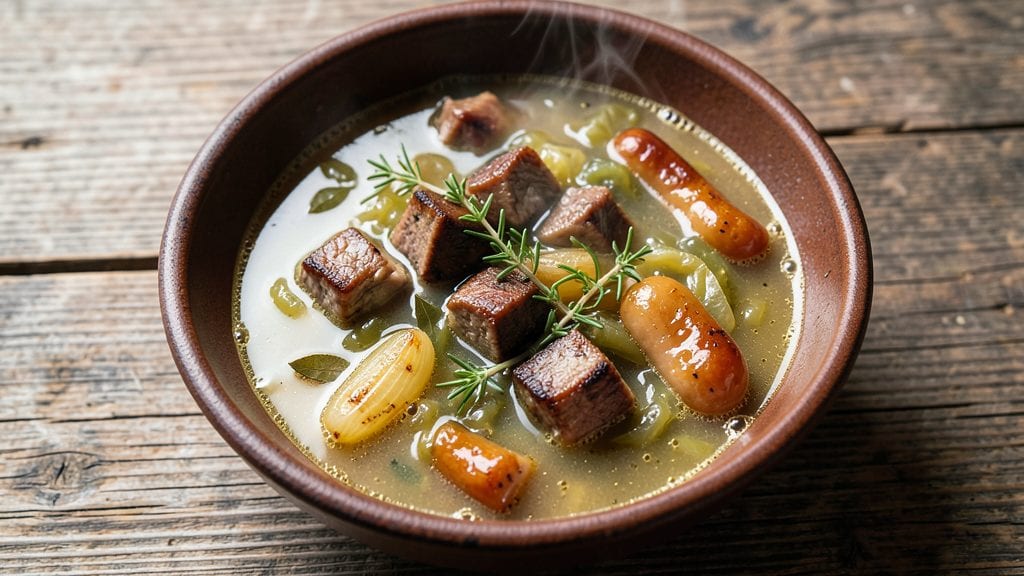
This Czech sauerkraut soup recipe brings hearty tradition to your kitchen with its deep, fermented tang and layers of caramelized flavor. The secret lies in balancing sharp sauerkraut with rich meat and slow-simmered onions until the broth becomes velvety and aromatic.
I first tasted this soup in a Prague tavern, where the steam rising from the bowl carried memories of home—something I’ve since recreated in my own kitchen with precise technique.
The beauty of this dish is its simplicity: just a few core ingredients—sauerkraut, smoked sausage, pork shoulder, and onions—simmered together for hours until the flavors meld into perfect harmony. Traditional Czech cooking relies on patience, letting the acidity of the sauerkraut mellow while the meat becomes fork-tender.
The caramelized onions add a sweet contrast, rounding out the sharpness with depth that makes every spoonful satisfying.
What you’ll end up with is a steaming bowl of soup where the tangy sauerkraut shines alongside tender meat and onions that’ve developed a rich, golden hue. The broth is thickened just enough to coat the spoon, while the smoky sausage adds a savory backbone that ties everything together.
This is comfort food at its finest—warm, nourishing, and packed with the kind of flavor that lingers long after the last bite.
Whether you’re serving it as a main dish for a chilly evening or bringing a taste of Czech tradition to your table, this soup delivers restaurant-quality results with minimal effort.
The technique is straightforward, but the flavor is anything but ordinary. Let’s get cooking—your kitchen will thank you for the aroma alone.
Ingredients for czech sauerkraut soup
Six core ingredients transform into a soul-warming Czech classic—sauerkraut's tang meets smoky sausage and caramelized onions.
| Ingredient | Amount | Notes |
|---|---|---|
| Sauerkraut 🥬 | 3 cups | Unrinsed for maximum tang |
| Pork Shoulder 🥩 | 2 lbs | Bone-in, cut into 1-inch cubes |
| Smoked Czech Sausage 🌭 | 1 lb | Kielbasa or similar, sliced into rounds |
| Yellow Onions 🧅 | 3 whole | Thinly sliced, caramelized |
| Fresh Thyme 🌿 | 2 sprigs | Or 1 tsp dried thyme |
| Fresh Bay Leaves 🍃 | 2 whole | Removed before serving |
| Garlic Cloves 🧄 | 4 cloves | Smashed, not minced |
| Tomato Paste 🍅 | 2 tbsp | High-quality, no sugar added |
| Apple Cider Vinegar 🍏 | 2 tbsp | Balances sauerkraut acidity |
| Dried Caraway Seeds 🌾 | 1 tbsp | Toasted for aromatic depth |
| Beef Broth 💧 | 6 cups | Low-sodium, homemade preferred |
| Salt 🧂 | 1 ½ tsp | Diamond Crystal kosher salt |
| Black Peppercorns 🌶️ | ½ tsp | Freshly cracked |
| Dark Beer 🍺 | 1 cup | Czech-style lager or stout |
| Fresh Parsley 🌿 | ¼ cup | Chopped, for garnish |
The sauerkraut is non-negotiable—look for the kind with visible brine, not the drained, wilted stuff. Trader Joe's carries a great organic version, or check the refrigerated section at Whole Foods. For the pork shoulder, bone-in is key—it adds depth to the broth. If you can't find Czech kielbasa, smoked sausage from the deli counter works in a pinch. The onions? Yellow onions caramelize best here—red onions add color but burn faster. Toast your caraway seeds in a dry pan for 30 seconds before adding—they should smell like an old-world spice cabinet.
No caraway seeds? Substitute 1 tsp ground coriander, though it won't be identical. Short on beer? Substitute apple juice or even extra beef broth—just add a splash of vinegar to mimic the maltiness. The tomato paste can be skipped if you're avoiding umami, but trust me, it rounds out the acidity beautifully. For the thyme, fresh is ideal, but dried works at one-third the amount. If your sauerkraut is particularly pungent, reduce the vinegar to 1 tbsp—the flavors need to dance, not fight. And for the love of all things Czech, don't rinse the sauerkraut—that's where the magic lives.
This soup tastes even better the next day—plan ahead. The broth thickens as it cools, so add a splash of water if it's too heavy after reheating. Keeps for 5 days in the fridge, or 3 months frozen. I like to portion it into individual containers so I can grab a bowl straight from the freezer on cold mornings. The garnish of parsley isn't just for looks—it brightens the rich flavors. Save some broth before serving to thin if needed, and always taste as you go—the balance of tang, sweet, and smoky should sing.
Why You'll Love This Recipe
- Here’s what sold me: that perfect balance of smoky Czech sausage, the tangy crunch of sauerkraut, and the deep savoriness of slow-cooked pork. Add a splash of broth, and suddenly you’ve got a soup that’s ridiculously satisfying—no blandness here.
- One-Pot Magic: I swear by this recipe when I need a meal that doesn’t require a million dishes. Just toss the sauerkraut, pork shoulder, and sausages into one pot—no chopping boards, no stress. The onions caramelize right in the broth, and by the time the thyme releases its earthy aroma, you’re basically done.
- Smoky, Tangy Bliss: Here’s what sold me: that perfect balance of smoky Czech sausage, the tangy crunch of sauerkraut, and the deep savoriness of slow-cooked pork. Add a splash of broth, and suddenly you’ve got a soup that’s ridiculously satisfying—no blandness here.
- Weeknight Workhorse: Between us, this is my go-to when I’ve got a house full of people or just need something hearty after a long day. It reheats beautifully, so it’s perfect for meal prep—just double the batch and freeze half. (Yes, even on a Tuesday night.)
Step-by-step instructions for Czech sauerkraut soup
Here's the method that delivers deep, complex flavors with tender meat and caramelized onions.
Prepare and Brown the Pork Shoulder
Cut the 2 lbs pork shoulder into 1-inch cubes, leaving the bone-in for extra flavor. Pat them dry with paper towels—this ensures a better sear. Heat a large Dutch oven over medium-high heat and add the pork shoulder in batches, allowing space between pieces to avoid steaming.
Sear each batch for 3-4 minutes per side until the pork develops a deep golden-brown crust. This browning creates the rich foundation for your soup. Remove the pork and set aside, leaving the rendered fat in the pot. Here's the thing—don't rush this step. The longer you sear, the more flavor you'll extract from the meat.
Caramelize the Onions and Develop the Base
In the same Dutch oven with the pork fat, add the 3 whole yellow onions that have been thinly sliced. Cook over medium heat for 15-20 minutes, stirring occasionally, until the onions turn a deep amber color. This caramelization adds natural sweetness that balances the tangy sauerkraut.
When the onions are nearly caramelized, add the 4 smashed garlic cloves and the 2 tbsp tomato paste. Stir well and cook for another 2 minutes until the garlic is fragrant. This is where the depth of flavor begins to build. The tomato paste adds a subtle richness that complements the smoky elements of the sausage.
Build the Flavor Foundation
Add the 1 tbsp toasted dried caraway seeds to the pot and stir for 30 seconds to release their aromatic oils. Then pour in the 2 tbsp apple cider vinegar, scraping up any browned bits from the bottom of the pot. This deglazing step captures all the flavor that's stuck to the pot.
Next, add the 1 cup dark beer and let it simmer for 3-4 minutes until reduced by half. The alcohol will cook off, leaving behind a deeper malt flavor. This reduction concentrates the beer's flavor, which will blend beautifully with the other ingredients. Here's what I do—stir occasionally to prevent sticking, but don't walk away. The beer reduces quickly.
Simmer the Soup with All Ingredients
Return the browned pork shoulder to the pot. Add the 3 cups unrinsed sauerkraut, 6 cups beef broth, 2 sprigs fresh thyme, and 2 whole fresh bay leaves. Stir gently to combine, then bring the mixture to a simmer. The sauerkraut should be fully submerged in the broth.
Partially cover the pot and let the soup simmer gently for 1 hour. You'll notice the pork becomes fork-tender and the flavors meld together beautifully. The sauerkraut will soften but retain its distinctive tang. Here's the moment that matters: taste the soup after 1 hour. You should detect layers of flavor—the smokiness from the sausage, the sweetness from the caramelized onions, and the tang from the sauerkraut.
Finish and Serve
Remove the 2 whole fresh bay leaves from the soup. Add the 1.5 tsp salt and 0.5 tsp freshly cracked black peppercorns, stirring well to distribute the seasoning evenly. The salt enhances all the flavors, while the pepper adds a subtle heat that cuts through the richness.
Finally, slice the 1 lb smoked Czech sausage into rounds and add them to the soup. Let everything heat through for 5 minutes. Ladle the soup into bowls and garnish each serving with 0.25 cup chopped fresh parsley. The parsley adds a fresh contrast to the deep, savory flavors of the soup. Serve immediately while the pork is still tender and the flavors are at their peak.
Pro Tips For Making Czech Sauerkraut Soup
- Brown the Pork First: Don’t skip this step—sear the pork shoulder in batches until deep golden, not just pink. I used to rush it, and the soup always tasted flat until I realized the Maillard reaction on the meat is what carries the flavor through the long simmer.
- Rinse the Sauerkraut: Drain and rinse the sauerkraut under cold water before adding it to the pot. The brine is acidic and can make the soup too tangy; a quick rinse balances the flavors without losing texture.
- Slice the Sausage Thin: Cut the smoked Czech sausage into ¼-inch slices, not chunks. Thin slices cook faster, infuse the broth evenly, and melt into the soup instead of sitting as chewy bits—trust me, it makes a difference.
- Simmer Low and Long: Keep the heat at a gentle simmer, not a rolling boil, for at least 2 hours. The pork needs time to fall apart, and the flavors meld properly—rushing it leaves the meat tough and the sauce thin.
Storing and reheating this dish
Refrigerator Storage
Let your soup cool completely before transferring it to an airtight container—I use glass Pyrex with snap-on lids for best results. Store at 40°F or below for up to 5 days, but honestly?
It tastes even better the next day as the flavors meld further. The sauerkraut's tang softens slightly, and the broth thickens into a velvety consistency. 🥣
Freezer Prep
For long-term storage, portion the soup into quart-sized freezer bags or glass containers, leaving 1-inch headspace for expansion. Seal tightly to prevent freezer burn, and label with the date—this soup stays delicious for 3 months.
I like to freeze it in single-serving portions so I can grab a bowl straight from the freezer on cold mornings. Thaw overnight in the fridge before reheating.
Stovetop Reheating
This is my preferred method because it preserves texture. Pour the soup into a heavy-bottomed pot and heat over medium-low heat for 10-15 minutes, stirring occasionally. Add ¼ cup water or beef broth if it looks too thick.
Taste and adjust seasonings—soup often needs a pinch of salt after reheating. The pork should be tender, and the sauerkraut should retain its slight crunch. 🔥
Microwave Method
For quick reheating, transfer soup to a microwave-safe bowl and cover loosely with a damp paper towel. Heat on 70% power for 3-4 minutes, stirring halfway.
If the sauerkraut looks dry, add a splash of broth or water. Avoid full power—it can make the pork rubbery. This method works best for single servings.
Garnish Refresh
Always finish with fresh parsley and a sprinkle of caraway seeds before serving. The parsley brightens the rich flavors, while the seeds add an aromatic finish. If reheating from the freezer, I like to add a dash of apple cider vinegar (about ½ tsp) to revive the tang.
The contrast between the reheated soup and fresh garnishes makes it taste almost as good as fresh! 🌿
Nutrition facts
Frequently asked questions
Why does the recipe call for unrinsed sauerkraut?
The brine in sauerkraut contains natural enzymes and probiotics that enhance flavor and digestion. Rinsing removes these beneficial elements and washes away the sharp tang that balances the soup's richness. The recipe preserves that authentic fermented depth that makes this dish truly Czech.
Can I make this soup vegetarian?
Replace the pork shoulder with 2 cups of hearty mushrooms (like cremini or portobello) and use vegetable broth instead of beef. For extra protein, add 1 can of white beans (drained) or ½ cup of lentils. The smoky sausage can be swapped for vegan smoked tofu or mushroom-based sausage crumbles.
How do I know when the pork shoulder is tender?
The pork should be fork-tender after 1 hour of simmering. Insert a fork—it should slide in easily with minimal resistance. If it's still slightly chewy, simmer uncovered for another 15-20 minutes. Overcooking can make it dry, so aim for just until it pulls apart easily.
What if my soup tastes too sour?
Add a pinch of sugar (about ½ tsp) or a splash of apple juice to mellow the acidity. Alternatively, stir in a pat of butter or a spoonful of cream to round out the flavors. The key is balancing the tang with sweetness or richness—taste as you go!
Is there a quicker way to caramelize the onions?
For faster results, slice onions extra thin (⅛-inch) and cook on medium-high heat with a splash of water or broth. Stir frequently to prevent burning. This cuts the time to about 10-12 minutes while still achieving deep color and sweetness.