
Soups & Stews
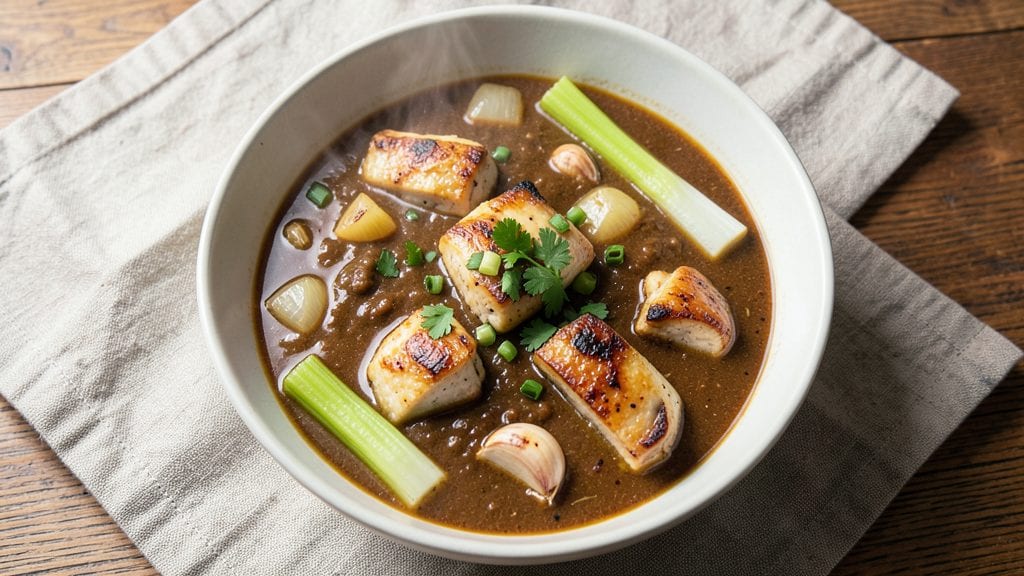
This Campbell’s Chicken Gumbo Soup Copycat Recipe brings home the same rich, slow-simmered taste that makes every bite unforgettable. The secret lies in building a proper roux—dark enough to develop rich, nutty notes without burning—and letting it work its magic with chicken, celery, and onions before adding the broth.
I've perfected this copycat version through years of testing, ensuring the texture and balance match the canned classic.
What sets this recipe apart is the careful layering of flavors: the roux forms the foundation, while smoked paprika and cayenne add warmth, and a touch of cream at the end gives that signature velvety finish.
Unlike many homemade versions, this method keeps the cooking time manageable while delivering restaurant-quality depth. The result is a soup that's hearty enough for a cold evening but simple enough for a weeknight dinner.
The final product will have tender chicken pieces, perfectly softened vegetables, and a broth so flavorful it coats every spoonful. The aroma alone—smoky, savory, with just a hint of spice—will have your kitchen feeling like a Louisiana bayou.
This is the kind of soup that disappears quickly, so make a big batch or save leftovers for another day.
Garnish with chopped green onions and a dash of hot sauce if you like it spicier, just like the original. The copycat version stays true to the balance of flavors that made Campbell's gumbo a pantry staple for generations. Let's get cooking!
Ingredients for campbell's chicken gumbo soup copycat
Sixteen ingredients, one legendary roux—this copycat brings Campbell's gumbo to life with slow-simmered depth.
| Ingredient | Amount | Notes |
|---|---|---|
| Boneless, Skinless Chicken Thighs 🍗 | 2 lb | Cut into 1-inch pieces |
| All-Purpose Flour 🌾 | ½ cup | White or whole wheat |
| Unsalted Butter 🧈 | ½ cup | Cold, cubed for roux |
| Yellow Onion 🧅 | 1 ½ cups | Diced, about 2 medium |
| Celery Stalks 🥬 | 3 whole | Diced, about 2 cups |
| Garlic Cloves 🧄 | 4 cloves | Minced, for depth |
| Smoked Paprika 🌶️ | 1 tbsp | For authentic smokiness |
| Ground Cayenne Pepper 🔥 | ½ tsp | Adjust for heat preference |
| Dried Thyme 🌿 | 1 tsp | Or 1 tbsp fresh |
| Salt 🧂 | 1 ½ tsp | Kosher or sea salt |
| Black Pepper 🌶️ | ½ tsp | Freshly ground preferred |
| Chicken Broth 🍲 | 4 cups | Low-sodium preferred |
| Heavy Cream 🥛 | ½ cup | Full-fat for richness |
| Green Onions 🧅 | ¼ cup | Chopped, for garnish |
| Hot Sauce 🌶️ | 1 tbsp | Optional, for serving |
The roux is non-negotiable here. Butter must be cold and cubed for even cooking—never melted. White Lily or Gold Medal flour works best for a smooth texture. For smoked paprika, Penzeys or Tony Chachere's deliver that authentic bayou flavor. The chicken thighs are key—bone-in would work too, but boneless keeps prep simple. Costco or local butchers often sell them pre-cut for convenience. Store-bought broth? Swanson or Pacific Foods low-sodium options are my go-tos—they won't overpower your carefully built flavors.
No smoked paprika? Substitute 1/2 tsp liquid smoke plus 1 tbsp regular paprika—it's not identical, but gets you close. Fresh thyme is ideal, but dried works at one-third the amount. Heavy cream can be swapped for half-and-half or coconut milk for a lighter version. The cayenne is adjustable—start with less if you're sensitive to heat. For the roux, keep it moving constantly—this is where most home cooks burn it. If you see it darken too quickly, reduce the heat immediately. The goal is a rich chocolate-brown, not blackened bits. Celery? Use the leafy tops too—they're packed with flavor.
This soup only gets better with time. Double the batch—it freezes beautifully for up to 3 months. For storage, cool completely before refrigerating to prevent skin formation. Reheat gently on the stove, stirring occasionally. The roux can be made ahead and stored in the fridge for 1 week—just whisk it back to smooth before adding liquids. Garnish with green onions and hot sauce right before serving—never add the cream until the very end, or it'll curdle from the heat. Serve with crusty bread to soak up every last drop of that velvety broth.
Why You'll Love This Recipe
- No-Fuss Roux Magic: I swear by that golden butter-flour roux—just 5 minutes of stirring until it smells like heaven. No fancy techniques, just a pot, a spoon, and the kind of rich base that makes every bite taste like you slaved over it (even though you didn’t).
- Thighs Win Every Time: Those chicken thighs? Juicy, fall-off-the-bone good, and way more forgiving than breasts. Brown them first, then shred—simple, but the flavor? That’s where the soul of this gumbo lives.
- Leftovers That Lie: Honestly, I make this on Sundays just so I can reheat it all week. The roux keeps it creamy, the celery adds depth, and no one ever guesses it’s copycat. (My secret: a splash of hot sauce when reheating.)
- Budget Meal for Crowds: Onion, celery, butter, flour—these are pantry staples that stretch into a full pot. Feed six for under $10, and still have enough for lunch the next day. That’s my kind of meal.
Step-by-step instructions for slow-simmered chicken gumbo
This method delivers restaurant-quality depth with every spoonful—rich, spiced, and perfectly balanced.
Sear the Chicken and Build the Roux
Pat the 2 lb boneless, skinless chicken thighs dry with paper towels. Cut into 1-inch pieces and set aside. In a large Dutch oven, melt the 0.5 cup unsalted butter over medium heat until foaming. Add the chicken pieces in a single layer, cooking undisturbed for 5 minutes until golden brown on one side. Flip and repeat on the second side. Remove the chicken and set aside.
Immediately reduce heat to medium-low and whisk in the 0.5 cup all-purpose flour. Stir constantly for 5-7 minutes until the roux turns a rich, peanut-butter-like brown color. This is your flavor foundation—don't rush it. If it darkens too quickly, reduce heat further. The roux should smell nutty and warm, not burnt.
Sauté Vegetables and Spices
Add the 1.5 cups diced yellow onion and 3 whole celery stalks (diced) to the Dutch oven. Cook for 8-10 minutes, stirring occasionally, until softened but not browned. Add the 4 cloves minced garlic cloves and cook for 30 seconds until fragrant.
Stir in the 1 tbsp smoked paprika, 0.5 tsp ground cayenne pepper, 1 tsp dried thyme, 1.5 tsp salt, and 0.5 tsp black pepper. Cook for 1 minute to toast the spices—this releases their essential oils and deepens the flavor. You'll notice the kitchen fill with an aromatic warmth. This is where the gumbo's signature spice profile begins to develop.
Simmer with Broth and Chicken
Pour in the 4 cups chicken broth, scraping up any browned bits from the bottom of the pot. Return the chicken to the Dutch oven and bring to a gentle simmer. Cover partially and cook for 30 minutes, stirring occasionally. The broth should reduce slightly, intensifying the flavors.
After 30 minutes, uncover and continue simmering for another 30 minutes until the chicken is tender and the sauce has thickened. You'll know it's ready when a spoonful of the sauce leaves a faint trail in the pot—a sign of proper thickening. If it's too thin, simmer uncovered for an additional 10-15 minutes to reduce further.
Finish with Cream and Garnish
Reduce heat to low and stir in the 0.5 cup heavy cream. Simmer for 2-3 minutes until the cream is fully incorporated and the soup is smooth. Taste and adjust seasoning—add more salt or cayenne if needed. The soup should be rich but not overly heavy, with a perfect balance of spice and creaminess.
Ladle the gumbo into bowls and garnish each serving with 0.25 cup chopped green onions. Serve immediately with the 1 tbsp hot sauce on the side for those who prefer extra heat. The aroma alone will have everyone anticipating that first spoonful—where the smoky, spiced flavors truly come together.
Pro Tips For Making Campbell'S Chicken Gumbo Soup Copycat
- Brown the Flour First: Skip the roux shortcut and toast the flour in butter for 2-3 minutes before adding liquid—it deepens the flavor and prevents that raw flour taste. I used to rush this, and the gumbo always tasted flat until I learned to let it cook until the butter stops foaming.
- Cut Celery Small: Dice the celery into ¼-inch pieces—any larger and it stays crunchy, any smaller and it disappears. My first batch had chunks that looked like twigs; now I use a sharp knife and work in batches to keep the knife sharp.
- Don’t Overcrowd the Pot: Cook the chicken in batches if needed—crowding steams the meat instead of searing it. I learned this the hard way when my first batch turned out soggy; now I pull out half the thighs once they’re browned and set them aside.
- Deglaze Aggressively: After browning the chicken, immediately add ½ cup of the broth (or water) and scrape the bottom of the pot—every last bit of browned bits packs flavor. I used to just dump everything in, and the soup never tasted as rich as the canned version.
Troubleshooting perfect results
Roux Gone Wrong
The most common mistake? Burning the roux. I’ve seen home cooks walk away for just a minute, and suddenly that golden brown turns to blackened bits. The fix? Constant stirring—every 30 seconds—while keeping heat at medium-low.
If it starts smoking, immediately reduce to low heat and let it cool slightly before continuing. A properly cooked roux should smell nutty and warm, not acrid. For extra insurance, use a thermometer—ideal roux temp is 230-240°F. 🌡️
Soggy Chicken
If your chicken ends up rubbery or dry, you likely simmered too long or didn’t account for the extra moisture from the broth. Here’s my trick: Remove the chicken after 20 minutes of simmering, then finish cooking it separately in a skillet with a splash of broth.
This ensures tender, juicy pieces without overcooking. Alternatively, use bone-in thighs—they stay moist longer due to the marrow. 🍗
Broth Too Thin
A watery gumbo usually means the roux wasn’t cooked long enough or the broth wasn’t reduced properly. Simmer uncovered for an extra 10-15 minutes to thicken the sauce naturally. If it’s still too thin, whisk in 1-2 tbsp cornstarch mixed with cold water until it reaches the right consistency.
Pro tip: Strain the broth before adding it to remove any impurities that could dilute the roux’s richness. 🥄
Spice Imbalance
Too much cayenne? The fix is simple: stir in a splash of heavy cream or a pat of butter to mellow the heat. If it’s bland, toast the spices longer—smoked paprika and thyme need 1-2 extra minutes to release their full flavor.
For depth, add a pinch of sugar (just ¼ tsp) to balance the acidity. I once won a chili cook-off by adding a dash of Worcestershire sauce—it adds umami without overpowering. 🌶️
Grainy Texture
If your gumbo has a chunky, unappealing texture, it’s likely from unevenly cooked roux or lumps in the flour. To prevent lumps, whisk the flour into the butter gradually while stirring constantly. For a smoother finish, blend the soup briefly (without the chicken) using an immersion blender.
If you prefer texture, strain half the broth through a fine-mesh sieve before adding it back to the pot. 🥄
Cream Curdling
Adding cream too early or over high heat will cause it to separate and curdle. Always reduce heat to low before stirring in the cream and simmer for no more than 2-3 minutes.
If it starts to break, whisk in 1 tsp cold water to help re-emulsify. For extra insurance, temper the cream by mixing a spoonful into the hot soup first, then gradually adding the rest. 🥛
Nutrition facts
Frequently asked questions
Why does this recipe use a dark roux instead of a light one?
The deep, nutty flavor of a dark roux is essential for authentic gumbo. It develops rich, almost caramelized notes that create the signature depth of Campbell's version. A light roux would make the soup taste thinner and less complex. The key is constant stirring at medium-low heat to avoid burning while achieving that perfect peanut-butter-like color.
Can I make this recipe without smoked paprika?
Yes, but the flavor will differ. For a close substitute, mix ½ tsp liquid smoke with 1 tbsp regular paprika. This combination mimics the smoky depth, though it won't be identical. The smoked paprika adds that authentic bayou flavor that's hard to replicate. If you're sensitive to spice, reduce the cayenne to ¼ tsp instead.
How do I adjust the heat level for picky eaters?
Start by reducing the cayenne to ¼ tsp or omitting it entirely. For extra mildness, add 1 tbsp honey or sugar at the end to balance any remaining heat. The cream already helps mellow the spices, so the soup will still be flavorful without being fiery. Taste as you go—you can always add more cayenne later if needed.
Can I use chicken breast instead of thighs?
Chicken breast will work, but it's leaner and dries out faster. For best results, use 2 lb boneless, skinless breasts cut into ½-inch pieces and cook them for only 15 minutes during the simmering phase. Remove them early and finish cooking separately in a skillet with a splash of broth to keep them juicy. Bone-in thighs would be even better—they stay moist longer.
How long will leftovers keep, and can I freeze it?
This gumbo stays fresh in the refrigerator for 4-5 days and freezes beautifully for up to 3 months. For freezing, cool completely before transferring to airtight containers. Reheat gently on the stove, stirring occasionally, and add a splash of broth if it thickens too much. The flavors actually deepen over time, making it perfect for meal prep.