
Soups & Stews
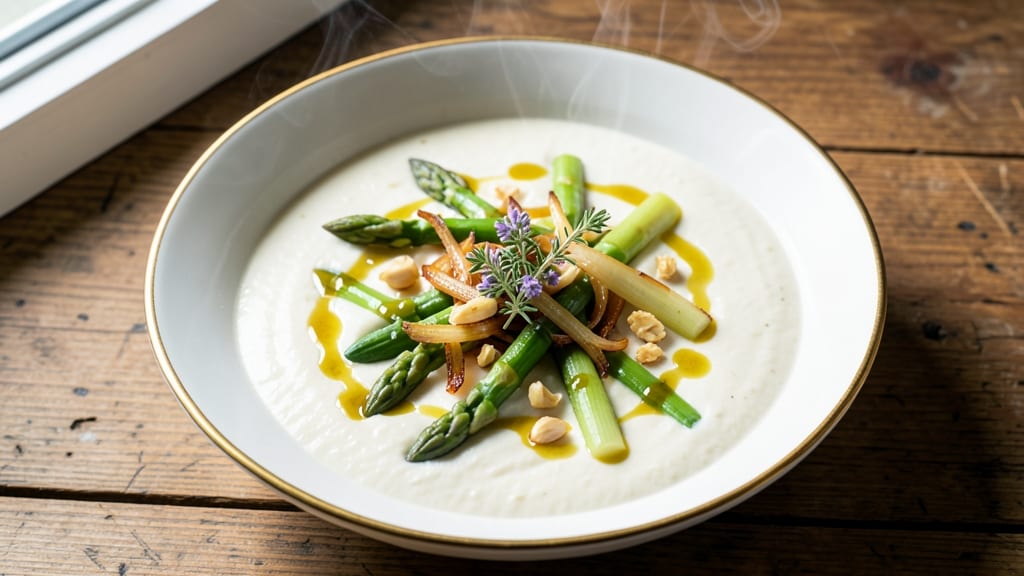
This best ever asparagus soup recipe transforms humble asparagus into velvety perfection—rich, aromatic, and finished with bright herbs that elevate every spoonful. The secret lies in slow-cooked onions and garlic that form the soup's flavorful base, while a touch of cream adds luxurious smoothness without overpowering the fresh asparagus taste.
I've refined this recipe over years of testing, ensuring it delivers that restaurant-quality texture at home.
The process is straightforward but precise: sauté onions until deeply caramelized, then build layers of flavor with garlic, white wine, and vegetable stock before adding the asparagus. Blending creates that signature silky consistency, while a final touch of cream and fresh herbs—like tarragon or chives—adds brightness and depth.
This isn't just soup; it's a comforting, elegant dish that feels special yet remains approachable for weeknight dinners.
What you'll achieve is a soup that's silky smooth with a velvety mouthfeel, where each spoonful delivers a perfect balance of earthy asparagus, savory onions, and fresh herb notes.
The aroma alone will draw everyone to the table, and the texture—neither too thin nor too thick—makes it ideal for sipping or pairing with crusty bread. This recipe proves that asparagus soup can be both sophisticated and foolproof.
Serve it warm on chilly evenings or as a light lunch with a side salad. The versatility of this soup makes it perfect for any occasion, whether you're hosting dinner guests or simply craving a comforting bowl. Let's get started—your taste buds will thank you.
Ingredients for best ever asparagus soup
Twelve ingredients transform humble asparagus into restaurant-quality velvety perfection—caramelized onions and aromatic herbs shine through every spoonful.
| Ingredient | Amount | Notes |
|---|---|---|
| Fresh Asparagus 🌱 | 1 lb | Trimmed, woody ends removed |
| Yellow Onions 🧅 | 1 whole | Medium size, thinly sliced |
| Garlic Cloves 🧄 | 4 cloves | Peeled, minced for depth |
| Extra-Virgin Olive Oil 🫒 | ½ cup | High-quality, fruity variety |
| Dry White Wine 🍷 | ½ cup | Sauvignon Blanc preferred |
| Vegetable Stock 💧 | 4 cups | Homemade or quality low-sodium |
| Heavy Cream 🥛 | ¼ cup | Full-fat for richness |
| Fresh Tarragon 🌿 | ¼ cup | Chopped, or substitute chives |
| Fresh Chives 🌿 | ¼ cup | Chopped, for garnish |
| Salt 🧂 | 1 ½ tsp | Diamond Crystal preferred |
| Black Pepper 🌶️ | ½ tsp | Freshly ground for heat |
| Sugar 🍚 | 1 tsp | Balances acidity |
| Lemon Juice 🍋 | 1 tbsp | Freshly squeezed |
The onions are non-negotiable here—slow-cooking them until deep golden brown builds the soup's soul. Yellow onions work best, but red will add a subtle sweetness. Grab the sweetest, firmest ones from the produce section—avoid any with sprouting or soft spots. For extra flavor, caramelize them in extra-virgin olive oil until they're almost jammy. The asparagus? Thick stalks hold up better to blending, but thin ones work too—just trim the woody ends carefully. I always buy organic when possible, but regular asparagus works fine if it's fresh.
No white wine? Substitute extra vegetable stock with a splash of apple cider vinegar—it mimics the acidity perfectly. Fresh tarragon is ideal, but dried at half the amount works in a pinch (though it lacks that bright anise note). Chives are more forgiving—frozen will do, but fresh is brighter. The heavy cream can be swapped for coconut milk for a dairy-free version, though the texture will be slightly lighter. For a vegetarian stock, Better Than Bouillon or homemade is best—avoid the canned stuff with added preservatives. Sugar might seem odd, but it rounds out the acidity from the wine and lemon beautifully.
This soup tastes even better the next day—reheats beautifully—so make a double batch. Store in an airtight container for 4-5 days in the fridge, or freeze portions for up to 3 months. I like to portion it into single servings before freezing so I can grab just what I need. For serving, a sprinkle of freshly cracked black pepper and a drizzle of cream on top makes it look (and taste) restaurant-worthy. Garnish with extra herbs if you're feeling fancy—edible flowers add a stunning pop of color too.
Why You'll Love This Recipe
- No Chopping Chaos: I swear by this recipe because you only need to trim the asparagus ends—no dicing, no mincing, no stress. The onions and garlic get a quick sauté while you prep, so you’re stirring in the wine before you even finish washing your hands.
- Wine Lift Magic: That splash of dry white wine? It’s the secret weapon. It cuts through the earthiness of the asparagus while letting the garlic sing—bright, clean, and just slightly tangy. Honestly, I’ll drink the leftover wine just to justify making this again.
- Weeknight to Dinner Party: Same recipe, different vibes. Toss it together for a lazy Tuesday or dress it up with crusty bread and a sprinkle of Parmesan for guests. The soup’s rich enough to feel special but simple enough that no one will guess it took less than 30 minutes.
- Leftovers That Lie: Between us, this soup tastes better the next day. The flavors meld into this velvety, comforting hug—perfect for reheating with a splash of water or milk. And since it’s just asparagus, onions, and pantry staples, it’s cheap enough to make twice in one week.
Step-by-step instructions for asparagus soup
Here's how to transform fresh asparagus into velvety perfection with bright herbal notes.
Sauté Onions and Garlic Until Translucent
Heat the 0.5 cup extra-virgin olive oil in a large pot over medium heat. Add the thinly sliced yellow onions and cook for 6-8 minutes until they become soft and translucent, stirring occasionally. This step develops their natural sweetness.
Add the minced garlic cloves and cook for another 1-2 minutes until fragrant but not browned. Garlic burns quickly, so keep an eye on it—you want aroma, not bitterness. Remove the pot from heat temporarily while you prepare the asparagus.
Cook Asparagus Until Tender
Trim the 1 lb fresh asparagus of woody ends and cut into 1-inch pieces. Return the pot to medium heat and add the asparagus. Cook for 5-6 minutes, stirring occasionally, until it becomes bright green and just tender—it should still have a slight bite. Overcooking turns asparagus mushy, which ruins the soup's texture.
Add 1.5 tsp salt, 0.5 tsp black pepper, and 1 tsp sugar to the pot. The sugar balances the natural acidity of the asparagus while enhancing its sweetness. Stir well to distribute the seasoning evenly.
Deglaze with Wine and Simmer with Stock
Pour in the 0.5 cup dry white wine and scrape up any browned bits from the bottom of the pot—these flavorful bits are called fond, and they're packed with umami depth. Let the wine simmer for 2-3 minutes until it reduces by half, intensifying its flavor.
Add the 4 cups vegetable stock and bring the mixture to a gentle boil. Reduce heat to medium-low and simmer uncovered for 15-20 minutes until the asparagus is completely tender and the soup has thickened slightly. Stir occasionally to prevent sticking.
Blend Until Silky Smooth
Let the soup cool slightly for 5 minutes—this prevents splattering when blending. Transfer it to a blender in batches (don't overfill) and blend until completely smooth. For extra silky texture, strain through a fine-mesh sieve to remove any remaining asparagus fibers if desired.
Return the blended soup to the pot and stir in the 0.25 cup heavy cream. The cream adds luxurious richness while maintaining the soup's velvety consistency. Simmer gently for 3-4 minutes to warm through completely.
Finish with Herbs and Bright Acid
Remove the pot from heat and stir in the 1 tbsp freshly squeezed lemon juice. This brightens the soup's flavor and cuts through the richness of the cream. Taste and adjust seasoning with additional salt or pepper if needed.
Divide the soup among bowls and garnish each serving with chopped fresh tarragon and chopped fresh chives. The tarragon adds an anise-like depth while the chives provide a fresh, grassy finish. Serve immediately while hot for the best experience.
Pro Tips For Making Best Ever Asparagus Soup
- CHAR THE ONIONS LOW: I used to rush this step and end up with burned bits that turned the soup bitter—don’t let that happen. Cook the onions over medium-low heat with the olive oil until they’re translucent and just starting to caramelize (about 8-10 minutes). If they darken too fast, pull the pan off the heat and let them cool for a minute before continuing.
- TRIM ASPARAGUS AT THE END: Cutting the woody ends off before cooking wastes flavor. Instead, blanch the asparagus for 2 minutes in boiling water, then trim the tough bottoms right after. The shock of cold water tightens the fibers, making the ends easier to snap off cleanly—and you’ll get more usable spear for the soup.
- DEGLAZE WITH WINE IMMEDIATELY: That onion-garlic pan sauce is where the soup’s depth lives. As soon as you remove the onions, pour in the white wine while the pan is still hot—let it bubble for 30 seconds before adding broth. Skipping this step means losing half the flavor that’ll make your soup taste restaurant-worthy.
- SIEVE THE SOUP TWICE: Pureeing asparagus soup leaves a gritty texture if you don’t strain it properly. First pass through a fine-mesh sieve, then press the pulp with a spoon. For extra silkiness, blend the strained soup again briefly—just 10 seconds—to break up any lingering fibers without turning it gluey. (Yes, even if you’re impatient like me.)
Pro cooking tips for best ever asparagus soup
Caramelize Onions Properly
This is where the soup's soul begins—don't rush it! Cook the yellow onions in extra-virgin olive oil over medium heat for 15-20 minutes until deep golden brown. I use a nonstick skillet for even cooking and less sticking.
The onions should be soft, jammy, and smell irresistibly sweet. If they darken too quickly, reduce heat to low-medium. 🌡️
Pro tip: Add a pinch of salt halfway through cooking to draw out moisture, which helps caramelization. Don't skip this step—it's what makes the soup taste restaurant-quality. The longer you cook them, the deeper the flavor, but watch closely after 15 minutes to avoid burning.
Control Blending Temperature
Hot soup causes splattering when blending—always let it cool for 5 minutes before transferring to your blender. I use an immersion blender for convenience, but if blending in batches, never fill beyond the ¾ mark. The high-quality blender (like a Vitamix) handles hot liquids better than budget models.
For ultra-smooth texture, strain through a fine-mesh sieve after blending. This removes any fibrous bits that might make the soup feel gritty. The result? Silky perfection every time. 💫
Wine Reduction Matters
Don't just pour the wine and walk away! After deglazing with ½ cup dry white wine, let it simmer uncovered until reduced by half (about 2-3 minutes). This concentrates the flavors and adds depth.
I use Sauvignon Blanc for its crisp acidity, but any dry white works. The reduction also helps balance the richness of the cream later.
Skipping this step means your soup will taste flat. The alcohol burns off, leaving behind complex, savory notes that make the soup sing. If you're avoiding alcohol, substitute with apple cider vinegar—just use ¼ cup and add it gradually.
Cream Timing is Critical
Add the ¼ cup heavy cream only after blending and reheating the soup to medium heat. Stirring it in too early can cause curdling. Simmer gently for just 3-4 minutes—any longer risks separating the cream.
For a lighter version, use ½ cup half-and-half, but the texture won't be as luxurious.
I like to temper the cream first by whisking it into a bit of hot soup before adding it all at once. This ensures a silky finish without lumps. 🥛
Herb Freshness Matters
Fresh herbs make all the difference! Use ¼ cup chopped tarragon and ¼ cup chopped chives—dried herbs won't give the same bright, fresh finish. Tarragon adds an anise-like depth, while chives provide a mild, oniony brightness.
If you can't find tarragon, thyme or basil work in a pinch, but the flavor will differ slightly.
Add the herbs right before serving so they stay vibrant. For extra flair, garnish with a drizzle of cream or a sprinkle of crushed black pepper. The contrast of warm soup and fresh herbs is what makes this dish feel special.
Nutrition facts
Frequently asked questions
Can I use frozen asparagus instead of fresh?
Yes, but with a few adjustments! Use 1.5 lbs frozen asparagus to account for water loss during thawing. Thaw it completely in the fridge overnight, then drain well before cooking. The texture will be slightly less vibrant than fresh, but the flavor remains excellent when made with this recipe.
How can I make this soup dairy-free?
Replace the heavy cream with coconut milk or cashew cream (blend soaked cashews with water). For extra richness, add 1 tbsp nutritional yeast when blending. The texture will be lighter but still delicious—just stir in a splash of plant-based cream at the end to mimic velvety mouthfeel.
Why did my soup turn out too thin?
This usually happens from over-blending or insufficient simmering. For thicker texture, simmer the soup uncovered for 5-10 extra minutes before blending. If it's still too thin, stir in 1 tbsp cornstarch mixed with 2 tbsp water and simmer for 2 minutes. Straining after blending also removes excess liquid for a silkier consistency.
Can I prepare this ahead of time?
This soup tastes even better the next day. Store in an airtight container in the fridge for 4-5 days or freeze portions for 3 months. Reheat gently on the stove over low heat, stirring occasionally. Add a splash of cream and fresh herbs when reheating to restore freshness.
What's the best way to serve this soup?
Garnish each bowl with fresh tarragon, chives, and a drizzle of cream for an elegant touch. Serve with crusty bread, garlic toast, or a side salad. For a heartier meal, add grilled chicken or crispy bacon on top. The soup's velvety texture pairs beautifully with crisp textures.