
Soups & Stews
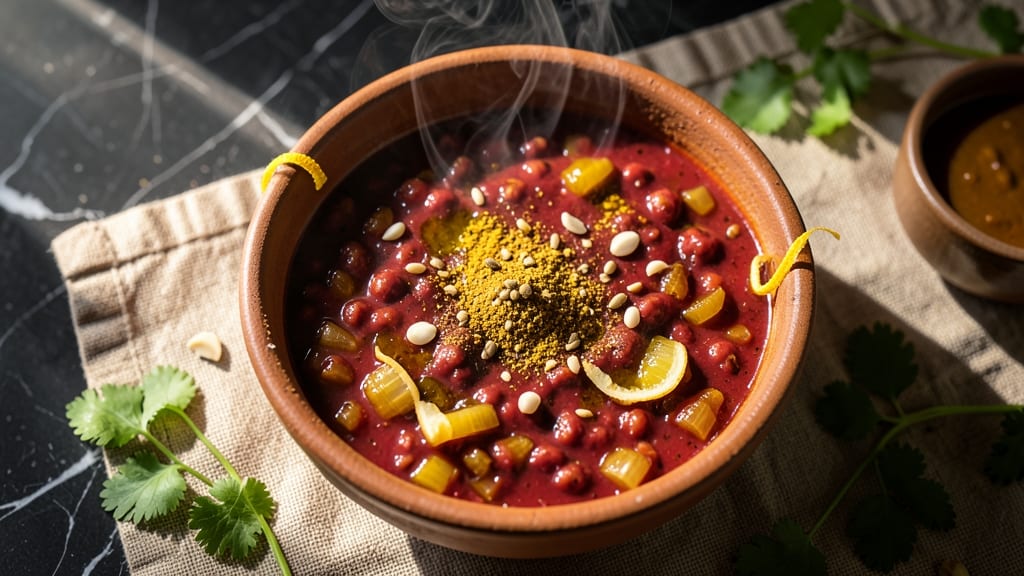
This Bengali soup recipe delivers the aromatic, turmeric-rich comfort of West Bengal’s shukto—a fragrant blend of lentils, vegetables, and spices simmered into a golden broth. The secret lies in slow-cooked lentils and a tempering of mustard seeds, cumin, and garlic that transforms simple ingredients into something deeply satisfying.
I first tasted this dish in a Kolkata home, where it was served as both a light lunch and a healing remedy, and it’s been a staple in my kitchen ever since.
The beauty of this recipe is its adaptability—whether you prefer a hearty vegetable version or one with fish, the foundation remains the same: a fragrant broth built on turmeric, ginger, and cumin. The lentils soften into a creamy texture, while the vegetables (or fish) absorb the flavors effortlessly.
Unlike many soups that rely on heavy cream or dairy, this one shines with plant-based richness, making it both comforting and nourishing.
What sets this apart is the tempering step, where whole spices are toasted in hot oil until they release their essential aromas. This technique—common in Bengali cooking—adds depth that no pre-ground spice can match.
The result is a soup that’s vibrant, warming, and packed with umami, perfect for chilly days or as a light yet filling meal. Each spoonful carries the essence of Bengali home cooking, where simplicity meets bold flavor.
Serve it with steamed rice or crusty bread to soak up every last drop of that golden, spiced broth. The recipe scales easily, so you can make a big batch for the week—it tastes even better the next day as the flavors meld.
For those who love fish, a version with macher jhol (fish curry) can be adapted by adding a light fish stock, but the lentil base remains the soul of the dish.
Ingredients for bengali soup
These aromatic spices and simple vegetables create a fragrant golden broth that captures Bengali home cooking.
| Ingredient | Amount | Notes |
|---|---|---|
| Red Lentils 🌾 | 1 ½ cups | Rinsed before cooking |
| Yellow Onion 🧅 | 1 whole | Finely chopped |
| Fresh Ginger 🌿 | 1 tbsp | Grated, peeled |
| Garlic Cloves 🧄 | 6 cloves | Minced, peeled |
| Turmeric Powder 🌶️ | 1 tsp | Freshly ground preferred |
| Ground Cumin 🌿 | 1 tsp | Toasted for depth |
| Mustard Seeds 🌶️ | 1 tsp | Whole, not powdered |
| Coconut Oil 🫒 | ¼ cup | For tempering |
| Green Chilies 🌶️ | 2 whole | Slit lengthwise |
| Fresh Spinach 🌿 | 2 cups | Chopped, stems removed |
| Potatoes 🥔 | 2 medium | Cubed, peeled |
| Carrots 🥕 | 2 whole | Sliced, peeled |
| Tomatoes 🍅 | 2 medium | Chopped, ripe |
| Salt 🧂 | 1 tsp | Adjust to taste |
| Water 💧 | 4 cups | For simmering |
The turmeric and cumin are the soul of this soup—look for vibrant, freshly ground turmeric at Indian markets or bulk spice stores like Spicewalla or Penzeys. The mustard seeds must be whole; powdered won't give that essential crackling aroma. For the ginger, fresh is non-negotiable—dried loses its zing. I always grab organic carrots and potatoes from the store's produce section, but any firm, unblemished vegetables work. The spinach should be bright green—wilting means it's past its prime. For the lentils, red lentils are key—they soften beautifully and create that signature creamy texture without losing shape.
No fresh ginger? Substitute with 1/2 tsp ground ginger, but you'll lose some depth. Running out of mustard seeds? Swap for 1/2 tsp ground mustard, though the flavor won't be identical. The tomatoes can be canned in a pinch—San Marzano works best—but fresh adds a brighter acidity. For the coconut oil, any neutral oil works if you're avoiding coconut flavor. The green chilies are optional but add a lovely heat; skip them if you prefer mild. If you're making this ahead, add the spinach last—it wilts quickly in hot broth.
This soup tastes even better the next day as the flavors meld—make a double batch and store in airtight containers. Keeps for 5 days refrigerated or 3 months frozen. For freezing, cool completely first. The lentils thicken when reheated, so add a splash of water if it's too thick. Serve with steamed basmati rice or warm naan to soak up every drop of that golden, spiced broth. The leftovers reheat beautifully—just stir in a little water if needed.
Why You'll Love This Recipe
- Pantry Magic: I swear by this one—no last-minute grocery runs. Red lentils and onions are my go-tos, and the ginger-garlic-turmeric trio transforms them into something special without extra effort. Honestly, I’ve made it with whatever spices I had, and it still works.
- Turmeric Glow: That golden swirl from the turmeric? It’s not just pretty—it’s flavor. The lentils soak up the earthy warmth while the ginger adds a bright kick, and the garlic? Oh, it’s the secret that makes this taste like a hug in a bowl. Between us, I’ve never met a soup that balances warmth and zing this well.
- Office Lunch Hero: Between us, this is my Monday through Friday lifesaver. Make a big batch on Sunday, and you’ve got lunch covered—pack it cold or reheat it, and it’s just as good the third day. My coworkers still ask for seconds, even after I’ve brought it four times in a row.
- Budget Blanket: A pound of lentils feeds four for under $3, and the onions and ginger stretch further than you’d think. I’ll be real: I’ve served this to picky eaters, college students on a budget, and even my health-conscious cousin—no complaints, just empty bowls. Not the prettiest, but the taste makes up for it.
Step-by-step instructions for spiced lentils and turmeric golden broth
This traditional Bengali preparation balances earthy spices with tender vegetables for a nourishing, aromatic soup.
Temper the Spices in Coconut Oil
Heat the 0.25 cup coconut oil in a heavy-bottomed pot over medium heat. Add the 1 tsp mustard seeds and let them sizzle for 30 seconds until they pop and darken slightly. This is your tempering base—don't walk away.
Next, add the 1 whole yellow onion and 1 tbsp fresh ginger. Sauté for 5-6 minutes until the onion softens and releases its sweet aroma. The ginger should melt into the oil, infusing the entire dish with its warm, zesty flavor. Keep the heat steady to prevent burning.
Add the 6 cloves garlic cloves and 2 whole green chilies (slit lengthwise). Cook for another 2 minutes until the garlic turns golden and the chilies soften. This aromatic foundation is the soul of the soup—don't rush this step.
Build the Spiced Broth
Stir in the 1 tsp turmeric powder and 1 tsp ground cumin, toasting for 30 seconds until fragrant. Immediately add the 1.5 cups red lentils (pre-rinsed) and the 4 cups water. Bring to a rolling boil, then reduce heat to medium-low and simmer uncovered for 15 minutes, stirring occasionally.
Add the 2 medium potatoes (cubed) and 2 whole carrots (sliced). Simmer for another 10 minutes until the potatoes are fork-tender and the carrots begin to soften. The lentils should be breaking down but not yet mushy—this is key for texture.
Add the 2 medium tomatoes (chopped) and 1 tsp salt. Simmer for 5 minutes more until the tomatoes break down and the broth thickens slightly. The soup should have a vibrant golden color from the turmeric and a rich, spiced aroma.
Finish with Fresh Spinach
Stir in the 2 cups fresh spinach and cook for 2-3 minutes until just wilted. The spinach should brighten the soup's color and add a fresh, slightly bitter contrast to the rich lentils. Remove from heat immediately—overcooking will turn the spinach into a mushy mass.
Taste and adjust seasoning with additional salt if needed. The soup should be flavorful but balanced—earthy from the lentils, bright from the tomatoes and spinach, with a gentle heat from the chilies. Let it sit for 5 minutes before serving to allow the flavors to meld.
Serve with Traditional Accompaniments
Ladle the soup into bowls and serve immediately with steamed basmati rice or crusty bread. Garnish with a drizzle of coconut oil and a sprinkle of fresh cilantro if desired. The soup's golden broth should coat the back of a spoon, and each bite should deliver a harmonious blend of spiced lentils, tender vegetables, and aromatic spices.
For best results, serve while hot. The flavors deepen as the soup sits, but the texture is best enjoyed fresh from the pot. This dish is both comforting and nourishing—perfect for cooler weather or as a healing meal.
Pro Tips For Making Bengali Soup
- Bloom the Spices First: Skip the urge to toss turmeric and whole spices into boiling water—it’ll just make your soup bitter. Instead, dry-toast them in oil for 30 seconds until fragrant, then add onions and ginger. This unlocks their flavor without turning your soup into a sad, muted dish.
- Grind Ginger Like You Mean It: Pre-packaged ginger paste is convenient, but fresh is non-negotiable for real depth. Use a microplane or fine grater to get a paste with no grit, then squeeze out excess liquid with your hands. Too much moisture = watery soup.
- Simmer, Don’t Boil: Once lentils and veggies hit the pot, keep heat at a gentle simmer—not a rolling boil. High heat breaks down the lentils into mush, and you’ll end up with a gluey, unappealing texture. A steady, quiet bubble is what you’re after.
- Toast the Lentils First: I used to skip this, but now I won’t make soup without it: dry-toast the red lentils in a little oil for 2–3 minutes until they smell nutty. It deepens their flavor and cuts the earthiness that can overpower the dish. (Yes, even if you’re impatient like me.)
Perfect pairings for this bengali soup
Rice Pairing Perfection
Serve this golden broth with steamed basmati rice—the fragrant, long-grain variety absorbs the spiced broth beautifully. I recommend Tilda brand basmati rice for its consistent texture.
Cook it separately in a 1:1.5 rice-to-water ratio (for 1 cup rice, use 1.5 cups water) and steam for 15 minutes until tender. The rice should be fluffy and separate, ready to soak up every drop of that turmeric-infused broth. 🌾
Crusty Bread Match
For a heartier meal, pair with warm naan or roti—the soft, pillowy texture contrasts perfectly with the soup's earthy flavors. I love Tandoori-style naan from Indian bakeries, but you can also make it at home using a store-bought naan mix (like Patak's) or homemade dough.
Toast it briefly in a cast-iron skillet for extra crispiness. The bread acts like a spoon, letting you enjoy every last bit of the aromatic broth.
Yogurt Swirl Option
Add a dollop of plain Greek yogurt (about 2 tbsp per bowl) for a cooling contrast. The tanginess balances the soup's richness, and it adds a creamy texture without overpowering the spices. I use Fage 5% fat yogurt for its thick consistency.
Stir it in just before serving so it doesn’t curdle in the hot broth. This trick is inspired by Bengali home cooking, where yogurt is often used to temper heat.
Herb Garnish
Finish with fresh cilantro or mint leaves—a handful per bowl adds brightness and freshness. The herbs should be bright green and finely chopped. I prefer cilantro for its citrusy note, but mint works beautifully if you love its cool, peppery kick.
A drizzle of coconut oil (about 1 tsp per bowl) enhances the soup’s golden hue and adds a subtle richness. This garnish elevates the dish from comforting to restaurant-worthy. ✨
Spicy Kick Boost
For those who love heat, serve with pickled green chilies or a side of mango chutney. The tangy, spicy contrast cuts through the soup’s earthiness.
I make a quick mango chutney by blending 1 ripe mango, 1 tbsp lime juice, 1 tsp sugar, and ½ tsp red chili powder. A small bowl on the side lets everyone add as much (or as little) as they like.
This pairing is a Bengali favorite—especially in Kolkata’s street food culture.
Drink Pairings
Complement the soup with masala chai or sparkling lime soda for a refreshing contrast. For chai, use Tazo Green Tea with 1 tsp ginger, ½ tsp cardamom, and a pinch of black pepper—simmer for 5 minutes and strain.
The warmth of the chai enhances the soup’s spices, while the soda’s fizz cleanses the palate. Either drink brings out the dish’s vibrant flavors without overpowering them. 🍵
Nutrition facts
Frequently asked questions
Can I make this Bengali soup without coconut oil?
While coconut oil adds authentic flavor, you can substitute with 1/4 cup neutral oil like vegetable or canola. For a richer taste, use ghee (clarified butter) instead—it enhances the soup's depth and works beautifully with the spices. Just be mindful that ghee has a higher smoke point.
How do I adjust the spice level for kids or sensitive eaters?
Remove the green chilies entirely for mild heat, or reduce them to 1 chili and slice it thinner. For extra mildness, skip the whole mustard seeds and use 1/2 tsp ground mustard instead. The turmeric and cumin provide plenty of flavor without heat, so the soup will still taste delicious.
What's the best way to store leftovers?
Let the soup cool completely, then transfer to airtight containers. It keeps in the fridge for 5 days and freezes well for 3 months. When reheating, add 1-2 tbsp water per cup of soup—the lentils thicken as they cool. For best texture, reheat gently on low heat or in the microwave with a splash of water.
Can I add protein like chicken or fish?
Yes! For a heartier version, add 1 cup cooked chicken (shredded) or 1 fillet of pomfret or hilsa fish (poached separately) in the last 10 minutes of cooking. The fish should flake easily when done. For chicken, use bone-in thighs—they stay juicy while simmering. Just reduce the water slightly if adding extra ingredients.
Why is my soup too thick or too thin?
If too thick, stir in 1/2 cup water at a time until reaching desired consistency. For thin soup, simmer uncovered for 5-10 more minutes to reduce the liquid. The lentils should be soft but not mushy—overcooking causes thickening. For extra creaminess, blend 1/4 cup of the soup and stir back in, but this changes the traditional texture.