
Soups & Stews
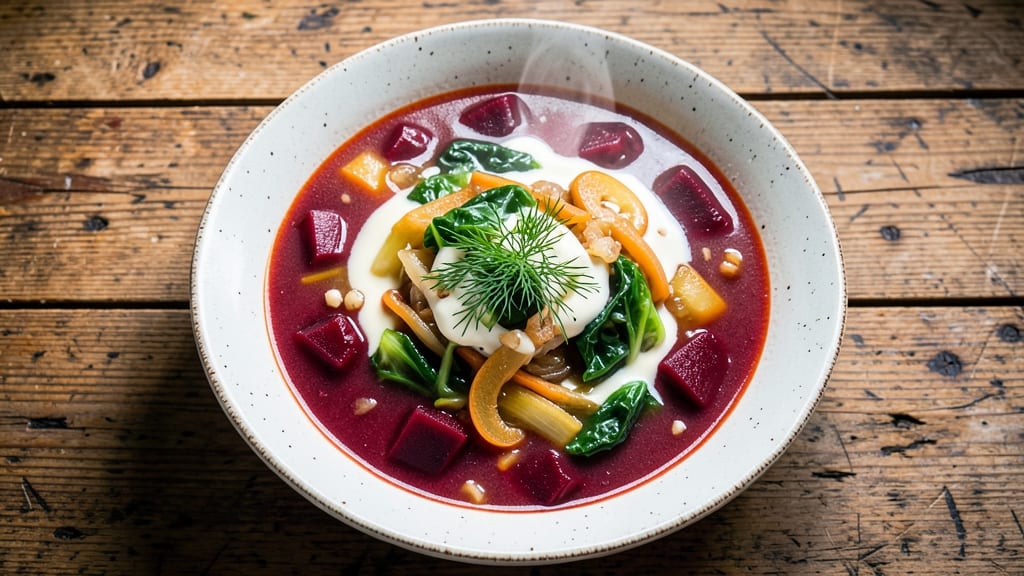
This beet, cabbage, and carrot soup recipe delivers a symphony of earthy sweetness and velvety texture that transforms simple vegetables into a hearty, satisfying meal. The secret lies in slow simmering—allowing the natural sugars in beets and carrots to caramelize while cabbage softens into tender, flavorful strands.
I’ve refined this recipe over years of testing, balancing sweetness with subtle acidity to create a soup that’s both comforting and vibrant.
What makes this recipe stand out is its versatility—whether you blend it for a silky consistency or leave it rustic with chunks, the flavors shine. The soup builds depth through aromatic vegetables like onions and garlic, while a touch of cumin and bay leaf adds warmth.
It’s naturally vegan, gluten-free, and packed with fiber, making it a nourishing choice for any season.
By the time you taste the first spoonful, you’ll understand why this soup becomes a staple—rich with caramelized notes, tender vegetables, and a smooth finish. The beauty of this recipe is in its adaptability: add fresh herbs for brightness, a squeeze of lemon for tang, or toasted seeds for crunch.
It’s the kind of dish that feels both rustic and refined, perfect for chilly evenings or meal prep.
Ready in about 45 minutes with minimal effort, this soup proves that wholesome meals don’t require complicated techniques. The slow simmering process ensures every bite is infused with flavor, while the natural sweetness of the vegetables keeps it satisfying without relying on added sugars.
Here’s how to make it—simple, foolproof, and deeply comforting.
Ingredients for beet cabbage carrot soup
Earthy vegetables and aromatic spices create this velvety, naturally sweet soup that's both comforting and vibrant.
| Ingredient | Amount | Notes |
|---|---|---|
| Medium Beets 🍠 | 3 whole | Peeled and roughly chopped |
| Green Cabbage 🥬 | 1 small | Cored and quartered |
| Carrots 🥕 | 4 medium | Peeled and roughly chopped |
| Yellow Onion 🧅 | 1 large | Diced finely |
| Garlic Cloves 🧄 | 4 cloves | Minced finely |
| Vegetable Broth 💧 | 6 cups | Low-sodium preferred |
| Extra-Virgin Olive Oil 🫒 | ½ cup | For sautéing vegetables |
| Fresh Thyme 🌿 | 2 sprigs | Or 1 tsp dried thyme |
| Bay Leaves 🍃 | 2 whole | Removed before serving |
| Ground Cumin 🌶️ | ½ tsp | For earthy depth |
| Fresh Lemon Juice 🍋 | 2 tbsp | Brightens flavors |
| Sea Salt 🧂 | 1 ½ tsp | Adjust to taste |
| Black Pepper 🌶️ | ½ tsp | Freshly ground |
| Toasted Walnuts 🥜 | ¼ cup | For garnish (optional) |
The beets and carrots are the soul of this soup—organic, vibrant varieties deliver the deepest flavor. Trader Joe's carries pre-peeled beets in the refrigerated section, saving time, but whole beets last longer. For cabbage, green is ideal—avoid wilted outer leaves. The key is rough chopping: larger pieces stay rustic, smaller pieces blend smoothly. If you can't find fresh thyme, dried works at one-third the amount, but fresh adds that bright herbal note. Prep all vegetables before cooking to streamline the process—this soup rewards attention to detail.
No fresh thyme? Dried thyme or oregano works in a pinch, though fresh is preferred. Substituting carrots for sweet potatoes adds richness, but the earthy balance shifts. For extra depth, smoked paprika at a quarter teaspoon mimics the slow-roasted flavor. Vegetable broth quality matters—low-sodium brands like Imagine or Pacific Foods ensure you control the salt. If you're blending, reserve a cup of soup before blending for rustic texture. The walnuts? Toast them in a dry pan for 2-3 minutes—they add crunch and nuttiness that elevates every spoonful.
Store leftovers in airtight containers for 5 days in the fridge, where flavors deepen overnight. Freezes beautifully for 3 months—portion into single servings for easy reheating. For meal prep, double the batch and freeze half immediately. Reheat gently on the stove with a splash of water or broth to restore creaminess. Garnish with fresh herbs or a drizzle of olive oil before serving to brighten the dish. The soup tastes even better the next day as flavors meld.
Why You'll Love This Recipe
- No Chopping Nightmare: I swear by this recipe—just toss the beets, cabbage, and carrots into chunks (no julienne skills needed) and let the pot do the work. That onion and garlic? Sautéed until golden, but honestly, you could set a timer and forget about it.
- Earthy Yet Bright: The beets bring that deep, sweet richness, while the cabbage keeps it fresh and almost tangy. That crisp edge from the raw cabbage at the end? Chef’s kiss—like a hug in a bowl, but with way more flavor.
- Meal Prep MVP: Make a double batch on Sundays, and you’ve got lunch for the week. The flavors actually improve after a day or two—my freezer’s full of these jars, and I never get tired of them. (Yes, even on a Tuesday night.)
- Pocketbook Hero: Beets and cabbage are the ultimate budget stretch—you’re feeding a crowd for less than $10. And because it’s so simple, I can afford to buy the good garlic (the stuff that makes you cry a little). Worth it.
Step-by-step instructions for beet, cabbage, and carrot soup
This method delivers a velvety, earthy soup with perfectly balanced sweetness and depth.
🍳 Step 1: Sauté the Vegetable Base
Heat the 0.5 cup extra-virgin olive oil in a large pot over medium heat. Add the 1 large finely diced yellow onion and cook for 5 minutes until softened and translucent. This foundational step builds flavor without browning.
Add the 4 medium peeled and roughly chopped carrots and 3 whole peeled and roughly chopped medium beets. Stir to coat in the oil, then sprinkle with 0.5 teaspoon ground cumin and 1 teaspoon sea salt. Cook for 8-10 minutes until the vegetables begin to soften and develop a golden hue at the edges.
🍳 Step 2: Develop Depth with Aromatics
Push the vegetables to one side of the pot and add 0.25 cup extra-virgin olive oil (reserving some for later). Add the 4 cloves minced garlic cloves and cook for 30 seconds until fragrant but not browned. This quick cooking preserves garlic's sweetness rather than bitterness.
Add the 1 small cored and quartered green cabbage to the pot, stirring to combine with the other vegetables. Cook for 5 minutes until the cabbage begins to wilt slightly. Add the 2 sprigs fresh thyme and 2 whole bay leaves, then pour in the 6 cups vegetable broth. Bring to a gentle boil.
⏰ Step 3: Simmer Until Tender
Reduce heat to low and let the soup simmer uncovered for 30-35 minutes until all vegetables are fork-tender. The beets should be completely soft, and the cabbage should collapse easily. Stir occasionally to prevent sticking at the bottom.
Taste and adjust seasoning with additional sea salt or black pepper as needed. The soup should be rich but not overly salty—remember that the broth may have some residual sodium. Remove and discard the bay leaves before proceeding.
🍳 Step 4: Blend to Velvety Perfection
Use an immersion blender to purée the soup directly in the pot until completely smooth. For a chunkier texture, blend in batches in a countertop blender, then return to the pot. The result should be a silky, velvety consistency with no visible vegetable pieces.
Return the soup to medium-low heat and stir in the 2 tablespoons fresh lemon juice. This brightens the earthy flavors and balances the natural sweetness of the beets and carrots. Simmer for 5 minutes to allow the lemon to integrate fully.
🍽️ Step 5: Finish and Serve
Ladle the soup into bowls and garnish with 0.25 cup toasted walnuts for added texture and crunch. The walnuts provide a delightful contrast to the smooth soup and add a nutty depth. Serve immediately while warm, as the flavors continue to meld even after blending.
For best results, pair with crusty bread to soak up the rich broth. The soup keeps well in the refrigerator for 3-4 days, though the texture may slightly thicken upon reheating—simply add a splash of water or broth to restore consistency.
Pro Tips For Making Beet Cabbage Carrot Soup
- PEEL BEETS AFTER COOKING: Raw beets stain everything—your hands, knife, cutting board—like nothing else. Toss them whole into the pot with the other veggies, then peel them after they’re tender. The skins slide off effortlessly, and you won’t be scrubbing dye out of your sink for an hour.
- CHOP CABBAGE SMALLER THAN YOU THINK: I used to cut cabbage into big wedges, thinking it’d cook faster. Wrong. Tiny, even shreds—think rice-sized pieces—break down evenly and blend smoothly. If you’re not blending, at least slice it into matchsticks so every bite has texture, not a chewy surprise.
- SWEAT ONIONS UNTIL TRANSPARENT: Skip the rush and let those onions cook low and slow until they’re nearly colorless, not just softened. This pulls out their natural sweetness and mellows the sharpness before the other veggies join. High heat later will caramelize them properly—don’t skip this step, even if you’re impatient.
- BLANCH CARROTS FIRST: Toss chopped carrots into boiling water for 3 minutes before adding them to the soup. This jumpstarts their softening and prevents them from turning mushy while the beets and cabbage catch up. Drain, rinse with cold water, and they’re ready to go—no waiting for the whole pot to simmer.
Best sauces and condiments for this recipe
Lemon-Tahini Swirl
Drizzle 1 tablespoon tahini into each bowl before serving, then swirl with a spoon to create a creamy ribbon. Add 1 teaspoon fresh lemon juice and a pinch of sea salt to the tahini before drizzling.
This Middle Eastern-inspired topping adds richness and a nutty depth that complements the soup's earthy sweetness perfectly. 💫
Smoked Paprika Crème Fraîche
Mix ¼ cup crème fraîche with ½ teaspoon smoked paprika and ¼ teaspoon black pepper for a tangy, smoky garnish. Spoon a dollop onto each serving and swirl gently.
The smoky notes enhance the soup's natural sweetness while adding a luxurious texture. For a vegan option, use coconut yogurt instead of crème fraîche.
Herbed Olive Oil
Combine 2 tablespoons extra-virgin olive oil with 1 teaspoon chopped fresh dill, 1 teaspoon chopped fresh parsley, and a pinch of flaky sea salt. Drizzle over the soup just before serving to add a fresh, herbaceous finish.
The olive oil enhances the soup's velvety texture while brightening the flavors with bright herbs.
Spicy Harissa Drizzle
Thin 1 teaspoon harissa paste with 1 teaspoon water and drizzle over the soup for a spicy kick. The harissa's smoky heat cuts through the soup's richness, adding complexity. Start with a small amount and adjust to taste—this is especially good for those who enjoy a bit of heat. 🌶️
Apple Cider Vinegar Reduction
Simmer 2 tablespoons apple cider vinegar with 1 tablespoon maple syrup until reduced by half, then drizzle over the soup. This tangy-sweet glaze adds brightness and balances the soup's earthy flavors. The reduction takes just 3-4 minutes and adds a restaurant-quality touch.
Toasted Sesame Seeds
Toast 1 tablespoon sesame seeds in a dry pan over medium heat for 1-2 minutes until golden and fragrant. Sprinkle over the soup for a nutty, crunchy contrast. The toasted seeds add texture and a subtle Asian-inspired flavor that pairs beautifully with the soup's hearty profile. 🥜
Nutrition facts
Frequently asked questions
Can I make this soup without blending for a rustic texture?
Skip the blending step entirely and enjoy the soup with hearty vegetable chunks. For a middle ground, blend only half the soup and leave the other half rustic. The cabbage and carrots will soften beautifully during the 30-35 minute simmer, creating tender strands that hold their shape.
How can I make this soup oil-free?
Replace the 0.5 cup olive oil with 2 tablespoons water or vegetable broth and sauté the onions and garlic using the same technique. The vegetables will release their natural moisture, and the soup will still develop rich flavors. You might need an extra 5 minutes of simmering time to achieve the same depth.
Can I use sweet potatoes instead of carrots?
Yes, but expect a different flavor profile! Sweet potatoes add natural sweetness and creaminess, which may make the soup taste slightly heavier. Use 2 medium sweet potatoes (peeled and chopped) and reduce the beets to 2 medium to balance the sweetness. The texture will be richer, but the earthy notes will still shine.
Why does my soup taste bitter after simmering?
Overcooking the vegetables can extract bitterness, especially from cabbage. To prevent this, simmer the soup for exactly 30-35 minutes and avoid boiling vigorously. If it tastes bitter, balance it with 1 extra tablespoon lemon juice or a pinch of sugar (just ½ teaspoon) to counteract the bitterness.
Can I prep this soup ahead of time for meal prep?
This soup is perfect for meal prep! Make it up to 3 days in advance and store in airtight containers. Reheat gently on the stove with a splash of water or broth to restore creaminess. For longer storage, freeze portions for up to 3 months. The flavors actually deepen over time, making it taste even better the next day!