
Soups & Stews
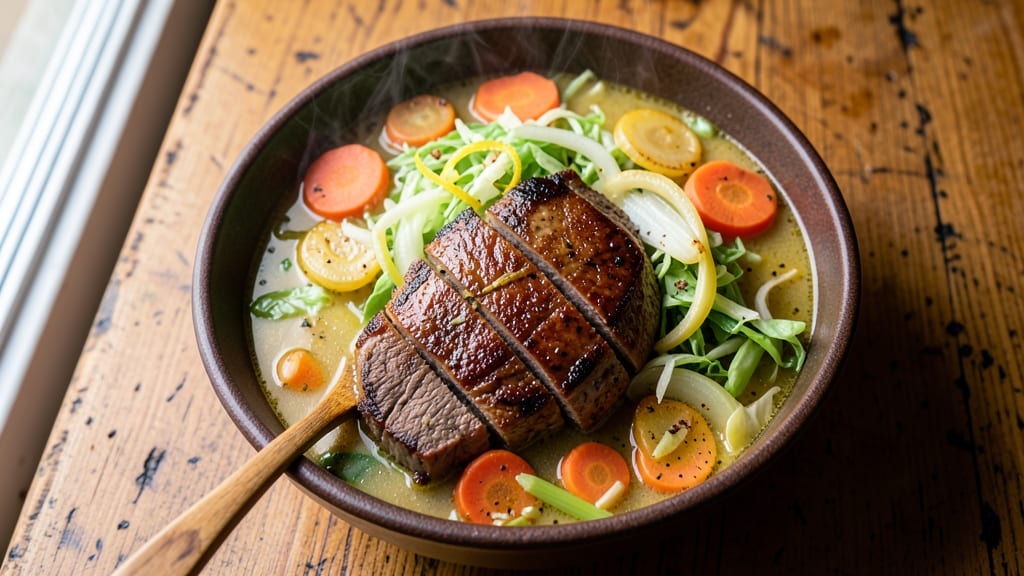
This Cracker Barrel beef cabbage soup recipe delivers the soul-warming comfort of a classic Southern one-pot meal in just under an hour. The secret lies in slow-simmered beef, tender cabbage, and a rich broth infused with aromatic herbs—just like the restaurant version you love.
I’ve perfected the technique to ensure every spoonful is packed with hearty flavor and tender textures, making it the ultimate foolproof weeknight dinner.
The beauty of this recipe is its simplicity: one pot, minimal prep, and no advanced skills required. You’ll start with a flavorful beef base, then build layers of savory goodness as the cabbage softens and the broth deepens.
The key is patience—letting everything simmer together transforms tough cuts into melt-in-your-mouth beef and cabbage that practically falls apart. It’s the kind of meal that feels like a hug in a bowl, perfect for chilly evenings or when you crave that restaurant-quality taste at home.
By the time you’re done, you’ll have a steaming pot of soup with tender beef chunks, perfectly cooked cabbage, and a broth so rich it’ll have everyone asking for seconds.
The aroma alone will fill your kitchen with warmth, and the first bite delivers that perfect balance of savory, slightly sweet, and herby notes. This is comfort food at its finest—hearty, satisfying, and impossible to resist.
Serve it with a side of warm biscuits (just like at Cracker Barrel) or a crusty loaf to soak up every last drop of that flavorful broth. The best part? Leftovers taste even better the next day, making it a meal prep favorite too. Let’s get cooking!
Ingredients for beef cabbage soup recipe cracker barrel
These hearty ingredients transform into restaurant-quality beef cabbage soup in one pot.
| Ingredient | Amount | Notes |
|---|---|---|
| Chuck Roast 🥩 | 1 ½ lb | Cut into 1-inch cubes |
| Green Cabbage 🥬 | 1 small head | Shredded, core removed |
| Carrots 🥕 | 4 medium | Peeled, sliced into rounds |
| Yellow Onion 🧅 | 1 whole | Diced, medium size |
| Celery Stalks 🥬 | 3 whole | Chopped, medium stalks |
| Garlic Cloves 🧄 | 4 cloves | Minced, fresh preferred |
| Beef Broth 💧 | 6 cups | Low-sodium preferred |
| Tomato Paste 🍅 | 2 tbsp | Smooth, canned |
| Dried Thyme 🌿 | 1 tsp | Or 1 tbsp fresh |
| Bay Leaves 🌿 | 2 whole | Dried, standard size |
| Salt 🧂 | 1 ½ tsp | Kosher or sea salt |
| Black Pepper 🌶️ | ½ tsp | Freshly ground |
| Olive Oil 🫒 | 2 tbsp | Extra-virgin preferred |
| Potatoes 🥔 | 2 medium | Peeled, cubed |
| Flour 🌾 | 1 tbsp | All-purpose, for thickening |
The chuck roast is non-negotiable here—it's the secret to that melt-in-your-mouth beef you crave. Look for well-marbled cuts at your local butcher or the meat department, and ask for it pre-cut if you're short on time. I always grab mine from Costco when I'm making a big batch, but the regular supermarket chuck works perfectly for a weeknight dinner. For the cabbage, green is best—it's more tender than red. Skip the pre-shredded bags though; whole heads keep better and you can shred exactly what you need. The carrots and celery? Fresh is best, but frozen works in a pinch if you're in a hurry. Just thaw them first.
No fresh thyme? Dried works at one-third the amount, but fresh has that restaurant-quality aroma. Short on beef broth? Chicken broth plus a bouillon cube gets you close, though the flavor won't be quite as rich. The tomato paste can be the squeeze-tube kind from Trader Joe's—it's perfect for this recipe and lasts forever. For the potatoes, Yukon Golds hold up best to the long simmer, but Russets work too. Want extra richness? Add a splash of red wine with the broth, or a spoonful of Worcestershire sauce for depth. The flour at the end is just to thicken things up slightly—don't skip it if your soup feels too watery.
This soup tastes even better the next day—make extra and freeze portions for quick meals. Store leftovers in the fridge for 4-5 days, or freeze for up to 3 months. I always portion mine into containers with a splash of broth so it reheats beautifully. The cabbage and potatoes will soften further when reheated, so don't overcook them initially. For serving, warm some crusty bread or biscuits—just like at Cracker Barrel. The aroma alone will have your whole house gathering around the table.
Why You'll Love This Recipe
- One-Pot Magic: I swear by this—dump everything in a single pot, let the chuck roast simmer until it falls apart, and suddenly you’ve got a meal that feels like a hug. No extra dishes, no fuss, just that deep, savory aroma filling your kitchen while you do whatever else needs doing.
- Umami Bomb: That slow-cooked chuck roast? It melts into the broth like butter, while the cabbage soaks up all the rich flavor—crisp at first, then tender with just the right chew. Honestly, the balance of sweet carrots, earthy celery, and that onion base makes it impossible to stop eating.
- Budget-Friendly Powerhouse: A chuck roast stretches for days, cabbage lasts forever, and carrots? You’ll use them all before they spoil. I’ll be real: this is the kind of meal that makes grocery money go further while still feeling like a treat—not some sad, watery pot of nothing.
Step-by-step instructions for Cracker Barrel beef cabbage soup
This hearty soup comes together in one pot with minimal effort—rich beef, tender veggies, and that perfect thickened broth.
Brown the Chuck Roast for Deep Flavor
Heat the 2 tablespoons olive oil in a large Dutch oven over medium-high heat. Pat the 1.5 lb chuck roast dry with paper towels and add it to the pot. Let it sear undisturbed for 4-5 minutes until a deep brown crust forms on all sides—this builds the foundation for rich flavor. Flip the roast and brown the other sides for another 3-4 minutes. Once browned, remove the roast and set it aside.
Here's the thing—don't rush this step. The longer you sear, the deeper the flavor. If your pan gets too crowded, work in batches. I like to press down gently on the roast with a spatula during the first minute to prevent curling, which ensures even contact with the hot oil.
Sauté the Vegetable Base
In the same Dutch oven, add the 1 whole yellow onion, 3 whole celery stalks, and 4 medium carrots, all chopped. Cook for 5-6 minutes until the onions soften and the carrots begin to caramelize slightly. Stir occasionally to prevent burning.
Next, add the 4 cloves minced garlic and cook for 30 seconds until fragrant—this prevents the garlic from burning, which would make the soup bitter. The vegetables should be tender but not mushy. If they start to stick, add a splash of water and scrape up any browned bits from the bottom of the pot. These bits are packed with flavor!
Build the Soup Foundation
Stir in the 2 tablespoons tomato paste and cook for 1 minute to deepen its flavor. Sprinkle the 1 tablespoon flour over the vegetables and stir to coat them evenly. This helps thicken the soup later and adds a subtle richness. Pour in the 6 cups beef broth, scraping up any browned bits from the bottom of the pot.
Add the 1.5 tsp salt, 0.5 tsp black pepper, 1 tsp dried thyme, and 2 whole bay leaves. Return the browned chuck roast to the pot. Bring everything to a gentle boil, then reduce the heat to medium-low and let it simmer uncovered for 30 minutes. This initial simmer allows the flavors to meld and the meat to begin tenderizing.
Add Potatoes and Cabbage for Hearty Texture
Peel and cube the 2 medium potatoes into ½-inch pieces and add them to the pot. Stir in the 1 small head shredded green cabbage. The cabbage should be cut into bite-sized pieces for even cooking. Increase the heat to medium-high and bring the soup back to a boil. Once boiling, reduce the heat to low and let it simmer for 25-30 minutes.
You'll know it's ready when the potatoes are fork-tender and the cabbage has softened but still holds its shape. If the soup looks too thin, you can remove the bay leaves and stir in a small amount of the 1 tablespoon flour mixed with 1 tablespoon cold water to thicken it slightly. Taste and adjust the seasoning if needed—this is where you can really make the soup your own.
Finish and Serve with Warmth
Remove the chuck roast from the pot and let it rest for 5 minutes before shredding it with two forks. Return the shredded meat to the soup and stir gently to combine. The soup should be thick and hearty, with tender meat and vegetables in every bite. Serve immediately in warm bowls, garnished with extra black pepper if desired.
This soup tastes even better the next day as the flavors continue to develop. Real talk: the first few bites are always the best, but the leftovers are just as comforting. Pair it with crusty bread to soak up every last drop of that rich, flavorful broth.
Pro Tips For Making Beef Cabbage Soup Recipe Cracker Barrel
- CRUST THE CHUCK ROAST: Pat the chuck roast bone-dry with paper towels before searing—this isn’t just about flavor, it’s about getting that deep, caramelized crust that’ll hold up through hours of simmering. I used to skip this, and the meat would turn out tender but bland. Trust me, the first 5 minutes in a screaming-hot pot with 2 tablespoons of oil make all the difference.
- CHOP CABBAGE SMALL: Cut the green cabbage into ½-inch pieces, not thick wedges—this isn’t stew, you want it to soften with the beef, not sit like a soggy afterthought. I learned this after serving a batch where the cabbage was still crunchy while the carrots turned to mush. Uniform size = even cooking.
- DON’T DROWN THE ONIONS: Sauté the onions, celery, and carrots until the onions turn golden—not just soft, but golden—before adding liquid. Rushing this step means you’ll end up with a pale, bland base. I know, it takes 8-10 minutes, but it’s the foundation of the soup.
- SALT THE WATER LIBERALLY: Season the broth before adding the meat—aim for 1½ teaspoons of salt per quart of water (yes, even if you’re using bouillon). The chuck roast soaks up flavor like a sponge, and if the broth starts bland, you’re fighting an uphill battle. Taste and adjust at the 2-hour mark; you can always add more, but you can’t take it out.
Regional styles of beef cabbage soup recipe cracker barrel
Southern Comfort Style
This recipe channels classic Southern cooking techniques that Cracker Barrel perfected—slow-simmered beef and tender cabbage in a rich, aromatic broth. The key is the chuck roast, which breaks down beautifully during the long simmer, creating melt-in-your-mouth texture.
I always add a splash of red wine (about ¼ cup) to the broth for depth, just like they do in many Southern kitchens. This variation also calls for smoked paprika (½ tsp) when browning the beef for that subtle smoky note you’d expect from a Southern restaurant. 🔥
German-Inspired Twist
For a nod to the dish’s European roots, swap the beef broth for a mix of beef and chicken broth (3 cups each) and add 2 slices of bacon, cooked until crispy, to the pot during the searing step.
Crumble the bacon into the soup along with 1 tsp caraway seeds (toasted lightly in a dry pan first) for an authentic German Kohlroulade flavor profile. The cabbage will soften beautifully, and the bacon adds a smoky richness that pairs perfectly with the hearty beef. 🌟
Cajun Bayou Version
Bring this soup to Louisiana with Cajun seasoning—add 1 tbsp when searing the beef and another 1 tsp when adding the broth. Stir in ½ tsp cayenne pepper for heat and a pinch of filé powder (made from ground sassafras leaves) at the end to thicken the broth naturally.
Serve with hot sauce on the side, just like at a Cajun roadside stand. The spicy kick cuts through the richness of the beef and cabbage beautifully. 🌶️
Slow-Cooker Adaptation
For a hands-off approach, brown the beef and vegetables as directed, then transfer everything to a 6-quart slow cooker. Add the remaining ingredients and cook on LOW for 8 hours or HIGH for 4-5 hours.
The slow cooker’s gentle heat ensures the beef becomes fork-tender without drying out, and the cabbage absorbs all the flavorful broth. This method is perfect for busy weeknights—just press a button and let it work its magic. ⏰
Creamy Potato Addition
For extra richness, stir in ½ cup sour cream or ½ cup Greek yogurt at the end of cooking, just before serving. The creaminess balances the hearty beef and cabbage, making each spoonful even more satisfying.
If you prefer a smoother texture, blend a portion of the soup (about 2 cups) before mixing it back in. This variation is a crowd-pleaser, especially on chilly days. 💛
Nutrition facts
Frequently asked questions
Can I substitute ground beef for chuck roast in this recipe?
While you can use ground beef, it won't give you the same tender, melt-in-your-mouth texture that slow-cooked chuck roast provides. If you must substitute, use 80/20 ground beef and brown it well with the onions and carrots. For best results, add 1 tablespoon Worcestershire sauce to the broth to enhance the beefy flavor.
How do I make this soup more flavorful if I don't have red wine or smoked paprika?
Try these easy swaps: Replace red wine with 1 teaspoon balsamic vinegar or ½ teaspoon liquid smoke for depth. For smoked paprika, add ½ teaspoon garlic powder and ½ teaspoon onion powder when browning the beef. Both combinations will give you that rich, savory flavor without changing the recipe's core.
Can I freeze this beef cabbage soup?
Let the soup cool completely, then portion it into airtight containers or freezer bags. It keeps for up to 3 months in the freezer. Thaw overnight in the fridge, then reheat on the stove over medium-low heat, stirring occasionally. The cabbage may soften further when reheated, but the flavor will be even richer.
Why did my cabbage turn mushy?
Overcooking is the most likely culprit. Cabbage should simmer for 25-30 minutes—no longer. If your soup is too thin, remove the bay leaves and stir in a slurry of 1 tablespoon flour + 1 tablespoon cold water instead of adding more cabbage. For extra texture, stir in ½ cup frozen peas at the end of cooking.
What's the best way to serve this soup like at Cracker Barrel?
Pair it with warm, buttery Cracker Barrel-style biscuits or a crusty sourdough loaf. For extra authenticity, sprinkle each bowl with grated Parmesan cheese and a dash of hot sauce on the side. The restaurant version often includes a side of pickles or coleslaw—great for balancing the hearty flavors.