
Soups & Stews
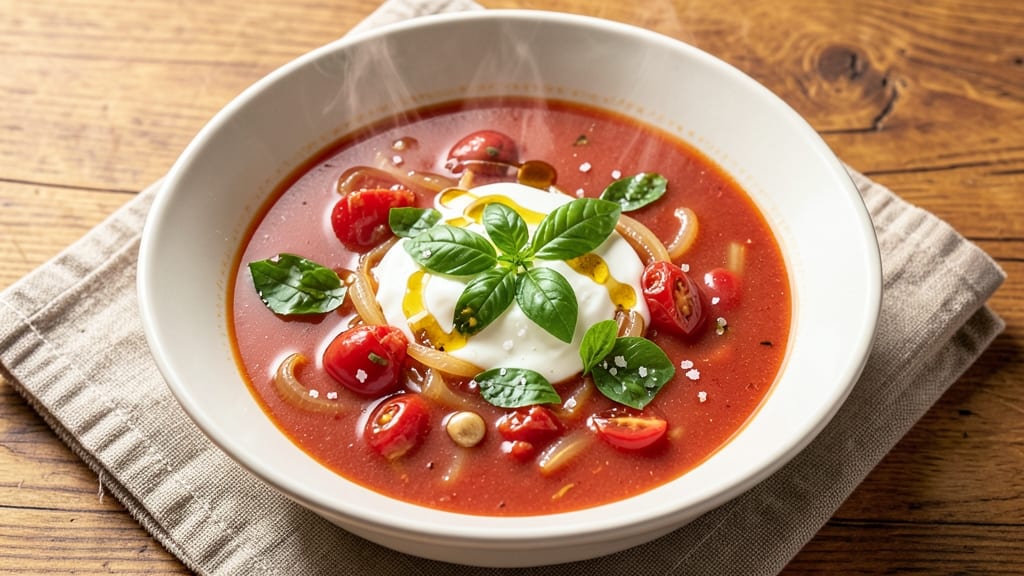
This basic tomato soup recipe delivers restaurant-quality velvety smoothness with just five simple ingredients and a touch of herbal sophistication. The secret lies in caramelizing onions and garlic before simmering them with crushed tomatoes—this creates a rich, deep flavor base that transforms into a silky, comforting soup.
I developed this version after years of testing, ensuring it’s foolproof whether you’re feeding a family or meal prepping for the week.
The process is straightforward but precise: sauté onions until golden, add garlic, then blend the cooked mixture with tomatoes and broth until perfectly smooth. A splash of cream or coconut milk at the end elevates the texture without overpowering the natural tomato sweetness.
This method guarantees a soup that’s creamy, aromatic, and packed with herbal depth—no blender shortcuts or canned tomato paste compromises.
By the time you’re done, you’ll have a bowl of velvety tomato soup with a delicate balance of sweetness and acidity, finished with optional garnishes like fresh basil, grated Parmesan, or crispy croutons.
The aroma alone will transform your kitchen into a cozy haven, perfect for chilly evenings or lazy weekends. Ready in under 45 minutes, this recipe proves homemade comfort food doesn’t require complicated techniques.
Serve it alongside grilled cheese for a classic pairing, or enjoy it as a light lunch with a side salad. The beauty of this recipe is its adaptability—use fresh tomatoes in summer, canned for convenience, or even sun-dried for an extra layer of intensity.
Here’s how to make it perfectly every time.
Ingredients for basic tomato soup
Five core ingredients plus a few finishing touches. Pantry staples with a touch of freshness.
| Ingredient | Amount | Notes |
|---|---|---|
| Yellow Onions 🧅 | 2 whole | Medium, thinly sliced |
| Garlic Cloves 🧄 | 4 cloves | Peeled, minced |
| Crushed Tomatoes 🍅 | 28 oz | San Marzano preferred |
| Vegetable Broth 💧 | 4 cups | Low-sodium preferred |
| Heavy Cream 🥛 | ½ cup | Full-fat for richness |
| Fresh Basil Leaves 🌿 | ¼ cup | Chopped, for garnish |
| Extra-Virgin Olive Oil 🫒 | 2 tbsp | For sautéing onions |
| Salt 🧂 | 1 ½ tsp | Kosher or sea salt |
| Black Pepper 🌶️ | ½ tsp | Freshly ground preferred |
| Sugar 🍯 | ½ tsp | Balances acidity |
| Fresh Thyme Leaves 🌿 | 1 tbsp | Or 1 tsp dried thyme |
| Parmesan Cheese 🧀 | ¼ cup | Freshly grated for serving |
The onions and garlic are non-negotiable here. Yellow onions work best—they caramelize beautifully without turning bitter. Grab a bunch from Trader Joe's or your local market for the freshest flavor. Garlic should be firm and free of sprouts. The crushed tomatoes? San Marzano is the gold standard—sweeter, meatier, and less acidic than regular brands. If you can't find it, Muir Glen plain crushed tomatoes are a solid backup. They're canned, but the quality shows in the final soup. For the broth, low-sodium is key—you'll be adding salt later, and you don't want to overdo it.
No fresh thyme? Dried thyme at one-third the amount works in a pinch, but fresh gives that bright herbal note. Running low on heavy cream? Coconut milk adds a subtle sweetness, though the texture will be slightly lighter. The sugar might seem odd, but it's crucial—1/2 teaspoon balances the acidity in the tomatoes without making the soup taste sweet. Pre-grated Parmesan is convenient, but freshly grated from a block melts better and tastes richer. The basil? Fresh is ideal, but dried works if you're in a bind—just use 1/4 teaspoon instead of the chopped leaves. And if you're short on time, baby spinach can replace half the basil in a pinch.
This soup reheats beautifully—just warm it gently on the stove or microwave with a splash of water. Keeps for 5 days in the fridge, though it's best within 3 days for peak flavor. Freezes for 3 months, but the texture might get slightly watery after thawing. I always make a double batch—one for dinner, one for lunch the next day. Garnish with extra Parmesan and basil right before serving, because those flavors fade fast once the soup sits. The aroma alone makes the kitchen feel like a cozy restaurant, so don't skip the finishing touches.
Why You'll Love This Recipe
- No Chopping Nightmare: I swear by this recipe because you only need to dice one onion and mince a few garlic cloves. The crushed tomatoes do all the heavy lifting—no peeling, no seeding, just dump and stir. Honestly, I’ve made this on days when I couldn’t even be bothered to wash my hands properly.
- Creamy-Garlicky Magic: That moment when the heavy cream swirls into the simmered tomatoes? Pure satisfaction. The garlic softens just enough to melt into the broth while keeping enough bite to make it sing—like a hug in a bowl, but with way more flavor.
- Leftovers That Don’t Suck: This soup actually tastes better the next day. Between us, I’ve reheated mine three times without a single complaint. The flavors meld into this rich, velvety consistency that’s perfect for lazy lunches or throwing together with grilled cheese when you’re too tired to cook.
- Budget Meal for Any Occasion: You’re paying for the heavy cream, but everything else? Pantry staples. A can of tomatoes, some broth, onions, garlic—stuff you’d buy anyway. I’ve served this to skeptical in-laws (they loved it) and as a quick dinner after work (still loved it). It’s the kind of dish that works for both.
Step-by-step instructions for basic tomato soup
Here's how to make velvety tomato soup with rich herbal notes—simple steps for perfect results.
Sauté Onions and Garlic Until Soft
Heat the 2 tablespoons extra-virgin olive oil in a large pot over medium heat. Add the 2 whole yellow onions, sliced, and cook for 5 minutes until they begin to soften and turn translucent. This is where the flavor foundation builds—don't rush it.
After the onions soften, add the 4 cloves garlic cloves, minced, along with the 1 tablespoon fresh thyme leaves. Stir for 1 minute until the garlic becomes fragrant but doesn't brown. The thyme will infuse the onions with its earthy aroma, giving the soup depth. If the onions start to stick, add a splash of water and scrape the bottom with a wooden spoon to release any browned bits—those add flavor too.
Simmer Tomatoes and Broth
Pour in the 28 ounces crushed tomatoes and stir to combine with the onions. Let the mixture simmer for 5 minutes to meld the flavors. Then, add the 4 cups vegetable broth, the 1.5 teaspoons salt, 0.5 teaspoon black pepper, and 0.5 teaspoon sugar. The sugar balances the acidity of the tomatoes, so don't skip it.
Bring everything to a gentle boil, then reduce the heat to low and let it simmer uncovered for 20 minutes. You'll see the soup thicken slightly as the liquid reduces. Stir occasionally to prevent sticking, and taste after 15 minutes—if it needs more salt, adjust now. The soup should be smooth but not overly thick at this stage; we'll fix that next.
Blend Until Silky Smooth
Use an immersion blender to puree the soup directly in the pot. Work in batches if needed, blending until completely smooth. If you don't have an immersion blender, carefully transfer the soup to a countertop blender, filling it only halfway to avoid overflow. Blend until no chunks remain—this is where the soup transforms from rustic to velvety.
Return the blended soup to the pot and stir in the 0.5 cup heavy cream. Heat gently over low heat for 3-4 minutes until warmed through. The cream adds richness without overpowering the tomato flavor. Taste again and adjust seasoning if needed—this is your chance to fine-tune the balance of salt, acid, and sweetness.
Finish with Herbs and Cheese
Remove the pot from heat and stir in the 0.25 cup chopped fresh basil leaves. Let the soup sit for 5 minutes to steep—this infuses the basil's bright, fresh flavor without overpowering. The basil should brighten the soup, not dominate it.
Ladle the soup into bowls and top each serving with 1 tablespoon freshly grated parmesan cheese. The parmesan adds a salty, umami finish that ties everything together. Serve immediately while warm, with crusty bread on the side. The soup will thicken slightly as it cools, so enjoy it while it's at its peak—creamy, aromatic, and perfectly balanced.
Pro Tips For Making Basic Tomato Soup
- Sweat the Onions First: I used to rush this step and end up with raw onion bits floating in my soup—no one wants that. Get your onions over medium heat with a splash of broth or water, cover the pot, and let them soften for 5-7 minutes. They’ll break down better and add depth without bitterness.
- Minimize the Garlic Burn: After burning three batches, I finally figured out: add the garlic after the onions have already softened. Sauté it for just 30 seconds—until it smells heavenly but isn’t browned. Overcooking turns it bitter, and trust me, you’ll taste it.
- Salt the Broth Early: This isn’t the prettiest method, but it’s the tastiest. Season the vegetable broth before adding the crushed tomatoes. The salt will penetrate better, and you’ll avoid that flat, one-dimensional flavor that happens when you wait until the end.
- Strain the Cream: Sounds weird, but it works: if you’re using heavy cream, strain it through a fine-mesh sieve before adding it to the soup. This removes any watery separation or impurities, giving you a smoother, richer finish—no clumps, just pure velvety goodness.
Storing and reheating this dish
Fridge Storage Essentials
Let your soup cool completely before transferring it to an airtight container—I use glass Pyrex with snap-on lids for best results. Store in the refrigerator at 40°F or below for up to 5 days, though I recommend enjoying it within 3 days for peak flavor.
The onions and garlic will continue developing depth, while the basil retains its brightness longer than you'd expect. 🌿
Always leave ½ inch of headspace in the container to prevent spills during reheating. If the soup thickens significantly overnight, add 1-2 tablespoons of water or broth when reheating to restore the perfect consistency. I like to portion it into individual mason jars for easy grab-and-go lunches.
Freezer-Friendly Tips
This soup freezes beautifully for up to 3 months, but texture changes are inevitable. For best results, use quart-sized freezer bags—they're stackable and thaw faster than containers. Squeeze out excess air to prevent freezer burn, and label with the date.
I add a splash of olive oil to the top before freezing to protect the surface from drying out. 🥶
When ready to use, thaw overnight in the fridge or use the microwave's defrost setting for 3-4 minutes. Never refreeze thawed soup—once it's been warmed, the texture degrades quickly. For a quick meal, I often freeze portions in silicone molds for single-serving convenience.
Reheating Like a Pro
Stovetop reheating preserves texture best. Gently warm over low heat for 5-7 minutes, stirring occasionally. If the soup looks too thick, add 1-2 tablespoons of broth to loosen it.
I avoid high heat to prevent the cream from separating. For microwave reheating, cover with a microwave-safe lid and heat on 50% power for 2-3 minutes, stirring halfway. 🔥
Always taste after reheating—this is your chance to adjust seasoning. A pinch of salt or a squeeze of lemon often brings it back to perfection. The cream may separate slightly, so stir vigorously before serving.
For extra richness, add a dash of heavy cream or a pat of butter at the end.
Garnish Refreshers
Fresh garnishes make reheated soup feel brand new. Top with freshly grated Parmesan (about 1 tablespoon per bowl) and chopped basil right before serving. The basil's aroma is most potent when added fresh.
For texture contrast, sprinkle with toasted breadcrumbs or crispy fried shallots—they add a satisfying crunch. 🧀
Need a quick fix? A drizzle of high-quality olive oil and red pepper flakes elevate reheated soup instantly. For a smoky twist, add a pinch of smoked paprika or a dash of hot sauce. These finishing touches transform leftovers into a restaurant-worthy meal every time.
Nutrition facts
Frequently asked questions
Can I make this tomato soup without blending?
Skip the blending step and simply mash the cooked tomatoes with a potato masher or immersion hand blender for a rustic texture. The soup will be chunkier but still delicious—great for families who prefer texture. Just simmer the onions, tomatoes, and broth longer (about 30 minutes) to break down the tomatoes naturally.
What if I don't have heavy cream?
Use ½ cup coconut milk for a dairy-free option, or ¼ cup Greek yogurt for tangy richness. For a lighter version, stir in 2 tablespoons butter at the end. The cream adds velvety texture, but these alternatives work beautifully—just adjust seasoning slightly after adding.
How can I make this soup spicier?
Add ½ teaspoon red pepper flakes while simmering the tomatoes, or stir in 1 teaspoon hot sauce at the end. For smoky depth, sprinkle with ½ teaspoon smoked paprika when reheating. Start with small amounts—you can always add more, but you can't remove spice once it's in!
Can I use fresh tomatoes instead of crushed?
Yes, but you'll need about 6-8 medium ripe tomatoes. Roast them first (halved, skin-side up at 400°F for 20 minutes) for concentrated sweetness, then peel, seed, and chop before adding to the pot. Fresh tomatoes work best in summer when they're at peak flavor—just expect slightly more acidity, so you may need ¾ teaspoon sugar instead.
Why did my soup turn out too acidic?
Most likely, the tomatoes were too tart or you skipped the sugar. Next time, balance acidity by adding ½ teaspoon sugar (or 1 teaspoon honey) while simmering, or stir in 1 teaspoon lemon juice at the end. For future batches, try San Marzano crushed tomatoes—they're naturally sweeter than other brands.