
Soups & Stews
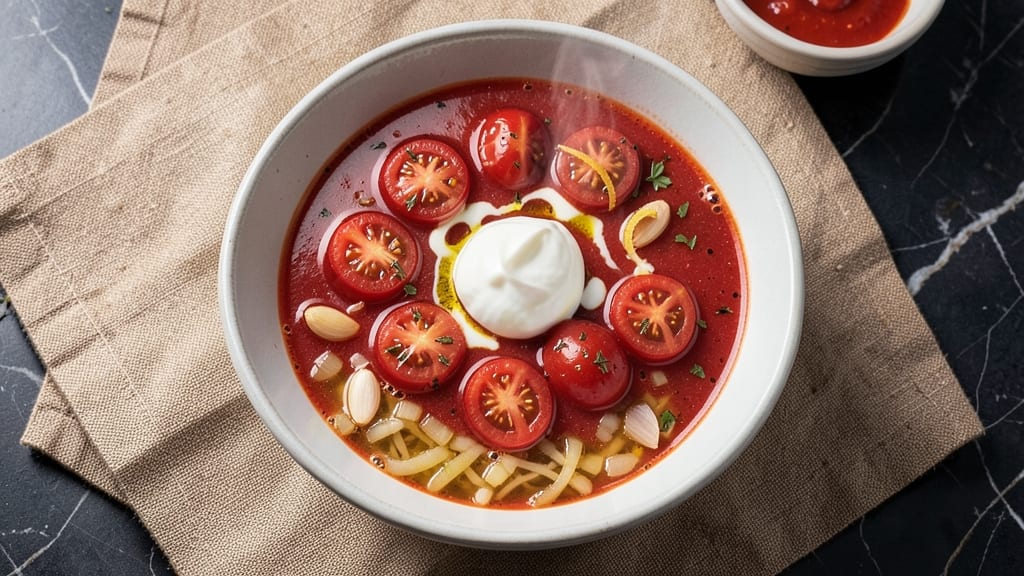
This basic tomato soup recipe with fresh tomatoes transforms summer's bounty into a velvety, aromatic bowl that tastes like a sun-warmed garden. The secret lies in slow-cooked tomatoes that release their natural sweetness while building deep, savory layers—no canned shortcuts needed.
I've perfected this method over years of testing, ensuring every spoonful delivers that perfect balance of acidity and richness.
The foundation begins with sautéing onions and garlic until golden, creating the aromatic base that carries through every bite. Fresh tomatoes—peeled, seeded, and simmered low and slow—develop a complexity that canned versions simply can't match.
A touch of cream or coconut milk (for vegan versions) adds luxurious body without overpowering the bright tomato flavor. This soup is the ultimate blank canvas: simple enough for weeknights but elegant enough for company.
What you'll end up with is a silky-smooth soup with vibrant red color and a depth of flavor that improves with each passing day. The texture is perfectly balanced—creamy but not heavy, bright but not tart—thanks to careful simmering and blending.
Garnish with fresh basil, a drizzle of olive oil, or crispy bread croutons to elevate it from comforting to extraordinary.
Versatile enough for any season, this recipe adapts effortlessly to dietary needs. Swap butter for olive oil, use vegetable broth instead of chicken, or add a pinch of red pepper flakes for heat.
The method remains the same, proving that great soup doesn't require complicated techniques—just quality ingredients and patience. Let's get cooking!
Ingredients for basic tomato soup recipe with fresh tomatoes
Fresh tomatoes, aromatic onions, and rich cream create a velvety soup bursting with summer's bright, vibrant flavor.
| Ingredient | Amount | Notes |
|---|---|---|
| Fresh Tomatoes 🍅 | 2 lb | Ripe, preferably heirloom varieties |
| Yellow Onion 🧅 | 1 whole | Medium size, diced finely |
| Garlic Cloves 🧄 | 4 cloves | Freshly minced for maximum aroma |
| Unsalted Butter 🧈 | 4 tbsp | Cold, cut into small pieces |
| Heavy Cream 🥛 | ½ cup | Full-fat for rich texture |
| Chicken Broth 💧 | 4 cups | Low-sodium preferred |
| Extra-Virgin Olive Oil 🫒 | 2 tbsp | For sautéing and finishing |
| Fresh Basil Leaves 🌿 | ¼ cup | Chopped for garnish |
| Salt 🧂 | 1 ½ tsp | Diamond Crystal kosher salt |
| Black Pepper 🌶️ | ½ tsp | Freshly cracked |
| Sugar 🍯 | 1 tsp | Balances acidity |
| Red Wine Vinegar 🍷 | 1 tbsp | Brightens the flavor |
The tomatoes are the heart of this soup—heirloom varieties have the best depth of flavor, but any ripe tomatoes will work. Local farmers markets often have the freshest selection, but the grocery store's produce section is fine too. Look for tomatoes that are firm with a vibrant color—no soft spots. The yellow onion should be sweet, not bitter, and the garlic should smell pungent and fresh. For the broth, low-sodium options prevent over-salting, and the heavy cream adds that luxurious texture without overpowering the tomato flavor. If you're using a vegan version, coconut milk works beautifully as a substitute.
No heirloom tomatoes? Regular beefsteak or Roma tomatoes are excellent stand-ins. The onion can be swapped for shallots if you prefer a milder flavor, but the garlic is non-negotiable—it's the flavor anchor. For a dairy-free version, coconut cream or cashew cream adds richness without dairy. The red wine vinegar is key for brightness, but if you don't have it, a splash of lemon juice works in a pinch. The extra-virgin olive oil should be fruity and peppery—avoid the mild, cheap varieties. If you're short on time, a quick sauté in butter works, but olive oil adds a more complex flavor profile.
This soup tastes even better the next day as the flavors meld together. Store leftovers in an airtight container in the fridge for up to 5 days, or freeze for 3 months in portion-sized containers. The basil wilts quickly, so add it fresh just before serving. For a make-ahead tip, prep the soup without the cream and basil, then stir in the cream and garnish when ready to eat. The homemade tomato base also freezes beautifully—just thaw and reheat with fresh broth and cream.
Why You'll Love This Recipe
- I swear by this trick: toss whole tomatoes in boiling water for 30 seconds, then peel and chop. That’s it. No knife skills required—just a bowl of warm water and a spoon.
- No-Chop Shortcut: I swear by this trick: toss whole tomatoes in boiling water for 30 seconds, then peel and chop. That’s it. No knife skills required—just a bowl of warm water and a spoon.
- Creamy-Garlic Hug: The butter and heavy cream turn this into something rich and velvety, but the garlic? Oh, it’s the star—softly cooked until it’s just shy of bitter, then simmered into the soup until every spoonful feels like a warm embrace.
- Leftovers That Shine: This soup actually tastes better the next day. Honestly, I make double batches on Sundays because reheating it with a splash of milk or broth makes it even smoother—no one ever guesses it’s been sitting in the fridge.
Step-by-step instructions for fresh tomato soup
Transform garden-fresh tomatoes into velvety soup with rich depth and bright acidity.
Sauté Aromatics Until Fragrant
Heat the 2 tablespoons extra-virgin olive oil in a large pot over medium heat. Add the 1 whole yellow onion, diced finely, and cook for 5-6 minutes until soft and translucent. You'll see the onion edges begin to caramelize slightly—that's when you know it's ready for the next step.
Add the 4 cloves garlic cloves, freshly minced, and cook for another 30 seconds until fragrant but not browned. Garlic burns quickly, so watch closely. Remove the pot from heat for just a moment to let the raw garlic aroma settle—this prevents bitterness in your finished soup.
Build the Tomato Base
Return the pot to medium heat and add the 4 tablespoons cold unsalted butter in small pieces. Let it melt completely, then add the 2 lb fresh tomatoes. I like to crush them slightly with my hands in the pot—this releases their juices and helps create a smoother texture without needing a blender later.
Cook for 10-12 minutes until the tomatoes break down and the mixture thickens. You're looking for a rich, jammy consistency where the raw tomato flavor transforms into something deeper and more complex. Stir occasionally to prevent sticking, especially when the butter caramelizes.
Season and Simmer for Depth
Add the 4 cups chicken broth, 1.5 teaspoons salt, 0.5 teaspoon black pepper, 1 teaspoon sugar, and 1 tablespoon red wine vinegar. Bring to a gentle boil, then reduce heat to low and let it simmer uncovered for 20-25 minutes. This slow cooking allows the flavors to meld and develop that garden-fresh tomato essence.
Taste occasionally during this time. You'll notice the acidity brightens as the liquid reduces. The sugar helps balance any tartness from the tomatoes or vinegar, while the vinegar adds a subtle tang that prevents the soup from tasting flat. If it looks too thick, add ¼ cup water to reach your preferred consistency.
Finish with Cream and Fresh Herbs
Remove the pot from heat and stir in the 0.5 cup heavy cream until fully incorporated. The cream adds richness without overpowering the tomato flavor. For a smoother texture, you can blend the soup now with an immersion blender, but I prefer leaving it slightly rustic with visible tomato flecks for texture contrast.
Finally, stir in the 0.25 cup chopped fresh basil leaves. The basil adds a bright, fresh finish that cuts through the creaminess. Taste and adjust seasoning if needed—sometimes the basil needs a pinch more salt to balance its freshness. Let the soup sit for 5 minutes before serving to allow the flavors to fully integrate.
Pro Tips For Making Basic Tomato Soup Recipe With Fresh Tomatoes
- Sear the Onion Low: Skip the high-heat rush—sauté the diced onion in butter over medium-low for 10-12 minutes until it’s soft and golden, not browned. I used to crank the heat and end up with a burnt taste that ruined the whole soup. Patience here means deeper flavor later.
- Blanch Tomatoes First: Drop whole tomatoes into boiling water for 30 seconds before peeling and chopping. The skin slips off like magic, and you avoid the mess of cutting around stubborn patches. (Yes, even if you’re impatient like me—just don’t overcook them.)
- Salt the Cream Early: Stir a pinch of salt into the heavy cream before adding it to the soup. This stops the final taste from tasting flat or overly rich—like when you forget and the soup ends up tasting like buttered cardboard. Trust me, it makes a real difference.
- Strain for Smoothness: If you want a silky texture, strain the cooked tomato base through a fine-mesh sieve before mixing in the cream. It’s extra work, but the result is restaurant-quality without the lumps. (I skip this when I’m lazy, but the dish is noticeably better when I don’t.)
Essential equipment for great basic tomato soup recipe with fresh tomatoes
Large Pot or Dutch Oven
A 6-8 quart Dutch oven or heavy-bottomed pot is ideal for this recipe because it distributes heat evenly and prevents scorching during the 20-25 minute simmer. I use my Le Creuset signature Dutch oven—it retains heat beautifully and handles temperature changes gracefully.
If you don’t have one, a stainless steel stockpot with a tight-fitting lid works just as well. 🌡️
Immersion Blender
An immersion blender is my go-to tool for achieving that silky texture without transferring hot liquid to a countertop blender. The Ninja QN301 is my top recommendation—it handles thick soups effortlessly and has a variable speed control for precise blending.
If you prefer a smoother finish, blend after adding the cream but before stirring in the basil. For a rustic look, skip blending entirely and enjoy the chunky texture.
Fine-Mesh Strainer
A fine-mesh strainer (like the OXO Good Grips) is essential if you prefer a completely smooth soup without any seeds or skins. Place it over a large bowl and gently press the cooked tomatoes through to remove any fibrous bits.
This step isn’t mandatory—many traditional tomato soups embrace texture—but it’s a game-changer for ultra-smooth results. I use it when serving the soup to kids or guests who prefer a velvety consistency. 💫
Wooden Spoon
A heat-resistant wooden spoon (I love the OXO Good Grips) is perfect for stirring the soup without scratching your pot. Wood naturally releases moisture, which helps prevent burning when scraping the bottom.
Avoid metal spoons during the tomato breakdown phase—they can react with the acidity and leave a metallic taste. A silicone spatula also works well, but wood adds a rustic touch to your kitchen toolkit.
Measuring Spoons
Precision matters when balancing flavors, so invest in a set of stainless steel measuring spoons (like Weston Pro Series). The ½ teaspoon black pepper and 1 teaspoon sugar make a noticeable difference in brightness and acidity.
A kitchen scale is optional but helpful for measuring the 1.5 teaspoons salt—Diamond Crystal kosher salt packs differently than table salt, so accuracy ensures perfect seasoning. 🧂
Cheesecloth (Optional)
For an extra-smooth finish, use cheesecloth to strain the soup a second time after blending. Line a fine-mesh strainer with cheesecloth and gently pour the soup through to remove any remaining bits. This step is purely optional but elevates the soup to restaurant-quality.
I keep a muslin cloth in my kitchen for this purpose—it’s versatile and reusable for everything from straining broths to dusting cakes. ✨
Nutrition facts
Frequently asked questions
Can I use canned tomatoes instead of fresh?
While fresh tomatoes create the deepest flavor, you can absolutely use canned tomatoes in a pinch! For best results, choose high-quality crushed tomatoes (not diced) and add 1 extra tablespoon of sugar and ½ teaspoon more red wine vinegar to compensate for the less vibrant acidity. Simmer for 15 minutes longer to develop the flavors since canned tomatoes have less natural sweetness.
How do I prevent my tomato soup from being too acidic?
The key is balancing acidity with sweetness. If your tomatoes taste particularly tart, add ½ teaspoon extra sugar during the simmering phase or a splash of vegetable broth to dilute the acidity. For ripe tomatoes, the natural sweetness should balance out—just taste as you go! If it's still too sharp, a pinch of cream or a sprinkle of fresh herbs can help mellow the flavor.
Can I make this soup ahead of time?
This soup tastes even better the next day as flavors meld! Store in an airtight container in the fridge for up to 5 days. For freezing, omit the cream and basil, then reheat gently and stir them in before serving. The texture remains creamy after reheating, though you may need to add a splash of broth if it thickens too much.
What's the best way to make it vegan?
Swap the butter for 2 tablespoons olive oil, use vegetable broth, and replace the heavy cream with ½ cup coconut milk or cashew cream. For extra richness, add 1 tablespoon nutritional yeast when blending. The flavor remains vibrant while staying completely plant-based!
Why does my tomato soup taste bitter?
Bitterness usually comes from overcooking the garlic or letting the tomatoes simmer too long. Remove the pot from heat immediately after adding garlic, and never let the soup boil vigorously after adding tomatoes. If it's already bitter, stir in 1 teaspoon sugar or a pinch of salt to balance, or add a splash of vinegar to cut through the harshness.