
Soups & Stews
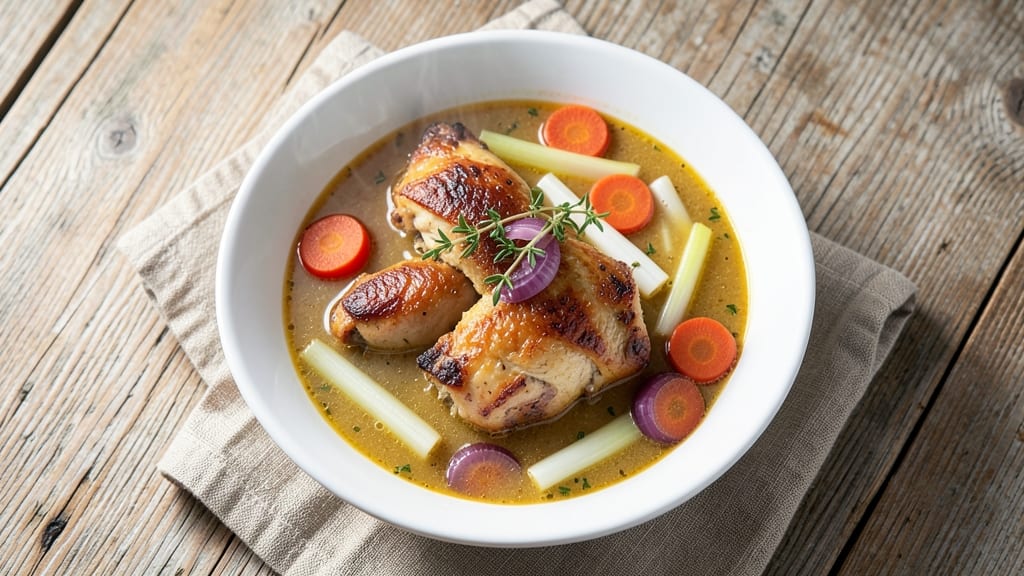
This Babish chicken soup recipe delivers the soul-warming comfort of Eastern European tradition in every spoonful—rich, aromatic broth, tender chicken, and fluffy herb dumplings that transform a simple meal into a celebration.
The secret lies in slow-cooked depth, where onions caramelize into sweetness, thyme infuses earthy warmth, and bay leaves lend subtle complexity. I developed this version after years of perfecting the balance between rustic simplicity and restaurant-quality flavor, ensuring every bite feels like home.
The foundation begins with a properly browned chicken, which forms the backbone of the broth, while vegetables like carrots and celery add natural sweetness and texture. Herb dumplings—made with flour, eggs, and fresh dill—absorb the savory broth while staying light and tender, creating the signature Babish touch.
The key is patience: letting the soup simmer for hours allows flavors to meld into a harmonious blend that’s both comforting and sophisticated.
What sets this recipe apart is the attention to detail—clarifying the broth for a velvety finish, adjusting seasoning gradually, and finishing with fresh parsley for brightness.
The result is a soup that’s hearty enough for winter nights but elegant enough for company, with each spoonful offering layers of smoky, herby, and umami richness. Serve with crusty rye bread or a simple salad to complete the meal.
Whether you're recreating family traditions or introducing someone to Babish-style cooking, this recipe delivers foolproof results with professional-level flavor. The dumplings are the star, but the broth—built from scratch—is what truly makes it special. Let’s get cooking.
Ingredients for babish chicken soup
Sixteen ingredients transform into a restaurant-quality Eastern European masterpiece with smoky dumplings.
| Ingredient | Amount | Notes |
|---|---|---|
| Chicken Thighs 🍗 | 2 ½ lb | Bone-in, skin-on preferred |
| Yellow Onions 🧅 | 2 whole | Medium size, sliced thin |
| Carrots 🥕 | 4 medium | Peeled, cut into chunks |
| Celery Stalks 🧄 | 4 whole | Cut into 1-inch pieces |
| Garlic Cloves 🧄 | 6 cloves | Minced for depth of flavor |
| Fresh Thyme 🌿 | 2 tbsp | Leaves only, chopped fine |
| Fresh Dill 🌿 | ¼ cup | Chopped for dumplings |
| Bay Leaves 🍃 | 2 whole | For subtle complexity |
| All-Purpose Flour 🌾 | 2 cups | For dumpling dough |
| Large Eggs 🥚 | 2 whole | Room temperature for binding |
| Salt 🧂 | 2 tsp | Diamond Crystal preferred |
| Black Peppercorns 🌶️ | 1 tsp | Freshly cracked for heat |
| Fresh Parsley 🌿 | 0.15 cup | Chopped for garnish |
| Vegetable Oil 🫒 | ¼ cup | For browning chicken |
| Chicken Broth 💧 | 6 cups | Homemade or high-quality store-bought |
The chicken thighs are non-negotiable here—bone-in, skin-on delivers the richest flavor and gelatinous broth. Look for free-range or organic at specialty markets like Whole Foods or Trader Joe's for superior quality. Carrots and celery should be fresh, firm, and vibrant—avoid any with soft spots or wilted tops. The thyme and dill? Fresh is essential—dried simply can't replicate that bright, herbal punch. For the broth, homemade is ideal, but Pacific Foods or Swanson brands work in a pinch if you're short on time. Bay leaves should be whole and fragrant—never dried and crumbly.
No fresh thyme? Dried at one-third the amount works, but the flavor profile shifts slightly. Substituting celery root for celery adds a nutty depth, though texture changes. The dumpling dough requires all-purpose flour—King Arthur or Bob's Red Mill are excellent choices. For the broth, vegetable broth can replace chicken broth if needed, though flavor will differ. Fresh parsley is ideal for garnish, but dried parsley at half the amount suffices if you're out. The vegetable oil should have a high smoke point—avocado or grapeseed oil are perfect for browning the chicken without burning.
Store the chicken broth base in the fridge for up to 5 days or freeze for 3 months—it only gets better with time. Dumpling dough can be prepped ahead and refrigerated for 24 hours, though fresh is always superior. Fresh herbs like dill and parsley should be wrapped in damp paper towels and stored in resealable bags for up to 5 days. The browned chicken can be refrigerated for 3 days before adding to the soup. For a crowd-friendly version, double the dumpling dough and broth—this soup scales beautifully for gatherings.
Why You'll Love This Recipe
- One-Pot Magic: I swear by this recipe—just dump everything in one pot, and the chicken thighs practically melt into flavor while the veggies soften perfectly. No extra bowls, no stress.
- Garlic Bomb Flavor: That minced garlic? Oh, it’s there—warm, punchy, and lingering in every spoonful, especially when it caramelizes just enough to coat the carrots and celery.
- Lunchbox Hero: Honestly, this soup’s so adaptable I make it for sick days, potlucks, or even packed lunches (yes, it reheats like a dream). Add noodles or crackers, and suddenly you’ve got a meal for anyone.
- Pantry Savior: Between us, chicken thighs are cheap, and this recipe stretches for days—my freezer’s always stocked with portions. Toss in whatever veggies you’ve got, and it’s still ridiculously good.
Step-by-step instructions for smoky herb dumplings in savory broth
Master this technique for rich, aromatic broth and pillowy dumplings that soak up every flavor.
Brown the Chicken for Maximum Flavor
Pat the 2.5 lb chicken thighs dry with paper towels—this ensures a proper sear. Heat 0.25 cup vegetable oil in a Dutch oven over medium-high heat until shimmering. Working in batches if needed, add the chicken thighs skin-side down and cook undisturbed for 8-10 minutes until the skin is deep golden brown and crispy.
Flip the thighs and cook for another 5-6 minutes until the internal temperature reaches 165°F. Remove the chicken and set aside, leaving the rendered fat in the pot. This golden crust forms the flavor foundation of your soup—don't rush this step. If the fat becomes too dark, reduce heat slightly to prevent burning.
Build the Aromatic Vegetable Base
In the same Dutch oven, add 2 whole yellow onions (sliced thin), 4 medium carrots (cut into chunks), and 4 whole celery stalks (cut into 1-inch pieces). Cook over medium heat for 8-10 minutes, stirring occasionally, until the vegetables soften and begin to caramelize—this should happen before they brown.
Add 6 cloves garlic cloves (minced) and 2 tbsp fresh thyme (chopped), cooking for 1 minute until fragrant. Stir in 2 whole bay leaves and pour in 6 cups chicken broth, scraping up any browned bits from the bottom. Bring to a gentle simmer, then return the chicken thighs to the pot. Partially cover and cook for 30 minutes to infuse the broth with chicken flavor.
Prepare the Herb Dumpling Dough
In a medium bowl, whisk together 2 cups all-purpose flour, 2 whole large eggs, 2 tsp salt, and 1 tsp black peppercorns (cracked) until just combined. Fold in 0.25 cup fresh dill (chopped) and 0.15 cup fresh parsley (chopped), mixing until evenly distributed. The dough should hold together when pressed but remain slightly crumbly—this texture is ideal for tender dumplings.
Cover the dough and let it rest at room temperature for 15 minutes while the broth simmers. This resting period allows the flour to hydrate fully, ensuring the dumplings will be light and pillowy rather than dense. If the dough feels too dry, add 1 tablespoon ice water at a time until it comes together.
Poach the Dumplings to Perfection
Using a 1-tablespoon scoop, drop the dumpling dough into the simmering broth, spacing them 1 inch apart to allow room to expand. The broth should remain at a gentle simmer—if it boils vigorously, reduce heat to maintain even cooking. Cover the pot and cook for 12-15 minutes until the dumplings are fully cooked through and the broth has thickened slightly.
To test doneness, remove one dumpling with a slotted spoon and slice it open—it should be tender and fluffy with no raw flour visible. The dumplings should float effortlessly in the broth, indicating they've absorbed enough liquid to become light and airy. If they sink to the bottom, they need more time.
Finish and Serve with Confidence
Remove the chicken thighs from the broth and let them rest for 5 minutes before shredding the meat with two forks. Skim any excess fat from the surface of the broth, then return the shredded chicken to the pot. Taste and adjust seasoning with additional salt or black peppercorns if needed—this step ensures the soup is perfectly balanced.
Ladle the soup into bowls, garnishing each serving with a few fresh parsley leaves and a sprinkle of fresh dill for brightness. Serve immediately with crusty bread to soak up every last drop of that smoky, herb-infused broth. The dumplings should be tender yet hold their shape, and the broth rich enough to coat the back of a spoon without being gluey.
Pro Tips For Making Babish Chicken Soup
- Brown the Thighs Properly: Don’t just sear—get those chicken thighs deep golden, or the soup will taste undercooked even if the meat is tender. I used to rush this, and the flavor stayed bland. Take your time, 5-7 minutes per side, until the skin’s crisp and the fat runs clear.
- Mince the Celery-Fine: Skip the rough chop—this isn’t stew. Dice the celery into tiny, even pieces (think rice-sized) so it softens into the broth without leaving chewy bits. I learned this the hard way when my first batch had a mouthful of crunch in every spoonful.
- Salt the Water Generously: The broth starts in the pot, not just the seasoning at the end. Add 1-2 teaspoons of salt to the water before the chicken goes in—it pulls more flavor out of the meat and balances the veggies better. (Yes, even if you’re using low-sodium broth.)
- Save the Garlic Oil: Don’t toss that starchy garlic water down the drain. After sautéing the garlic, splash in a little broth to deglaze, then strain it back into the pot. That golden slurry packs extra flavor—it’s the difference between good soup and really good soup.
Troubleshooting perfect results
Broth Too Thin?
If your broth feels watery after simmering, resist the urge to add more broth or water—this dilutes flavor. Instead, let it reduce uncovered over low heat for 10-15 minutes, stirring occasionally. For extra richness, whisk in 1 tbsp cold butter or 1 tbsp heavy cream at the end.
I’ve found that simmering longer with the chicken bone-in actually thickens the broth naturally as collagen breaks down. 💡
Dumplings Sinking?
Dumplings that sink instead of floating need more time to hydrate and cook through. If they’re already fully cooked but still sinking, the dough might be too dense. Next time, add 1 extra egg yolk to the dough for lightness.
For immediate fixes, gently press them down with a spoon to help them absorb broth from below. I’ve also had success adding ½ tsp baking powder to the dough for lift. ✨
Chicken Too Tough?
Overcooking chicken is the #1 cause of toughness. Remove thighs when they reach 165°F internal temperature and let them rest for 10 minutes before shredding. For extra tenderness, simmer the broth with chicken for only 30 minutes after browning—longer cooking breaks down collagen but also makes meat stringy.
I always shred chicken against the grain for maximum tenderness. 🍗
Fat Floating on Top?
Excess fat can make soup greasy. After simmering, skim fat with a spoon or use a fat separator. For a cleaner finish, chill the soup in the fridge overnight—the fat solidifies on top and can be easily scooped off.
If you prefer a lighter broth, strain it through a fine-mesh sieve after cooking, then return the solids to the pot for 5 minutes to reabsorb flavor. 🥄
Dumplings Too Dense?
Dense dumplings usually mean overmixing or insufficient resting time. Whisk the dough just until combined—overmixing develops gluten and makes them tough. Let the dough rest for 15 minutes before cooking, and avoid adding extra flour.
For extra fluffiness, fold in 1 tbsp sour cream or 1 egg white when mixing. I’ve also had success using cake flour instead of all-purpose for lighter texture. 💫
Broth Too Salty?
If your soup tastes too salty, don’t panic—there are fixes! Add ½ cup unsalted chicken broth or ½ cup water and simmer for 5 minutes to dilute. For a more elegant solution, stir in 1 tbsp lemon juice or 1 tbsp heavy cream to balance flavors.
I’ve also used ½ cup milk for a subtle mellowing effect. Always taste as you go—seasoning can be adjusted at the end. 🧂
Nutrition facts
Frequently asked questions
What makes these dumplings different from regular soup dumplings?
These herb dumplings incorporate fresh dill and parsley directly into the dough, creating a bright, aromatic flavor that infuses the broth as they cook. Unlike traditional matzo balls or potato dumplings, they're made with all-purpose flour and eggs for a light, pillowy texture that floats beautifully in the broth. The key is the 15-minute rest before cooking, which ensures perfect tenderness.
Can I make this soup ahead of time?
This soup actually tastes better the next day as flavors deepen. Prepare the broth and chicken up to 2 days ahead, then refrigerate. When ready to serve, reheat gently and add fresh dumplings (they cook in 12-15 minutes). For the dumplings themselves, you can make the dough 1 day ahead and store it covered in the fridge. The broth can be frozen for 3 months—just thaw and reheat before adding fresh dumplings.
What's the best way to store leftovers?
Store leftovers in an airtight container in the refrigerator for up to 4 days. The broth will thicken slightly when chilled—just stir in a splash of water or broth when reheating. For longer storage, freeze the soup (without dumplings) for up to 3 months. To reheat, warm over low heat and add fresh dumplings at the end. Never reheat dumplings directly from frozen—they'll become dense.
Can I substitute bone-in chicken breasts?
While bone-in chicken thighs are ideal for rich broth, you can use bone-in chicken breasts if preferred. However, breasts cook faster and may dry out. For best results, remove them when they reach 165°F and simmer for only 20-25 minutes after browning. The broth will be slightly lighter without the thigh bones' collagen. For extra flavor, add 1 chicken bouillon cube to the broth.
How can I make this soup vegetarian?
Replace the chicken with 2 cups mushrooms (cremini or shiitake) and 2 cups chickpeas for protein. Use vegetable broth instead of chicken broth, and add 1 tbsp soy sauce or 1 tsp miso paste for umami depth. Keep the dumpling recipe the same but add 1 tbsp nutritional yeast to the dough for a cheesy flavor. The soup will have a heartier texture but still maintain that comforting quality.