
Soups & Stews
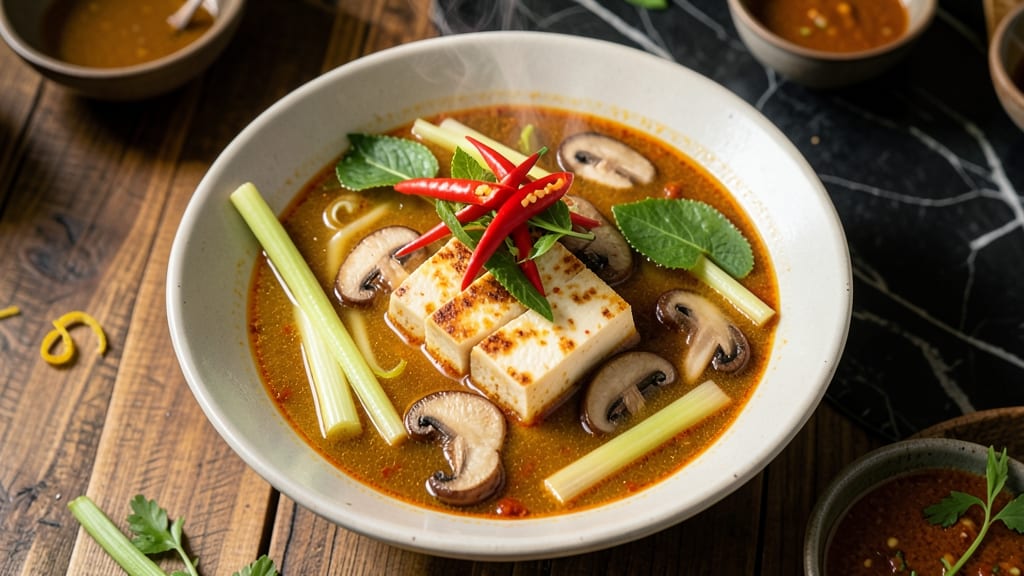
This authentic vegetarian tom yum soup captures Thailand's fiery, citrusy soul without meat—just vibrant broth, aromatic herbs, and perfectly balanced heat. The secret lies in the aromatic base: galangal, lemongrass, and kaffir lime leaves simmered until fragrant, then brightened with tamarind and lime juice for that signature tang.
I've refined this recipe over years of testing, ensuring the vegetarian version delivers the same complex umami and spicy-sour punch as the classic.
The broth builds in layers—starting with toasted spices that ground into the water, then mushrooms and tofu absorbing the bold flavors. Fresh herbs like Thai basil and cilantro finish the dish, adding freshness that cuts through the heat.
What makes this recipe truly authentic is the balance: too much spice overwhelms, but just enough chilies create that addictive burn. The result? A steaming bowl of restaurant-quality soup that's both comforting and invigorating.
This vegetarian version proves you don't need fish sauce or shrimp to achieve depth—mushrooms and soy sauce provide the umami foundation, while lime and tamarind deliver that essential tang. The tofu holds its shape while soaking up the aromatic broth, and mushrooms add meaty texture.
Serve it with jasmine rice to soak up every last drop of that bright, spicy-sour elixir.
Perfect for weeknight dinners or impressing guests, this soup comes together in under an hour with just 10 minutes of active prep. The flavors only deepen as it sits, making it ideal for meal prep.
Garnish with fresh herbs and lime wedges for that final touch of authenticity. Let's make this bold, aromatic bowl of goodness.
Ingredients for authentic vegetarian tom yum soup
Authentic flavors start with these aromatic ingredients—galangal, lemongrass, and kaffir lime leaves bring Thailand's bold essence.
| Ingredient | Amount | Notes |
|---|---|---|
| Fresh Galangal 🌿 | ½ inch | Peeled, sliced thinly |
| Lemongrass Stalks 🌿 | 3 whole | Bruised, bottom 3 inches |
| Kaffir Lime Leaves 🍋 | 4 whole | Torn in half |
| Shiitake Mushrooms 🍄 | 8 oz | Fresh, stems removed |
| Extra-Firm Tofu 🧇 | 1 lb | Pressed, cubed |
| Red Curry Paste 🌶️ | 2 tbsp | Vegetarian, no fish sauce |
| Ginger Root 🧄 | 1 inch | Peeled, sliced thinly |
| Thai Chilies 🌶️ | 4 whole | Seeds removed for mild heat |
| Vegetable Stock 💧 | 4 cups | Homemade or low-sodium |
| Tamari or Soy Sauce 🥢 | 2 tbsp | For umami depth |
| Tamarind Paste 🍈 | 1 tbsp | Dissolved in 2 tbsp hot water |
| Fresh Lime Juice 🍋 | ½ cup | Freshly squeezed |
| Thai Basil Leaves 🌿 | ¼ cup | Packed, loosely |
| Cilantro Leaves 🌿 | ¼ cup | Packed, loosely |
| Fish Sauce Substitute 🥢 | 2 tbsp | Soy sauce or coconut aminos |
| Palm Sugar or Brown Sugar 🍯 | 1 tbsp | For subtle sweetness |
The galangal and lemongrass are non-negotiable for authentic flavor. Thai markets or specialty grocers carry fresh galangal—look for firm, pale roots with no mold. If you can't find it, ginger is a decent substitute, though it lacks the piney depth. Lemongrass should be vibrant green with no brown spots. Bruise the stalks with the side of your knife to release oils. For kaffir lime leaves, Asian markets often sell them fresh in small bundles. If you're using dried, soak them in warm water for 10 minutes to revive. The shiitake mushrooms should be firm and plump—avoid any with slimy stems, as that indicates spoilage.
No galangal? Double the ginger and add 1 tsp coriander seeds for complexity. Running out of tamarind paste? Lemon juice plus 1 tsp sugar mimics the tang. The red curry paste is key—Maesri or Mae Ploy brands are vegetarian-friendly and widely available. If your chilies are too spicy, remove seeds and membranes before chopping. For the fish sauce substitute, coconut aminos add a subtle sweetness that works beautifully. The palm sugar can be swapped for brown sugar, but it won't have the same caramel notes. Fresh herbs are ideal, but dried basil at half the amount works in a pinch.
Store fresh galangal and ginger in the fridge for up to 2 weeks, wrapped in damp paper towels. Lemongrass keeps for 1 week in a sealed container. The curry paste and tamarind paste last 6 months in the pantry. This soup tastes even better the next day as flavors meld—reheat gently and add a splash of water if it thickens. For meal prep, store in glass containers with a tight seal. Garnish with fresh herbs and lime wedges just before serving to keep everything vibrant.
Why You'll Love This Recipe
- Minimal Chopping Required: I swear by this—just a few hardy stalks of lemongrass and a couple of galangal slices to pound (or buy pre-sliced if you’re lazy). The mushrooms and tofu need zero prep beyond a quick press and slice, and those kaffir lime leaves? Toss them in whole. Done.
- Tangy, Spicy, Umami Bomb: That first sip of galangal’s peppery bite, lemongrass’s citrusy punch, and shiitake mushrooms soaking up the broth? It’s like a flavor explosion in your mouth. The tofu soaks up the spice without overpowering—honestly, I’ve had people ask if it’s meat.
- Leftovers That Taste Better: Between us, this soup actually improves the next day. The flavors meld into this deep, savory harmony, and reheating it is just a matter of adding a splash of water and a squeeze of lime. I’ve had it for lunch three days in a row—no complaints.
- Budget-Friendly Powerhouse: Galangal and kaffir lime leaves might sound fancy, but they stretch so far. A single root lasts me four batches, and shiitake mushrooms are cheaper than you’d think. Plus, tofu is the ultimate wallet-friendly protein. Feeds four for under $15, easy.
Step-by-step instructions for authentic vegetarian tom yum soup
Master this classic Thai soup with precise aromatic layering and perfect balance.
Prepare the Aromatic Base
In a large pot, combine the 4 cups vegetable stock, 2 tbsp red curry paste, 0.5 inch fresh galangal, 1 inch ginger root, 3 whole lemongrass stalks, and 4 whole Thai chilies. Bring to a gentle simmer over medium heat for 10 minutes, allowing the flavors to meld deeply. The broth should develop a fragrant aroma with subtle spice notes.
Here's the thing—don't rush this step. The galangal and ginger need time to release their citrusy, peppery essence into the broth. You'll know it's ready when the lemongrass stalks are soft enough to pierce easily with a knife. Skim off any foam that rises to the surface for a cleaner broth.
Add Mushrooms and Tofu
Add the 8 oz shiitake mushrooms (stems removed) and 1 lb extra-firm tofu (pressed and cubed) to the simmering broth. Cook for 8-10 minutes until the mushrooms soften and the tofu absorbs the flavors. The mushrooms should release their earthy aroma while maintaining their shape.
I like to stir occasionally but not constantly—this prevents the tofu from breaking apart. You want the tofu to be heated through but still hold its structure. If the broth reduces too much, add ½ cup hot water to maintain the proper consistency for the final sauce.
Build the Signature Flavor Profile
In a small bowl, dissolve the 1 tbsp tamarind paste in 2 tbsp hot water until smooth. Add this to the pot along with 2 tbsp tamari or soy sauce, 2 tbsp fish sauce substitute, and 1 tbsp palm sugar or brown sugar. Stir well and simmer for 5 minutes to fully incorporate all the flavors.
This is where the magic happens—the tamarind adds that signature tangy depth, while the sweetness of palm sugar balances the heat. Taste the broth now and adjust seasoning if needed. For more spice, add a pinch of red pepper flakes. For more sourness, add a splash of fresh lime juice—but we'll add most of that later.
Finish with Herbs and Lime
Remove the pot from heat and stir in the 0.5 cup fresh lime juice, 4 whole kaffir lime leaves (torn in half), 0.25 cup Thai basil leaves, and 0.25 cup cilantro leaves. Let the soup steep for 5 minutes to allow the herbs to infuse their bright, aromatic flavors.
Real talk: This is the moment that matters. The lime juice should brighten the broth while the kaffir lime leaves add a floral citrus note. The Thai basil and cilantro contribute fresh, slightly peppery notes that elevate the entire dish. Don't skip this steeping time—it makes all the difference in achieving that authentic tom yum flavor.
Serve Immediately with Garnishes
Ladle the soup into bowls and garnish with additional Thai basil leaves, cilantro leaves, and a sprinkle of lime zest. Serve with steamed jasmine rice to soak up the fragrant broth. The soup should be aromatic, tangy, spicy, and slightly sweet—each spoonful should deliver a perfect balance of these flavors.
If you're serving guests who prefer less heat, provide extra lime wedges on the side. The acidity helps cut through the spice while adding another layer of complexity. This soup tastes best immediately, so don't wait to serve—every minute it sits, the flavors continue to develop and intensify.
Pro Tips For Making Authentic Vegetarian Tom Yum Soup
- BLEND GALANGAL FIRST: I learned this the hard way—adding whole galangal slices at the end just gives you a mouthful of chewy root. Instead, slice it thin (about 1/4-inch) and pulse it in the blender with the broth before adding other aromatics. This way, the heat and acidity extract every bit of its piney, ginger-like punch without leaving you with a surprise toothpick.
- TOAST LEMONGRASS STALKS: Skip the chopping for now—wrap the lemongrass stalks in foil and toast them over a gas flame (or under a broiler) for 2-3 minutes until fragrant and slightly charred. This deepens their citrusy aroma and prevents that "raw grass" aftertaste. Just remove the tough bottom inch before adding to the pot.
- PRESS TOFU DRY: Wrap extra-firm tofu in a towel, place a heavy pan on top, and let it sit for 10 minutes. This removes surface moisture so it absorbs the broth instead of turning the soup into a watery tofu stew. Cut it into 1-inch cubes afterward—they’ll hold their shape and soak up the spicy-sweet broth like a dream.
- SIMMER MUSHROOMS SEPARATELY: Shiitake mushrooms release their umami juice when cooked, but tossing them in with everything else can turn your soup into a gloopy mess. Sauté them in a separate pan with a splash of water until they’re tender and juicy, then add them to the broth at the very end. This keeps their texture intact and balances the soup’s lightness.
Common mistakes when making this recipe
Overcooking Aromatics
Don’t let your galangal, lemongrass, or kaffir lime leaves turn bitter—simmer them just until fragrant (10 minutes max). Overcooking releases harsh, medicinal notes that ruin the delicate balance. I’ve seen beginners boil these ingredients for 20+ minutes, turning the broth into a bitter, muddy mess.
Remove them after 10 minutes (or strain them out) to keep the broth bright and aromatic. 🌿
Skipping the Tamarind
Tamarind is the secret to authentic tang—don’t replace it with just lemon juice. While lime adds freshness, tamarind’s deep, caramelized sourness is irreplaceable. I once made this soup with only lemon and the result was flat.
Dissolve the 1 tbsp tamarind paste in hot water first to prevent clumping, then simmer it into the broth. Trust me, your taste buds will thank you. 🍈
Using Low-Quality Tofu
Extra-firm tofu is non-negotiable—it holds its shape and absorbs flavors better than soft varieties. I’ve seen people use silken tofu, which turns to mush and makes the soup watery. Press your tofu for 30 minutes before cubing to remove excess water.
For extra texture, pan-fry the tofu cubes until golden before adding them to the broth. This adds a satisfying bite that balances the silky broth. 🧇
Ignoring the Steeping Time
Those final 5 minutes of steeping with herbs and lime are crucial—they infuse the broth with bright, aromatic flavors. I’ve rushed this step before, and the soup tasted flat.
Let the kaffir lime leaves and Thai basil sit in the hot broth—they’ll release their essential oils and transform the soup from good to restaurant-quality. Don’t skip this step, even if you’re eager to serve. ✨
Balancing Flavors Last
Adjust seasoning as you go, not just at the end. Taste the broth after adding tamarind, soy sauce, and sugar—this is your chance to fix any imbalances before committing. I’ve seen people add all the lime juice first, only to realize the broth needs more sweetness or spice.
Build flavors gradually: start with half the lime juice, then add more to taste at the end. This gives you control over the final balance. 🍋
Using Store-Bought Vegetable Stock
Low-sodium vegetable stock works in a pinch, but homemade elevates the dish. Store-bought versions often lack depth, making the broth taste flat. If you must use canned stock, choose a high-quality brand like Pacific Foods or Imagine and add an extra 1 tsp soy sauce for umami.
For best results, make your own stock with vegetable scraps and aromatics like onion, carrot, and celery. The extra effort makes a world of difference. 💧
Nutrition facts
Frequently asked questions
Can I make this soup without galangal?
Yes, but you'll lose some authentic depth. Replace 0.5 inch galangal with 1 inch ginger plus 1 tsp coriander seeds toasted and ground. For extra flavor, add ½ tsp turmeric to mimic galangal's earthy notes. The soup will still be delicious, just slightly different in complexity.
How do I adjust the spice level?
Start by removing seeds from Thai chilies for mild heat. For more spice, add 1 extra chili or a pinch of red pepper flakes. If it's too hot, balance with more lime juice (acidity helps cool the burn) or a splash of coconut milk. Always taste as you go!
What's the best way to store leftovers?
Store in glass containers with tight lids and refrigerate for up to 3 days. The flavors actually improve overnight! Reheat gently on low heat, adding 1-2 tbsp water if it thickens. For freezing, cool completely first and freeze for up to 1 month.
Can I make this soup vegan?
Skip the tofu and use 1 lb firm mushrooms (shiitake or oyster) plus 1 cup chickpeas for protein. Replace tamari with coconut aminos and ensure your red curry paste is vegan. The umami from mushrooms and chickpeas will keep the broth rich and satisfying.
Why does my broth taste bitter?
Most likely, you overcooked the aromatics. Galangal and lemongrass should simmer only 10 minutes—any longer releases bitter compounds. Also check your stock (store-bought can be bitter) and remove any burnt bits from the bottom of the pot. A splash of lime juice can help brighten the flavor.