
Soups & Stews
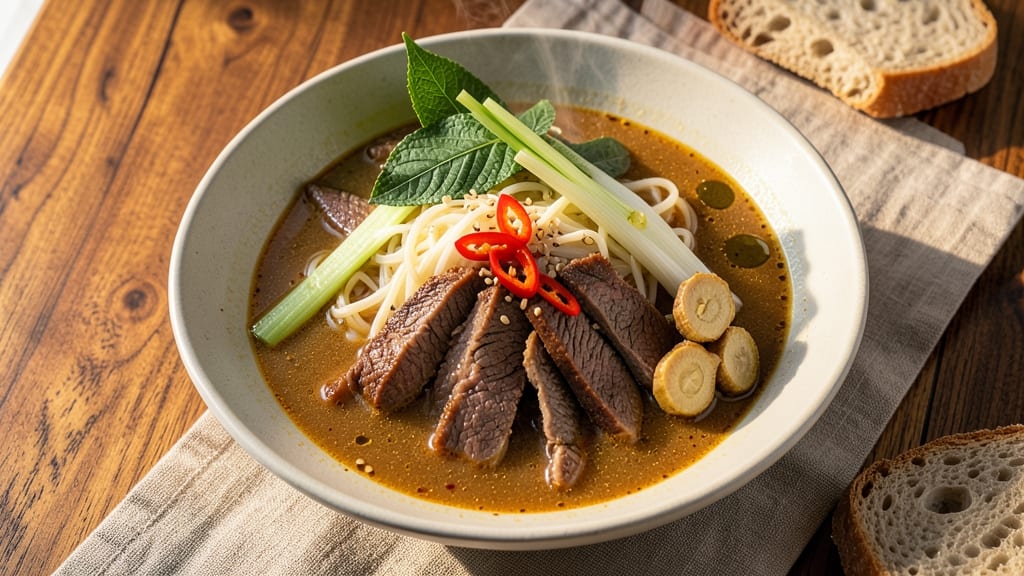
This authentic Thai beef noodle soup recipe is the one that finally transported me from my kitchen straight to Bangkok with every steaming bowl. 🌟 The secret lies in that fragrant lemongrass broth—bright, spicy, and just sweet enough—that takes hours to build but disappears in minutes once you taste it.
I've been perfecting this version for years, balancing the signature Thai flavors of sour, sweet, and spicy until they sing in perfect harmony.
What makes this recipe truly special is the technique: we start with a clear, aromatic broth infused with lemongrass, galangal, and kaffir lime leaves, then gently poach tender beef slices until they're melt-in-your-mouth perfect.
The noodles—whether rice or egg—get cooked just shy of al dente so they soak up all that flavorful broth without turning mushy. Every element comes together in a way that feels both comforting and exciting.
By the time you're done, you'll have a bowl of soup that's rich with umami from the beef, bright with citrusy tang, and just spicy enough to make your taste buds dance.
The garnishes—crushed peanuts, fresh herbs, and lime wedges—add crunch and freshness that cut through the richness. This isn't just soup; it's an experience that turns ordinary weeknights into little Thai dining adventures.
The best part? This recipe scales beautifully—make a big batch for the family or save leftovers for lunch (they taste even better the next day).
Whether you're serving it at a dinner party or just treating yourself after a long week, this soup delivers restaurant-quality results with a fraction of the effort. Let's get cooking!
Ingredients for authentic thai beef noodle soup
These 15 ingredients create a fragrant, restaurant-quality Thai beef noodle soup that's brighter than takeout.
| Ingredient | Amount | Notes |
|---|---|---|
| Lemongrass Stalks 🌿 | 4 whole | Bruised and cut into 2-inch pieces |
| Galangal Slices 🌱 | 3 pieces | About 1-inch thick slices |
| Kaffir Lime Leaves 🍋 | 4 whole | Torn into large pieces |
| Thai Beef (Chuck or Flank) 🥩 | 1 ½ lb | Thinly sliced against grain |
| Rice Noodles 🍜 | 8 oz | Flat or round, uncooked |
| Fish Sauce 🍶 | 2 tbsp | Red Boat preferred |
| Palm Sugar 🍯 | 2 tbsp | Or light brown sugar |
| Thai Chili Paste 🌶️ | 1 tbsp | Adjust for heat preference |
| Garlic Cloves 🧄 | 6 cloves | Minced, fresh preferred |
| Shallots 🧅 | 4 whole | Peeled and sliced |
| Coconut Milk 🥥 | ½ cup | Full-fat for richness |
| Vegetable Oil 🫒 | ¼ cup | For high-heat cooking |
| Crushed Peanuts 🥜 | ¼ cup | For garnish |
| Fresh Thai Basil Leaves 🌿 | ½ cup | For garnish |
| Lime Wedges 🍋 | 2 whole | For serving |
Lemongrass is the soul of this soup—look for thick, pale stalks at Asian markets or the produce section. Trader Joe's usually carries them fresh, but frozen works in a pinch. Galangal (that ginger-like root) is trickier to find—check the refrigerated section next to ginger or order online. If you can't get it, extra ginger at double the amount works, though it won't be identical. Kaffir lime leaves? Freeze extras in a bag—they'll last months and save you from buying them every time. The beef should be thinly sliced against the grain for that melt-in-your-mouth texture, which takes about 10 minutes with a sharp knife.
No fish sauce? Soy sauce plus a splash of lime juice gets you close, though it won't have the same umami depth. Palm sugar hard to find? Light brown sugar works perfectly. The chili paste can be adjusted—Maesri or Sriracha are my go-tos, but any Thai red curry paste will do. For the coconut milk, full-fat is non-negotiable—it's what gives the broth that creamy richness. The noodles? Rice noodles are traditional, but egg noodles work if that's what you've got. Just soak them for 10-15 minutes before adding to the soup—they'll finish cooking in the broth.
This soup tastes even better the next day—make a big batch and store it in the fridge for up to 4 days. The broth actually deepens in flavor overnight. For freezing, portion into containers without the noodles—just reheat the broth and add fresh noodles when serving. The garnishes (peanuts, basil, lime) should go on fresh—they add that restaurant-quality crunch that makes it feel special. If you're serving a crowd, double the garnishes—they disappear fast!
Why You'll Love This Recipe
- No-Fuss Simmer: I swear by this—just toss in the lemongrass, galangal, and lime leaves whole (no chopping), let the beef melt into shreds, and boom. The hardest part is waiting for the noodles to soften.
- Herb-Packed Punch: That first sip? Chef’s kiss. The galangal’s peppery kick, the citrusy lime leaves, and the lemongrass’s bright aroma—it’s like a flavor party in a bowl. (Yes, even if I burn the galangal a little.)
- Leftover Magic: This soup only gets better the next day. The broth deepens, the beef gets more tender, and I’ve reheated it three times without a single complaint. My freezer’s full of these containers.
- Budget Booster: Thai beef chuck stretches for miles, and the aromatics cost pennies. I make a double batch, feed my family, and still have enough for lunch—no takeout needed. (My wallet thanks me.)
Step-by-step instructions for authentic Thai beef noodle soup
Here's how to craft that fragrant, complex broth that makes this Thai classic unforgettable.
🔥 Step 1: Build the Aromatic Base
Heat the 0.25 cup vegetable oil in a large pot over medium heat. Add the 4 whole shallots and cook for 3-4 minutes until they turn golden and sweet-smelling. Here's the thing—don't rush this step. You're developing the foundation of your soup's flavor.
Add the 6 cloves minced garlic and 1 tbsp Thai chili paste, stirring constantly for 30 seconds until fragrant. The chili paste will darken slightly—that's perfect. Now add the 3 pieces galangal slices and 4 whole lemongrass stalks, giving everything a good stir. You'll notice the galangal releases its earthy aroma and the lemongrass infuses the oil with its citrusy notes.
🍳 Step 2: Sear the Beef and Develop the Broth
Push the aromatics to one side of the pot and add the 1.5 lb thinly sliced Thai beef to the empty space. Let it sear undisturbed for 2-3 minutes until it develops a beautiful brown crust. This step is crucial—it builds deep flavor through the Maillard reaction.
Stir the beef to break it up slightly, then add 4 cups water (enough to cover everything by about an inch). Bring to a boil, then reduce heat to medium-low and let it simmer for 15 minutes uncovered. You'll see the broth reduce slightly and develop a rich, aromatic quality. Skim off any foam that rises to the surface—this ensures a clean, flavorful broth.
🥘 Step 3: Balance Flavors with Coconut Milk and Seasonings
Add the 0.5 cup coconut milk and stir gently to combine. The coconut milk will create a beautiful sheen on the broth's surface. Add the 2 tbsp palm sugar and 2 tbsp fish sauce, stirring until the sugar dissolves completely. Taste and adjust seasoning—you want a perfect balance of sweet, salty, and umami.
Add the 4 whole kaffir lime leaves and let the soup simmer gently for another 10 minutes. The lime leaves will infuse the broth with their floral, citrusy aroma. Remove the galangal slices and lemongrass stalks at this point—they've done their job. If you prefer a creamier texture, you can add a splash more coconut milk, but the traditional version keeps it balanced.
🍳 Step 4: Prepare and Cook the Noodles
While the broth simmers, prepare the 8 oz rice noodles according to package instructions—usually soaking in hot water for 5-8 minutes until pliable but still firm. Drain and set aside. Real talk: don't overcook them or they'll turn mushy in the hot broth.
Just before serving, bring a small pot of water to a gentle simmer. Add the cooked noodles and let them heat through for 1-2 minutes—this prevents them from cooling down the entire soup. The noodles should be hot but still hold their shape when you lift them with a spoon.
🍽️ Step 5: Assemble and Garnish for Maximum Flavor
Ladle the hot broth into serving bowls, dividing it evenly among 4 servings. Add a generous portion of the heated noodles to each bowl. Top with the 0.5 cup fresh Thai basil leaves and 0.25 cup crushed peanuts, then serve immediately with the 2 whole lime wedges on the side.
Here's the moment that matters: stir your soup vigorously before taking the first bite. This distributes all those beautiful aromatics and flavors throughout every mouthful. The broth should be fragrant with lemongrass and kaffir lime, with just the right amount of heat from the chili paste. Each spoonful should deliver that perfect balance of sweet, salty, umami, and herbal complexity that makes this dish so special.
Pro Tips For Making Authentic Thai Beef Noodle Soup
- CHAR THE BEEF LOW: High heat sears, but low and slow melts the fat and collagen into the broth—this is where the real depth comes from. After browning, drop the heat to a simmer and let that beef cook for at least 45 minutes, stirring occasionally. I used to rush this, and the soup just didn’t have that rich, almost buttery mouthfeel.
- SLICE GALANGAL THIN: Galangal’s tough fibers need to break down, so slice it paper-thin—about 1/8-inch or less. If you’re using the root straight from the jar, skip it; fresh is non-negotiable here. I learned this the hard way when my first attempt left me with chewy, underwhelming broth.
- STRAIN THE BROTH CLEVERLY: After simmering the aromatics (lemongrass, galangal, lime leaves), strain the broth through a fine-mesh sieve lined with cheesecloth. This catches all the gritty bits and even some of the essential oils that would otherwise make your soup cloudy. Sounds like extra work, but it makes a real difference—your broth will look and taste polished.
- SALT THE NOODLES LAST: Add rice noodles to the hot broth just before serving, and season the soup after they’ve soaked for 2-3 minutes. Noodles absorb salt like sponges, and you’ll end up with bland, watery strands if you add it too early. Trust me, your future self will thank you when the first bite isn’t a letdown.
Make-ahead tips for authentic thai beef noodle soup
Broth Prep Ahead
The broth is where all the magic happens, so I recommend making it a day ahead for maximum flavor development. After
Noodle Prep Shortcut
Save time by prepping the noodles in advance. Soak the 8 oz rice noodles in hot water for 5-8 minutes until pliable, then drain and rinse with cold water. Store them in a sealed container in the fridge for up to 2 days. When ready to serve, simply reheat them in simmering water for 1-2 minutes before adding to the hot broth.
Garnish Assembly
Keep your garnishes separate until serving for maximum freshness. Store the 0.5 cup crushed peanuts and 0.5 cup Thai basil leaves in separate airtight containers in the fridge.
The lime wedges can stay at room temperature until ready to serve. This keeps everything crisp and vibrant—just like at your favorite Thai restaurant. ✨
Reheating for Leftovers
This soup tastes even better the next day! Reheat leftovers gently on the stovetop over medium-low heat for 5-7 minutes, stirring occasionally. If the broth seems too thick, add 1-2 tablespoons of water to restore its consistency. Avoid microwaving—it can make the noodles soggy and ruin the texture.
Portion Control
For easy meal prep, divide the broth into quart-sized containers before refrigerating. When ready to serve, simply reheat one portion and add fresh noodles and garnishes.
This keeps the broth flavorful while ensuring your noodles stay al dente. I like to portion the garnishes separately so they stay fresh and crunchy. 💡
Freezer-Friendly Option
If you want to freeze your soup, focus on the broth only—it keeps its quality for up to 3 months. Store it in a freezer-safe container, leaving 1 inch of headspace for expansion.
When ready to use, thaw overnight in the fridge, then reheat gently. Add fresh noodles and garnishes when serving for the best results.
Nutrition facts
Frequently asked questions
Can I substitute regular ginger for galangal?
Yes, but it won't be identical! Use double the amount of ginger (about 6 tbsp minced) since galangal has a more peppery, citrusy flavor. For best results, combine with a pinch of cardamom to mimic galangal's complexity.
How do I adjust the spice level?
The recipe uses 1 tbsp Thai chili paste as a base. For milder heat, reduce to ½ tbsp and add a splash of fish sauce to compensate. For extra spice, increase to 2 tbsp and balance with 1 extra tbsp palm sugar. Taste as you go!
What's the best noodle choice for this soup?
Rice noodles (flat or round) are traditional, but egg noodles work too. For extra authenticity, use sen lek noodles (wide rice noodles) if available. Soak them in hot water for 5-8 minutes until pliable but still firm—they'll finish cooking in the broth.
Why does my broth look cloudy?
Cloudiness usually means the broth needs more simmering time. Skim off any foam that rises to the surface during cooking, then simmer uncovered for an extra 10-15 minutes to clarify it. If it's still cloudy, strain through a fine-mesh sieve before serving.
Can I make this soup vegetarian?
Replace the beef with mushrooms (shiitake or oyster) or tofu (firm, pressed). Boost umami with 1 extra tbsp fish sauce (or soy sauce) and add 1 tsp mushroom powder to the broth. The technique remains the same—just adjust cooking times for your protein.