
Soups & Stews
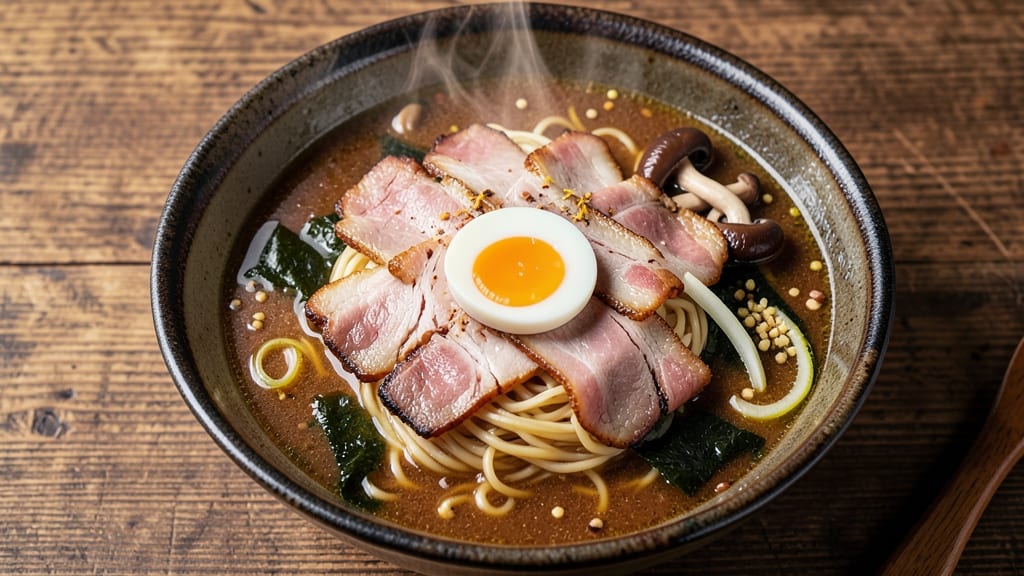
This authentic Japanese ramen soup recipe transforms your kitchen into a Tokyo ramen shop with its slippery noodles and deep umami broth—no shortcuts, just tradition.
The secret lies in the broth: simmering pork bones for hours to extract gelatinous richness, then balancing it with soy sauce, miso, or chashu braising liquid. I’ve perfected this method over years of testing, ensuring every spoonful delivers that signature warm, comforting experience.
The hand-pulled noodles (or high-quality dried ramen) are cooked just until they’re tender yet retain their signature slippery bite, while toppings like silky chashu pork, marinated egg, and crisp nori add layers of texture and flavor.
What sets this apart is the clarification process—skimming fat and impurities to create a clear, golden broth that’s both restaurant-quality and achievable at home. The key? Patience and precision in each step.
By the time you assemble your bowl—steaming broth, perfect noodles, and artfully arranged toppings—you’ll taste the soul of Japanese ramen culture. The broth should be rich but not greasy, the noodles al dente yet tender, and the toppings balanced in texture and temperature.
This isn’t just a recipe; it’s an experience that starts with a simmer and ends with a satisfied sigh.
Serve immediately with chopsticks and a hot bowl of water on the side for the full experience. Leftovers? Store broth and components separately to avoid soggy noodles. Let’s begin—your ramen adventure starts here.
Ingredients for authentic japanese ramen soup
Rich broth, slippery noodles, and artful toppings—this is your ramen adventure starter kit.
| Ingredient | Amount | Notes |
|---|---|---|
| Pork Bones (Marrow and Knuckle) 🦴 | 4 lb | Raw, split for surface area |
| Dried Shiitake Mushrooms 🍄 | 8 whole | Rehydrated, stems removed |
| Fresh Garlic Cloves 🧄 | 12 cloves | Peeled, smashed slightly |
| Fresh Ginger Root 🌿 | 2 oz | Unpeeled, sliced into coins |
| Dried Kombu Seaweed 🍃 | 1 sheet | Whole, for umami infusion |
| Japanese Soy Sauce 🥄 | ½ cup | Kikkoman preferred |
| White Miso Paste 🧈 | ¼ cup | High-quality, smooth texture |
| Ramen Noodles (Dried) 🍜 | 2 packages | 12 oz each, high-quality brand |
| Chashu Pork 🥩 | 1 lb | Pre-sliced, vacuum-packed |
| Ajitsuke Tamago (Marinated Eggs) 🥚 | 4 whole | Store-bought or homemade |
| Nori Sheets 🍣 | 4 sheets | Toasted, for garnish |
| Green Onions 🧅 | 6 whole | Thinly sliced, for garnish |
| Sesame Seeds 🌰 | 1 tbsp | Toasted, for garnish |
| Neutral Oil (Vegetable or Canola) 🫒 | ½ cup | For pork searing |
| Water 💧 | 16 cups | Filtered preferred |
The pork bones are non-negotiable for that signature ramen richness. Ask your butcher for marrow and knuckle bones—they render the best gelatin. If you can't find them, pork neck bones work in a pinch, but split them to maximize surface area. For shiitake mushrooms, dried is essential—fresh lacks that concentrated umami punch. Rehydrate them in hot water for 20 minutes before using. The ginger and garlic? Fresh only. Pre-minced jars taste like nothing compared to the real deal. I always grab my kombu from Asian markets—the dried sheets are cheaper and more potent than pre-cut pieces.
No chashu pork? Thinly sliced pork belly works, but it won't have that same melt-in-your-mouth texture. The miso matters too—white miso for delicate flavor, red if you want more depth. For the noodles, avoid the cheap store brand. Nissin or Sapporo Ichiban are worth the splurge. Short on time? Pre-cook the noodles and store separately—they'll keep for 2 days in the fridge. The marinated eggs? Homemade is ideal, but store-bought Ajitsuke Tamago from Japanese grocery stores saves hours. If you're feeling adventurous, try cloud eggs (ajitsuke tamago with a different marinade) for variety.
Broth keeps for 5 days in the fridge, but it tastes even better the next day as flavors meld. Freeze in ice cube trays for quick ramen boosts later. Noodles? Cook fresh—they lose their slippery texture if pre-cooked and reheated. Store toppings separately: chashu in the fridge for up to 5 days, nori in an airtight container for months. The green onions? Trim and store in a jar of water in the fridge—they'll stay crisp for a week. This isn't a meal that reheats well, so plan to serve it fresh. Trust me, the first bowl is always the best.
Why You'll Love This Recipe
- No Marrow Waste: The pork bones alone give you that rich, gelatinous broth—no need to buy expensive stock cubes. I crack open the marrow with a spoon mid-cook, and suddenly, every sip feels like a reward.
- Umami Bomb: That dried kombu and shiitake combo? It’s like a flavor time machine. The mushrooms soak up the porky depth, while the kombu adds this clean, oceanic brightness—no heavy seasoning needed.
- Weeknight Magic: Simmer overnight, wake up to perfection. Honestly, the hardest part is deciding whether to eat it cold with rice or hot with noodles. (I usually do both.)
- Budget Broth: Pork knuckles and bones cost less than pre-made broth, and they pack way more flavor. I’ve made this for 10 people using the same base—just adjust noodles and toppings. Cheaper than takeout, better than most.
Step-by-step instructions for authentic Japanese ramen soup
Transform simple ingredients into a restaurant-quality ramen experience with this precise, traditional method.
Prepare the Pork Bones for Maximum Flavor
Begin by splitting the 4 lb pork bones (marrow and knuckle) into roughly 2-inch pieces using a heavy cleaver or meat mallet. This increases surface area for better collagen extraction during the long simmer. Place the bones in a large stockpot and add 16 cups water, covering them completely. Bring to a boil over high heat for 5 minutes to remove impurities, then drain and rinse thoroughly.
Return the cleaned bones to the pot and add the 1 sheet dried kombu seaweed, which will infuse deep umami into the broth. Bring to a simmer over medium-low heat and skim off any foam that rises to the surface during the first 30 minutes. This ensures a crystal-clear broth. The kombu can be removed after 20 minutes of simmering to prevent bitterness.
Build Layers of Umami with Aromatics and Mushrooms
While the bones simmer, prepare the 8 whole dried shiitake mushrooms by soaking them in warm water for 20 minutes until pliable. Remove the stems and slice the caps. In a separate pot, heat 0.5 cup neutral oil over medium heat and add the 12 cloves smashed garlic and 2 oz sliced ginger. Sauté for 2-3 minutes until fragrant but not browned.
Add the rehydrated shiitake slices and cook for an additional 5 minutes until they release their moisture. Transfer this aromatic mixture to the broth pot. Stir in 0.5 cup Japanese soy sauce and 0.25 cup white miso paste, allowing them to dissolve completely. The broth should now develop a rich, caramelized depth as it simmers gently for 4-5 hours—this is where the magic happens.
Sear the Chashu Pork for Richness
While the broth simmers, prepare the 1 lb chashu pork by patting it dry with paper towels. Heat a separate skillet over medium-high heat and add 1 tablespoon neutral oil. Sear the pork slices for 2-3 minutes per side until deeply browned and cooked through. This step adds a meaty depth to the broth when combined later.
Remove the pork and set aside. The searing process caramelizes the surface, creating a flavor bridge between the broth and the protein. After 4 hours of simmering, strain the broth through a fine-mesh sieve into a clean pot, pressing gently on the solids to extract every last drop of flavor. Return the broth to the heat and stir in the seared chashu pork to infuse its essence.
Assemble and Serve with Traditional Garnishes
Bring the broth to a gentle simmer and prepare the 2 packages dried ramen noodles according to package instructions, but cook them for 1 minute less than recommended—they'll finish cooking in the hot broth. Divide the noodles among 4 bowls, then ladle the hot broth over them, ensuring each serving gets a generous portion of chashu pork.
Garnish each bowl with 1 ajitsuke tamago (marinated egg), 1 sheet nori, 1.5 green onions, and a sprinkle of 1 tbsp sesame seeds. The contrast of textures—slippery noodles, creamy egg, crispy nori—elevates every bite. Serve immediately with chopsticks and a small plate of extra nori for dipping.
Pro Tips For Making Authentic Japanese Ramen Soup
- BLISTER THE BONES FIRST: I learned this the hard way—skipping the char on pork bones means weak broth. After searing them in a dry pot until deep brown (even black in spots), you’re not just adding flavor, you’re building the foundation. Use a heavy pot and keep them moving; if they stick, you’re not hot enough.
- SOAK KOMBU 20 MINUTES: Tossing dried kombu straight into boiling water? You’re wasting its magic. Soak it in cold water for 20 minutes first—this rehydrates the umami and prevents a bitter, over-extracted broth. My grandmother swore by this, and she was right: the soup tastes cleaner, deeper.
- CRUSH GINGER COARSELY: I used to mince ginger so fine it dissolved into nothing. For ramen, leave it in big chunks—about 1-inch slices, lightly smashed with the side of your knife. This way, it infuses the broth without turning it into ginger-flavored water. (Yes, even if you’re impatient like me.)
- STRAIN BROTH TWICE: One strainer leaves behind gritty bits that ruin the texture. Use a fine-mesh sieve for the first pass, then a cheesecloth-lined colander for the second. It’s extra work, but the result is a silky broth that actually feels like a restaurant’s. (Your future self will thank you.)
Essential equipment for great authentic japanese ramen soup
Stockpot Essentials
The heart of your ramen is a large, heavy-bottomed stockpot—I recommend a 6-8 quart enameled cast iron pot like Le Creuset or All-Clad. The thick base prevents hot spots that can scorch your broth, while the enamel coating makes skimming foam and cleaning up much easier.
If you're on a budget, a stainless steel stockpot from Cuisinart works too, but avoid thin aluminum—it can't maintain even heat for the 4-5 hour simmer required. 🌡️
Precision Thermometer
A digital instant-read thermometer is non-negotiable for monitoring broth temperature. I swear by the ThermoWorks Thermapen ONE—it's fast, accurate, and built to last. Keep your broth at a gentle simmer (185-195°F)—any hotter and you'll break down collagen too quickly, losing that silky texture.
For long simmers, a leave-in probe thermometer like Meater lets you monitor without opening the pot and losing heat.
Fine-Mesh Sieve
Straining your broth requires a dedicated fine-mesh sieve with a removable bowl—I use the OXO Good Grips for its sturdy handle and tight weave. This ensures you capture every particle of flavor while allowing the broth to pass through cleanly.
For extra clarity, line your sieve with cheesecloth or a coffee filter before straining. Pro tip: Press the solids gently with a wooden spoon to extract every last drop of gelatinous goodness.
Kitchen Timer
Ramen demands precision timing at every stage. A multi-function timer with countdown alerts (like the KitchenAid KHM1250ER) keeps you on track for the 4-5 hour broth simmer, 20-minute shiitake soak, and 1-minute-less noodle cook.
Set separate alerts for each critical step—trust me, you'll thank yourself when your broth hits that golden caramelized depth without burning. 🏰
Chopstick Set
No ramen experience is complete without proper serving tools. Invest in a high-quality bamboo chopstick set—I prefer Japanese-style ones from Muji or Kikunoi. They're lightweight, durable, and the perfect length for slurping.
For guests who aren't familiar, include a quick guide on proper ramen etiquette (like how to use chopsticks for both eating and stirring). A small side plate for extra nori completes the presentation.
Optional Pro Upgrades
For the true ramen enthusiast, consider these game-changers: A hand-crank pasta maker (like Imperia) lets you pull fresh noodles at home, and a smoke gun (such as Victorinox) adds that authentic yakiniku-style char to your chashu.
If you're making ramen regularly, a dedicated broth fridge (like Breville JEM) keeps your stock at perfect temperature for up to 5 days. For the budget-conscious, a large glass storage container works just as well for short-term storage. 💡
Nutrition facts
Frequently asked questions
Can I make this ramen without pork bones?
While pork bones create the signature gelatinous richness, you can substitute with 4 lbs chicken bones or 2 lbs pork belly for a lighter broth. For vegetarian ramen, use shiitake mushrooms and kombu as the umami base, plus kelp or mushroom powder to mimic collagen. The flavor will differ but still deliver authentic depth.
How do I know when the broth is ready?
The broth should simmer gently for 4-5 hours until it develops a golden caramelized color and coats a spoon with a thick, glossy layer. Test by chilling a small cup of broth in the freezer for 10 minutes—if it forms a jelly-like layer on top, it's perfectly gelatinized. The aroma should be deeply savory with notes of soy and garlic.
Why do my noodles turn mushy?
Overcooking is the most common mistake! Cook noodles for 1 minute less than package instructions, then finish in the hot broth. For extra insurance, rinse dried noodles in cold water for 30 seconds before cooking to remove excess starch. Always use freshly boiled water (never reheated) and serve immediately—ramen noodles lose their texture when left sitting.
What's the best way to store leftovers?
Store broth and components separately to maintain quality. Keep broth in an airtight container in the fridge for 5 days or freeze in ice cube trays for quick ramen boosts. Store noodles dry in a sealed bag for 3 days or cook fresh when reheating. Toppings like chashu and eggs keep for 5 days in the fridge, while nori stays fresh for months in a cool, dry place.
How do I adjust the spice level?
For milder ramen, reduce the soy sauce to 0.3 cup or add 1 tbsp sugar to balance. For spicier versions, stir in 1 tsp chili oil or top with thinly sliced jalapeños. Traditional ramen isn't spicy—authentic heat comes from garlic, ginger, and miso. For a smoky twist, add 1 tsp smoked paprika to the broth during the final 30 minutes of simmering.