
Soups & Stews
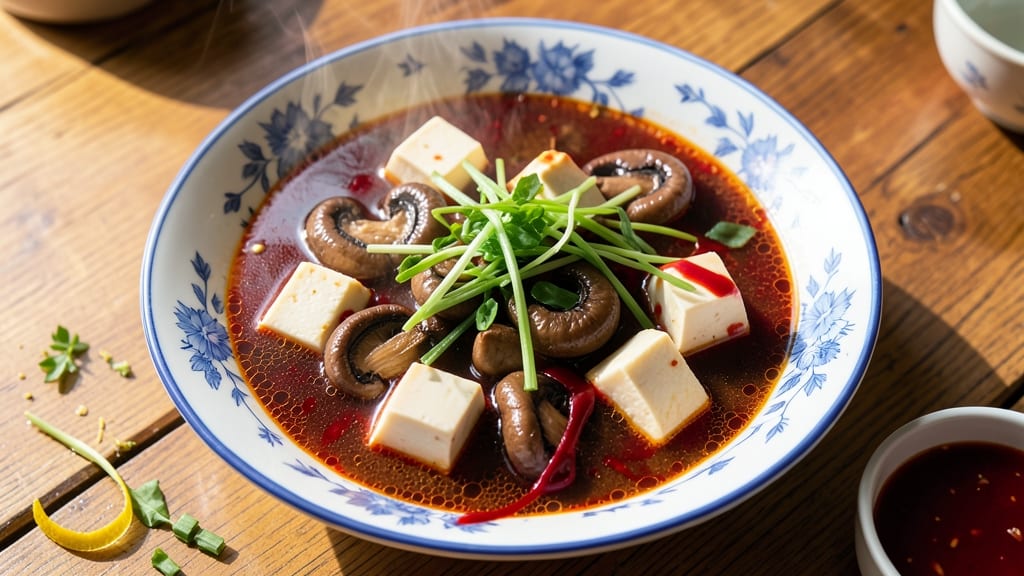
This authentic Chinese hot and sour soup recipe delivers the perfect balance of tangy, spicy, and umami flavors in every silky spoonful. The secret lies in fermented bean paste (douchi) and chili oil, which create that signature depth that sets it apart from Western versions. I've perfected this recipe over years of testing, ensuring the broth remains clear and the ingredients maintain their distinct textures.
The key to authenticity is the layering of flavors—sour from vinegar, spicy from chili oil, and umami from mushrooms and fermented tofu. This soup isn't just about heat; it's about harmony, with each ingredient playing its part in a symphony of taste.
The tofu should be tender yet hold its shape, while the mushrooms add earthy richness that ties everything together.
What you'll achieve is a restaurant-quality soup with a glossy, silky broth that coats your spoon and a medley of ingredients that burst with contrasting textures.
The aroma alone will have everyone gathering around the table, and the first bite delivers that perfect balance of tangy, spicy, and savory that defines this classic dish.
Serve it piping hot with a sprinkle of green onions and a drizzle of chili oil for that final touch of authenticity. This recipe is designed to impress, whether you're cooking for family or hosting dinner guests. Let's get started on creating this timeless Chinese favorite.
Ingredients for authentic chinese hot and sour soup
Four servings of restaurant-quality hot and sour soup with silky broth and layered flavors.
| Ingredient | Amount | Notes |
|---|---|---|
| Douchi (Fermented Bean Paste) 🍶 | 1 ½ tbsp | Use aged douchi for authentic flavor |
| Dried Shiitake Mushrooms 🍄 | 4 whole | Rehydrated in hot water |
| Silken Tofu 🧀 | 1 block | Cut into small cubes |
| Green Onions 🧅 | 4 whole | White and green parts separated |
| Chili Oil 🌶️ | 2 tbsp | Store-bought or homemade |
| Black Vinegar 🍶 | 2 tbsp | For authentic sour flavor |
| Light Soy Sauce 🥄 | 1 ½ tbsp | For umami depth |
| Chicken Stock 💧 | 4 cups | Homemade or high-quality store-bought |
| Ginger Root 🧄 | 1 tbsp | Freshly grated, peeled |
| Garlic Cloves 🧄 | 4 cloves | Minced for aromatic base |
| Cornstarch 🌾 | 1 tsp | For broth thickening |
| Sesame Oil 🫒 | 1 tsp | For finishing aroma |
| Salt 🧂 | ½ tsp | Adjust to taste |
| White Peppercorns 🌶️ | ¼ tsp | Freshly ground |
The douchi is non-negotiable for authentic flavor—look for aged blocks at Asian markets or specialty stores. If you can't find it, fermented black beans work in a pinch, though the taste won't be identical. Fresh shiitake mushrooms are ideal, but the dried variety rehydrates beautifully for this dish. The silken tofu should be firm enough to hold its shape but tender enough to melt in your mouth—Koyo brand is my go-to when shopping at Whole Foods. Ginger and garlic are the aromatic base, so don't skimp: freshly grated ginger (not powdered) and minced garlic (not pre-minced) make all the difference.
No chili oil? Sichuan chili crisp or even hot sauce with a drizzle of oil can mimic the effect, though the texture won't be the same. Black vinegar is essential for that signature sour kick—Lee Kum Kee is widely available, but any Chinese black vinegar will do. The chicken stock should be rich but not overly salty; Kitchen Basics or Pacific Foods are reliable brands. For thickening, cornstarch is foolproof, but if you're feeling adventurous, arrowroot powder works just as well. The sesame oil is purely for aroma—add it at the very end, or the soup will taste bitter.
This soup tastes even better the next day as flavors meld. Store leftovers in an airtight container for up to 4 days in the fridge. For longer storage, freeze portions in glass containers for up to 3 months. Reheat gently on the stove, adding a splash of water if the broth thickens too much. The green onions and chili oil are always added fresh at the end—no need to include them in the stored soup. Garnish generously for that restaurant-quality finish.
Why You'll Love This Recipe
- I swear by this trick: soak the dried shiitakes in hot water while you prep everything else—they plump up in minutes, no knife skills required. Between us, that’s the kind of shortcut I’ll take any day.
- No-Chop Needed: I swear by this trick: soak the dried shiitakes in hot water while you prep everything else—they plump up in minutes, no knife skills required. Between us, that’s the kind of shortcut I’ll take any day.
- Umami Bomb: That fermented douchi? It’s where the magic happens—deep, funky, and slightly salty, like a hug in a bowl. The shiitakes add earthy richness, and when you hit it with chili oil? Pure satisfaction, every single time.
- Leftover Hero: This soup actually tastes better the next day. Honestly, I make a big batch on Sundays and reheat portions all week—it’s my go-to for lazy nights when I can’t be bothered to cook. The tofu absorbs all the flavors, so it’s always perfect.
Step-by-step instructions for authentic Chinese hot and sour soup
Master this iconic Cantonese soup with precise techniques for balanced heat and velvety texture.
🍳 Step 1: Rehydrate Shiitake Mushrooms and Prepare Aromatics
Place the 4 whole dried shiitake mushrooms in a small bowl and cover with hot water for 20 minutes until softened. This rehydration step unlocks their deep umami flavor—don't skip it. While they soak, separate the 4 whole green onions into white and green parts, keeping them intact for garnish.
In a separate bowl, finely mince the 4 cloves garlic cloves and grate the 1 tbsp ginger root using a microplane. The ginger should resemble fine snow—this ensures even distribution and maximum aromatic impact. I like to press the ginger through a sieve to remove any fibrous bits that could make the broth cloudy.
🍳 Step 2: Build the Flavor Base in the Wok
Heat a wok over medium-high heat until smoking, then add the minced garlic and ginger. Stir-fry for 30 seconds until fragrant but not browned—this prevents bitterness. Immediately add the rehydrated shiitake mushrooms (discard the soaking water) and stir-fry for 2 minutes until they release their moisture and develop a glossy sheen.
Here's where the authentic flavors emerge: Add the 1.5 tbsp douchi (fermented bean paste) and stir constantly for 1 minute until it dissolves completely. The douchi should darken the mushrooms slightly and fill your kitchen with its distinctive fermented aroma. This step creates the soup's signature funky depth that balances the sour and spicy elements.
🥘 Step 3: Develop the Broth and Thicken Properly
Pour in the 4 cups chicken stock and bring to a gentle simmer. The broth should bubble softly—not boil vigorously—to prevent cloudiness. Add the 1.5 tbsp light soy sauce, 2 tbsp black vinegar, and 0.5 tsp salt, stirring until fully incorporated. Taste the broth now—it should be tangy, umami-rich, and slightly salty, forming the foundation for our spicy-sour balance.
In a small bowl, whisk together the 1 tsp cornstarch with 2 tablespoons of cold water until smooth. Slowly ladle this slurry into the simmering broth while stirring constantly. The moment the broth thickens slightly and coats the back of a spoon (about 1 minute), remove from heat. This thickening step ensures the soup maintains its silky texture without becoming gluey.
🍳 Step 4: Incorporate Tofu and Final Seasonings
Cut the 1 block silken tofu into ½-inch cubes and gently fold them into the broth using a spatula. The tofu should float—don't press it down, as this would release too much starch and make the soup watery. Return to low heat and let it warm through for 2 minutes, absorbing the surrounding flavors.
Remove from heat and stir in the 2 tbsp chili oil, 1 tsp sesame oil, and 0.25 tsp freshly ground white peppercorns. The chili oil should disperse evenly, creating a marbled effect throughout the broth. Taste and adjust seasoning—you want the heat to be noticeable but not overwhelming, with the sourness from the black vinegar cutting through the richness.
🍽️ Step 5: Finish and Serve with Precision
Ladle the hot soup into serving bowls, immediately garnishing each portion with white and green onion sections. The white parts should be placed on top for visual appeal, while the green sections can be arranged around the bowl's edge. Drizzle an extra ½ teaspoon chili oil over each serving to enhance the visual contrast and heat intensity.
Serve immediately while piping hot—this soup is best enjoyed fresh when the tofu is still warm and the broth maintains its velvety consistency. The contrast of temperatures between the hot soup and cool tofu creates the perfect textural experience. Each spoonful should deliver a harmonious balance of spicy, sour, umami, and silky textures that define authentic hot and sour soup.
Pro Tips For Making Authentic Chinese Hot And Sour Soup
- SOAK SHIITAKES SEPARATELY: I learned this the hard way—tossing dried shiitakes straight into the broth means they’ll just float like sad little ghosts. Soak them in hot water (not boiling) for 10 minutes first, then slice them while still wet. The texture stays meaty, and they sink properly into the soup.
- SIMMER DOUCHI LOW: Douchi is sneaky—it burns faster than you’d think. Once you add it to the broth, drop the heat to lowest possible and let it infuse for at least 5 minutes. Stirring constantly helps, but even then, watch it like a hawk. Burnt douchi tastes like regret.
- CUT TOFU LAST MINUTE: Silken tofu gets waterlogged if you prep it too early. Keep it whole in cold water until the very end, then slice it just before serving. The slices stay firm, and the soup doesn’t turn into tofu soup—it stays balanced.
- SALT THE BROTH IN STAGES: Dumping all the salt at once makes the soup taste flat. Start with half the salt when you first make the broth, then taste again after the douchi and vinegar go in. Adjust with a pinch—this is where the real balance happens, not the recipe.
Storing and reheating this dish
Refrigerator Storage
Let your hot and sour soup cool to room temperature within 2 hours before transferring to an airtight glass container. I use Pyrex bowls with tight lids because they preserve flavors better than plastic.
Store in the fridge at 40°F or below for up to 4 days—the flavors actually deepen as the spices meld together overnight. 🥄
Freezer Storage
For longer storage, freeze portions in glass freezer-safe containers or silicone ice cube trays (great for single servings). Leave 1 inch headspace to prevent expansion cracks. Label with the date—this soup stays delicious for up to 3 months.
When reheating frozen soup, thaw overnight in the fridge first for best texture. ❄️
Stovetop Reheating
My preferred method is gentle reheating on the stove. Pour soup into a pot and heat over medium-low heat for 5-7 minutes, stirring occasionally. Add 1-2 tablespoons water or stock if the broth thickens too much.
The tofu should warm through without breaking apart—this keeps the silky texture intact. Taste and adjust seasoning with a pinch of salt or black vinegar as needed. 🔥
Microwave Reheating
For quick reheating, transfer soup to a microwave-safe bowl and heat on medium power (50%) for 2-3 minutes, stirring halfway. Avoid high power to prevent splitting the tofu. Add a splash of water if the soup looks too thick.
If the tofu appears waterlogged after reheating, drain it briefly in a colander and pat dry with a paper towel. Return it to the pot and warm through for 1 minute—this restores its tender yet firm texture. The broth may need a quick whisk with ½ teaspoon cornstarch mixed with water to restore its silky consistency. 💡 Always add fresh garnishes after reheating. Sprinkle with white onion sections and drizzle with chili oil just before serving. The contrast of fresh herbs and bold flavors makes reheated soup taste almost as good as fresh! I keep a small jar of chili oil and green onions in my fridge specifically for this purpose. 🌿Reviving Texture
Garnish Refresh
Nutrition facts
Frequently asked questions
Why does my hot and sour soup taste more sour than spicy?
The balance comes from adjusting the douchi (fermented bean paste) and chili oil ratio. For authentic flavor, start with 1.5 tbsp douchi and 2 tbsp chili oil, then taste as you go. If it's too sour, reduce the black vinegar by ½ tbsp or add a pinch of sugar. The key is gradual adjustments—never add all seasonings at once!
Can I substitute silken tofu with regular tofu?
Regular tofu won't work—it's too dense and will absorb too much liquid, making the broth watery. Silken tofu's delicate texture is essential for that signature melt-in-your-mouth feel. If you're desperate, use extra-firm tofu pressed for 20 minutes, but it won't be the same. The tofu should float and maintain its shape, not disintegrate!
What makes this recipe more authentic than Western versions?
The secret lies in douchi (fermented bean paste), which adds funky depth, and the precise balance of black vinegar (not white vinegar) for sourness. Many Western recipes skip these key ingredients, relying instead on generic chili flakes and apple cider vinegar. The ginger and garlic are also freshly minced—not powdered—to create that aromatic complexity.
How do I make the broth clearer?
Simmer the broth at a gentle bubble (not a rolling boil) to prevent cloudiness. Strain through a fine-mesh sieve after cooking if needed, but avoid over-straining—some texture from mushrooms adds umami. Also, don't overcook the aromatics; 30 seconds for garlic/ginger is perfect. The result should be a glossy, translucent broth with visible ingredients.
Can I make this soup vegetarian?
Yes! Replace the chicken stock with vegetable stock and add 1 cup rehydrated wood ear mushrooms or baby bok choy for texture. For extra umami, include 1 tbsp vegetarian douchi substitute (like fermented soybeans) or ½ cup miso paste (dissolved in the broth). The tofu will still be the star!