
Soups & Stews
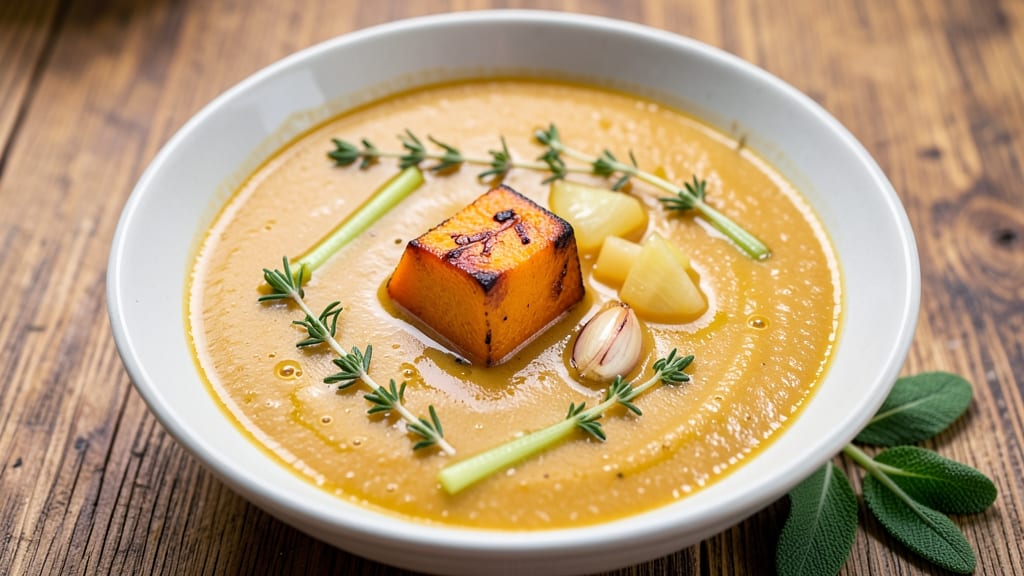
This aromatic butternut squash soup recipe transforms humble ingredients into velvety, nutmeg-kissed perfection that warms both body and soul. The secret lies in slow-roasting the squash until caramelized, then blending it with toasted aromatics—thyme, sage, and a whisper of ginger—for depth that lingers long after the first spoonful.
What sets this apart is the silken texture achieved through proper blending technique, creating a soup so smooth it feels like a hug in a bowl.
We begin by developing rich, toasted flavors in the base—sautéing onions, garlic, and celery until golden creates the foundation for the soup's aromatic complexity. The butternut squash, cut into even cubes, roasts until tender yet retains its shape, ensuring each bite delivers perfect texture.
Nutmeg and a splash of cream (or coconut milk for a dairy-free option) elevate the soup from ordinary to extraordinary, adding warmth and velvety richness that balances the natural sweetness of the squash.
The result is a soup that's equally impressive as a weeknight meal or holiday centerpiece—creamy yet light, fragrant with earthy spices, and impossibly comforting. Garnishes like toasted pumpkin seeds or crispy croutons add satisfying texture, while a drizzle of olive oil and fresh herbs complete the presentation.
This recipe delivers restaurant-quality results without requiring specialized equipment, making it perfect for home cooks ready to master velvety, aromatic soups.
Whether you're serving a crowd or treating yourself to a cozy solo dinner, this soup's versatility shines—it reheats beautifully, freezes well, and adapts to dietary preferences with simple swaps.
The technique is straightforward but yields professional-level outcomes, proving that exceptional soup doesn't require complicated methods. Let's create this nourishing, flavor-packed masterpiece that will become your new autumn staple.
Ingredients for aromatic butternut squash soup
Transform humble ingredients into velvety, nutmeg-kissed soup perfection with these carefully selected components.
| Ingredient | Amount | Notes |
|---|---|---|
| Medium Butternut Squash 🎃 | 3 lb | Peeled, seeded, cut into 1-inch cubes |
| Yellow Onion 🧅 | 1 whole | Diced, medium size |
| Celery Stalks 🌿 | 3 whole | Diced, medium ribs |
| Garlic Cloves 🧄 | 4 cloves | Peeled, minced |
| Fresh Thyme Sprigs 🌿 | 2 whole | Stems removed, leaves only |
| Fresh Sage Leaves 🌿 | ¼ cup | Chopped, loosely packed |
| Fresh Ginger Root 🌿 | 1 tbsp | Grated, finely |
| Ground Nutmeg 🌶️ | ½ tsp | Freshly grated preferred |
| Heavy Cream 🥛 | ½ cup | Full-fat, cold |
| Vegetable Broth 💧 | 4 cups | Low-sodium, homemade preferred |
| Extra-Virgin Olive Oil 🫒 | ½ cup | For roasting and finishing |
| Salt 🧂 | 1 ½ tsp | Diamond Crystal kosher salt |
| Black Pepper 🌶️ | ½ tsp | Freshly cracked |
| Pumpkin Seeds 🥜 | ¼ cup | Toasted, for garnish |
The butternut squash is the soul of this soup—choose a dense, heavy variety with smooth skin and no soft spots. Local farmers markets often carry the best quality, but the supermarket's organic section works too. For the aromatics, fresh thyme and sage from the grocery store's produce section are ideal, though dried will work in a pinch. The ginger should be firm and aromatic—look for plump, unblemished roots. Toast your spices lightly in a dry pan before using to deepen their flavors, a technique professional chefs swear by for maximum aromatic impact.
No fresh thyme? Dried thyme at one-third the amount suffices, though it lacks the bright, floral notes of fresh. Substitute sage with rosemary at half the quantity, but expect a slightly different herbal profile. The vegetable broth can be store-bought, but homemade with carrot tops and celery leaves elevates the soup's depth. For a dairy-free version, replace the heavy cream with full-fat coconut milk—it adds richness without compromising the soup's silken texture. The pumpkin seeds? Toast them in a dry skillet until golden for maximum crunch and nuttiness.
This soup reheats beautifully—simmer gently on the stove, stirring occasionally, until warmed through. Store in airtight containers for up to 5 days in the refrigerator, though the flavors actually deepen overnight. For longer storage, freeze in portioned containers for up to 3 months. The roasted squash cubes can be prepped ahead and refrigerated for 2 days, making this an excellent make-ahead dish for busy weeknights. Garnish with a drizzle of olive oil and extra nutmeg just before serving to maintain that restaurant-quality finish.
Why You'll Love This Recipe
- One-Pot Magic: I swear by this recipe because it’s all about minimal cleanup—just chop, sauté, and blend. No extra pots, no fuss. The onion, celery, and garlic caramelize right in the same pot where the soup simmers, so you’re washing one bowl at the end. Honestly, that’s half the battle won.
- Herb-Packed Depth: That fresh thyme and roasted garlic? Chef’s kiss. The thyme brightens every spoonful while the garlic lingers in a way that makes you want seconds. And the butternut squash—sweet, nutty, and velvety—carries it all without overpowering. It’s the kind of flavor that sticks with you.
- Weeknight to Dinner Party: Between us, this soup is my go-to for both lazy nights and when unexpected company shows up. For weeknights, I toss in a handful of spinach at the end. For guests, I garnish with crispy sage and a drizzle of cream. Same base, different vibes—no stress, all satisfaction.
- Budget-Friendly Leftovers: Butternut squash is affordable, and this recipe stretches easily. I make a big batch on Sundays, and by Wednesday, I’m reheating bowls for lunch or freezing portions for months. The onions and celery add bulk without breaking the bank, and the thyme keeps the cost low while boosting flavor. Practical? Absolutely. Delicious? Even more so.
Step-by-step instructions for aromatic butternut squash soup
Transform simple ingredients into velvety, nutmeg-kissed soup with these precise techniques.
Roast the Vegetable Base for Deep Flavor
Preheat your oven to 400°F and line a large baking sheet with parchment paper. Arrange the 3 lb medium butternut squash cubes, 1 whole yellow onion (diced), 3 whole celery stalks (diced), and 4 cloves garlic (peeled) in a single layer on the sheet. Drizzle everything with 2 tablespoons of the 0.5 cup extra-virgin olive oil and toss gently to coat.
Spread the vegetables evenly and roast for 30-35 minutes, stirring halfway through, until the squash is tender when pierced with a knife and the edges are deep golden brown. This roasting step develops complex caramelized flavors that form the foundation of your soup. The onions should be soft and translucent, while the celery should yield slightly under pressure.
Build the Aromatic Base with Fresh Herbs
Transfer the roasted vegetables to a large pot and add the remaining 0.3 tablespoons extra-virgin olive oil. Stir in the 2 whole fresh thyme sprigs (leaves only), 0.25 cup fresh sage leaves (chopped), and 1 tablespoon fresh ginger root (finely grated). Cook over medium heat for 2-3 minutes, stirring constantly, until the herbs release their essential oils and the mixture becomes fragrant.
Add the 4 cups vegetable broth and bring to a gentle simmer. Stir in the 0.5 tsp ground nutmeg and 1.5 tsp salt. Let the soup simmer uncovered for 10 minutes to allow the flavors to meld. The nutmeg should perfume the air subtly, while the ginger will add a warm, slightly spicy note that complements the sweetness of the squash.
Blend to Silken Perfection
Use an immersion blender to puree the soup directly in the pot until completely smooth. For an ultra-silken texture, strain through a fine-mesh sieve if desired. Return the soup to the pot and stir in the 0.5 cup heavy cream and 0.5 tsp black pepper. The cream should blend seamlessly, creating a luxurious mouthfeel without overpowering the vegetable flavors.
Taste and adjust seasoning if needed—this is where the soup's balance comes together. The nutmeg should be present but not overpowering, while the ginger and thyme should add layers of complexity. The soup should be rich but not heavy, with the sweetness of the roasted squash shining through.
Finish and Garnish Professionally
Reduce the heat to low and let the soup simmer gently for an additional 5 minutes to allow the flavors to fully integrate. Ladle the soup into bowls and immediately garnish with 0.25 cup toasted pumpkin seeds. The seeds should be toasted in a dry skillet over medium heat for 2-3 minutes until fragrant and lightly browned before sprinkling on top.
Serve immediately with a drizzle of high-quality extra-virgin olive oil if desired. The contrast between the creamy soup and the nutty, crunchy seeds adds both texture and visual appeal. Each spoonful should deliver a harmonious blend of sweet, earthy, and aromatic flavors with perfect velvety texture.
Pro Tips For Making Aromatic Butternut Squash Soup
- CHAR THE ONIONS LOW: Sauté those onions and celery in two tablespoons of butter (yes, butter) over medium-low heat until they’re deep golden—not brown, not pale, but that rich caramel stage where the kitchen smells like a French bistro. I used to rush this, and the soup always tasted flat; patience here builds the flavor base.
- PEEL THE SQUASH AFTER COOKING: Skip the fuss of peeling raw butternut squash—just roast or boil it whole (cut into chunks), then let it cool before scraping off the skin with a spoon. The flesh pulls away cleanly, and you avoid the mess of peeling a slippery squash. (Pro move: Save those skins for broth.)
- SALT THE WATER LIKE THE OCEAN: When boiling the squash, add 1½ teaspoons of salt per 4 cups of water—enough to make it taste like seawater. This seasons the squash deeply before blending, so you won’t need to over-salt later. I learned this the hard way after blending bland, watery soup.
- BLOOM THE THYME FIRST: Chop the thyme sprigs coarse (no need to mince) and add them to the pot with the onions and celery—let them steep in the butter for 2 minutes before adding anything else. This extracts their aroma fully, making the soup smell like it was simmered for hours. (Yes, even if you’re in a hurry.)
Dietary considerations for this dish
Vegetarian-Friendly Foundation
This soup is naturally vegetarian, relying on the rich flavors of roasted butternut squash, fresh herbs, and aromatic spices to create depth. The heavy cream adds velvety texture, but you can easily substitute full-fat coconut milk for a dairy-free version without compromising the soup's luxurious mouthfeel.
The vegetable broth ensures the base remains plant-based while providing robust flavor. 🌱
Gluten-Free Adaptations
All ingredients in this recipe are inherently gluten-free, making it safe for those with celiac disease or gluten sensitivity. The vegetable broth should be certified gluten-free, and the toasted pumpkin seeds for garnish are naturally gluten-free.
Always double-check labels on packaged ingredients like broth and spices to avoid cross-contamination. The soup's natural sweetness and spice profile shine without any gluten-containing additives.
Dairy-Free Swaps
For a dairy-free version, replace the 0.5 cup heavy cream with an equal amount of full-fat coconut milk—it adds richness while keeping the soup's silken texture. You can also use cashew cream (blend soaked cashews with water) for a nutty depth.
The coconut milk will introduce subtle tropical notes that complement the nutmeg and ginger beautifully. Always use unsweetened versions to avoid altering the soup's balance.
Low-Calorie Adjustments
To reduce calories while maintaining flavor, use low-fat coconut milk instead of heavy cream and increase the vegetable broth by 0.5 cup to maintain consistency. Lightly toast the pumpkin seeds in a dry skillet to enhance their flavor without adding fat.
Reduce the olive oil to 2 tablespoons total for roasting and use a fine-mesh sieve to remove excess fat from the blended soup. The result is still hearty and satisfying but with fewer calories.
Allergen Considerations
This soup contains no common allergens, but always verify ingredient labels for potential cross-contamination. For nut allergies, omit the pumpkin seeds and substitute with toasted sunflower seeds instead. If you're serving guests with multiple allergies, prepare the soup in a dedicated pot and avoid cross-contact with other foods.
The recipe's focus on fresh herbs and spices makes it adaptable to various dietary restrictions while keeping the flavors vibrant.
Meal Prep Tips
Store leftover soup in airtight containers for up to 5 days in the refrigerator, though the flavors deepen overnight. For longer storage, freeze in portioned containers for up to 3 months.
When reheating, warm gently on the stove over medium-low heat, stirring occasionally, to preserve the soup's silken texture. Garnishes like toasted seeds can be added fresh after reheating to maintain their crunch. The soup reheats beautifully, making it perfect for busy weeknights or meal prep.
Nutrition facts
Frequently asked questions
Why does roasting the squash make this soup taste better?
Roasting caramelizes the natural sugars in the squash, creating deep, complex flavors that can't be achieved by boiling. The golden edges develop nutty, almost toasty notes that blend beautifully with the aromatic herbs. This technique also softens the squash perfectly for blending while preserving its natural sweetness.
Can I make this soup ahead of time?
This soup actually tastes better the next day as the flavors meld together. Store in an airtight container in the refrigerator for up to 5 days. For longer storage, freeze in portioned containers for up to 3 months. Just reheat gently on the stove over medium-low heat and add fresh toasted seeds as garnish before serving.
What's the secret to getting that ultra-smooth texture?
The key is blending while the soup is still hot (about 170°F) and using an immersion blender for complete smoothness. For an extra-silken result, strain through a fine-mesh sieve after blending. The heavy cream also contributes to the luxurious texture, but coconut milk works beautifully for a dairy-free version that's still velvety.
How can I make this soup more flavorful if I don't have fresh herbs?
Use dried herbs at one-third the amount (so 1/3 tsp dried thyme instead of 2 sprigs fresh). Toast the dried herbs in a dry pan for 30 seconds to deepen their flavor before adding to the soup. You can also add a pinch of smoked paprika or a dash of fish sauce (just 1/4 tsp) for extra umami depth that complements the sweet squash.
What's the best way to serve this soup for a crowd?
Double the recipe and keep it warm in a slow cooker set to low heat while serving. For presentation, ladle into shallow bowls and garnish with toasted pumpkin seeds and a drizzle of olive oil. Serve with crusty bread or a side salad to make it a complete meal. The nutmeg aroma will fill your kitchen and make your home smell like autumn!