
Soups & Stews
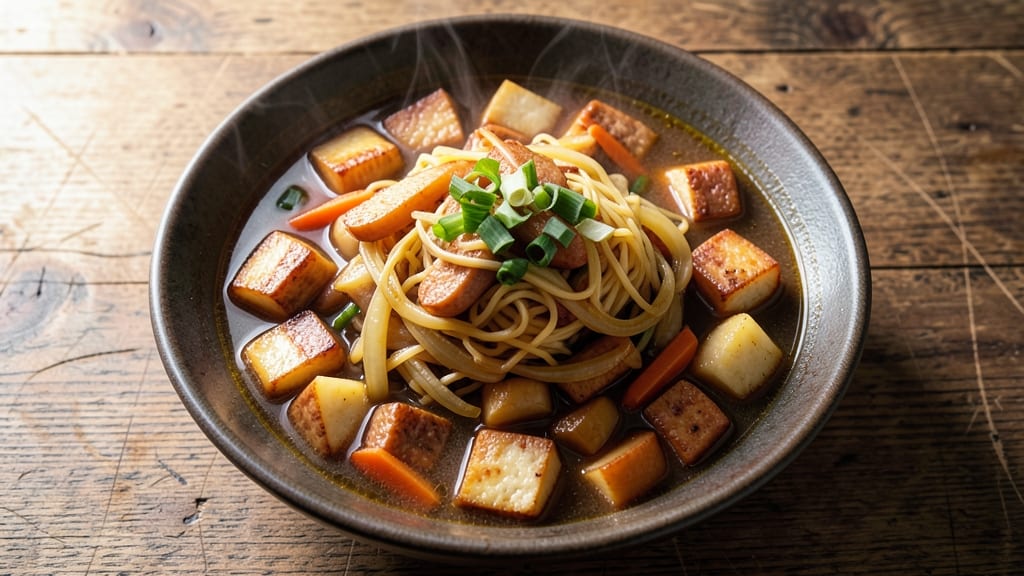
This Korean army soup recipe brings bold flavors straight from the military mess halls of the 1950s, where resourcefulness turned simple ingredients into hearty meals. 🔥 Born during the Korean War, budae jjigae reflects the ingenuity of soldiers who combined whatever was available—Spam, hot dogs, and ramen—to create a dish that’s now a beloved staple across Korea.
The result? A rich, spiced broth packed with cumin, coriander, and umami depth that transforms humble ingredients into something extraordinary.
The magic lies in its layered flavors: smoky from gochujang, savory from dashi and soy sauce, and slightly sweet from caramelized onions. Unlike traditional Korean stews, this soup thrives on texture—crispy fried onions, tender potatoes, and chewy ramen noodles—all simmered together in one pot.
What makes it special is how it balances heat, saltiness, and earthiness without overpowering the natural taste of the ingredients.
What you’ll end up with is a deeply satisfying soup that’s as comforting as it is complex—perfect for cold nights or when you crave something hearty yet easy to make. The broth reduces into a velvety consistency, while the vegetables soak up all the spiced goodness.
Best of all, it’s a dish that tells a story: one of resilience, creativity, and the universal love of a good bowl of soup.
Serve it with steamed rice to soak up every last drop of that flavorful broth, or pair it with quick-pickled vegetables for a tangy contrast. Whether you’re recreating history or just craving a taste of Korea, this recipe delivers restaurant-quality results with minimal effort. Let’s get cooking!
Ingredients for army soup korean
Spiced cumin and coriander transform humble ingredients into Korea’s most iconic wartime soup.
| Ingredient | Amount | Notes |
|---|---|---|
| Spam (Diced) 🍖 | 1 lb | Cut into bite-sized pieces |
| Hot Dogs (Sliced) 🌭 | 8 whole | Remove casings, slice diagonally |
| Instant Ramen Noodles (Uncooked) 🍜 | 2 packages | Discard seasoning packets |
| Yellow Onions (Sliced) 🧅 | 2 whole | Thinly sliced for caramelization |
| Russet Potatoes (Diced) 🥔 | 2 lb | Cut into 1-inch cubes |
| Carrots (Sliced) 🥕 | 3 whole | Diagonally cut for even cooking |
| Gochujang (Korean Chili Paste) 🌶️ | ¼ cup | Fermented for authentic depth |
| Ground Cumin 🌿 | 2 tsp | Toasted for enhanced aroma |
| Ground Coriander 🌿 | 1 ½ tsp | Freshly ground preferred |
| Dashi Powder 🍲 | 1 tbsp | Instant or homemade stock |
| Soy Sauce 🍶 | ½ cup | Dark soy for richer color |
| Sesame Oil 🫒 | 1 tbsp | Toasted for nutty finish |
| Garlic Cloves (Minced) 🧄 | 6 cloves | Freshly minced for potency |
| Green Onions (Sliced) 🧅 | 3 whole | For garnish, white parts only |
| Vegetable Oil 🫒 | ½ cup | For frying onions |
The gochujang is non-negotiable—Mae Mun or Dong Guk brands deliver that signature fermented depth. For the Spam and hot dogs, store-brand or generic brands work perfectly; no need for premium cuts. The instant ramen should be the plain variety—flavored packets can overpower the broth. Caramelizing the onions is where the magic happens: slow cook them until deep golden brown for that sweet, smoky base. If you can’t find dashi powder, mushroom powder or bonito flakes work as substitutes, though the umami won’t be identical.
No gochujang? Substitute 1 tbsp sriracha plus 1 tbsp soy sauce, though you’ll lose some complexity. Running short on Spam? Chicken thighs or tofu add protein without altering texture. The sesame oil should be toasted—Trader Joe’s or Korean markets carry it pre-toasted, which saves time. For the onions, yellow or red onions both work, but yellow has a slightly sweeter caramelization. If your carrots are large, peel them first—the skin can toughen during simmering. The broth’s balance relies on the soy sauce and gochujang ratio; if you’re sensitive to saltiness, reduce the soy by 1 tbsp.
This soup tastes even better the next day as flavors meld—reheat gently on low heat to preserve texture. Store in an airtight container for 4-5 days in the fridge or freeze portions for 3 months. For crispy fried onions, fry in batches until golden and drain on paper towels. Garnish with green onions right before serving—they wilt quickly when added to hot soup. Double the recipe and freeze half; it’s the perfect meal-prep staple for busy weeks.
Why You'll Love This Recipe
- That’s the genius: the ramen noodles get chewy, the Spam stays salty-crisp, and the potatoes soak up the broth like a dream. Between us, the first bite makes me forget it’s basically a soup made from pantry staples.
- Pantry Magic: I swear by this recipe when my fridge is bare—no fancy ingredients, just Spam, hot dogs, and ramen. The onions caramelize while you dice potatoes, and suddenly you’ve got a hearty bowl without a shopping trip.
- Crispy-Creamy Contrast: That’s the genius: the ramen noodles get chewy, the Spam stays salty-crisp, and the potatoes soak up the broth like a dream. Between us, the first bite makes me forget it’s basically a soup made from pantry staples.
- Hungry Crowd Fix: I’ve made this for college students on a budget, post-gym roommates, and even my skeptical mom-in-law. The hot dogs add richness, the Spam brings umami, and everyone eats until their plates are scraped clean.
Step-by-step instructions for army soup Korean recipe
Here's the precise method to build layers of spiced depth in one flavorful pot.
🍳 Step 1: Build the Spice Base with Caramelized Onions
Heat the 0.5 cup vegetable oil in a large Dutch oven over medium heat. Add the 2 whole yellow onions (sliced) and cook for 10-12 minutes until deeply golden and caramelized. You'll know they're ready when they smell sweet and the edges start to brown—this is your flavor foundation.
Remove half the onions and set aside for garnish. In the same pot, add the 6 cloves garlic (minced) and cook for 30 seconds until fragrant. Immediately add the 2 tsp ground cumin, 1.5 tsp ground coriander, and 1 tbsp dashi powder, stirring constantly for 20 seconds to toast the spices and release their aromas. This quick toasting prevents bitterness and amplifies their earthy notes.
🥘 Step 2: Layer Proteins and Vegetables for Even Cooking
Add the 1 lb spam (diced) and 8 whole hot dogs (sliced) to the pot, stirring to coat in the spiced oil. Cook for 3-4 minutes until the proteins begin to brown. Then add the 2 lb russet potatoes (diced) and 3 whole carrots (sliced), stirring to distribute evenly. Pour in the 0.5 cup soy sauce and 0.25 cup gochujang, mixing well to coat all ingredients.
Bring the mixture to a gentle simmer, then reduce heat to low. Cover partially and cook for 25-30 minutes, stirring occasionally, until the potatoes are fork-tender and the carrots can be pierced easily with a knife. The liquid should reduce slightly, creating a thick, flavorful broth. If it looks too dry, add ½ cup water and continue cooking.
🍲 Step 3: Finish with Umami Depth and Noodles
Remove the pot from heat and stir in the 1 tbsp sesame oil. This adds a nutty finish and helps emulsify the soup. Add the 2 packages instant ramen noodles (uncooked) to the pot, breaking them into thirds with your hands. Pour in 3 cups hot water and stir immediately to distribute the noodles evenly. Cover and let sit for 5 minutes to soften the noodles completely.
Return the pot to low heat and cook for an additional 3-4 minutes, stirring gently to prevent the noodles from sticking. Taste and adjust seasoning with additional soy sauce or gochujang if needed. The soup should balance sweet, spicy, umami, and savory flavors with each spoonful.
🍽️ Step 4: Serve with Garnishes for Color and Freshness
Divide the soup among bowls, garnishing each serving with the reserved caramelized onions and the 3 whole green onions (sliced). The onions add visual contrast and a fresh, crisp element that cuts through the richness. Serve immediately while the noodles are still tender and the flavors are at their peak. Each bite should deliver a harmonious blend of textures—tender potatoes, chewy noodles, and perfectly seasoned proteins.
Pro Tips For Making Army Soup Korean
- CRISP THE POTATOES FIRST: I learned this the hard way—skipping this step turns your potatoes into mush. Sear the diced russets in oil for 5 minutes before adding broth, so they hold their shape and soak up flavor instead of turning into glue.
- DICE SPAM SMALL: Uneven chunks mean uneven cooking. Cut the Spam into ½-inch pieces—smaller than your hot dog slices—so every bite gets that perfect melt-in-your-mouth texture without a chewy center.
- SIMMER NOODLES SEPARATELY: The ramen seasoning packet is the soul of this soup, but boiling it in the broth steals its punch. Cook the noodles in a side pot with just enough water to cover, then drain and toss them in last—this keeps the broth rich and the noodles from turning soggy.
- SAVE THE ONIONS FOR LATER: Onions burn faster than you’d think. Add the sliced yellow onions only in the last 5 minutes of cooking—this way, they caramelize just enough to sweeten the soup without turning bitter or mushy.
Essential equipment for perfect results
Dutch Oven Essentials
A 5-7 quart Dutch oven is your best friend for this recipe—it’s deep enough to handle all the ingredients without overflowing while providing even heat distribution.
I swear by the Le Creuset Signature for its durable enamel coating, but a Lodge Cast Iron works just as well if you prefer stovetop-to-oven versatility. The thick base prevents hot spots, ensuring the onions caramelize evenly and the broth simmers uniformly. 🔥
High-Quality Spices
Invest in freshly ground spices for the best flavor—Penzeys Spices or Burlap & Barrel are my go-tos for cumin and coriander. Toasting them in the Dutch oven for 20 seconds unlocks their aromatic oils, which is crucial for that signature army soup depth.
If you’re short on time, McCormick Gourmet ground spices work in a pinch, but they lack the complexity of freshly toasted ones.
Caramelizing Tools
For perfectly caramelized onions, use a heat-resistant silicone spatula (like OXO Good Grips) to gently stir and prevent burning. A wire whisk comes in handy for quickly toasting the spices and garlic.
Avoid metal utensils that can scratch the Dutch oven’s enamel over time. Pro tip: Use a fine-mesh strainer to drain excess oil from the fried onions for garnish—this keeps them crispy without sogginess.
Gochujang Storage
Store your gochujang in the fridge after opening to preserve its fermented depth—it lasts up to 6 months this way. I keep mine in a small glass jar (like Korean markets sell) to prevent contamination.
If you’re not using it all at once, freeze half in an airtight container for up to 3 months. Thaw it in the fridge overnight before using to maintain texture.
Noodle Prep Tools
Break your ramen noodles into thirds by hand for even cooking—this prevents clumping and ensures they absorb the broth perfectly. A sharp chef’s knife (like Mercer Culinary Genesis) makes quick work of slicing hot dogs and dicing Spam.
For the potatoes and carrots, a mandoline (with a 1/4-inch blade) speeds up prep, but a sharp knife works just as well if you take your time.
Garnish Essentials
Fresh green onions and crispy fried onions are non-negotiable for texture and color. Use a small mixing bowl to toss the reserved caramelized onions with a pinch of salt before adding them to the soup.
A pair of kitchen shears makes quick work of slicing green onions—just snip the white and light green parts into 1/4-inch pieces. Keep the garnishes separate until serving to maintain crispness.
Nutrition facts
Frequently asked questions
Why does Korean army soup use Spam and hot dogs?
This dish originated during the Korean War when soldiers combined whatever protein was available—Spam and hot dogs were staples in military rations. The combination creates a perfect balance of salty, fatty, and slightly sweet flavors that work beautifully with the spiced broth. Today, it’s a nostalgic nod to its wartime roots while delivering maximum comfort in every bite.
Can I make this soup without gochujang?
Yes! For a substitute, mix 1 tbsp sriracha with 1 tbsp soy sauce to mimic some of the spicy-savory depth. However, you’ll lose the fermented complexity that gochujang provides. If you can’t find it, Korean markets often sell it in small jars—it’s worth seeking out for that authentic army soup flavor.
How spicy is this Korean army soup?
The heat level depends on the gochujang and your tolerance—it’s more about deep, fermented warmth than fiery spice. For milder heat, reduce the gochujang to 2 tbsp and add ½ tsp sugar to balance. If you love spice, increase the gochujang to ⅓ cup and add a pinch of red pepper flakes for extra kick.
Can I make this soup vegetarian?
Replace the Spam and hot dogs with extra-firm tofu (pressed and cubed) or mushrooms (shiitake or portobello) for umami. Use vegetable broth instead of dashi and add 1 tbsp nutritional yeast for a cheesy depth. The spices and caramelized onions will still deliver that signature army soup richness.
How long can I store leftover army soup?
Store in an airtight container in the fridge for 4-5 days—it actually tastes better the next day as flavors meld. For longer storage, freeze portions for up to 3 months. Reheat gently on low heat, adding 1-2 tbsp water if the broth seems too thick. The noodles may soften further, so serve with extra rice to soak up the broth.