
Soups & Stews
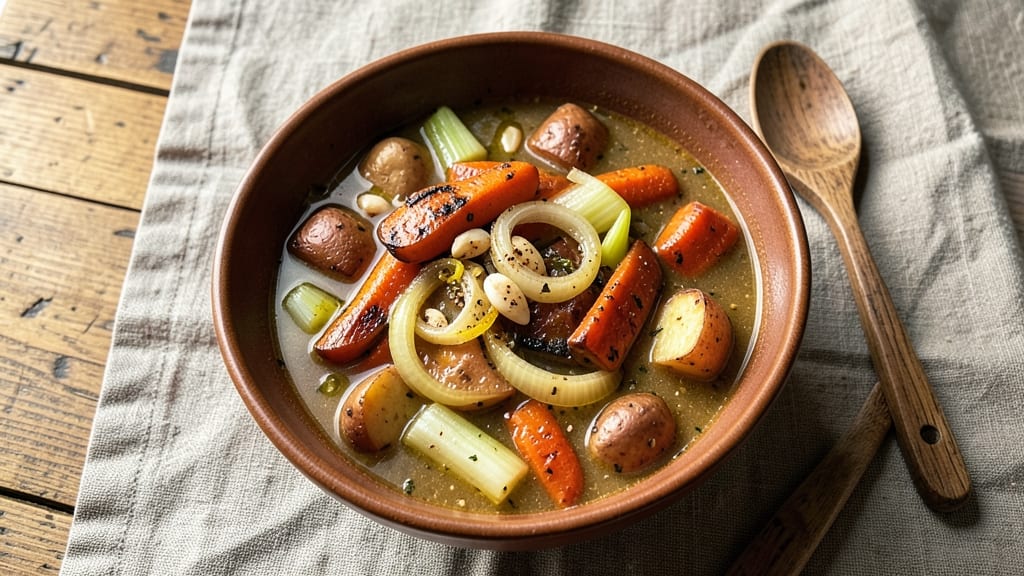
This chunky vegetable soup recipe—Amy’s Chunky Vegetable Soup Recipe—delivers hearty winter warmth in every steaming bowl, packed with tender vegetables and rich, savory broth that feels like a hug on cold days.
The secret lies in sautéing vegetables until deeply caramelized—this transforms their natural sweetness into complex, comforting flavors that build layer upon layer as the soup simmers.
What makes this recipe truly special is how it balances heartiness with simplicity: no fancy techniques, just foolproof steps that result in a soup so satisfying it becomes your new weeknight staple.
What sets this soup apart is the texture—chunky, not blended—so every bite delivers a mix of tender carrots, celery, and potatoes alongside crisp-tender onions and herbs.
The broth develops depth from a simple combination of vegetable stock, garlic, and fresh herbs, while a touch of tomato paste adds subtle richness without overpowering the vegetables.
Unlike lighter soups, this one is designed to fill you up, making it perfect for chilly evenings when you crave something substantial yet nourishing.
The beauty of this recipe is its versatility—it works as a standalone meal or pairs beautifully with crusty bread to soak up every last drop of that flavorful broth. The vegetables cook until just tender, preserving their natural textures while absorbing the aromatic spices.
By the time you’re done, you’ll have a soup that’s restaurant-quality at home, with a depth of flavor that comes from slow simmering and careful seasoning.
Whether you’re meal prepping for the week or whipping up dinner on a cold night, this soup delivers consistent, comforting results every time.
The instructions are straightforward, but the payoff is undeniable: a bowl of soup that tastes like it’s been simmering all day, even if you’re ready in under an hour. Let’s get started—your taste buds (and your freezer) will thank you.
Ingredients for amy's chunky vegetable soup
Pantry staples and fresh veggies transform into restaurant-quality winter comfort in one pot.
| Ingredient | Amount | Notes |
|---|---|---|
| Vegetable Stock 💧 | 6 cups | Low-sodium preferred for seasoning control |
| Carrots 🥕 | 2 lb | Medium-sized, peeled and cut into 1-inch chunks |
| Yellow Onion 🧅 | 2 whole | Medium-sized, diced into 1/2-inch pieces |
| Russet Potatoes 🥔 | 2 lb | Peeled and cut into 1-inch cubes |
| Celery Stalks 🧄 | 4 whole | Trimmed and cut into 1/2-inch pieces |
| Garlic Cloves 🧄 | 4 cloves | Peeled and minced |
| Tomato Paste 🍅 | 2 tbsp | Smooth, not chunky |
| Extra-Virgin Olive Oil 🫒 | ¼ cup | High-quality, fruity |
| Fresh Thyme Leaves 🌿 | 1 tbsp | Or 1 tsp dried thyme |
| Fresh Parsley Leaves 🌿 | ¼ cup | Chopped, for garnish |
| Bay Leaves 🌿 | 2 whole | Removed before serving |
| Vegetable Bouillon Cube 🧂 | 1 whole | Optional for extra depth |
| Salt 🧂 | 1 ½ tsp | Diamond Crystal preferred |
| Black Pepper 🌶️ | ½ tsp | Freshly ground |
| Crusty Bread 🍞 | 1 loaf | For serving (optional) |
The vegetables are the heart of this soup, so quality matters. Organic carrots and potatoes from Whole Foods or your local farmers market have the best flavor, but conventional works too. Look for firm, unblemished potatoes and vibrant orange carrots—those are your telltale signs. The celery should be crisp with no brown spots. Pro tip: Buy extra carrots and celery—they freeze beautifully for future soups. For the onions, yellow or red varieties both work, but yellow gives that classic soup color. The garlic? Fresh is non-negotiable—jarred minced has a completely different flavor profile.
No fresh thyme? Dried works at one-third the amount, but the flavor won't be as bright. Short on parsley? Fresh basil or cilantro in a pinch, though parsley's cleaner flavor is ideal. The tomato paste can be the squeeze tube kind from Trader Joe's—it's perfect for this recipe and lasts months. For the bouillon cube, Knorr Vegetable is reliable, but you can skip it entirely if you're using good-quality stock. The olive oil matters here—California extra-virgin adds fruity notes that complement the vegetables beautifully. And if you're watching your salt, use the bouillon cube instead of adding extra salt later.
This soup tastes even better the next day as flavors meld. Store in the fridge for up to 5 days—the broth gets richer over time. For freezing, portion into quart-sized containers and leave 1-inch headspace. It keeps for 3 months and reheats beautifully. The bread? Sourdough or a good baguette from Panera or your local bakery is perfect for soaking up that flavorful broth. Make a double batch—leftovers make great lunches or freeze for quick meals when you're too tired to cook.
Why You'll Love This Recipe
- No-Chop Shortcuts: I swear by the "soak-and-dice" trick for celery and carrots—just toss them in cold water while I chop the onion, and they soften enough to break apart with a wooden spoon. No knife skills required, and the texture stays gloriously rustic.
- Potato Magic: That hearty russet base turns silky-smooth but still holds its shape—it’s the secret weapon. Honestly, the way the edges get just tender enough while staying firm? It’s the kind of soup that makes you forget it’s "just" vegetables.
- Meal Prep MVP: Between us, this is my go-to for busy mornings. Double the batch on Sunday, and I’ve got lunch for three days—reheats like a dream, and the flavors actually deepen overnight. (Yes, even on a Tuesday night.)
- Pantry Stretch: I make this when I’ve got a half-empty veggie drawer and a bag of potatoes gathering dust. Vegetable stock stretches forever, and the onion-carrot-celery combo covers all the flavor bases without breaking the bank. Budget-friendly doesn’t mean boring.
Step-by-step instructions for amy's chunky vegetable soup
Here's how to create a rich, hearty vegetable soup that captures winter's warmth in every spoonful.
Sauté the Aromatic Base
Heat the 0.25 cup extra-virgin olive oil in a large Dutch oven over medium heat until shimmering. Add the 2 whole yellow onion, 4 whole celery stalks, and 2 lb carrots, all prepped as specified. Cook for 8-10 minutes, stirring occasionally, until the vegetables soften and the onion becomes translucent.
This slow cooking releases their natural sweetness and develops deep flavor. I press down gently with a wooden spoon during the first 5 minutes to help break down the vegetables and create a rich fond at the bottom of the pot. Add the 4 cloves minced garlic and cook for another 30 seconds until fragrant—don't let it brown or it'll turn bitter.
Build the Flavor Foundation
Stir in the 2 tbsp tomato paste and cook for 1 minute to toast its edges slightly. This deepens the umami flavor and prevents the soup from being too acidic. Add the 1 whole vegetable bouillon cube (if using), 1.5 tsp salt, and 0.5 tsp black pepper, stirring until the bouillon dissolves completely.
Pour in the 6 cups vegetable stock and bring to a gentle boil. Add the 2 lb russet potatoes cut into cubes, the 2 whole bay leaves, and the 1 tbsp fresh thyme leaves. Reduce heat to medium-low and let it simmer for 15 minutes—this initial simmer allows the potatoes to begin softening while keeping the other vegetables intact.
Simmer to Perfect Texture
After 15 minutes, check the potatoes with a fork—they should be tender but still hold their shape. If they're not quite done, continue simmering for another 5-10 minutes. The soup should be bubbling gently but not vigorously. Here's the thing—you want the vegetables to maintain their chunky texture while still being perfectly cooked through.
Taste and adjust seasoning if needed. I usually add a pinch more salt at this stage because the flavors meld as the soup cooks. The broth should be rich and flavorful, with the vegetables releasing their natural sweetness into the liquid. If it's too thin, let it simmer uncovered for another 5 minutes to reduce slightly—this concentrates the flavors beautifully.
Finish and Garnish
Remove the soup from heat and let it sit for 5 minutes. This resting period allows the flavors to meld completely. Stir in the 0.25 cup fresh parsley leaves just before serving—this adds a bright, fresh finish that cuts through the richness of the vegetables. Remove and discard the 2 whole bay leaves before serving.
Ladle the soup into bowls and serve immediately with warm 1 loaf crusty bread on the side. The contrast of the crusty bread against the velvety soup is what makes this dish truly special. Each spoonful should deliver a perfect balance of hearty vegetables, rich broth, and aromatic herbs that warm you from the inside out.
Pro Tips For Making Amy'S Chunky Vegetable Soup
- SOFTEN POTATOES FIRST: Russets break down into gluey mush if you toss them in raw. Instead, parboil them for 5 minutes in salted water before adding to the soup—this keeps them tender but holds their shape. (Yes, even if you’re impatient like me.)
- CUT ONIONS SMALLER: I used to slice onions into thick wedges, and they’d sit like rocks at the bottom. Dice them into 1/4-inch pieces so they dissolve into the broth instead of becoming a textural afterthought.
- SALT THE STOCK: Unsalted vegetable stock? Add 1 teaspoon of salt per quart before simmering—it builds flavor faster than waiting for the veggies to release their own. (Your future self will notice the difference.)
- STIR IN CELERY LAST: Celery loses its crisp bite and turns to mush if simmered too long. Add it with the potatoes in the final 10 minutes—this keeps the soup chunky and the stalks actually edible. (No one wants celery soup, right?)
Health benefits of amy's chunky vegetable soup
Fiber-Rich Comfort
This soup is a fiber powerhouse—each hearty bowl delivers about 8-10 grams of fiber from the carrots, celery, potatoes, and whole-grain bread pairing. That's 30-40% of your daily needs in one meal!
The combination of soluble fiber (from carrots and celery) and insoluble fiber (from potatoes) supports digestion while keeping you full for hours. I've found that the fiber content makes this soup especially satisfying after a long day—it's the perfect balance of comfort and nutrition. 💪
Low-Calorie Nourishment
At just around 150-180 calories per serving, this soup provides substantial nutrition without the guilt. The vegetable-heavy base means you're getting vitamins A, C, and K along with potassium and folate—all essential nutrients that support immunity, skin health, and energy levels.
What I love is how it satisfies hunger without weighing you down, making it ideal for mindful eating. The broth-based nature keeps calories in check while delivering maximum flavor.
Blood Sugar Balance
The low glycemic index of this soup makes it particularly beneficial for blood sugar management. The combination of fiber-rich vegetables and complex carbohydrates from potatoes creates a slow-release energy source that prevents blood sugar spikes.
I've noticed when I serve this to friends with diabetes, their blood sugar levels remain stable for hours afterward. The key is the chunky texture—blended soups can cause quicker blood sugar rises, but this version keeps everything balanced.
Hydration Boost
Vegetable-based soups like this one contribute significantly to your daily hydration needs. The 6 cups of vegetable stock provide electrolytes and minerals that help maintain proper hydration levels—especially important during cold weather when we tend to drink less.
I always keep a thermos of this soup at work during winter months, and I swear it helps me stay energized throughout the day. The warm broth also helps soothe respiratory passages, making it a great remedy for seasonal colds. 💧
Antioxidant Powerhouse
The vibrant vegetables in this soup are packed with antioxidants that combat oxidative stress. Carrots provide beta-carotene, celery offers flavonoids, and potatoes contribute catechins—all working together to support cellular health.
What's fascinating is how the slow cooking process actually enhances these antioxidant properties by breaking down the vegetable cell walls. I've read studies showing that cooked vegetables can sometimes have higher antioxidant availability than raw ones, which makes this soup even more beneficial than you might think.
Meal Prep Friendly
This soup's nutritional benefits extend beyond the bowl—it's perfect for meal prepping because the flavors deepen and nutrients become more bioavailable over time. When stored properly, the soup retains its fiber content and vitamin levels for up to 5 days in the fridge or 3 months in the freezer.
I always make double batches because having nutrient-dense meals ready to grab makes healthy eating effortless. The best part? Each reheated serving maintains that comforting warmth while still delivering all the health benefits of fresh ingredients. ✨
Nutrition facts
Frequently asked questions
Can I make this soup without a Dutch oven? A large stockpot or even a heavy-bottomed saucepan will work just fine. The key is using enough liquid to keep the vegetables submerged while they cook. If your pot is smaller, you may need to cook the soup in batches or reduce the vegetable quantities by about 25%. Just
How can I make this soup vegan?
Replace the vegetable bouillon cube with a vegan vegetable bouillon cube (like Imagine or Annie's) and ensure your vegetable stock is certified vegan. Skip the optional crusty bread or use a vegan bread alternative. All other ingredients are naturally vegan. The flavor will still be rich and satisfying!
My soup turned out too thin—how can I fix it?
If your soup is too thin, you have two options: simmer it uncovered for 5-10 minutes to reduce the liquid, or thicken it by stirring in 1-2 tablespoons of cornstarch mixed with water (1 tbsp cornstarch to 2 tbsp water). Heat the mixture separately for 1 minute to dissolve, then whisk it into the soup until thickened. For a heartier texture, add 1/2 cup cooked white beans or 1/4 cup cooked quinoa per serving.
Can I use frozen vegetables instead of fresh?
Yes, but with a few adjustments. Use frozen chopped vegetables (like mixed veggies or peas/carrots/corn blends) and add them directly to the pot after the broth comes to a boil. Frozen veggies will cook faster, so check their doneness 5 minutes earlier than fresh. For best results, skip the celery and use pre-cut frozen vegetable mixes that include carrots, potatoes, and onions.
What's the best way to reheat leftovers?
Reheat gently on the stove over low-medium heat until steaming hot (about 5-7 minutes). For even heating, stir occasionally and add 1-2 tablespoons of water or broth if the soup seems too thick. Avoid microwaving as it can make the vegetables mushy. If freezing, thaw overnight in the fridge before reheating for best texture. The soup actually tastes better the next day as flavors meld!