
Soups & Stews
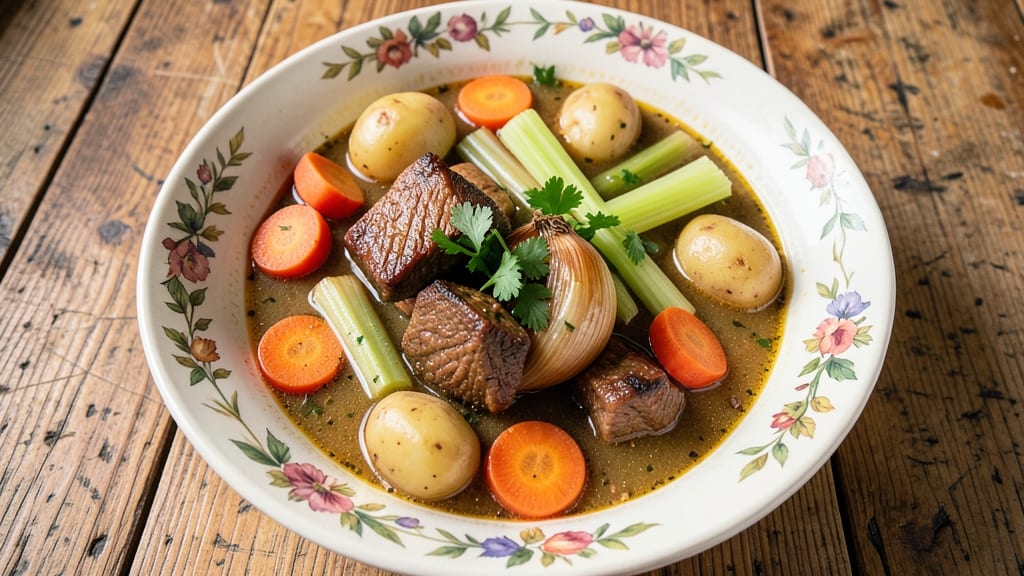
This Amish vegetable beef soup recipe brings old-world comfort to your table with its rich, slow-simmered flavors and hearty ingredients. The secret lies in tender beef chunks and root vegetables that meld into a deeply satisfying broth, perfect for chilly evenings or family gatherings.
I’ve perfected this version to stay true to traditional Amish cooking while making it accessible for modern kitchens.
The dish relies on a Dutch oven for even cooking, a technique passed down through generations. Carrots, potatoes, and onions develop a natural sweetness as they simmer alongside the beef, while herbs like thyme and bay leaves add subtle depth.
The result is a soup that’s both nourishing and deeply flavorful—ideal for feeding a crowd or storing for leftovers.
By the time you serve this soup, you’ll have a steaming bowl of homestyle goodness with tender beef, perfectly cooked vegetables, and a broth so rich it’ll have everyone asking for seconds. The simplicity of the ingredients belies the complexity of the flavors, making it a staple for any meal.
Pair it with crusty bread or a drizzle of olive oil for extra richness, and you’ve got a meal that feels like a warm hug. Here’s how to make it—step by step—for a soup that tastes like home.
Ingredients for amish vegetable beef soup
Nothing fancy—just good beef, root veggies, and herbs that simmer into homestyle comfort.
| Ingredient | Amount | Notes |
|---|---|---|
| Chuck Roast Beef 🥩 | 2 ½ lb | Cut into 1-inch cubes |
| Yellow Onions 🧅 | 2 whole | Medium, peeled and chopped |
| Carrots 🥕 | 4 whole | Medium, peeled and chopped |
| Russet Potatoes 🥔 | 4 whole | Medium, peeled and cubed |
| Celery Stalk 🧅 | 3 whole | Trimmed and chopped |
| Garlic Cloves 🧄 | 4 cloves | Minced for depth |
| Fresh Thyme 🌿 | 2 tbsp | Leaves only, chopped |
| Fresh Parsley 🌿 | ¼ cup | Chopped for garnish |
| Bay Leaves 🍃 | 2 whole | Removed before serving |
| Beef Broth 💧 | 6 cups | Low-sodium preferred |
| Tomato Paste 🍅 | ¼ cup | For richness |
| Olive Oil 🫒 | 2 tbsp | For searing |
| Salt 🧂 | 1 ½ tsp | Kosher or sea salt |
| Black Pepper 🌶️ | 1 tsp | Freshly ground |
| All-Purpose Flour 🌾 | 2 tbsp | For thickening |
The beef is the star here. Chuck roast is perfect—it stays tender while absorbing all those veggie flavors. Grab it from the butcher counter if you can (they’ll usually cube it for you), or buy pre-cubed at Costco or Walmart. Look for good marbling—it’ll keep the meat juicy. I always buy a little extra because it freezes beautifully. For the veggies, organic carrots and potatoes from the store’s fresh section taste sweeter, but regular ones work too. Just scrub them well if you’re skipping the peeling.
No beef broth? Water plus 2 beef bouillon cubes gets you close, but add a splash of balsamic vinegar for depth. Fresh thyme is ideal, but dried works at half the amount if that’s what you’ve got. The tomato paste can be the squeeze-tube kind—it’s perfect for this. For the flour, King Arthur or Gold Medal brands are my go-tos, but any all-purpose will do. If you’re watching carbs, you could swap half the potatoes for cauliflower florets—they’ll soften right up in the broth.
This soup tastes even better the next day—honestly, it’s a great make-ahead meal. Keeps for 5-6 days in the fridge, or 3 months frozen. I like to portion it into containers so we can grab bowls straight from the fridge. The bay leaves? Remove them before serving—nobody wants a leaf in their soup. And if you’ve got leftover broth, freeze it for future soups or gravies. Nothing goes to waste in this kitchen.
Why You'll Love This Recipe
- One-Pot Magic: I swear by this—just toss the beef, onions, carrots, and celery into a pot with broth, let it simmer, and walk away. No chopping like a fine-diner, no fancy techniques. The potatoes just melt in later, and boom, dinner’s ready.
- Deep Umami Bomb: That chuck roast? It falls apart into tender, rich chunks after hours of slow cooking, while the onions caramelize right into the broth. Honestly, the first spoonful makes me forget I’m even eating soup—it’s that hearty.
- Meal Prep MVP: Between us, this soup gets better the next day. I make a double batch on Sundays—one for dinner, one for lunches all week. The potatoes hold up, the beef stays juicy, and no one complains (even my picky teenager).
- Budget Win: Chuck roast is cheap, veggies are cheap, and a big pot feeds six for under $15. I’ll be real: this is how I stretch my grocery money without sacrificing flavor. Leftovers? Free meals. That’s the real win.
Step-by-step instructions for Amish vegetable beef soup
This homestyle soup delivers deep flavor and tender meat with minimal fuss—just follow these simple steps.
Sear the Beef for Rich Flavor
Heat a large Dutch oven over medium-high heat and add the 2 tablespoons olive oil. Once shimmering, add the 2.5 lb chuck roast beef cut into 1-inch cubes, working in batches if needed to avoid crowding. Sear for 5-6 minutes until the meat develops a deep golden-brown crust on all sides. This step builds flavor that infuses the entire soup.
Remove the beef and set aside. If the oil starts smoking, reduce heat slightly—you want a good sear without burning. I like to keep the browned bits in the pot later for extra depth, so don't wipe it clean.
Sauté Vegetables Until Tender
In the same Dutch oven, add the 2 whole yellow onions, 4 whole carrots, 3 whole celery stalks, and 4 cloves garlic—all chopped as specified. Cook for 8-10 minutes over medium heat, stirring occasionally, until the vegetables soften and the onions become translucent. You'll smell that sweet, caramelized aroma—this is where the soup's flavor really starts to develop.
Add the 2 tablespoons fresh thyme and 2 whole bay leaves now. Stir for 30 seconds to toast the spices lightly, which enhances their flavor. If the vegetables stick, add a splash of beef broth to deglaze and scrape up those flavorful browned bits from the bottom of the pot.
Build the Soup Base
Stir in the 2 tablespoons all-purpose flour and cook for 1 minute to remove any raw taste. Slowly pour in the 6 cups beef broth while stirring constantly to prevent lumps. Add the 0.25 cup tomato paste and bring everything to a gentle simmer over medium heat. This is where all the flavors start melding together—let it bubble away for 10 minutes to develop that rich, savory foundation.
Return the seared beef to the pot along with the 4 whole russet potatoes (cubed). Season with the 1.5 teaspoons salt and 1 teaspoon black pepper. The soup should now be bubbling gently—this is the moment it starts transforming into something truly comforting.
Simmer Until Tender
Reduce heat to low and let the soup simmer uncovered for 1 hour to 1 hour 15 minutes, stirring occasionally. The beef should become fork-tender and easily pull apart. The potatoes should be soft enough to pierce with a fork but still hold their shape slightly. This low-and-slow cooking is what makes the soup so hearty and satisfying.
If the soup gets too thick, add a little more broth. If it's too thin, uncover it and let it reduce slightly. Taste and adjust seasoning—you might need a bit more salt or pepper depending on your broth. The aroma alone should make your kitchen smell like home.
Finish and Serve
Once everything is tender, remove the 2 whole bay leaves and discard them. Stir in the 0.25 cup fresh parsley for a bright finish. Let the soup sit off heat for 5 minutes to allow flavors to meld one last time. Ladle into bowls and serve hot with crusty bread—this is where the magic happens.
The soup should be rich with tender beef, soft vegetables, and a thick, flavorful broth. Each spoonful delivers that homestyle comfort we all crave. If you have leftovers, they'll taste even better the next day as the flavors deepen further.
Pro Tips For Making Amish Vegetable Beef Soup
- Sear the Chuck Roast: High heat. Seriously, crank it up to medium-high and let that chuck roast develop a deep brown crust before adding any liquid. I used to rush this, and the soup always tasted flat—now it’s rich and layered with flavor. Two minutes per side, no crowding the pan.
- Cut Potatoes Uniformly: Big chunks stay tough; tiny ones turn to mush. Aim for 1.5-inch cubes—big enough to hold shape but small enough to cook through in the same time as the beef. I learned this the hard way when I skipped measuring and ended up with a mushy bottom layer.
- Salt the Potatoes Early: Toss the raw potato cubes with salt and a little oil before adding them to the pot. It keeps them from absorbing too much liquid and turning limp, plus the seasoning soaks in evenly. Trust me, your future self will notice the difference.
- Simmer Low and Slow: This isn’t a race—keep the heat at a bare simmer (tiny bubbles, not rolling) for at least 2.5 hours. I used to crank it up, and the beef would dry out or the veggies would fall apart. Low and steady guarantees tender meat and perfect texture. No shortcuts here.
Common mistakes when making your amish vegetable beef soup
Overcrowding the Pot
Adding all the beef at once can lower the pot's temperature and prevent proper browning. I always sear in batches—never more than 1 inch thick of beef in the pot. If you're short on time, try a 12-inch cast iron skillet for faster searing before transferring to the Dutch oven.
Overcrowding also means your veggies will steam instead of caramelize, losing that sweet depth. 🔥
Skipping the Sear
The sear isn't just for flavor—it's what makes the beef tender. Without it, your soup will taste more like boiled beef than rich, caramelized comfort food. I've tried skipping it (don't ask why), and the results were disappointing.
If you're worried about time, at least pat the beef dry first—it crisps better when moisture-free. 🥩
Ignoring the Deglaze
Those browned bits on the bottom of the pot are flavor gold! When your veggies start sticking, immediately add ¼ cup beef broth and scrape with a wooden spoon.
This deglazing step captures all the meaty, caramelized goodness that would otherwise burn. I once forgot this and my soup tasted flat—never again! 💧
Rushing the Simmer
Low and slow is the key to tender beef. If you crank the heat too high, the beef will toughen instead of melt in your mouth. I've seen people walk away from their soup for just 45 minutes—big mistake!
Aim for 1 hour 15 minutes minimum at a gentle simmer. The potatoes should be soft but not mushy—this means perfect doneness. ⏰
Overthickening the Soup
Adding too much flour can make your soup gluey. I recommend 2 tbsp max—just enough to thicken slightly without turning it into paste. If it's too thick, add broth 1 tablespoon at a time while stirring.
The goal is a soup that coats the back of a spoon but still flows easily. Taste as you go—this is the only way to get it right. 🥄
Nutrition facts
Frequently asked questions
Can I substitute chuck roast with another beef cut?
Yes, but choose wisely! Short ribs or stew meat work well—they stay tender and add rich flavor. Avoid lean cuts like sirloin, as they’ll turn tough. For a quicker option, use pre-cut beef stew meat from the grocery store, but sear it just as thoroughly. The key is fat content—you want enough to keep the meat juicy during simmering.
How do I make this soup vegetarian?
Swap the beef for mushrooms (like cremini or portobello) or lentils for protein. Use vegetable broth instead of beef, and add 1 tablespoon soy sauce or 1 teaspoon smoked paprika for depth. The carrots, potatoes, and onions will still give that hearty texture—just skip the tomato paste if you prefer a lighter flavor. Taste and adjust seasoning, as vegetarian versions often need more salt.
Can I make this soup in an Instant Pot?
Sear the beef in a skillet first, then transfer everything to the Instant Pot. Set to high pressure for 25 minutes, then quick-release. The potatoes and carrots may break down more than in a Dutch oven, so add them 10 minutes before pressure cooking if you prefer firmer veggies. The broth will be thinner, so reduce it on the stove afterward if you like a thicker consistency.
Why does my soup taste bland?
Blandness usually means one of three things: under-seasoned broth, rushed cooking, or missing the sear. Always taste the broth before adding the potatoes—adjust salt, pepper, or a splash of Worcestershire sauce (½ teaspoon) for umami. Simmer uncovered for the full 1 hour 15 minutes to let flavors deepen. And never skip the sear—those browned bits are flavor gold!
What’s the best way to reheat leftovers?
Reheat gently on the stove over low-medium heat with a splash of water or broth to prevent drying out. Avoid microwaving—it makes the potatoes gummy. For extra richness, stir in a pat of butter or a drizzle of olive oil while reheating. If the soup seems too thick, add a little broth. Leftovers taste even better the next day as flavors meld further!