
Soups & Stews
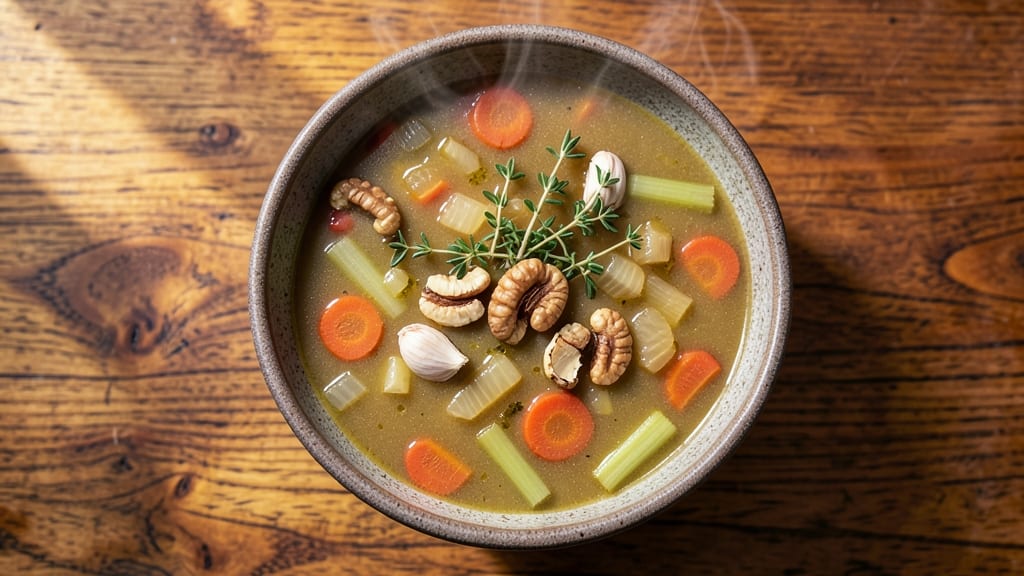
This acorn soup recipe transforms humble forest foraged ingredients into a velvety, earthy masterpiece that bridges tradition and modern comfort. The key lies in properly preparing acorns—leaching their natural tannins through repeated boiling—to create a smooth, rich base that pairs beautifully with aromatic herbs and warm spices.
I developed this recipe after years of experimenting with wild harvests, perfecting the balance between rustic authenticity and approachable technique.
The process begins with thorough preparation: cracking acorns, boiling them multiple times to remove bitterness, then simmering them with vegetables and herbs until tender. What sets this soup apart is its adaptability—vegan by nature, yet easily enhanced with dairy or meat for those who prefer richer variations.
The result is a deeply satisfying bowl with a luxurious, almost custard-like texture that feels both nostalgic and refined.
By the final step, you'll have a soup that's creamy without dairy, fragrant with herbs, and subtly sweet from the roasted acorns. The aroma alone transforms any kitchen into a cozy gathering space, while the flavor profile offers complex layers of earthiness and warmth.
This is the kind of dish that invites conversation as much as it satisfies hunger—perfect for autumn gatherings or quiet weeknight dinners.
Whether you're a forager, a plant-based cook, or simply someone who appreciates deeply flavorful soups, this recipe delivers restaurant-quality results with minimal fuss. The technique is straightforward once you understand the acorn preparation, and the rewards are well worth the effort. Let's create something truly special from the forest floor.
Ingredients for acorn soup
Earthy acorns meet aromatic herbs in this velvety soup—rich, rustic, and entirely plant-based.
| Ingredient | Amount | Notes |
|---|---|---|
| White Oak Acorns 🌰 | 1 ½ cups | Cracked and leached thoroughly |
| Yellow Onion 🧅 | 1 whole | Diced medium-fine |
| Carrots 🥕 | 2 medium | Peeled and sliced thin |
| Celery Stalks 🌿 | 3 whole | Diced small |
| Garlic Cloves 🧄 | 4 cloves | Minced finely |
| Fresh Thyme Sprigs 🌿 | 2 whole | Leaves only |
| Fresh Sage Leaves 🌿 | ½ cup | Chopped finely |
| Extra-Virgin Olive Oil 🫒 | ¼ cup | High-quality for roasting |
| Vegetable Broth 💧 | 4 cups | Low-sodium preferred |
| Coconut Milk 🥥 | 1 can | Full-fat for creaminess |
| Sea Salt 🧂 | 1 ½ tsp | Diamond Crystal preferred |
| Ground Black Pepper 🌶️ | ½ tsp | Freshly ground |
| Maple Syrup 🍁 | 1 tbsp | Pure grade B |
| Raw Cashews 🥜 | ¼ cup | Soaked for creaminess |
Acorns are the foundation, and quality matters most. White oak acorns yield the best texture and mildest flavor—avoid red oak, which can be bitter. Most specialty stores or foraging groups sell pre-cracked acorns, but if you're gathering your own, ensure they're fully cured and leached at least three times to remove tannins. Local foragers' markets often have prepped acorns in autumn, or check Whole Foods bulk section. The key is patience: roasting them at 350°F for 20 minutes before blending transforms their flavor entirely. For a shortcut, Bob's Red Mill sells pre-leached acorn flour, though freshly prepared acorns deliver superior depth.
No acorns? Substitute with 1.5 cups cooked white beans or lentils—they mimic the earthy, protein-rich base. Fresh thyme and sage are ideal, but dried works at half the amount if you're in a pinch. The coconut milk adds luxurious creaminess, but cashew cream (blended soaked cashews + water) works beautifully for a nut-free option. Maple syrup balances the earthiness—agave or date syrup are suitable alternatives, though maple's unique flavor is worth seeking out. For extra richness, blend in 1/4 cup silken tofu with the cashews.
This soup reheats beautifully—simmer gently on low heat to preserve its velvety texture. Store in an airtight container for up to 5 days in the fridge, though the flavor deepens overnight. For longer storage, freeze portions for up to 3 months. The acorn base thickens as it cools, so stir in a splash of broth when reheating. Garnish with extra fresh herbs and a drizzle of olive oil before serving—a sprinkle of toasted pumpkin seeds adds crunch and visual appeal.
Why You'll Love This Recipe
- No-Fuss Prep: I swear by this—just chop the onion, carrots, and celery into even chunks (no fancy dice needed), toss them in a pot with the acorns, and let the broth work its magic. The acorns soften like butter, so you’re not stuck peeling or pre-soaking anything.
- Earthy Depth: Between us, that first spoonful of acorn soup is next-level—nutty, toasty, and rich without being heavy. The garlic and onions caramelize into something so savory, you’ll want to slurp it straight from the pot. (Yes, even on a Tuesday night.)
- Meal Prep MVP: This soup tastes just as good tomorrow as it does fresh. I make a double batch on Sundays—it reheats beautifully, freezes like a dream, and becomes my go-to lunch for the week. Honestly, it’s the only soup I don’t dread pulling out of the fridge.
- Budget-Friendly Staple: Acorns are free if you forage them (or cheap if you buy in bulk), and the veggies stretch across multiple meals. I’ve turned this into a hearty stew, a base for grain bowls, or even a filling for dumplings—basically, it’s my wallet’s new best friend.
Step-by-step instructions for acorn soup
This method transforms humble acorns into a velvety, herb-infused soup with depth and balance.
Roast the Acorns and Aromatics for Complex Flavor
Preheat your oven to 375°F. Spread the 1.5 cups white oak acorns on a baking sheet and roast for 15 minutes, stirring halfway, until they develop a rich, toasted aroma. Remove and let cool slightly before cracking them open with a nutcracker or rolling pin.
In the same oven, toss the 1 whole yellow onion, 2 medium carrots, 3 whole celery stalks, and 0.25 cup extra-virgin olive oil on a separate baking sheet. Roast for 25-30 minutes until the vegetables soften and develop caramelized edges. This step builds the soup's foundational sweetness and depth.
Sauté Garlic and Herbs for Fragrant Layers
Heat 0.125 cup extra-virgin olive oil in a large pot over medium heat. Add the 4 cloves minced garlic cloves and cook for 30 seconds until fragrant—don't let them brown. Stir in the 0.5 cup chopped fresh sage leaves and thyme leaves from the 2 whole fresh thyme sprigs, cooking for 1 minute until the herbs release their essential oils.
Add the roasted vegetables to the pot, along with 4 cups vegetable broth and 1.5 tsp sea salt. Bring to a gentle simmer and cook for 10 minutes to meld the flavors. This step ensures the herbs and vegetables integrate fully before adding the acorns.
Simmer the Acorns and Season the Base
Add the cracked acorns to the pot and simmer for 20-25 minutes until they soften completely. Stir occasionally to prevent sticking. The soup should thicken slightly as the acorns break down, releasing their earthy sweetness. If the mixture becomes too thick, add 1-2 tablespoons water to maintain a smooth consistency.
Stir in the 1 can coconut milk, 1 tbsp maple syrup, and 0.5 tsp ground black pepper. Simmer for an additional 5 minutes to allow the coconut milk to blend seamlessly. Taste and adjust the seasoning—you may need a touch more salt or maple syrup to balance the flavors.
Blend and Finish with Creamy Texture
Using an immersion blender, blend the soup directly in the pot until completely smooth. For a finer texture, strain the soup through a fine-mesh sieve if desired. Return the soup to the pot and stir in the 0.25 cup soaked raw cashews to add a subtle creaminess and nutty richness. The cashews should dissolve into the soup, enhancing its velvety mouthfeel.
Simmer for 3-5 minutes to heat through, then adjust the consistency with additional broth or water if needed. Ladle into bowls and serve immediately, garnished with a sprinkle of fresh thyme or sage for a pop of color and aroma.
Pro Tips For Making Acorn Soup
- Boil Acorns Twice: First simmer them 10 minutes to break down tannins, then drain and boil again for 30 minutes—this cuts that bitter edge without turning your soup into glue. I learned this the hard way after serving a batch that tasted like bark.
- Dice Onions Fine: Smaller than usual—think 1/8-inch pieces—and cook them until translucent before adding anything else. Big chunks just sit there while the carrots and celery soften; this gets all the sweetness to meld first.
- Don’t Rush the Celery: Let it sweat for 5 minutes in the pot before adding liquid—this draws out the bitterness and concentrates the flavor. Skip this, and your soup will taste like you used celery stems as the main ingredient.
- Roast Garlic First: Wrap whole cloves in foil, roast at 400°F for 20 minutes, then mash into the soup at the end. It adds depth without overpowering, and you won’t taste the sharp bite of raw garlic. (Yes, even if you’re impatient like me.)
Serving suggestions for this acorn soup
Bread Pairings
This rich, velvety soup pairs beautifully with rustic breads that can soak up every last drop of flavor. I love serving it with sourdough loaves from local bakeries—like those from Breads Bakery—because their tangy crust contrasts perfectly with the soup's earthy sweetness.
For a lighter option, toasted baguette slices work wonderfully, especially when brushed with garlic-infused olive oil before serving. 🥖
Herb Garnishes
Fresh herbs elevate the soup's aroma and add a vibrant finish. I always garnish with chopped fresh thyme and sage leaves, but parsley adds a bright contrast. For extra flair, sprinkle toasted pumpkin seeds or crushed walnuts on top—their crunch cuts through the soup's creaminess.
A drizzle of high-quality extra-virgin olive oil (like Colavita) adds a luxurious sheen. ✨
Cheese Additions
While this soup is naturally vegan, a sprinkle of aged cheddar or Parmesan cheese transforms it into a heartier dish. I recommend sharp white cheddar from Cabot—it melts beautifully and adds a tangy depth.
For a vegetarian twist, top with nutritional yeast (about 1 tbsp) for a cheesy, umami-rich finish. 🧀
Side Dish Harmony
Pair your soup with roasted Brussels sprouts tossed in balsamic glaze for a sweet-savory contrast. Alternatively, a simple mixed greens salad with apple slices and walnuts balances the soup's richness. The crispness of the greens and the crunch of the nuts complement the velvety texture perfectly. 🥗
Warm Accompaniments
For a cozy meal, serve the soup with crispy roasted potatoes or warm cornbread. The potatoes add a hearty, starchy element, while cornbread—especially with a hint of honey or maple syrup—echoes the soup's natural sweetness.
I often make a small batch of stone-ground cornmeal cornbread from King Arthur Flour for the best texture. 🍞
Drink Pairings
A dry Riesling from Germany or a crisp Chardonnay with citrus notes cleanses the palate between spoonfuls. For non-alcoholic options, sparkling apple cider or hibiscus iced tea adds a refreshing contrast. The effervescence of the drinks helps cut through the soup's richness, making each bite feel lighter. 🍷
Nutrition facts
Frequently asked questions
Why do acorns need to be leached before using in soup?
Acorns contain natural tannins that create bitterness. Leaching removes these compounds through repeated boiling—typically 3-4 changes of water over 30-45 minutes. This step transforms the acorns from bitter to sweet and velvety, making them perfect for soups. Skipping this can ruin the delicate flavor profile you're working toward.
Can I substitute store-bought acorn flour for fresh acorns?
Yes! Store-bought acorn flour works well, but it lacks the depth of freshly roasted acorns. Use 1 cup flour per 1.5 cups cracked acorns in the recipe. For best results, toast the flour in the oven (350°F for 10 minutes) before using to enhance its nutty flavor. The texture will be slightly different but still delicious.
How do I know when acorns are properly leached?
Taste them! After each boiling, crack open a few acorns and sample the meat. It should taste sweet and mild, not bitter. The water should also run clear—if it's still cloudy, continue leaching. Properly leached acorns will sink in water, while unprocessed ones float. This step is critical for a smooth, flavorful soup.
Can I make this soup ahead of time?
This soup tastes even better the next day. Store it in an airtight container in the fridge for up to 5 days. The flavors meld beautifully, and the texture remains creamy. When reheating, simmer gently on low heat and stir in a splash of broth or water if it thickens too much. Freeze for up to 3 months for longer storage.
What if my soup turns out too thick?
Thick soup is easy to fix! Stir in 1-2 tablespoons of water or broth at a time until you reach your desired consistency. For a smoother texture, blend again briefly with an immersion blender. If the soup separates after blending, simmer it gently for 5 minutes to re-emulsify. The cashews help create creaminess, but extra liquid keeps it silky.