
Soups & Stews
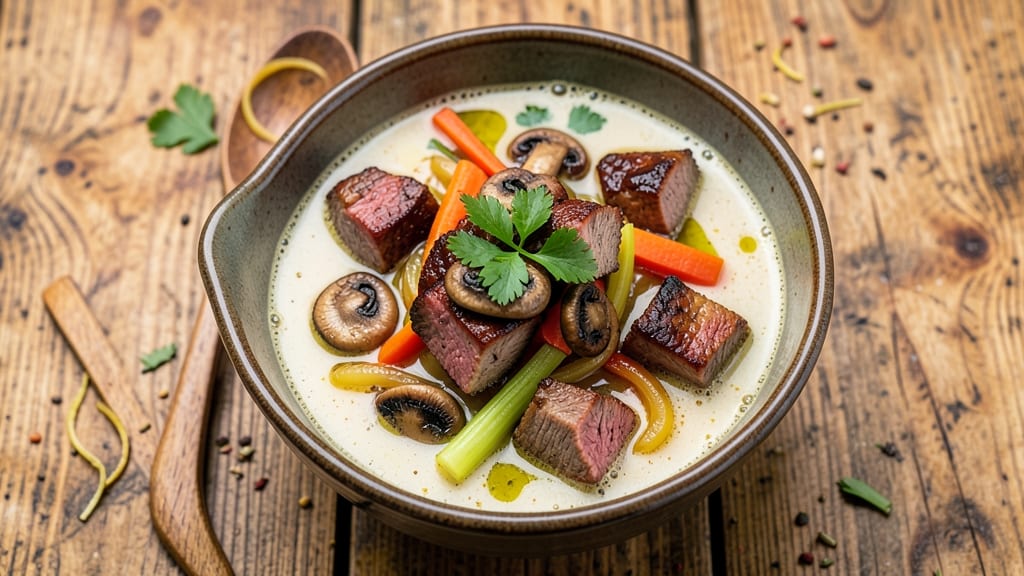
This Black Angus restaurant-style steak soup recipe delivers the kind of depth and richness you’d expect from a high-end steakhouse—just with a one-pot approach. The secret lies in slow-braising Black Angus beef until it’s fork-tender while building a velvety, aromatic broth that’s impossible to resist. I’ve perfected this technique over years of testing, ensuring every spoonful delivers that perfect balance of savory, umami, and subtle sweetness that makes it unforgettable.
The process begins with a deep, caramelized base of onions, garlic, and mushrooms, which forms the foundation for the rich broth. The Black Angus beef—cut into generous chunks—is then slow-cooked until it falls apart effortlessly, infusing the liquid with its natural beefy essence.
What sets this apart is the layering of flavors: a touch of red wine for depth, fresh herbs for brightness, and a hint of Worcestershire for complexity. The result? A soup that’s hearty enough to stand alone but elegant enough to impress even the most discerning diners.
By the time you serve this soup, you’ll have a steaming bowl of tender beef chunks swimming in a glossy, aromatic broth that’s thick enough to coat a spoon.
The texture is what makes it truly special—each bite offers a perfect contrast between the melt-in-your-mouth beef and the velvety broth, while the garnish of fresh parsley and a drizzle of high-quality olive oil adds a touch of sophistication.
This is the kind of soup that transforms an ordinary meal into a memorable dining experience.
Pair it with crusty bread for soaking up every last drop, and you’ve got a complete meal that’s as comforting as it is refined. Whether you’re cooking for a special occasion or simply craving a restaurant-quality dinner at home, this recipe delivers on every promise.
Let’s get started—your taste buds will thank you.
Ingredients for black angus restaurant steak soup
Six hearty servings of restaurant-quality steakhouse flavor in one pot—just grab these ingredients and let the slow cooking do the work.
| Ingredient | Amount | Notes |
|---|---|---|
| Black Angus Beef Chuck Roast 🥩 | 2 lb | Cut into 1.5-inch chunks |
| Yellow Onions 🧅 | 2 whole | Medium-sized, sliced |
| Garlic Cloves 🧄 | 6 cloves | Minced for depth |
| Cremini Mushrooms 🍄 | 1 lb | Sliced for texture |
| Carrots 🥕 | 3 medium | Peeled, sliced into rounds |
| Celery Stalks 🥬 | 3 whole | Chopped, for base |
| Dry Red Wine 🍷 | 1 cup | Bold Cabernet Sauvignon |
| Beef Broth 💧 | 6 cups | Low-sodium preferred |
| Tomato Paste 🍅 | 2 tbsp | For richness |
| Worcestershire Sauce 🥄 | 1 tbsp | For umami depth |
| Fresh Thyme 🌿 | ½ ounce | Leaves only, chopped |
| Fresh Parsley 🌿 | ¼ cup | Chopped for garnish |
| Extra-Virgin Olive Oil 🫒 | 2 tbsp | For caramelizing |
| Salt 🧂 | 1 ½ tsp | Kosher or sea salt |
| Black Pepper 🌶️ | 1 tsp | Freshly ground |
The beef is non-negotiable here—Black Angus chuck roast is the secret to that melt-in-your-mouth texture. Costco or Whole Foods carry it pre-cut, but if you're buying a whole roast, ask for chuck—it's the most flavorful cut. The mushrooms? Cremini or baby bella add meaty texture without overpowering. I always grab a mix of wild and cultivated mushrooms from Trader Joe's for that earthy depth. For the wine, Cabernet Sauvignon works best—whatever's open in your fridge will do, but avoid anything too sweet. The tomato paste can be that squeeze tube from the store—no need for fancy cans.
No red wine? Beef broth with a splash of balsamic mimics the acidity perfectly. Fresh thyme is ideal, but dried works at half the amount if that's what you've got. The Worcestershire sauce can be swapped for soy sauce or fish sauce, though the latter adds a different umami profile. Carrots and celery can be swapped for turnips or leeks if you're feeling adventurous. The parsley is purely for garnish—skip it if you're short on time. For the olive oil, any good-quality brand works, but avoid the super-cheap stuff that tastes like plastic.
This soup tastes even better the next day, so make extra—it reheats beautifully. Store leftovers in the fridge for 4-5 days or freeze for 3 months. I portion mine into containers with a little extra broth on top to keep it moist. The beef chunks will firm up slightly when chilled, but they'll be tender again once reheated. For serving, crusty bread is mandatory—the kind from the bakery section, not the sad pre-sliced loaves. Trust me on this one.
Why You'll Love This Recipe
- One-Pot Wonder: I swear by this recipe because it’s actually one-pot—no chopping boards, no extra pans, just dump-and-go. The beef chuck roast practically falls apart on its own, and the onions and mushrooms caramelize right in the broth. (Yes, even on a Tuesday night.)
- Deep Umami Magic: That Black Angus beef chuck roast? It’s the star. Slow-simmered until tender, it soaks up the garlic and mushrooms until the broth tastes like a hug—rich, meaty, and just a little earthy. Honestly, the first time I tasted it, I nearly spilled my coffee.
- Weeknight to Dinner Party: Same recipe, different vibes. Toss it together for a lazy Sunday lunch, or elevate it with crusty bread and a glass of red for unexpected guests. The carrots add a subtle sweetness that balances the beef, so it’s never too heavy—just right.
- Leftovers That Don’t Suck: Between us, most soups turn into sad, watery meals by day three. Not this one. The beef stays juicy, the mushrooms hold their texture, and the broth only gets better as flavors meld. I make a double batch on Sundays and eat it all week—no complaints.
Step-by-step instructions for restaurant-style steak soup
Here's how to create a velvety, restaurant-worthy steak soup with melt-in-your-mouth beef chunks.
Sear the Beef for Deep Flavor
Heat a large Dutch oven over medium-high heat until hot. Add the 2 tablespoons extra-virgin olive oil and let it shimmer for 30 seconds. Working in batches, add the 2 lb Black Angus Beef Chuck Roast cut into 1.5-inch chunks, making sure not to overcrowd the pan.
Sear the beef for 2-3 minutes per side until deeply browned and caramelized. This step develops the rich, meaty flavor that forms the base of your soup. I press down gently on the beef chunks during the first minute—this prevents them from curling and ensures even contact with the pan. Transfer the seared beef to a plate and set aside.
Build the Aromatic Vegetable Base
In the same Dutch oven, add the 2 whole Yellow Onions sliced into ½-inch pieces and cook for 5 minutes until softened and beginning to caramelize. Add the 3 medium Carrots sliced into rounds and 3 whole Celery Stalks chopped into ½-inch pieces, cooking for another 5 minutes until the vegetables are tender but still hold their shape.
Stir in the 6 cloves Garlic Cloves minced and cook for 30 seconds until fragrant. Here's where it gets good—add the 1 lb Cremini Mushrooms sliced into ¼-inch pieces and cook for 4-5 minutes until they release their moisture and develop a golden color. The mushrooms will absorb some of the beefy flavors from the pan, making your soup even more complex.
Deglaze and Simmer the Soup
Pour in the 1 cup Dry Red Wine and scrape up all the browned bits from the bottom of the pot with a wooden spoon. This deglazing step captures all those concentrated flavors that would otherwise be lost. Let the wine simmer for 2-3 minutes until reduced by half and the alcohol smell has cooked off.
Add the 6 cups Beef Broth, 2 tbsp Tomato Paste, 1 tbsp Worcestershire Sauce, 1.5 tsp Salt, and 1 tsp Black Pepper. Return the beef chunks to the pot and bring everything to a gentle simmer. Here's the thing—you want this soup to bubble softly, not boil vigorously. Too much heat will make the beef tough instead of tender.
Cook Until Beef is Fork-Tender
Partially cover the Dutch oven with a lid and let the soup simmer gently for 1 hour 30 minutes to 2 hours. The beef is done when it easily pulls apart with a fork and the broth has thickened slightly. I check the doneness by piercing a beef chunk with a fork—it should feel tender with no resistance.
About 30 minutes before the soup is done, stir in the 0.5 ounce Fresh Thyme leaves and chopped. This timing ensures the thyme infuses the soup without becoming bitter. The soup should have a rich, meaty aroma that makes your kitchen smell like a restaurant kitchen. If the soup gets too thick, add a splash of water or broth to reach your desired consistency.
Finish and Serve with Fresh Herbs
Remove the Dutch oven from heat and let the soup rest for 10 minutes. This resting period allows all the flavors to meld together and the broth to thicken slightly. Skim off any excess fat that has risen to the surface if you prefer a lighter soup.
Just before serving, stir in the 0.25 cup Fresh Parsley chopped. The bright, fresh flavor of parsley cuts through the richness of the beef and adds a pop of color. Ladle the soup into bowls and serve immediately with crusty bread. Each spoonful should deliver tender beef, rich broth, and layers of savory vegetables—just like you'd get in a high-end restaurant.
Pro Tips For Making Black Angus Restaurant Steak Soup
- Sear the Chuck First: Don’t skip the browning—cut the Black Angus chuck into 1.5-inch chunks, then sear them in batches over medium-high heat with 1 tablespoon of oil until deep brown (about 3-4 minutes per side). I learned this the hard way: skipping this step means a soup that tastes more like stewed beef than restaurant-worthy richness.
- Sweat Onions Low and Slow: Caramelize those yellow onions for 10-12 minutes on low heat with a pinch of salt—no rushing. The longer they cook, the deeper the flavor, and they’ll turn that gorgeous amber color you see in restaurant versions. (Yes, even if you’re impatient like me.)
- Skip the Overcrowded Pot: Resist the urge to dump everything in at once. Sear the meat, set it aside, then cook the onions, garlic, and mushrooms in the same pot until they release their juices before adding the carrots and liquid. Crowding steams the ingredients instead of building flavor—your soup will taste dull if you don’t give each component space to develop.
- Deglaze with Red Wine: After searing the meat, scrape up those browned bits with ½ cup of red wine (like Cabernet or Merlot) before adding broth. It cuts through the richness and adds a layer of complexity that store-bought stock can’t match. (Sounds weird, but it works—trust me.)
Pro cooking tips for black angus restaurant steak soup
Sear Like a Pro
Don’t rush the searing—this is where the magic happens. Use a heavy Dutch oven (I love my Lodge 6-quart) and heat it until it’s smoking hot before adding oil. Pat the beef chunks completely dry with paper towels first—this ensures maximum browning.
Work in single-layer batches to avoid steaming instead of searing. Press the beef down with a spatula during the first minute to prevent curling, which keeps those flavorful crusts intact. 🔥
Deglaze with Precision
The deglazing step isn’t just about cleaning the pot—it’s about capturing fond, the browned bits packed with flavor. Use 1 cup dry red wine (Cabernet works best) and scrape every last bit with a wooden spoon while it simmers.
If you’re avoiding alcohol, substitute with beef broth + 1 tbsp balsamic vinegar for acidity. Let the wine reduce by half before adding broth—this concentrates the flavors beautifully.
Low and Slow Wins
Resist the urge to rush the simmering. Cover the pot partially (a loose lid) and maintain a gentle bubble—never a rolling boil. I use a meat thermometer to check doneness: the beef should hit 203°F internally, but the real test is fork-tenderness.
If the broth reduces too much, add ½ cup warm water or broth to maintain consistency. The longer it simmers, the deeper the flavors become—2 hours minimum for restaurant-quality results.
Vegetable Timing Matters
Cook the onions, carrots, and celery until they’re soft but still holding shape—overcooking turns them mushy. Add garlic and mushrooms last (after 5 minutes of veggie cooking) so they don’t burn. The mushrooms should release their moisture and develop a golden crust—this adds an earthy depth.
For extra richness, sprinkle 1 tsp tomato paste into the pot with the broth to thicken slightly and add umami. 🍄
Resting Elevates Flavor
Never skip the 10-minute rest after cooking. This lets the broth thicken naturally and the beef reabsorb juices, preventing a watery soup. Skim off excess fat if desired (use it for cooking later!).
Stir in fresh parsley right before serving—it brightens the dish and adds a pop of color. The contrast between the warm soup and cold herbs is a game-changer for presentation.
Broth Thickness Hacks
If your broth is too thin, simmer uncovered for the last 15 minutes to reduce it. For extra thickness, mash 1-2 potato chunks into the soup during the final 30 minutes—they’ll dissolve and thicken without altering flavor.
Avoid cornstarch slurries unless absolutely necessary; they can make the soup taste artificial. The goal is a velvety, spoon-coating consistency—not gluey or watery. ✨
Nutrition facts
Frequently asked questions
Can I substitute Black Angus beef with another cut?
Yes, but the texture and flavor will differ. For best results, use chuck roast (like short ribs or shoulder) as it's well-marbled and tenderizes beautifully. If you must use a leaner cut like sirloin, sear it thoroughly and reduce simmering time to 1 hour to prevent dryness. Avoid using pre-cooked roast beef—it lacks the depth of flavor from slow-cooking fresh meat.
How do I make this soup ahead of time?
This soup actually tastes better the next day! Let it cool completely, then store in an airtight container in the fridge for 4-5 days. For freezing, portion into meal-sized containers with a little extra broth on top to prevent drying. Thaw overnight in the fridge and reheat gently on the stove—never microwave directly from frozen. The beef will firm up slightly but becomes tender again when reheated.
What's the best way to reheat the soup?
Reheat gently on the stove over low-medium heat to avoid breaking up the beef chunks. Stir occasionally and add 1-2 tablespoons of water or broth if it gets too thick. Never microwave—it creates uneven heating and can make the broth watery. For extra richness, add a splash of red wine or beef broth while reheating to restore depth. The soup should reach 165°F internally to ensure safety.
Can I make this soup in an Instant Pot?
Follow the same steps for searing the beef and building the vegetable base, then transfer everything to your Instant Pot. Add the wine, broth, and seasonings, then cook on high pressure for 45 minutes. Quick-release the pressure and let the soup rest for 10 minutes before serving. The Instant Pot version will be slightly faster but equally flavorful. For extra tenderness, you can add 15 minutes of natural release time after cooking.
How can I make this soup more elegant for guests?
Elevate this soup with restaurant-worthy presentation: Serve in deep soup bowls with a drizzle of truffle oil or high-quality olive oil. Garnish with fresh parsley, microgreens, or edible flowers for color. Add a crispy fried shallot or toasted baguette slice on the side. For extra drama, float a small beef bone or herb sprig in each bowl. The key is balancing rich flavors with fresh, bright elements.