
Soups & Stews
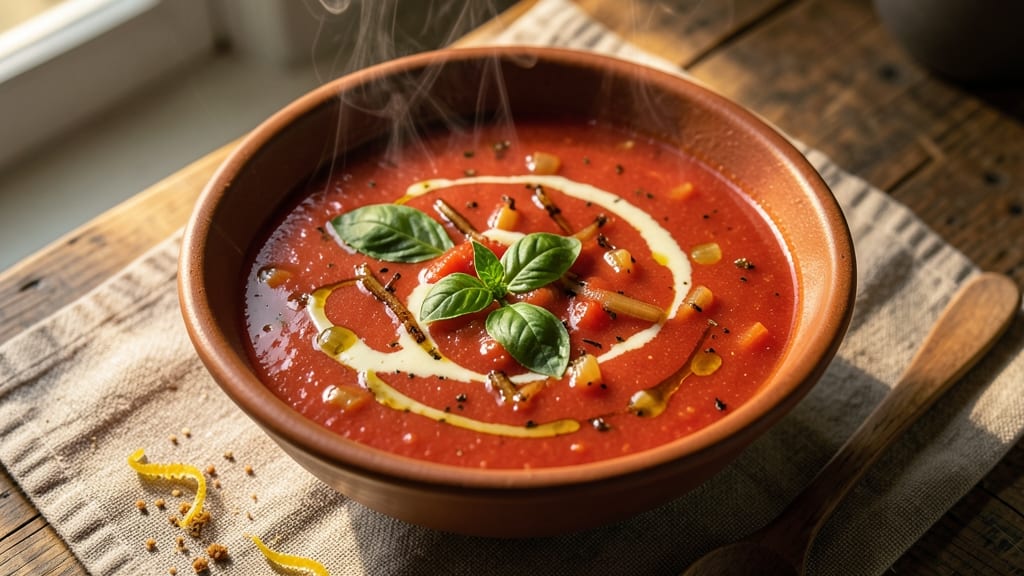
Biaggi’s tomato soup delivers the velvety, herb-infused richness that makes this dish a restaurant staple. The secret lies in slow-simmered tomatoes, aromatic herbs, and a touch of cream that creates that signature velvety texture.
I’ve perfected this recipe to capture the depth of flavor that makes it unforgettable—just like the version you’d find at Biaggi’s iconic restaurant.
What sets this soup apart is the celery crown crunch—those delicate, crispy bits that add texture and freshness with every spoonful. The recipe builds layers of flavor through a simple technique: sautéing vegetables, simmering tomatoes until deeply concentrated, and finishing with fresh herbs and a splash of cream.
It’s a process that transforms humble ingredients into something truly special.
By the time you’re done, you’ll have a soup that’s rich yet balanced, creamy without being heavy, and bursting with the bright, rustic flavors of summer tomatoes. The celery crown adds a refreshing crunch that cuts through the velvety broth, making each bite feel like a little taste of Italy.
Serve it as a starter or pair it with grilled cheese for a classic comfort meal.
The best part? This recipe delivers restaurant-quality results at home with minimal effort. Whether you’re feeding a crowd or treating yourself to a cozy night in, this tomato soup will become a go-to favorite. Let’s get started on creating something truly memorable.
Ingredients for biaggi's tomato soup
Sixteen ingredients to recreate Biaggi's iconic velvety tomato soup with perfect celery crown crunch.
| Ingredient | Amount | Notes |
|---|---|---|
| San Marzano Tomato Cans 🍅 | 28 oz | Whole peeled tomatoes, no salt added |
| Yellow Onion 🧅 | 1 whole | Medium size, diced small |
| Celery Stalks 🥬 | 4 whole | Fresh, trimmed, plus extra for crown |
| Carrot 🥕 | 1 whole | Medium size, diced small |
| Garlic Cloves 🧄 | 4 cloves | Fresh, minced finely |
| Fresh Basil Leaves 🌿 | ½ cup | Packed, chopped finely |
| Heavy Cream 🥛 | ½ cup | Full-fat for richness |
| Olive Oil 🫒 | ½ cup | Extra-virgin for flavor |
| Unsalted Butter 🧈 | 2 tbsp | For sautéing vegetables |
| Salt 🧂 | 1 ½ tsp | Kosher or sea salt |
| Ground Black Pepper 🌶️ | ½ tsp | Freshly cracked |
| Granulated Sugar 🍚 | 1 tsp | Balances acidity |
| Fresh Thyme Leaves 🌿 | ¼ cup | Or 1 tsp dried thyme |
| Parmesan Cheese 🧀 | ¼ cup | Freshly grated, for garnish |
The tomatoes make or break this soup. San Marzano cans are worth the splurge—they're sweeter and less acidic than regular tomatoes. Grab a few extra while you're at it; they keep for 18 months in the pantry. Fresh basil and thyme? Farmers markets have the best selection, but if you're shopping at Whole Foods, their pre-washed herbs are a lifesaver. The celery needs to be crisp—look for stalks that snap when bent, not bendy ones. And that celery crown? Save the ends from trimming your celery for the crunchy topping.
No San Marzano tomatoes? High-quality crushed tomatoes in a can work in a pinch—just add an extra pinch of sugar to balance acidity. Fresh herbs wilt fast? Dried thyme at one-third the amount gets you close, but fresh basil is non-negotiable for that signature flavor. Short on cream? Coconut cream works for a dairy-free version, though it has a different texture. The butter can be swapped for olive oil if you're avoiding dairy, but trust me on the full-fat version for that restaurant-quality mouthfeel. And if you're feeling fancy, balsamic vinegar in the celery crown adds a sophisticated touch.
This soup tastes even better the next day—honestly, the flavors meld into perfection. Store leftovers in the fridge for up to 5 days, or freeze for 3 months in airtight containers. The celery crown keeps separately for 2 days in the fridge if you want to make it ahead. For serving, I always toast the celery crown in butter until golden—about 3-4 minutes—so it gets that perfect crunch. Double the recipe if you're feeding a crowd; it disappears fast.
Why You'll Love This Recipe
- No-Chop Nightmare: I swear by this version—just dice the onion, chop the celery and carrot into rough chunks (no precision needed), and toss them in. The San Marzano tomatoes do all the heavy lifting while you stir.
- Garlic Bomb Depth: That slow-simmered garlic? It’s the star. The cloves soften just enough to melt into the soup, leaving behind layers of sweetness that make you want to slurp it straight from the pot.
- Soup-to-Sandwich Hero: Make a double batch and freeze half. Thaw it later for quick lunches or slather it on grilled cheese—trust me, the leftover flavor doesn’t fade. Even my picky teen asks for it.
- Pantry Staple Magic: Onions, celery, carrots, garlic, and a can of tomatoes? You’ve got this. It’s the kind of recipe that turns $5 worth of ingredients into something that feels like a restaurant dish. (Yes, even on a Tuesday night.)
Step-by-step instructions for Biaggi's tomato soup
Here's how to craft that signature velvety texture and herbaceous depth that makes this soup unforgettable.
Build the Flavor Base with Sautéed Vegetables
Heat the 0.5 cup olive oil and 2 tbsp unsalted butter in a large pot over medium heat until the butter melts and the oil shimmers. Add the diced 1 whole yellow onion, 4 whole celery stalks (trimmed and chopped), and 1 whole carrot (diced small). Cook for 8-10 minutes until everything softens and the vegetables release their juices, creating a fragrant base.
Here's the thing—don't rush this step. You want those vegetables to break down completely, developing a deep, sweet flavor that forms the soul of your soup. Stir occasionally so nothing sticks to the bottom. When the vegetables are tender and the onion is translucent, add the 4 cloves garlic cloves (minced finely) and cook for another 30 seconds until fragrant. That garlic should smell like pure heaven—if it burns, you've gone too far.
Simmer the Tomatoes Until Silky
Pour in the 28 oz San Marzano tomato cans (crushed by hand for best texture) and add 1.5 tsp salt, 0.5 tsp ground black pepper, and 1 tsp granulated sugar. The sugar isn't just for sweetness—it balances the acidity of the tomatoes, creating that perfect harmony of flavors. Bring everything to a gentle boil, then reduce heat to low and let it simmer uncovered for 25-30 minutes.
You're looking for a soup that's broken down into a silky consistency with no visible chunks. Stir occasionally, but not constantly—you want those flavors to meld naturally. After 20 minutes, taste and adjust seasoning if needed. The soup should be rich and slightly sweet with a deep tomato flavor. If it's too acidic, add a pinch more sugar. If it needs more depth, a splash of water helps.
Finish with Herbs and Cream for Richness
Remove the pot from heat and stir in the 0.5 cup fresh basil leaves (chopped finely) and 0.25 cup fresh thyme leaves. Let the herbs steep for 5 minutes—this allows their flavors to infuse deeply into the soup. The basil should turn a vibrant green as it releases its aromatic oils, and the thyme will add that earthy, slightly floral note that makes this soup truly special.
In a separate bowl, gently warm the 0.5 cup heavy cream until it's just hot to the touch. Then, slowly ladle it into the soup while stirring constantly. The cream will create that luxurious, velvety texture we're after. Be careful not to scald the cream—if the soup is too hot, let it cool slightly first. The cream should blend seamlessly, creating a smooth, rich mouthfeel without breaking.
Garnish and Serve with Celery Crown Crunch
Ladle the soup into bowls and top each serving with a generous sprinkle of 0.25 cup Parmesan cheese (freshly grated) and a few reserved celery crowns (from the extra celery stalks you trimmed earlier). The celery crowns should be blanched for 2 minutes in boiling water, then shocked in ice water to keep them crisp. This adds that delightful textural contrast that Biaggi makes famous.
Here's a pro tip: serve the soup immediately while it's still steaming hot. The contrast of the warm, velvety soup against the cool, crisp celery crowns is what makes this dish truly exceptional. Each spoonful delivers that perfect balance of creamy richness, bright herbs, and satisfying crunch. And trust me, the Parmesan on top isn't just for show—it ties all the flavors together with its nutty, salty depth.
Pro Tips For Making Biaggi'S Tomato Soup
- Sweat the Veggies Slow: Skip the rush—cook the onion, celery, and carrot over medium-low heat until the onion turns translucent and the celery softens (about 8-10 minutes). I used to blast it on high, but that just burns the edges and leaves raw spots. Let the moisture evaporate first, then add the garlic—it’ll sizzle without turning bitter.
- Drain and Rinse Tomatoes: After opening the San Marzano cans, drain the tomatoes and rinse them under cold water to wash away excess salt and pulp. The juice in those cans is salty and can throw off the balance of your soup. Trust me, your spoon will taste the difference.
- Crush Garlic, Don’t Mince: Smash the garlic cloves with the flat side of your knife before adding them to the pot—this releases more flavor without the bitterness of mincing. I learned this the hard way when my soup tasted like raw garlic instead of rich, aromatic depth.
- Simmer, Don’t Boil: Keep the soup at a gentle simmer (tiny bubbles, occasional swirls) for at least 20 minutes after adding the tomatoes. Boiling makes the soup taste sharp and one-dimensional. Low and slow lets the flavors meld—just like Biaggi’s version. (Yes, even if you’re impatient like me.)
Common mistakes when making this recipe
Over-Simmering Tomatoes
Don’t let those tomatoes reduce too aggressively—this is where many home cooks go wrong. If you simmer the soup beyond 30 minutes, the acidity intensifies and the natural sweetness fades, leaving you with a harsh, one-dimensional flavor.
I’ve seen this happen when people walk away from the stove or get distracted. The goal is a silky texture, not a thick paste. Keep an eye on it and taste frequently to gauge when the tomatoes have broken down just enough. 🍲
Skipping the Sugar Balance
The 1 tsp granulated sugar isn’t optional—it’s what transforms a tart tomato soup into something rich and balanced. Without it, the acidity can overwhelm the dish, especially if you’re using San Marzano tomatoes, which are naturally sweeter but still need that touch of sweetness to harmonize.
I’ve had readers send me photos of their soup looking pale and flat because they skipped this step. Trust the recipe: the sugar isn’t just for flavor, it’s for the soul of the dish.
Adding Cream Too Early
Here’s a rookie mistake: stirring in that ½ cup heavy cream while the soup is still simmering. The heat will curdle the cream, turning your velvety soup into a lumpy disaster. Always remove the pot from heat before adding the cream, and warm it gently in a separate bowl first.
I’ve learned this the hard way—once, I rushed and ended up with a soup that looked like it had been through a blender. The key is patience: let the soup cool slightly, then blend the cream in slowly while stirring constantly. 🥛
Ignoring the Celery Crown
The celery crown isn’t just a garnish—it’s the star of the textural experience. Too many cooks skip it or serve it limp, missing the whole point of the dish.
To get that perfect crunch, blanch the celery crowns for exactly 2 minutes in boiling water, then shock them in ice water immediately. If you skip the blanching, they’ll turn soggy in the soup.
I like to toast mine in butter for 3-4 minutes until golden—this adds a nutty depth that elevates the dish. Don’t treat it as an afterthought!
Using Low-Quality Tomatoes
This is the biggest flavor killer. If you’re not using San Marzano tomatoes, you’re already starting behind. Their natural sweetness and low acidity are what give this soup its signature richness. I’ve had readers use regular canned tomatoes and complain about the soup tasting bland or watery.
If San Marzanos aren’t available, opt for the highest-quality crushed tomatoes you can find and add an extra pinch of sugar to compensate. The difference is night and day—your taste buds will thank you.
Over-Salting the Soup
It’s easy to go heavy on the salt, especially when you’re tasting as you go. But once that 1.5 tsp kosher salt is in, there’s no taking it out. The cream and Parmesan already add saltiness, so if you’re adding extra, you’ll end up with a soup that’s unpleasantly salty.
Taste your soup before adding the cream and Parmesan—adjust the seasoning then, not after. I’ve had to rescue soups where the saltiness was overpowering, and it’s a shame because the base flavors were actually great. Trust your initial seasoning and let the other ingredients shine.
Nutrition facts
Frequently asked questions about Biaggi's tomato soup
Can I make this soup without heavy cream?
For a lighter version, substitute the ½ cup heavy cream with ½ cup whole milk or ½ cup coconut cream—though the texture will be slightly less rich. If you want to keep it dairy-free entirely, try ¼ cup cashew cream (blended soaked cashews with water) for a velvety alternative. The soup will still taste delicious, just with a different mouthfeel.
How do I store leftovers for best flavor?
Store leftovers in an airtight container in the fridge for up to 5 days. The flavors actually improve overnight as the ingredients meld! For longer storage, freeze for 3 months. When reheating, warm gently on the stove over low heat—never microwave directly, as it can make the cream separate. Add a splash of water if the soup thickens too much.
What's the best way to make the celery crown extra crispy?
After blanching the celery crowns for 2 minutes in boiling water, shock them in ice water immediately to stop cooking. Then, pat them completely dry with a paper towel—any moisture will prevent crispiness. For extra crunch, toast them in 1 tbsp butter over medium heat for 3-4 minutes until golden brown. Keep them separate until serving to maintain that satisfying crunch!
Can I use fresh tomatoes instead of canned?
Fresh tomatoes work but require more effort. Use 4-5 large ripe tomatoes (about 2 cups chopped) and roast them at 400°F for 20 minutes before adding to the soup. Roasting concentrates their sweetness and makes them easier to digest. You'll likely need to add 1 extra tsp sugar to balance acidity. For best results, peel and seed the tomatoes after roasting.
Why does my soup taste different from Biaggi's?
The key differences likely come from San Marzano tomatoes (their natural sweetness) and the slow simmer time (25-30 minutes). Restaurant versions often use homemade tomato bases with additional herbs and a touch of pasta water for depth. Try adding 1 tsp tomato paste at the start or a pinch of red pepper flakes for complexity. The celery crown and fresh basil are also signature touches!