
Soups & Stews
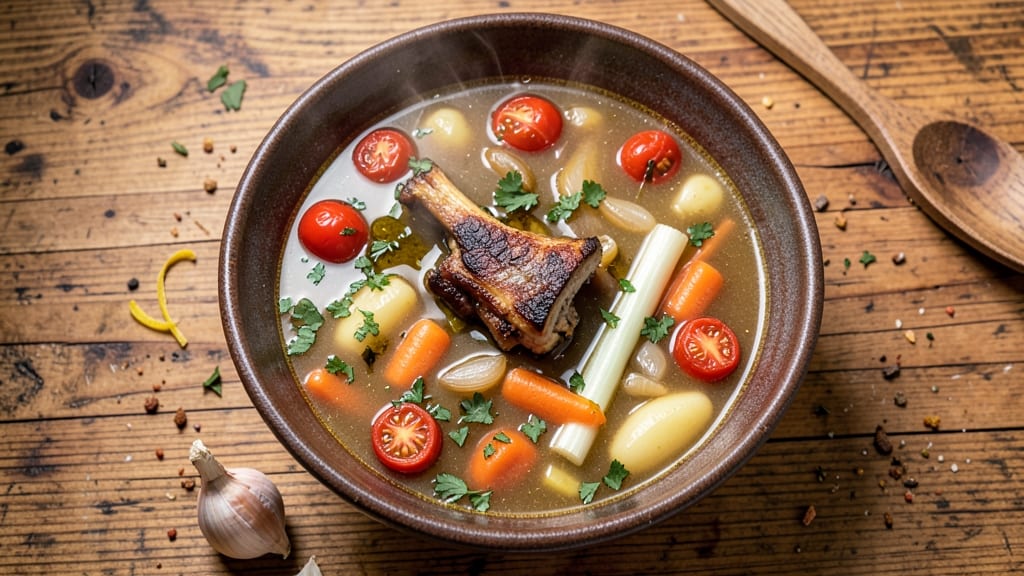
This beef stock vegetable soup recipe transforms simple ingredients into a deeply flavorful bowl of comfort, all thanks to the magic of homemade broth. The secret lies in slow-simmered beef stock that infuses every vegetable with rich, savory depth—far beyond anything you'd find in store-bought versions.
I've perfected this technique over years of testing, ensuring each spoonful delivers that perfect balance of hearty meatiness and fresh vegetable brightness.
The recipe begins with parboiling vegetables to preserve their texture while allowing them to absorb the stock's concentrated flavors. As the soup simmers, the aromatics—carrots, celery, and onions—release their natural sweetness, creating a fragrant base that forms the soul of this dish.
The final touch? A sprinkle of fresh herbs that adds brightness and color, elevating the soup from simple to extraordinary.
What you'll end up with is a restaurant-quality soup that's rich, satisfying, and packed with layers of flavor—perfect for chilly evenings or as a nourishing meal for the whole family. The broth remains velvety and full-bodied, while the vegetables retain their natural sweetness and satisfying bite.
This isn't just soup; it's a deeply comforting experience that comes together with minimal effort but maximum reward.
Serve it with crusty bread to soak up every last drop of that precious broth, or pair it with a simple green salad for a complete, balanced meal.
The best part? This recipe scales effortlessly, whether you're feeding two or ten. Let's get started on creating your own bowl of savory perfection.
Ingredients for beef stock vegetable soup
Homemade beef stock meets vibrant vegetables for a soup that's restaurant-quality and deeply comforting.
| Ingredient | Amount | Notes |
|---|---|---|
| Beef Bones 🦴 | 3 lb | Marrow and knuckle bones preferred |
| Yellow Onions 🧅 | 2 whole | Chopped into 1-inch pieces |
| Carrots 🥕 | 4 medium | Peeled and cut into 1-inch chunks |
| Celery Stalks 🧄 | 4 whole | Chopped into 1-inch pieces |
| Garlic Cloves 🧄 | 6 cloves | Smashed, not minced |
| Tomatoes 🍅 | 4 whole | Roma or vine-ripened, halved |
| Potatoes 🥔 | 2 lb | Yukon Gold, cubed |
| Zucchini 🥒 | 2 medium | Sliced into 1/2-inch rounds |
| Fresh Parsley 🌿 | ¼ cup | Chopped, for garnish |
| Fresh Thyme 🌿 | ¼ cup | Leaves only, stems removed |
| Bay Leaves 🌿 | 2 whole | Dried, for infusion |
| Black Peppercorns 🌶️ | 1 tbsp | Crushed, for depth |
| Salt 🧂 | 2 tsp | Kosher or sea salt |
| Olive Oil 🫒 | ¼ cup | Extra-virgin for richness |
| Dried Porcini Mushrooms 🍄 | ¼ cup | Crumbled, for umami depth |
The beef bones are the soul of this soup—marrow and knuckle bones from Whole Foods or your local butcher give the richest flavor. Look for bones with good meat clinging to them; the more surface area, the more flavor. Costco often has great deals on beef bones in bulk, which is perfect for stock-making. If you can't find marrow bones, don't stress—regular beef bones still work, but you might want to add a teaspoon of beef bouillon to boost depth. The vegetables should be fresh but don't need to be perfect—bruised spots are fine, just trim any moldy areas. For the carrots and celery, I always buy organic to avoid pesticide residue, but conventional is fine if that's what's available.
No fresh thyme? Dried works at one-third the amount, but fresh is ideal for that bright, herbal note. Swapping zucchini for butternut squash? Use 1.5 cups of peeled, cubed squash instead—it holds up beautifully. The porcini mushrooms are optional but add an incredible umami depth—if you can't find them, a dash of soy sauce or a splash of Worcestershire will help. For the tomatoes, Roma are best because they're meatier, but any ripe tomato will work. If you're short on time, one 14-oz can of diced tomatoes in place of fresh will save you chopping. The key is balancing sweetness and acidity—don't skip the tomatoes entirely, but adjust to taste if needed.
This soup tastes even better the next day as flavors meld together. Store in airtight containers in the fridge for up to 5 days or freeze for 3 months. For freezing, portion into individual containers so you can thaw just what you need. The broth can be made ahead and frozen separately—simmer it for 4-6 hours, then strain and freeze in 1-cup portions. When you're ready to serve, just reheat the broth with fresh vegetables. The herbs should be added at the very end to preserve their freshness—a sprinkle of parsley and thyme right before serving makes all the difference.
Why You'll Love This Recipe
- Minimal Chopping Required: I swear by the "mirepoix" shortcut—just dice those onions, carrots, and celery into rough chunks (no fancy julienne here). The beef bones do all the heavy lifting, so you’re basically tossing in veggies while the stock simmers itself into existence. Honestly, my knife gets more rest than my toes on lazy Sundays.
- Deep Umami Magic: That first sip? Chef’s kiss. The beef bones melt into the broth, turning it into this rich, golden elixir that clings to every spoonful. The garlic and onions caramelize just enough to add a sweet, savory punch—no bouquet garni or fancy tricks, just pure, addictive flavor. (Yes, even on a Tuesday night.)
- Leftovers That Shine: This soup only gets better the next day. The flavors meld like old friends, and the broth thickens into something dangerously cozy. I freeze half the batch in portions—perfect for quick lunches or when I’m too tired to cook. My roommate still teases me about how I "hoard" it, but they’re welcome to it.
- Budget-Friendly Powerhouse: Beef bones are the ultimate pantry MVP—cheap, nutrient-packed, and you can find them at any butcher or even the back of the grocery freezer. A single batch stretches for days, and you’re not just feeding stomachs, you’re feeding souls (and wallets). Between us, this is how I stretch my grocery budget without sacrificing taste.
Step-by-step instructions for beef stock vegetable soup
Transform humble ingredients into a deeply flavorful soup that builds richness through slow cooking.
Build the Rich Beef Stock Foundation
Start by placing the 3 lb beef bones in a large stockpot and covering them with cold water by about 2 inches. Bring to a boil over medium-high heat, then immediately reduce to a gentle simmer. Skim off any foam or impurities that rise to the surface during the first 10 minutes—this ensures crystal-clear broth.
Add the 2 whole chopped yellow onions, 4 medium peeled carrots, 4 whole chopped celery stalks, 6 smashed garlic cloves, 2 whole bay leaves, 1 tbsp crushed black peppercorns, and 2 tsp salt. Simmer uncovered for 2 hours, maintaining a barely bubbling surface. The bones should release their marrow and collagen, creating a velvety base.
Infuse with Umami and Vegetable Depth
After the initial 2 hours, stir in the 0.25 cup crumbled dried porcini mushrooms and 4 halved tomatoes. These ingredients add earthy umami and natural acidity that brightens the broth. Return to a gentle simmer and cook uncovered for another 30 minutes, allowing the flavors to meld.
I press down on the vegetables occasionally with a wooden spoon—this helps release their flavors into the simmering liquid. The broth should develop a deep, golden hue and an aroma that's rich with savory notes. If the liquid reduces too much, add hot water in 1-cup increments to maintain coverage.
Add Potatoes and Zucchini for Hearty Texture
Strain the broth through a fine-mesh sieve into a clean pot, discarding the solids. Return the broth to medium heat and add the 2 lb cubed Yukon Gold potatoes and 2 medium sliced zucchini. Bring to a gentle boil, then reduce heat to medium-low and simmer for 15-20 minutes until the potatoes are fork-tender and the zucchini softens but retains shape.
The potatoes should be just tender enough to collapse slightly when pierced with a knife—this ensures they absorb the broth's flavor without turning mushy. Taste the broth at this stage and adjust seasoning with salt or black pepper if needed. The vegetables should integrate seamlessly, creating a harmonious blend of textures.
Finish with Fresh Herbs and Olive Oil
Remove the pot from heat and stir in the 0.25 cup fresh thyme leaves and 0.25 cup olive oil. The oil adds a luxurious mouthfeel and balances the soup's acidity, while the thyme brightens the dish with its aromatic notes. Let the soup rest for 5 minutes to allow the flavors to fully integrate.
Ladle the soup into bowls and garnish each serving with 0.25 cup chopped fresh parsley. The parsley not only adds visual contrast but also introduces a fresh, herbal note that cuts through the soup's richness. Serve immediately while the vegetables are still warm and the broth shimmers with depth.
Pro Tips For Making Beef Stock Vegetable Soup
- BLISTER THE BONES FIRST: I learned this the hard way—skipping the char on beef bones means flavorless broth. Toss them in a 425°F oven for 20-30 minutes until they’re deep brown, then scrape off the crust before simmering. That’s where the rich, meaty depth comes from.
- CHOP VEGETABLES UNIFORM: Carrots and celery in random sizes? They’ll cook unevenly, turning mushy or leaving hard chunks. Cut all veggies into ½-inch pieces—same size, same shape—so they release flavor at the same time. (Yes, even if it looks like a food blog.)
- SKIP THE BOILING RAGE: That initial hard boil? It wastes time and scares off delicate flavors. Instead, start with cold water, bring to a gentle simmer, then cover and let it bubble quietly for hours. The stock will be clearer and richer—no burnt edges or cloudy water.
- SAVE TIME WITH FROZEN GARLIC: I was skeptical until I tried it: minced frozen garlic cloves drop right into the pot with the bones, no chopping. They thaw and infuse flavor just like fresh—no extra prep, no wasted cloves. (Bonus: no garlic breath for the next hour.)
Storing and reheating this dish
Refrigerator Storage
Let your soup cool to room temperature (about 1 hour) before transferring to airtight containers—I use Le Creuset stoneware with tight-sealing lids. Store in the fridge for up to 5 days, though I find the flavors deepen beautifully after 24 hours as the vegetables absorb more broth.
The potatoes will soften further but remain perfectly edible. 🥣
Freezer-Friendly Tips
For long-term storage, portion soup into quart-sized freezer bags or glass containers (leave 1-inch headspace for expansion). Freeze for up to 3 months—the broth retains its depth while the vegetables stay tender when reheated properly.
Label containers with the date to track freshness. I often freeze broth separately in 1-cup portions for quick meals later. ❄️
Reheating Methods
For stovetop reheating, transfer soup to a pot and warm over medium-low heat for 10-15 minutes, stirring occasionally. Add 2-3 tbsp water or broth if it thickens too much.
Never boil—this can make potatoes mushy. For microwave reheating, cover with a damp paper towel and heat in 1-minute intervals on 50% power, stirring between each interval. 🔥
Reviving Texture
If reheated soup seems too thick, thin with hot water or broth (start with ¼ cup increments). For extra richness, stir in 1 tbsp olive oil or a splash of beef bouillon. The fresh herbs should always be added post-reheating to preserve their brightness.
I like to toast 1 tsp fresh thyme leaves in a dry pan for 10 seconds before sprinkling on top for an aromatic boost. 💫
Make-Ahead Broth
Make your beef stock ahead and freeze it separately for maximum flexibility. Simmer bones for 4-6 hours, strain, then freeze in 1-cup portions. When ready to make soup, thaw the broth in the fridge overnight, then proceed with the vegetable additions.
This shortcut saves 2-3 hours** of active cooking time while keeping the soup's depth intact. 💡
Nutrition facts
Frequently asked questions
Can I use store-bought beef stock instead of homemade?
Yes, but you'll lose the deep, rich flavor that comes from slow-simmered homemade stock. For best results, use a high-quality, low-sodium beef stock and enhance it with 1 tbsp soy sauce or 1 tsp beef bouillon to boost umami. If you choose this route, simmer the vegetables in the stock for an extra 10-15 minutes to let their flavors meld.
How do I prevent the soup from turning out too thick?
Add 1 cup hot water or broth gradually while simmering if the soup thickens too much. For extra insurance, don't overcook the potatoes—they should be fork-tender but still hold their shape. If the broth reduces too much, simply add more liquid before serving. The key is maintaining a gentle simmer rather than a rolling boil.
What vegetables can I swap in for zucchini or potatoes?
Try butternut squash (cubed, 1.5 cups), green beans (trimmed, 1 cup), or turnips (peeled and cubed) for heartier options. For lighter choices, use cauliflower florets or asparagus spears. Each vegetable will change the soup's texture and flavor profile—adjust cooking times accordingly.
Why does my homemade beef stock taste bitter?
Bitterness usually comes from overcooking or not skimming impurities during the first 10 minutes of simmering. To fix it, strain the stock through a cheesecloth-lined sieve for clearer results. If the bitterness persists, add 1 tsp lemon juice or 1 tbsp apple cider vinegar to balance the flavor. Always use cold water and maintain a gentle simmer.
Can I make this soup vegetarian?
Replace the beef stock with mushroom or vegetable stock and add 1 tbsp soy sauce or 1 tsp miso paste for umami depth. Use dried shiitake mushrooms (soaked and chopped) in place of porcini, and consider adding 1 cup cooked lentils or chickpeas for protein. The vegetable base will still shine with the rich, savory broth.