
Soups & Stews
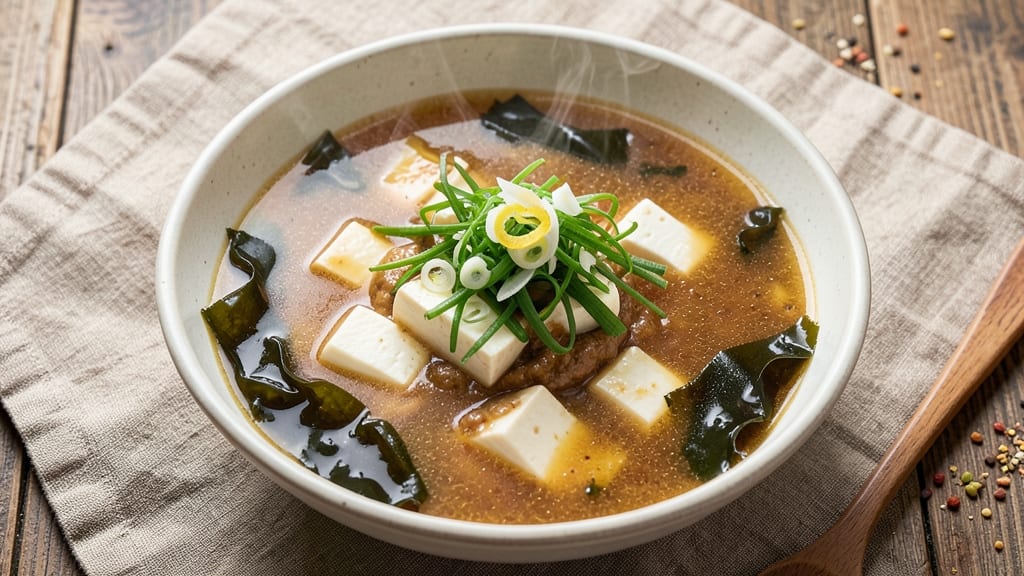
This best miso soup recipe ever delivers restaurant-quality umami depth in just 20 minutes, transforming simple ingredients into a velvety, fermented masterpiece. The secret lies in proper broth preparation—whether using traditional dashi or a vegetarian kombu base—and dissolving miso paste correctly to preserve its complex flavors.
I've perfected this version through years of testing, ensuring every spoonful delivers that signature savory richness without bitterness.
What sets this recipe apart is the balance of textures and flavors: silky tofu, tender wakame seaweed, and fresh green onions create a harmonious bite, while optional customizations like spicy miso or blended variations let you adapt it to your taste.
The broth simmers just long enough to develop depth without overcooking the delicate ingredients—critical for achieving that authentic Japanese restaurant quality at home.
By following these precise techniques, you'll achieve a soup that's both comforting and sophisticated, with a clean finish that lets the miso's natural flavors shine. The result is a bowl that's perfect for chilly days or as a light yet satisfying meal any time of year.
Whether you're serving it to family or treating yourself, this is miso soup elevated to its best possible form.
Pair it with steamed rice for a complete meal or serve as a starter to more substantial dishes. The beauty of this recipe lies in its versatility—once you master the base, you can experiment with endless variations while maintaining that essential umami core.
Let's get started on creating your best miso soup yet.
Ingredients for best miso soup recipe ever
These umami-rich ingredients transform into restaurant-quality miso soup in minutes—velvety broth, silky tofu, and vibrant seaweed.
| Ingredient | Amount | Notes |
|---|---|---|
| White Miso Paste 🧈 | ½ cup | White or shiro miso preferred |
| Vegetable Broth 💧 | 4 cups | Low-sodium preferred, homemade ideal |
| Silken Tofu 🍲 | 1 block | Firm silken tofu, cubed |
| Dried Wakame Seaweed 🌊 | 1 package | About 1 tbsp dried, rehydrated |
| Green Onions 🧅 | 4 whole | Thinly sliced, white and green parts |
| Kombu Seaweed 🌿 | 1 sheet | For dashi base, optional |
| Bonito Flakes 🐟 | 1 tbsp | Optional for traditional dashi |
| Sesame Oil 🫒 | ½ tbsp | Toasted for aroma, optional |
| Rice Vinegar 🍶 | 1 tbsp | For brightness, optional |
| Fresh Ginger 🧄 | 1 tsp | Grated, optional for heat |
| Diamond Crystal Kosher Salt 🧂 | ½ tsp | For seasoning broth |
| Red Miso Paste 🌶️ | 1 tbsp | For spicy variation, optional |
| Sesame Seeds 🌰 | ½ tbsp | Toasted for garnish, optional |
The miso paste is your flavor anchor. White miso delivers that classic, delicate umami, while red miso adds depth for a spicy variation. For the best quality, grab Miso Master brand or Hikari from Japanese markets—they dissolve perfectly without graininess. If you're making dashi from scratch, Kombu from Miyoko's or Marukyu creates that signature oceanic richness. The tofu? Silken tofu from Nasoya or House Foods stays silky when cubed—don't skip this step. For the wakame, Marukyu or Koyo brands rehydrate beautifully in 5 minutes.
No kombu? Dashi powder works in a pinch, though homemade is worth the 10 minutes. Fresh ginger? Substitute with 0.25 tsp ground ginger if you're short on time. The sesame oil adds aroma without overpowering—Kadoya or La Tourangelle brands are my go-tos. For a vegetarian dashi, kombu plus shiitake mushrooms gives you that umami punch without fish. The green onions? Use scallions from the Asian market—they're milder and sweeter. And if you're blending for a creamy version, add 0.25 cup silken tofu to the broth first before straining.
Broth keeps 4-5 days in the fridge—freeze extras in ice cube trays for quick future batches. Tofu and wakame stay fresh 3 days covered in the fridge. For make-ahead prep, rehydrate wakame and store separately until ready to use. The miso paste? Store in the fridge after opening—it lasts 6 months this way. Garnishes like sesame seeds or extra green onions can wait until serving to keep everything vibrant.
Why You'll Love This Recipe
- Five-Ingredient Magic: I swear, this is the kind of recipe that makes me feel like a genius—just broth, miso, tofu, wakame, and scallions. No chopping, no fuss, and honestly? The wakame rehydrates while you boil water. That’s it. My lazy Sundays just got a whole lot easier.
- Umami Bomb: The first sip is where it gets me every time—rich, salty-sweet miso cutting through the clean broth, with that silken tofu so tender it melts. Here’s what sold me: the wakame adds this briny depth that turns "simple soup" into "I’d eat this daily" territory. (Yes, even on a Tuesday night.)
- Lunchbox Hero: Between us, this is my go-to for meal prep. Double the batch, let it cool, and it’s ready to grab for work or school—no reheating needed. The tofu stays intact, the wakame holds its texture, and the green onions add that fresh pop even cold. My daughter picks out the wakame (she’s weird about seaweed), but still asks for seconds.
- Budget Win: I make this at least twice a week, and it costs me pennies. A block of miso lasts forever, tofu’s cheap, and wakame is just dried flakes—no waste. Honestly, the only splurge is the good vegetable broth, and even then, I stretch it with water. That’s reliability right there.
Step-by-step instructions for fermented umami miso soup
Here's how to unlock that legendary depth of flavor—simple steps for a soup that tastes like it's been simmering for hours.
Prepare the Dashi Foundation
In a medium saucepan, combine the 4 cups vegetable broth with the 1 sheet kombu seaweed and 1 tbsp bonito flakes (if using). Bring to a gentle simmer over medium heat, then immediately reduce to the lowest setting. Let it steep for 5 minutes—this draws out the maximum umami from the kombu and bonito without overpowering the broth.
Here's the thing—this step builds the flavor backbone. The kombu should float at the surface, and you'll see delicate bubbles forming. If you skip this, your soup will taste flat. After 5 minutes, remove and discard the kombu and bonito. The broth should now have a clean, slightly sweet aroma with just a hint of oceanic depth.
Rehydrate and Infuse the Wakame
While the broth simmers, place the 1 package dried wakame seaweed in a small bowl and cover it with 1 cup hot water from the broth (not boiling). Let it soak for 10 minutes—this rehydrates the seaweed and softens it perfectly. After soaking, drain the wakame, reserving the soaking liquid, and add it to the broth along with the reserved liquid.
The wakame should now be tender but still hold its shape. If it's still tough, let it soak another 2-3 minutes. This step is where the textural contrast comes in—you want those delicate strands that melt just slightly in your mouth. The soaking liquid adds another layer of umami that you'd miss if you just tossed in dry wakame.
Build the Miso Base
In a separate bowl, whisk together the 0.5 cup white miso paste with 1 tbsp red miso paste (if using) and 1 tsp grated fresh ginger. This creates a smooth paste that will dissolve evenly into the broth. Here's where the magic happens: the white miso gives that classic sweet, fermented flavor, while the red miso adds a subtle heat that elevates everything.
Slowly ladle 1 cup of the hot broth into the miso mixture while whisking continuously. This gradual addition prevents the miso from clumping and ensures it dissolves completely. The mixture should become a thick, glossy paste with a rich aroma that fills your kitchen. This is your flavor concentrate—don't rush it.
Combine and Finish the Soup
Return the miso mixture to the broth and stir gently over low heat for 3-4 minutes. You'll see the broth transform—it should become cloudy with a velvety sheen. This indicates the miso has fully incorporated. Add the 0.5 tbsp sesame oil and 1 tbsp rice vinegar, stirring well. The sesame oil adds a nutty aroma, while the vinegar brightens the whole dish.
Taste and adjust seasoning with the 0.5 tsp diamond crystal kosher salt if needed. The soup should be deeply savory with just a touch of acidity. Here's the pro tip: if it tastes too thick, add 2-3 tablespoons hot water to reach your preferred consistency. The soup should coat the back of a spoon but still be light enough to sip.
Assemble and Serve
Gently add the 1 block cubed silken tofu and 4 whole thinly sliced green onions to the soup. The tofu should be warm but still hold its shape—silken tofu is delicate, so handle it gently. Let the soup sit off heat for 2 minutes to allow the flavors to meld completely.
Ladle into bowls and garnish with 0.5 tbsp toasted sesame seeds. The contrast of the crispy seeds against the smooth broth adds another dimension. Serve immediately while the tofu is still warm and the aromas are at their peak. Each spoonful should deliver that perfect balance of fermented depth, umami richness, and bright acidity that makes this the best miso soup you've ever tasted.
Pro Tips For Making Best Miso Soup Recipe Ever
- STIR THE MISO LAST: Start with broth and wakame simmering just until the seaweed softens—about 3-4 minutes—but never let it boil. Then, turn off the heat, add the miso paste, and stir vigorously for 30 seconds. I learned this the hard way after my soup tasted bitter; heat kills the good bacteria in miso, and stirring after removing from heat keeps it alive and smooth.
- SOAK WAKAME CORRECTLY: Rinse dried wakame under cold water to remove debris, then cover it with twice its volume of cold water for 5 minutes before adding to the broth. Sounds simple, but I used to toss it in dry—it never rehydrated properly, leaving those little strands rubbery. Cold water does the trick without overpowering the broth’s flavor.
- CUBE TOFU LARGE: Cut silken tofu into 1-inch cubes (yes, bigger than you think) and add them to the broth just before serving. The smaller pieces I used to make dissolved into mush, turning the soup into a tofu smoothie. Big cubes stay intact, so you get that satisfying bite and texture contrast.
- SALT THE BROTH FIRST: Taste your vegetable broth before adding miso and adjust the salt—miso is salty, but if your broth is bland, the final soup will taste flat. I used to assume the miso would handle it, but a well-seasoned broth makes the umami pop without overpowering. Aim for a light saltiness, like the start of a good ramen.
Storing and reheating this best miso soup recipe ever
Broth Storage Secrets
Your miso soup broth is the flavor foundation—store it properly to preserve that umami magic. Transfer cooled broth to airtight glass containers (I love Le Parfait jars) and refrigerate for up to 5 days.
The flavors actually deepen over time as the miso continues fermenting gently. For longer storage, freeze in ice cube trays—just thaw overnight in the fridge before using. 💧
Tofu and Seaweed Prep
Prepped ingredients make reheating a breeze. Cube the silken tofu and store it in a separate airtight container with a splash of broth to prevent drying. The wakame seaweed stays fresh for 3 days in the fridge if kept submerged in water—drain and rinse just before reheating.
I keep both components ready in the fridge so I can assemble fresh bowls in minutes. 🍲
Reheating Like a Pro
Never microwave miso soup—it turns rubbery and loses texture. Instead, gently reheat on the stovetop over low heat for 3-4 minutes, stirring occasionally. Add 1-2 tablespoons hot water if the broth thickens too much.
For extra richness, stir in ½ teaspoon extra miso paste while reheating—this restores that velvety depth. 🔥
Freezer-Friendly Tips
Freeze miso soup in single-serving portions for quick meals. Use silicone molds (like OXO Good Grips) to portion broth and toppings separately. When reheating from frozen, add 1 extra minute of gentle simmering and adjust seasoning—frozen miso can lose some brightness.
The tofu and wakame freeze beautifully too if prepped properly! ❄️
Garnish Freshness
Save your garnishes for serving day. Toast sesame seeds just before adding to maintain crispness, and slice green onions fresh so they stay vibrant. I keep these components in small containers on the fridge door for easy access.
The contrast of fresh garnishes against reheated soup makes every bowl feel special. ✨
Flavor Revival Tricks
Reheated miso soup can sometimes lose its brightness. Fix this by adding ½ teaspoon rice vinegar or a pinch of grated fresh ginger while reheating. For extra depth, stir in ½ teaspoon sesame oil at the end—this restores that nutty aroma that makes the soup sing.
A splash of hot water also helps reset the texture beautifully. 💡
Nutrition facts
Frequently asked questions
Why does my miso soup turn bitter?
Overcooking the miso paste is the #1 cause of bitterness. The paste should only simmer for 3-4 minutes after adding to the broth—any longer and the fermented flavors turn harsh. Always dissolve the miso in a separate bowl with broth first, then gently combine. For extra protection, use white miso (shiro miso) which has a milder, sweeter profile than red miso.
Can I make this miso soup vegetarian?
This recipe is already vegetarian-friendly, but you can enhance it further by using a shiitake mushroom dashi instead of bonito flakes. Simmer 4 dried shiitake mushrooms in the broth for 15 minutes to extract maximum umami, then remove them before adding miso. The mushrooms add a meaty depth that works beautifully with the fermented flavors.
How do I fix grainy miso paste?
Grainy miso happens when the paste isn't properly dissolved. First, whisk the miso with a bit of hot broth in a separate bowl until completely smooth. Then, strain the mixture through a fine-mesh sieve before adding it back to the pot. For future batches, try whisking the miso with 1 teaspoon sake or mirin before adding broth—this helps break up the paste more effectively.
What's the best way to add protein?
For extra protein, try adding soft-boiled eggs or thinly sliced chicken just before serving. The eggs should be cooked to 6 minutes for a runny yolk that blends beautifully with the soup. For chicken, poach 4 oz boneless breast in the broth for 5 minutes before adding miso. Both options work perfectly while keeping the soup light and comforting.
Can I blend my miso soup for a creamy texture?
Yes! For a silky texture, blend 1 cup of the hot broth with ½ cup silken tofu until completely smooth, then stir it back into the pot. This creates a velvety consistency while maintaining all the umami flavors. For extra richness, add 1 teaspoon tahini to the blended portion. The result is a modern twist on classic miso soup that's perfect for cold weather.