
Soups & Stews
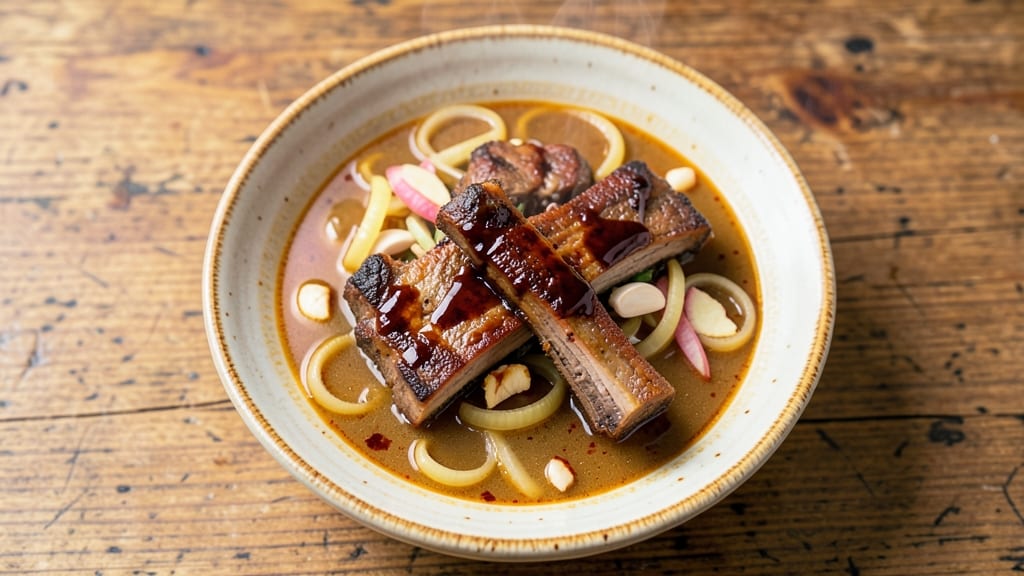
This beef ribs soup recipe Panlasang Pinoy delivers the hearty, smoky comfort of Filipino home cooking in every steaming bowl. I perfected this one-pot wonder after years of weekend kitchen experiments, balancing rich broth with tender beef ribs and aromatic spices that make your home smell like a karinderia feast.
The secret lies in slow simmering—transforming tough ribs into melt-in-your-mouth perfection while building layers of umami through traditional ingredients like soy sauce, annatto oil, and bay leaves.
What sets this Filipino-style soup apart is the harmony of flavors: the savory depth of soy sauce and fish sauce, the smoky richness of annatto-infused oil, and the bright contrast of siling labuyo (bird’s eye chili) and calamansi.
Unlike heavy stews, this broth stays light yet deeply satisfying, with ribs that stay connected to their bones—no forks required. The recipe also includes optional garnishes like chopped green onions and crispy garlic for that restaurant-quality finish.
By the time you’re done, you’ll have a restaurant-quality soup that pairs perfectly with steamed rice or sinigang vegetables. The aroma alone will have everyone gathering at your table, while the first spoonful delivers that perfect balance of smoky, tangy, and savory.
This is the kind of dish that turns ordinary weeknights into Filipino family-style celebrations.
Ready in under 2 hours with minimal prep, this recipe proves you don’t need fancy techniques to create authentic Filipino comfort. The slow simmering does all the work while you enjoy the process—just like lola used to make. Let’s get cooking!
Ingredients for beef ribs soup recipe panlasang pinoy
Sixteen ingredients for a soup that tastes like Filipino home cooking magic.
| Ingredient | Amount | Notes |
|---|---|---|
| Beef Ribs 🥩 | 3 lb | Bone-in, meaty cuts preferred |
| Yellow Onions 🧅 | 2 whole | Medium size, chopped |
| Garlic Cloves 🧄 | 8 cloves | Peeled, minced |
| Fresh Ginger 🌿 | ½ cup | Grated, packed |
| Annatto Oil 🫒 | 2 tbsp | Filipino achuete oil |
| Soy Sauce 🍶 | ½ cup | Filipino-style preferred |
| Fish Sauce 🐟 | 2 tbsp | Red Boat preferred |
| Bay Leaves 🌿 | 4 whole | Dried, standard size |
| Siling Labuyo 🌶️ | 2 whole | Bird's eye chili, chopped |
| Calamansi Juice 🍋 | ¼ cup | Freshly squeezed |
| Potatoes 🥔 | 2 lb | Russet, peeled, cubed |
| Carrots 🥕 | 2 whole | Medium, sliced |
| Tomatoes 🍅 | 2 whole | Medium, quartered |
| Green Onions 🧅 | ¼ cup | Chopped, for garnish |
| Crispy Garlic 🧄 | ¼ cup | Pan-fried, for garnish |
The beef ribs are the star—look for meaty cuts with good marbling for that rich, slow-simmered flavor. Filipino markets or Asian grocery stores often carry the best quality, but regular butchers can help too. If you can't find annatto oil, achuete seeds from Latin markets work—just grind them with oil. The fish sauce is non-negotiable here; Red Boat is my go-to, but any quality brand will do. For the siling labuyo, wear gloves if you're sensitive to heat—this stuff packs a punch. Calamansi is the secret tangy kick, but if you can't find it, lime juice works in a pinch (though it's not quite the same).
No annatto oil? Paprika or smoked paprika at half the amount gives some color, though it won't be authentic. Short on fish sauce? Soy sauce plus a dash of Worcestershire mimics some of the umami. The potatoes and carrots should be uniform size so they cook evenly—no one wants mushy veggies. For the tomatoes, San Marzano if you can find them, but regular beefsteak works fine. The crispy garlic is optional but adds that restaurant-quality crunch; just fry up some extra garlic in oil until golden and drain on paper towels.
This soup tastes even better the next day as the flavors meld. Store leftovers in the fridge for up to 4 days, or freeze for 3 months. I always make extra because it disappears fast—perfect for meal prep. The broth reduces slightly when reheated, so add a splash of water if it gets too thick. For serving, keep those crispy garlic and green onions separate until the last minute so they stay crisp. The aroma alone will have your whole house gathering around the table.
Why You'll Love This Recipe
- One-Pot Magic: I swear by this recipe—just ribs, onions, garlic, and ginger simmering in a single pot. No fancy gadgets, no stress. The annatto oil gives it that golden glow and depth without extra effort.
- Umami Bomb: That slow-cooked beef ribs? They practically melt into the broth, while the ginger and garlic work their magic. Honestly, the first spoonful makes me forget about takeout—it’s that rich and satisfying.
- Leftover Hero: This soup only gets better the next day. I make a big batch on Sundays, and by Wednesday, it’s still the star of my lunch. Freezes like a dream too, so I’m never stuck with sad leftovers.
- Budget Flex: Beef ribs are cheaper than you’d think, and the spices stretch the flavor. Between us, this is my go-to when I want something hearty but won’t break the bank. Plus, the annatto oil makes it feel special without costing extra.
Step-by-step instructions for beef ribs soup panlasang pinoy
Here's how to create a rich, smoky Filipino beef ribs soup that warms the soul.
Prepare the Beef Ribs for Maximum Flavor
Start by rinsing the 3 lb beef ribs under cold water and patting them completely dry with paper towels. This step is crucial—any moisture will prevent the annatto oil from properly coating the meat and creating that signature golden hue. In a large bowl, combine the ribs with 2 tbsp annatto oil, massaging it evenly over every surface. Let them marinate for at least 30 minutes at room temperature while you prep the remaining ingredients.
Pro tip: I like to make small slits in the thicker parts of the ribs with a sharp knife. This helps the marinade penetrate deeper and creates more surface area for flavor absorption. The annatto oil will give your soup that beautiful caramelized color and subtle earthy aroma that defines Filipino comfort food.
Build the Aromatic Base
In a large Dutch oven or heavy pot, heat 2 tablespoons olive oil over medium heat. Add the chopped 2 whole yellow onions and cook for 5 minutes until they soften and begin to caramelize. Add the 8 cloves minced garlic cloves and 0.5 cup grated fresh ginger, cooking for another 2 minutes until fragrant and the raw garlic smell disappears.
This is where the magic happens—don't rush this step. The onions should develop a deep golden color, and you should smell that sweet, almost jammy aroma. If the onions start to brown too quickly, reduce the heat slightly. Next, add the 2 whole sliced carrots, 2 whole quartered tomatoes, and 4 whole bay leaves, stirring to combine. Cook for 3 minutes until everything is well-coated in the aromatic oil.
Sear the Ribs and Develop Deep Flavors
Working in batches if needed, add the marinated ribs to the pot in a single layer. Sear them for 3-4 minutes per side until they develop a beautiful golden-brown crust. This step is essential for building flavor—those browned bits will dissolve into the soup, creating a rich, umami base. Once all ribs are seared, remove them from the pot and set aside.
Here's the thing—don't overcrowd the pot during searing. If you have to work in batches, that's perfectly fine. The key is getting that deep color on the meat before it starts cooking through. While the ribs are searing, you'll notice the pot filling with delicious fond—those browned bits are pure flavor. We'll scrape them up in the next step.
Simmer the Soup for Tender Ribs and Perfect Vegetables
Return the seared ribs to the pot and add 8 cups water (enough to just cover the ribs), 0.5 cup soy sauce, 2 tbsp fish sauce, and 2 whole chopped siling labuyo. Bring to a gentle simmer over medium-low heat. Once simmering, add the 2 lb cubed potatoes and return the ribs to the pot. Cover and cook for 1 hour 15 minutes, or until the ribs are fork-tender and the potatoes are easily pierced with a knife.
This is where patience pays off. The ribs should be falling off the bone tender, and the potatoes should be soft but still hold their shape. I check for doneness by gently pressing a potato with a fork—it should give slightly but not fall apart. If the soup reduces too much before the ribs are done, simply add hot water ½ cup at a time to maintain the proper consistency.
Finish with Bright Flavors and Garnishes
Once the ribs and potatoes are perfectly tender, remove the ribs from the pot and set them aside. Strain the soup through a fine-mesh sieve into a clean pot, pressing gently on the vegetables to extract all the flavor. Return the strained soup to the pot and stir in the 0.25 cup freshly squeezed calamansi juice. This final touch brightens the entire dish with a citrusy tang that cuts through the richness of the ribs.
Return the ribs to the pot and simmer for another 5 minutes to heat everything through. Ladle the soup into bowls, garnishing each serving with 0.25 cup crispy garlic and 0.25 cup chopped green onions. The crispy garlic adds a delightful crunch contrast, while the green onions bring freshness to each spoonful. Serve immediately with steamed rice to soak up every last drop of that smoky, savory broth.
Pro Tips For Making Beef Ribs Soup Recipe Panlasang Pinoy
- Blister the Onions First: I used to just chop onions and toss them in—big mistake. For panlasang pinoy ribs, char the onions over direct heat until blackened in spots (about 5 minutes). That smoky depth cuts through the richness of the beef and annatto, giving your soup that restaurant-quality complexity. Trust me, your nose will thank you.
- Pare Ginger Like a Pro: Skip the grating—peel the ginger, then slice it thinly (almost translucent) with a sharp knife. Toss it straight into the pot before adding the ribs. It infuses faster and avoids that clumpy texture that ruins the broth’s smoothness. (Yes, even if you’re impatient like me.)
- Don’t Rush the Annatto Oil: Annatto oil isn’t just for color—it’s the soul of the dish. Heat it slowly with the onions and garlic until the annatto dissolves completely (about 3 minutes). If you rush, you’ll end up with speckled broth instead of a rich, golden hue. Patience here makes all the difference.
- Simmer Ribs Half-Covered: After the initial sear, cover the pot loosely—just enough to let steam escape. This prevents the ribs from stewing into mush while still letting the broth reduce enough to coat the meat. I learned this the hard way when my first batch turned into a watery, sad affair. (Your future self will thank you.)
Wine and beer pairings for this beef ribs soup recipe panlasang pinoy
Filipino Red Wine Pairings
For this rich, umami-packed beef ribs soup, a Filipino red wine like Templar Pinot Noir from Bohol is my go-to choice. Its bright acidity and subtle earthy notes cut through the smoky annatto and soy sauce flavors while complementing the beef’s richness.
The wine’s medium body and red fruit undertones (think cherry and raspberry) mirror the soup’s natural sweetness from the tomatoes and carrots. Serve slightly chilled—around 55-60°F—to enhance its refreshing contrast. 🍷
Malaysian-Style Lager Balance
A crisp, Malaysian lager like Tiger Beer or Anchor cleanses the palate between bites of this hearty soup. The beer’s light malt sweetness and subtle citrus notes from the calamansi juice create a perfect harmony.
For a local twist, try Singha—its balanced carbonation and mild hop bitterness prevent the soup’s richness from feeling overwhelming. Keep the beer well-chilled (40°F) to maintain its crispness. 🍺
Coconut Beer Fusion
For adventurous drinkers, a Filipino coconut beer like Coco Beer adds a tropical contrast to the savory soup. The creamy coconut flavor (about 10% alcohol) complements the annatto’s earthiness while its slight sweetness balances the soup’s saltiness.
Serve slightly chilled (45°F) to let the coconut aroma shine. This pairing works especially well during summer months when you want to highlight the dish’s refreshing side. 🥥
White Wine Alternative
If red wine feels too heavy, a Filipino white wine like Petron White (a Sauvignon Blanc) offers a surprising match. Its zesty citrus and herbal notes (think lime and grass) echo the calamansi and green onions in the soup.
The wine’s high acidity cuts through the fat from the ribs, making each sip feel refreshing. Serve at 45-50°F to preserve its crispness. 🍷
Non-Alcoholic Pairings
For a non-alcoholic option, try San Miguel Pure Gold—a Filipino sparkling water with a subtle citrus twist. Its effervescence cleanses the palate between bites, while the citrus notes complement the calamansi in the soup.
For something warmer, hot ginger tea with a slice of lemon enhances the soup’s spicy and tangy elements without overpowering them. Both options work beautifully with the dish’s rich flavors. 🍋
Nutrition facts
Frequently asked questions
Can I substitute beef ribs with other cuts of beef?
While beef ribs are ideal for their rich flavor and tender texture, you can use beef chuck roast or short ribs as substitutes. Cut the meat into 2-inch chunks and increase simmering time by 30-45 minutes to ensure tenderness. Avoid lean cuts like sirloin—they won't develop the same satisfying texture.
How do I make the soup less spicy?
If the siling labuyo is too intense, reduce it to 1 chili or omit it entirely. For extra mildness, add 1 tablespoon sugar or 1 teaspoon honey to balance the heat. The calamansi juice also brightens flavors without adding spice. Taste as you go—you can always adjust!
Can I make this soup in an Instant Pot?
Yes! Sauté the onions, garlic, and ginger first, then add all ingredients except the calamansi juice. Cook on High Pressure for 60 minutes, then quick-release. Strain the broth, return ribs to the pot, and stir in calamansi. The pressure cooker cuts time by about 1 hour while keeping flavors intact. Just add 1 extra cup of water to account for pressure cooking.
What's the best way to reheat leftovers?
Reheat gently on the stove over low-medium heat with a splash of water or broth to prevent drying. Avoid microwaving—it can make the ribs rubbery. For best results, reheat only until steaming hot (10-15 minutes). The soup actually tastes better the next day as flavors deepen! Store leftovers for up to 4 days in the fridge.
Why did my ribs turn out tough?
Tough ribs usually mean they weren't simmered long enough or the heat was too high. Always cook on low-medium heat and check doneness with a fork—ribs should separate easily. If using a slow cooker, cook for 6-7 hours on low. For extra tenderness, add 1 tablespoon baking soda to the water (neutralizes acids that toughen meat).