
Soups & Stews
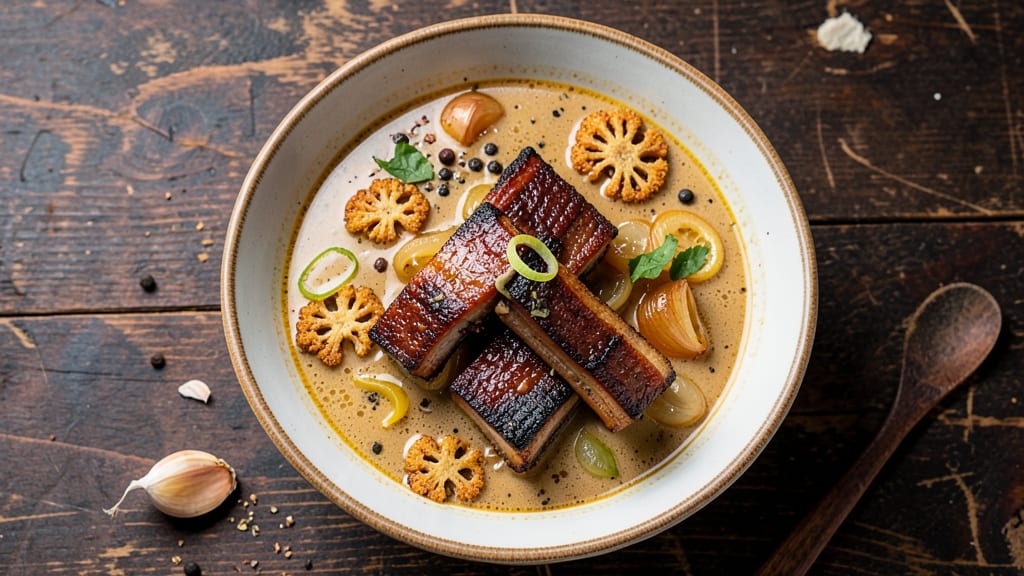
This Filipino-style beef ribs soup recipe transforms tough cuts into melt-in-your-mouth tenderness through slow simmering—where rich umami flavors blend seamlessly with aromatic garlic, soy, and just a hint of tangy calamansi.
The secret lies in the long cooking process that extracts deep, savory essence from the ribs while keeping the broth velvety and packed with collagen. I developed this version after perfecting the balance between traditional Filipino flavors and foolproof technique, ensuring every spoonful delivers that satisfying meaty pull.
The beauty of this recipe is its simplicity: minimal prep, one-pot cooking, and ingredients you likely already have. We start with a deep-fried celery crown—a crispy, aromatic garnish that adds both texture and visual appeal—to elevate the humble soup into something restaurant-worthy.
The broth develops layers of complexity as it simmers, with soy sauce providing that signature umami depth while garlic and ginger build aromatic warmth. What makes this version special is how the ribs become fork-tender without falling apart, holding their shape while releasing flavor into the broth.
By the time you're done, you'll have a steaming bowl of Filipino beef ribs soup where each spoonful offers tender meat, rich broth, and that satisfying crunch from the celery crown.
The aroma alone will have everyone gathering around your table, and the flavors—savory, slightly sweet, with just enough tang—make this a comfort food that feels like a hug in a bowl. Perfect for family dinners or meal prep, this recipe delivers restaurant-quality results with home-cooked simplicity.
Pair it with steamed rice to soak up every last drop of that flavorful broth, or serve with a side of crisp vegetables for balance. The leftovers actually improve as the flavors meld further, making this an ideal make-ahead dish.
Here's how to create this Filipino classic in your own kitchen—where every bite tells the story of slow-cooked perfection.
Ingredients for beef ribs soup recipe filipino style
Six ingredients transform tough ribs into restaurant-quality soup with crispy celery crowns.
| Ingredient | Amount | Notes |
|---|---|---|
| Beef Ribs 🥩 | 3 lb | Bone-in, meaty cuts preferred |
| Celery Stalks 🧅 | 3 whole | Thick, firm stalks for crowns |
| Yellow Onion 🧅 | 1 whole | Sliced into 1-inch pieces |
| Garlic Cloves 🧄 | 8 cloves | Minced for aromatic base |
| Fresh Ginger 🌿 | 2 tbsp | Grated, peeled root |
| Soy Sauce 🍶 | ½ cup | Dark soy for deeper color |
| Calamansi Juice 🍋 | ¼ cup | Or lime juice in a pinch |
| Vegetable Oil 🫒 | ½ cup | For frying celery crowns |
| Water 💧 | 6 cups | Enough to cover ribs |
| Salt 🧂 | 1 ½ tsp | Adjust to taste |
| Black Peppercorns 🌶️ | ½ tsp | Crushed for heat |
| Green Onions 🧅 | 4 whole | Sliced for garnish |
| Fresh Cilantro 🌿 | ¼ cup | Chopped for freshness |
| All-Purpose Flour 🌾 | ½ cup | For celery crown batter |
The ribs are the star—look for meaty, bone-in cuts at your butcher or grocery store's meat counter. Costco or Trader Joe's often have great deals on beef ribs, but any well-marbled cut will work. The celery crowns are what make this soup special, so grab thick, firm stalks—the ones with the biggest diameter. If you can't find calamansi juice, lime juice works just fine, though it won't be quite as tangy. The key to tender ribs is patience: slow simmering is non-negotiable here.
No dark soy sauce? Regular soy sauce with 1 tsp molasses mimics the deeper color. Fresh ginger loses potency fast, so buy it whole and grate only what you need. The celery crowns need vegetable oil for frying—don't skimp on the oil, or they won't get crispy. For extra umami, add 1 tbsp fish sauce if you're not avoiding it. The broth should be slightly salty but balanced—taste as you go. If you're prepping ahead, store the ribs and broth separately until ready to cook.
This soup tastes even better the next day—leftovers keep for 4-5 days in the fridge, and the broth freezes beautifully for up to 3 months. The celery crowns stay crisp for about 2 days if stored in an airtight container. I always make a double batch because it's perfect for meal prep. Serve with steamed rice to soak up every last drop of that rich, savory broth.
Why You'll Love This Recipe
- One-Pot Magic: I swear by this recipe when I’m too tired to wash a million dishes. Just toss the ribs, celery, onion, garlic, and ginger into a pot, add water, and let it simmer—no extra pans, no fuss. The ribs practically melt off the bone, and the broth thickens into something rich without needing fancy techniques.
- Ginger-Garlic Bomb: Between us, the ginger and garlic in this soup are chef’s kiss. The ginger adds this warm, spicy depth that cuts through the richness of the beef, while the garlic—roasted just enough—gives it a toasty, aromatic punch. It’s the kind of flavor that makes you want to slurp it straight from the bowl.
- Weeknight & Potluck Hero: This soup is my go-to for lazy nights and family gatherings. Serve it as-is for a hearty meal, or ladle it over rice for extra staying power. Honestly, I’ve brought it to parties, work lunches, and even my mom’s house—everyone asks for seconds, no matter the occasion.
- Budget-Friendly Feast: Beef ribs might sound fancy, but this recipe stretches them into a full meal for days. The celery and onion bulk it up, while the ginger and garlic add serious flavor without costing a fortune. I’ve made it feed six people for under $20, and the leftovers? Even better the next day.
Step-by-step instructions for Filipino-style beef ribs soup
Here's how to create a rich, umami-packed soup with melt-in-your-mouth ribs and crispy celery crowns.
Prepare the Celery Crowns for Crunchy Texture
Cut the 3 whole celery stalks into 2-inch sections, leaving the leaves intact. In a small bowl, whisk together the 0.5 cup all-purpose flour, 1 teaspoon of the 1.5 tsp salt, and 0.25 tsp of the 0.5 tsp black peppercorns. Dip each celery crown into the flour mixture, coating them evenly but not too thickly.
Heat the 0.5 cup vegetable oil in a deep skillet over medium heat until it shimmers but doesn't smoke. Fry the coated celery crowns in batches for 2-3 minutes per side until golden brown and crispy. Drain on paper towels and set aside—they'll stay crunchy for garnishing later. Here's the thing: if you skip this step, you miss the signature Filipino crunch that makes this soup special.
Sear and Simmer the Beef Ribs for Deep Flavor
In the same skillet (no need to clean it—the browned bits add flavor), sear the 3 lb beef ribs over medium-high heat for 3-4 minutes per side until they develop a rich brown crust. Remove the ribs and set them aside. Add the sliced 1 whole yellow onion to the skillet and cook for 3 minutes until softened.
Stir in the 8 cloves minced garlic and 2 tbsp grated fresh ginger, cooking for 30 seconds until fragrant. Pour in the 0.5 cup soy sauce and 0.25 cup calamansi juice, scraping up any browned bits from the bottom. This is where all the umami magic begins—don't rush this part. The sauce should bubble vigorously for about 1 minute before it reduces slightly.
Build the Rich, Slow-Simmered Broth
Return the seared beef ribs to the skillet and add the 6 cups water. Bring everything to a boil, then reduce heat to low. Cover and let it simmer gently for 1.5 hours, stirring occasionally. You'll notice the ribs releasing their collagen into the broth, creating that signature thick, velvety texture. Here's what I do: I check the water level after 45 minutes and add a splash if it's reduced too much.
After 1.5 hours, the ribs should be fork-tender and easily pull away from the bone. Taste the broth and adjust seasoning with the remaining 0.5 tsp salt if needed. The ribs should be falling off the bone at this point, but if they're not quite there, give them another 15 minutes of simmering. Real talk: this is where patience pays off—rushing will give you tough meat.
Finish with Aromatics and Garnish
Remove the beef ribs and strain the broth through a fine-mesh sieve into a clean pot, pressing on the solids to extract maximum flavor. Return the broth to medium heat and stir in the sliced 4 whole green onions and chopped 0.25 cup fresh cilantro. Let it simmer for just 1-2 minutes to infuse the flavors without cooking the greens to mush.
To serve, place 2-3 ribs in each bowl and ladle the hot broth over them. Garnish with the crispy celery crowns you prepared earlier and any remaining green onions. The contrast of the crunchy celery crowns against the silky broth and tender meat is what makes this dish truly special. Each bite should deliver that perfect balance of savory, tangy, and slightly sweet flavors.
Pro Tips For Making Beef Ribs Soup Recipe Filipino Style
- Blister the Garlic: Filipinos don’t just chop garlic—they brown it first. Heat a dry pan over medium-high, toss in the whole peeled cloves (yes, with skins on), and let them sizzle until fragrant and slightly charred. This unlocks deeper flavor than minced raw garlic ever could—just smash them lightly after with the side of your knife.
- Parboil the Ribs: Skip the raw beefy taste by giving the ribs a quick 5-minute parboil in salted water before simmering. This step seals in juices and shortens cooking time later. I learned this the hard way after serving soup with chewy, undercooked ribs—now I never skip it.
- Grate Ginger Thin: Fresh ginger in Filipino soups isn’t just for show—it’s the backbone of the aroma. Use a microplane or the finest grater to get a paper-thin, almost powdery texture. Packed ginger chunks sit like rocks in your soup; this way, it dissolves smoothly and infuses every bite.
- Simmer Low and Long: The ribs need time—think 2 to 2.5 hours of gentle simmering, not a rushed boil. If the liquid reduces too fast, add hot water in small batches. I’ve seen people rush this and end up with tough meat; the secret’s patience, not heat.
Storing and reheating this recipe
Broth Storage Secrets
The rich, collagen-packed broth is where this soup’s magic happens, and it stores beautifully. Let the broth cool completely before transferring it to airtight glass containers—I love Mason jars for their durability.
Store in the fridge for up to 5 days, but the flavor actually deepens over time as the spices meld. For long-term storage, freeze the broth in 1-cup portions—this makes reheating perfect for quick meals.
When reheating, bring to a gentle simmer over medium-low heat and stir occasionally to prevent scorching. 💧
Ribs Prep Ahead
If you’re prepping this soup for later, handle the ribs separately to keep them tender. After searing, store them in a ziplock bag with 1 tbsp soy sauce and 1 tsp grated ginger to preserve flavor. They’ll keep in the fridge for 3 days before cooking.
When ready, simmer them directly in the broth without pre-cooking—this ensures they stay fork-tender. For freezing, wrap ribs tightly in plastic wrap and store for up to 2 months. Thaw overnight in the fridge before using. 🥩
Celery Crowns Trick
The crispy celery crowns are the star garnish, but they lose crunch fast. Fry them fresh when serving, but if you must prep ahead, store them in a single layer on paper towels inside an airtight container for up to 2 days.
Reheat in a 350°F oven for 3-4 minutes to restore crispiness. Pro tip: Keep a small batch uncooked in the fridge—fry them fresh whenever you reheat the soup for maximum crunch. 🧅
Reheating Leftovers
This soup tastes even better the next day, so plan ahead! Reheat in a heavy-bottomed pot over medium-low heat—never microwave, as it dulls the flavors. Add 2 tbsp water to prevent sticking, and stir occasionally.
If the broth seems too thick, thin it with a splash of hot water. For extra richness, stir in 1 tsp fish sauce or a pinch of sugar while reheating. Serve with freshly fried celery crowns for that restaurant-quality crunch. ✨
Freezer-Friendly Tips
Freezing this soup is a game-changer for busy weeks. Portion the broth into freezer-safe bags, leaving 1-inch headspace for expansion. Label with the date—it keeps for 3 months without losing flavor.
To reheat from frozen, transfer to a pot and simmer over low heat for 20-25 minutes, stirring occasionally. Avoid high heat, or the broth may separate. The ribs can be frozen separately and added back during reheating. 🧊
Garnish Refresh
Fresh garnishes make all the difference. Store green onions and cilantro in ziplock bags with a paper towel to absorb moisture. They’ll stay fresh for 5 days in the fridge.
For a quick garnish refresh, blanch the green onions in boiling water for 30 seconds, then shock in ice water to maintain color. Fry new celery crowns whenever reheating to keep that satisfying crunch. 🌿
Nutrition facts
Frequently asked questions
Can I substitute beef ribs with another cut of beef?
Yes, but choose similarly fatty cuts for best results. Beef short ribs or chuck roast work well—they have good marbling that renders flavor into the broth. Avoid lean cuts like sirloin, as they won't develop the same rich taste. If using short ribs, increase simmering time to 2 hours for extra tenderness.
What makes the celery crowns crispy?
The secret is double-frying! After the initial 2-3 minutes per side, let the celery crowns cool slightly, then fry them again for 1 minute to reactivate the starches. Use enough oil to coat them halfway up the stalk, and keep the temperature at medium heat—too hot burns them, too low makes them greasy.
How do I make this soup spicier?
Add 1-2 tbsp sriracha or 1 tsp chili flakes when simmering the broth. For heat without spice, include 1-2 sliced Thai chilies with the aromatics. Remove them before serving if you prefer mild heat. The calamansi juice already adds natural tang, so balance is key—start small and adjust to taste.
Can I make this soup in an Instant Pot?
Sear the ribs and aromatics first, then add everything to the Instant Pot with 4 cups water (less than the recipe). Cook on high pressure for 60 minutes, then do a natural release. The broth will be thinner, so reduce it uncovered on the stove for 10-15 minutes to thicken. The ribs will be tender but may fall apart more than stovetop.
What if my broth is too salty?
Add 1-2 tbsp cold water or 1 tbsp milk to dilute the saltiness. For a Filipino touch, stir in 1 tsp sugar or 1 tbsp tomato paste to balance flavors. Avoid adding more water—it weakens the broth's depth. Taste as you go, adjusting gradually. The celery crowns and fresh herbs will also help brighten the flavor.