
Soups & Stews
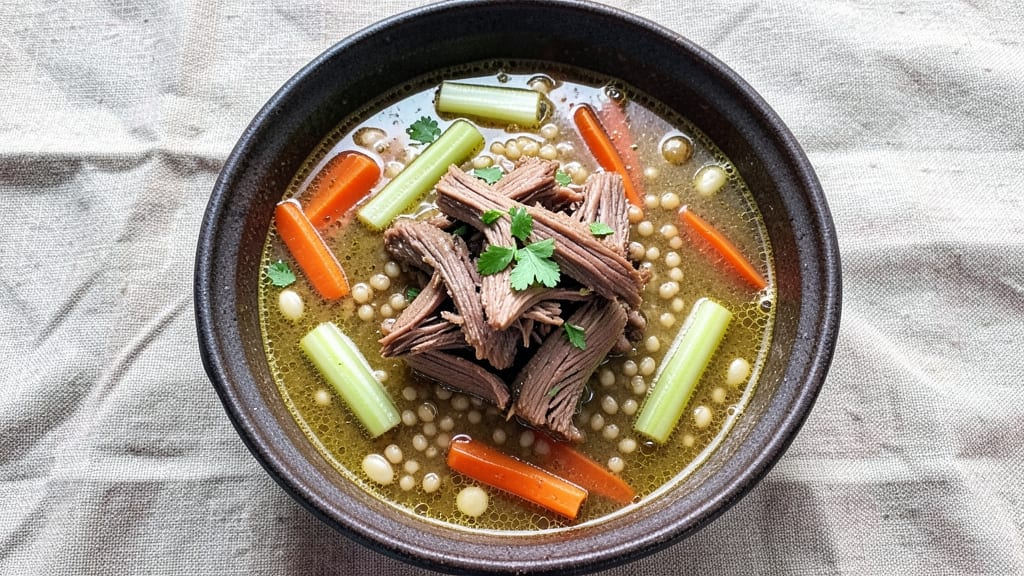
Transforming leftover roast beef into this beef barley soup is the ultimate way to stretch a meal into something even more satisfying. The secret lies in deglazing that roast pan—those browned bits hold layers of flavor that elevate the broth from ordinary to deeply savory. I developed this recipe after realizing how wasteful it was to let perfectly good roast scraps go uneaten, and now it's a staple in my rotation for chilly evenings or meal prep Sundays.
The beauty of this soup is in its simplicity: no special ingredients, just quality leftovers and pantry staples. The barley softens into tender, chewy bites while absorbing the rich beef broth, and vegetables like carrots and celery add natural sweetness and texture.
What starts as a simple simmer becomes a hearty, comforting bowl that tastes even better the next day—proof that good food doesn't require fancy ingredients, just smart techniques.
By the time you're done, you'll have a bowl of soup that's naturally rich from the roast, substantial from the barley, and perfectly balanced with vegetables and herbs. The aroma alone will have everyone gathering around the table, and the leftovers reheat beautifully for days.
This isn't just soup—it's a way to turn scraps into something extraordinary with minimal effort.
The best part? You'll never look at leftover roast the same way again. Whether you're feeding a family or prepping meals for the week, this recipe delivers restaurant-quality results without the fuss. Let's get started—your taste buds (and your wallet) will thank you.
Ingredients for beef barley soup recipe with leftover roast
Pantry staples plus leftover roast make this hearty soup—simple, flavorful, and waste-free.
| Ingredient | Amount | Notes |
|---|---|---|
| Leftover Roast Beef 🥩 | 1 ½ lb | Diced into bite-sized pieces |
| Pearl Barley 🌾 | 1 cup | Uncooked, rinsed well |
| Yellow Onion 🧅 | 1 whole | Diced, about 1.5 cups |
| Carrots 🥕 | 3 medium | Peeled, chopped into 1-inch pieces |
| Celery Stalks 🧄 | 3 whole | Chopped into 1-inch pieces |
| Garlic Cloves 🧄 | 4 cloves | Minced, or 1 tsp garlic powder |
| Beef Broth 💧 | 6 cups | Low-sodium preferred |
| Water 💧 | 2 cups | For adjusting consistency |
| Tomato Paste 🍅 | 2 tbsp | For depth of flavor |
| Dried Thyme 🌿 | 1 tsp | Or 1 tbsp fresh thyme |
| Bay Leaves 🍃 | 2 whole | Removed before serving |
| Salt 🧂 | 1 ½ tsp | Adjust to taste |
| Black Pepper 🌶️ | ½ tsp | Freshly ground |
| Olive Oil 🫒 | 2 tbsp | For deglazing pan |
The roast is the star, so use whatever scraps you've got—chuck or ribeye both work. Costco or Trader Joe's often have affordable pre-sliced roast for this purpose. Barley matters too—pearl barley is chewy and holds up well, but pot barley breaks down faster. For the veggies, baby carrots save chopping time, and celery adds that classic soup sweetness. Fresh thyme is ideal but dried works at one-third the amount—just remember it's concentrated.
No beef broth? Chicken broth plus 1 tbsp soy sauce gets you close. Short on carrots? Sweet potatoes or parsnips add depth. The tomato paste can be skipped if you dislike its intensity, but it adds that umami punch—Rao's brand is my go-to for quality. Deglazing the pan is non-negotiable—those browned bits are flavor gold. If you're in a hurry, 1 tbsp balsamic vinegar works in a pinch, but beef broth is still best. Fresh herbs like parsley or dill at the end brighten everything up.
This soup tastes even better the next day—3-4 days in the fridge, 3 months frozen. I double the batch and freeze half for lazy weeknights. Store in airtight containers, and if freezing, add a splash of water before sealing to prevent freezer burn. The barley thickens as it cools, so thin with broth or water when reheating. Leftovers reheat beautifully—just warm through on the stove or microwave.
Why You'll Love This Recipe
- Leftover Hero: I swear by this trick—turning yesterday’s roast into today’s star. No waste, no stress, just shred that beef right into the pot and let the broth work its magic. The barley soaks up all the rich, savory juices like a sponge.
- Savory Depth in Minutes: That crispy roast crust? It melts into the broth for layers of flavor you won’t find in store-bought. Add a splash of red wine or a bay leaf, and suddenly, you’ve got restaurant-quality richness without the fuss.
- Weeknight to Potluck: Make a big batch on Sunday—it reheats beautifully for lunches all week. Or double it for game day, because nothing says “I care” like a steaming bowl of hearty soup when the crowd’s hungry.
- Budget Magic: Pearl barley’s cheap, veggies stretch far, and roast beef stretches even further. I’ve fed four people for under $10 with this—plus, it’s the kind of meal that makes leftovers feel like a gift, not a chore.
Step-by-step instructions for beef barley soup
Transform your leftover roast into a comforting, hearty soup that's packed with flavor and texture.
Sauté the Aromatic Vegetables
Heat the 2 tablespoons olive oil in a large pot over medium-high heat. Add the diced yellow onion, chopped carrots, and celery stalks, stirring occasionally for 5-6 minutes until the vegetables soften and begin to release their natural juices. You'll notice the mixture smells sweet and earthy—this is where the soup's depth of flavor starts to build.
Once the vegetables are tender, add the minced garlic cloves and stir for 30 seconds until fragrant. The garlic should sizzle gently without browning, releasing its pungent aroma that will infuse throughout the soup. This step is crucial for developing that rich, savory base that ties everything together.
Add the Roast Beef and Tomato Paste
Push the vegetables to one side of the pot and add the diced 1.5 lb leftover roast beef to the empty space. Cook for 3-4 minutes until the beef is lightly browned on all sides. This quick sear helps to intensify the beef's flavor and prevents it from becoming mushy during the long simmer ahead.
Stir the beef back into the vegetables and sprinkle in the 2 tablespoons tomato paste. Cook for 1-2 minutes, stirring constantly, until the tomato paste darkens slightly and blends seamlessly with the vegetables. This step adds a subtle depth of flavor that balances the hearty beef and barley. Don't skip it—it makes all the difference in the final taste.
Build the Flavor Base
Pour in the 6 cups beef broth and scrape up any browned bits from the bottom of the pot with a wooden spoon. These flavorful bits, called fond, are packed with concentrated taste that will enrich your soup. Add the 2 cups water, 1 teaspoon dried thyme, 2 whole bay leaves, 1.5 teaspoons salt, and 0.5 teaspoon black pepper. Stir everything together until fully combined.
Bring the mixture to a gentle boil over high heat, then reduce the heat to low and let it simmer uncovered for 15 minutes. This initial simmer helps to meld all the flavors together and ensures the soup has a solid foundation before adding the barley. You'll see the liquid bubble gently and the aromas become even more inviting.
Cook the Barley to Perfection
Add the 1 cup pearl barley to the simmering pot and stir gently to distribute it evenly. Return the soup to a gentle simmer and cook uncovered for 45-50 minutes, stirring occasionally. Pearl barley takes longer to cook than other varieties, so don't rush this step—it needs time to soften and absorb all those rich flavors.
After 45 minutes, taste the barley to check for doneness. It should be tender but still have a slight bite to it. If it's still firm, continue cooking for another 5-10 minutes. The soup should have a thick, hearty consistency by the end, with the barley holding its shape but being easily fork-tender. This is the perfect texture for barley soup—substantial without being mushy.
Finish and Serve
Once the barley is tender, remove the 2 whole bay leaves from the soup as they can become bitter if left in too long. Taste the soup and adjust the seasoning if needed—you might want to add a bit more salt or pepper to suit your preference. The soup should be rich, savory, and perfectly balanced between the beefy flavors and the earthy barley.
Let the soup sit off the heat for 5 minutes before serving. This resting period allows the flavors to meld even further and makes it easier to portion. Ladle the soup into bowls and enjoy it hot, with crusty bread on the side to soak up every last drop of that delicious broth. The combination of tender beef, chewy barley, and aromatic vegetables makes this soup a true comfort food classic.
Pro Tips For Making Beef Barley Soup Recipe With Leftover Roast
- SHRED THE MEAT FIRST: I learned this the hard way—adding cold, dense roast beef chunks to the pot means you’ll end up with a mushy, uneven texture. Instead, shred it with two forks or chop it into ½-inch pieces before adding. This ensures every bite stays tender and absorbs the broth properly.
- SOAK THE BARLEY 30 MINUTES: Pearl barley’s reputation for taking forever is overrated—just soak it in cold water for 30 minutes first. Drain before cooking, and it’ll soften faster without turning pasty. (Yes, even if you’re impatient like me.)
- SWAP HALF THE WATER FOR BROTH: Leftover roast beef doesn’t have much flavor left, so skip the plain water. Use half beef broth (store-bought or homemade) instead—it adds depth without overpowering the dish. The soup will taste richer with almost no extra effort.
- SIMMER LOW AND COVERED: After the initial boil, drop the heat to a gentle simmer and keep the pot covered. I used to let it bubble hard, and the barley would turn mushy. Low heat = even cooking, and the lid traps steam to soften the veggies faster. Skip the lid, and you’re fighting the recipe.
Essential equipment for beef barley soup recipe with leftover roast
Pot Essentials
Start with a large, heavy-bottomed pot—I swear by my 6-quart Le Creuset Dutch oven for even heat distribution and durability. If you don’t have one, a stainless steel stockpot (like All-Clad) works perfectly.
The pot should hold all ingredients comfortably with room to stir. Avoid thin aluminum pots—they heat unevenly and can scorch your soup. 🔥
Deglazing Tools
Your wooden spoon is your best friend here—it’s gentle on nonstick pans and scrapes up those flavor-packed browned bits (fond) without damaging your pot. I keep a heat-resistant silicone spatula on hand too for stubborn bits.
A fine-mesh skimmer helps remove bay leaves cleanly later without splashing. Pro tip: A microplane for garlic is faster than mincing with a knife. 💡
Precision Timing
Invest in a digital kitchen timer (I use the OXO Good Grips) to track the 45-minute barley cook time accurately. Set it for 15-minute intervals to check for doneness without overcooking.
A measuring cup with level indicator ensures you add exactly 1 cup barley—no guessing. For simmering, a thermometer (like Thermoworks) confirms 185-190°F for perfect barley texture. ⏱️
Storage Solutions
For leftovers, glass Pyrex containers with tight-sealing lids preserve flavor better than plastic. Label them with dates—this soup lasts 4 days refrigerated or 3 months frozen. A vacuum sealer extends freezer life to 6 months, but even regular freezer bags work if you squeeze out air.
I add a splash of water before sealing to prevent freezer burn. ❄️
Optional Upgrades
An immersion blender (like Magic Bullet) lets you puree a portion for silky texture if you prefer some smoothness. A fine-mesh strainer helps if you want to remove barley for a broth-based variation.
For garnishes, a microplane for Parmesan or a small knife for fresh herbs makes plating effortless. My go-to is fresh parsley—just chop and sprinkle. ✨
Nutrition facts
Frequently asked questions
Can I use any leftover roast beef for this soup?
Yes! This recipe works with any cooked beef leftovers—whether it's chuck roast, ribeye, or even brisket. Just dice it into bite-sized pieces so it cooks evenly. The key is using about 1.5 pounds of meat to get that rich, hearty flavor. If your leftovers are fatty, skim excess grease before adding to the pot.
How do I know when the barley is perfectly cooked?
Pearl barley should be tender but still slightly firm—like al dente pasta. After 45 minutes of simmering, taste a few grains: they should be soft enough to crush between your teeth but not mushy. If it's still too firm, cook another 5-10 minutes. Overcooked barley turns to mush and loses its satisfying texture.
Can I make this soup in a slow cooker or Instant Pot?
For a slow cooker, combine all ingredients (except fresh herbs) and cook on low for 6-8 hours or high for 3-4 hours. For an Instant Pot, sauté the veggies first, then add everything else and cook on high pressure for 15 minutes, followed by a 10-minute natural release. The barley will absorb more liquid, so you may need to add ½ cup water at the end.
What if I don’t have beef broth?
No problem! Use chicken broth mixed with 1 tablespoon soy sauce for depth. For a vegetarian version, swap beef broth for vegetable broth and add 1 cup mushrooms or 1 tablespoon Worcestershire sauce for umami. The soup will still be flavorful—just slightly different. The key is balancing the broth's saltiness with your seasoning.
Why does my soup taste bland after reheating?
Reheating can mute flavors, but don’t worry—this is fixable! Stir in 1 teaspoon soy sauce or ½ teaspoon smoked paprika while warming. A splash of lemon juice or vinegar brightens the broth, and fresh herbs like parsley or thyme add freshness. Always reheat on low heat to avoid breaking the barley. The soup should taste just as rich as when it was fresh!