
Soups & Stews
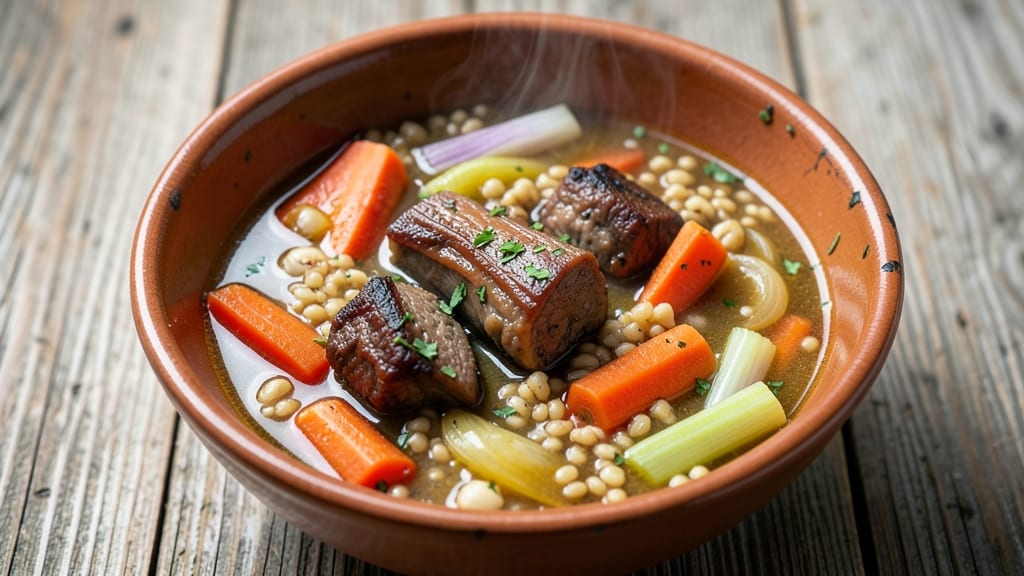
This beef shank and barley soup recipe delivers slow-simmered richness that transforms tough cuts into melt-in-your-mouth beef while building a deeply flavorful broth. The secret lies in braising the shank first—this technique unlocks layers of umami that elevate the soup from ordinary to extraordinary.
Unlike quick versions, this method rewards patience with a broth so robust it tastes like it's been simmering for hours, even if you use a pressure cooker to speed things along.
The combination of beef shank and barley creates a perfect balance—tender meat that practically falls apart and chewy barley that soaks up every drop of savory broth.
I developed this recipe after years of testing different techniques, and the key adjustments (like browning the meat thoroughly and using a combination of beef and vegetable stock) make all the difference. What starts as simple ingredients becomes something truly special through slow cooking.
By the time you're ready to serve, you'll have a soup that's comforting yet sophisticated—deeply aromatic with caramelized edges, tender beef that pulls apart easily, and barley that's perfectly cooked but still holds its shape.
The aroma alone will have everyone gathering around the table, and the first spoonful delivers that satisfying combination of meaty richness and barley's earthy sweetness.
This recipe works beautifully as a standalone meal or alongside crusty bread for soaking up every last drop of that flavorful broth. The leftovers, if there are any, reheat even better the next day as the flavors continue to meld.
Perfect for chilly evenings or when you want to impress guests with a dish that feels both rustic and refined.
Ingredients for beef barley soup recipe with beef shank
Simple ingredients, slow cooking—this soup transforms humble cuts into rich, umami-packed perfection.
| Ingredient | Amount | Notes |
|---|---|---|
| Beef Shank 🥩 | 3 lb | Bone-in, cut into 2-inch pieces |
| Yellow Onion 🧅 | 2 whole | Peeled, chopped into 1-inch pieces |
| Carrots 🥕 | 4 medium | Peeled, cut into 1-inch chunks |
| Celery Stalks 🧆 | 4 whole | Trimmed, cut into 1-inch pieces |
| Garlic Cloves 🧄 | 6 cloves | Peeled, smashed |
| Pearl Barley 🌾 | 1 cup | Rinsed well before cooking |
| Tomatoes 🍅 | 2 medium | Ripe, crushed by hand |
| Beef Stock 💧 | 4 cups | Homemade or high-quality store-bought |
| Vegetable Stock 💧 | 2 cups | Low-sodium preferred |
| Red Wine 🍷 | 1 cup | Dry, like Cabernet Sauvignon |
| Tomato Paste 🍅 | 2 tbsp | Smooth, not chunky |
| Fresh Thyme 🌿 | 2 sprigs | Leaves only, stems removed |
| Fresh Parsley 🌿 | ¼ cup | Chopped, for garnish |
| Bay Leaves 🍃 | 2 whole | Dried, standard size |
| Olive Oil 🫒 | 2 tbsp | Extra-virgin for browning |
| Salt 🧂 | 2 tsp | Kosher or sea salt |
| Black Peppercorns 🌶️ | 1 tsp | Freshly ground |
The beef shank is non-negotiable here—it's what gives this soup its signature depth. Look for bone-in cuts at your butcher or grocery store's meat department, as they yield the most flavorful broth. Costco or Whole Foods often carry excellent quality, but even the standard supermarket variety works if it's fresh. For best results, trim any excess fat before browning—this prevents the soup from becoming greasy. The pearl barley should be the short-grain variety (not pearled barley), as it holds its shape better during cooking. If you can't find it, wild rice blend works as a substitute, though the texture will differ slightly.
No red wine? Dry white wine or additional beef stock works in a pinch, though the umami depth will be slightly less pronounced. Fresh thyme is ideal, but dried thyme at half the amount gets you close—just make sure it's labeled as culinary-grade. The tomatoes can be canned if fresh aren't available, but San Marzano canned tomatoes are worth the splurge for their sweet, rich flavor. For the tomato paste, avoid the squeeze tubes—they often contain preservatives. Instead, grab a small can from the pasta aisle; it keeps for months in the pantry. If you're short on time, pre-cut vegetables from the grocery store's fresh section save prep work without sacrificing quality.
This soup tastes even better the next day as the flavors meld. Store leftovers in an airtight container in the fridge for up to 5 days, or freeze portions for 3 months. For quick reheating, simmer on the stove over medium heat—never microwave, as it can turn the barley mushy. I like to make a double batch and freeze half immediately, so I always have a comforting meal ready. The broth can also be used as a base for other dishes, like risotto or pasta—just strain out the solids and store the liquid separately.
Why You'll Love This Recipe
- One-Pot Magic: I swear by this recipe—just toss everything in one pot, walk away, and let the beef shank melt into ridiculously tender chunks while the barley soaks up all that rich broth. No chopping frenzy, no last-minute stress. The onions and celery practically cook themselves while you stir in the garlic at the end—simple, but that’s where the flavor happens.
- Deep Umami Bomb: The beef shank is the star here, slow-simmered until it’s fall-apart tender with that crispy edge. Add the caramelized onions and garlic? Suddenly, you’ve got a broth so flavorful it tastes like you simmered it for hours—even if you only gave it 45 minutes. Honestly, the first time I made this, I thought, "Wait, this is restaurant-quality?"
- Leftovers That Beg for More: This soup only gets better the next day. The barley plumps up perfectly, the beef stays juicy, and the broth deepens into something dangerously comforting. I’ve reheated portions for lunch all week, and my kids (who usually refuse leftovers) actually ask for it. (Yes, even on a Tuesday night.)
- Budget Meal That Feeds: A beef shank is a steal compared to steak, and it turns into enough soup to feed four for dinner and two for lunch. The onions, carrots, and celery stretch the flavor without breaking the bank. Between us, this is my secret weapon for stretching groceries without sacrificing taste—or my sanity.
Step-by-step instructions for beef shank and barley soup
Follow this method for a deeply flavorful soup where tender beef shank and chewy barley create a perfect balance.
Sear the Beef Shank for Deep Flavor
Heat a large Dutch oven over medium-high heat until hot. Add the 2 tablespoons olive oil and swirl to coat the bottom. Working in batches to avoid crowding, add the 3 lb beef shank pieces and sear until deep golden brown on all sides, about 4-5 minutes per side. This step develops a rich, caramelized crust that forms the foundation of your soup's flavor.
Transfer the seared beef shank to a plate as you work. Don't be tempted to rush this step—proper browning requires patience. If the oil smokes excessively, reduce the heat slightly. You want the beef to develop color without burning.
Sauté Vegetables and Build the Base
In the same Dutch oven, add the 2 whole yellow onion, 4 medium carrots, 4 whole celery stalks, and 6 cloves garlic cloves. Cook over medium heat for 8-10 minutes, stirring occasionally, until the vegetables soften and the onion becomes translucent. This process draws out their natural sweetness and flavors.
Add the 2 tablespoons tomato paste and cook for another 2 minutes, stirring constantly. This creates a paste-like base that will deepen the soup's color and umami profile. The tomato paste also helps thicken the soup slightly as it cooks.
Deglaze and Add Liquids
Pour in the 1 cup red wine and scrape up any browned bits from the bottom of the pot with a wooden spoon. This deglazing step captures all the flavorful fond that would otherwise stick to your pot. Let the wine simmer for 3-4 minutes until it reduces by about half and the alcohol aroma dissipates.
Add the 4 cups beef stock, 2 cups vegetable stock, 2 sprigs fresh thyme, 2 whole bay leaves, 2 teaspoons salt, and 1 teaspoon black peppercorns. Bring the mixture to a gentle boil, then reduce heat to low to maintain a steady simmer.
Simmer the Beef and Vegetables
Return the seared beef shank to the pot. Add the 2 medium tomatoes (crushed by hand) and the 1 cup pearl barley (previously rinsed). The barley should be fully submerged—if not, add a bit more stock. Cover the pot and let it simmer gently for 1 hour 30 minutes, or until the beef is fork-tender and pulls away from the bone easily.
Check occasionally and add more stock if the soup becomes too thick. The vegetables should soften completely, and the barley should be tender but still hold its shape. This slow cooking process extracts maximum flavor from all ingredients.
Finish and Serve
Once the beef is tender, remove it from the pot and let it cool slightly. Then, using tongs or a slotted spoon, transfer the beef to a cutting board and shred the meat, discarding any large bones. Return the shredded beef to the pot and stir to combine.
Simmer the soup uncovered for another 15-20 minutes to allow excess moisture to evaporate and the flavors to meld. Stir in the 0.25 cup fresh parsley just before serving. Ladle the soup into bowls and garnish with additional parsley if desired. The soup should be rich, hearty, and perfectly balanced between the tender beef, chewy barley, and aromatic vegetables.
Pro Tips For Making Beef Barley Soup Recipe With Beef Shank
- Sear the Shank First: That crust on the beef shank isn’t just for looks—it’s what locks in flavor. After patting the meat dry (yes, even if it’s cold), hit it with high heat in your pot until deep brown in spots. I used to skip this, and the soup always tasted like it needed more seasoning—turns out, it was just missing that Maillard magic.
- Cut Celery and Carrots Uniformly: Big chunks? They’ll fight for space and stay tough. Small, even pieces? They soften at the same rate and blend into the broth without turning to mush. My grandmother swore by a ½-inch dice—no smaller, or they’d disappear too fast. (Pro tip: Use the same size for onions too.)
- Deglaze with Wine Early: After browning the shank, don’t just add water—pour in that red wine (or even a splash of broth) right away. Let it bubble for 2 minutes to pull up all those stuck-on bits. I learned this the hard way: skipping this step means a duller base flavor, no matter how long you simmer.
- Add Barley Last, Then Rest: Barley needs time to soak up liquid, but if you toss it in too early, it’ll turn to glue. Stir it in 20 minutes before serving, then let the soup sit off the heat for 5 minutes—this lets the barley plump and the flavors meld. (Your future self will notice the difference in texture.)
Wine and beer pairings for these flavors
Red Wine Harmony
A bold Cabernet Sauvignon or Merlot from Napa Valley complements this soup beautifully—their dark fruit notes and earthy undertones mirror the deep umami flavors in the broth. I reach for a 2018 Cabernet Sauvignon from Caymus Vineyards for its velvety tannins that stand up to the rich beef.
The wine's acidity cuts through the soup's richness while enhancing its savory depth. 🍷
Malbec for Hearty Comfort
For something more approachable, a Argentinian Malbec like Catena Zapata offers a perfect balance of fruit and spice. The wine's dark plum and blackberry flavors harmonize with the caramelized beef, while its smooth finish cleanses the palate between spoonfuls.
This pairing works especially well if you prefer a slightly sweeter profile in your wine.
Crisp Lager Contrast
If you prefer beer, a German Helles Lager like Weihenstephaner Original provides refreshing contrast with its light malt sweetness and subtle hop bitterness. The beer's crispness balances the soup's richness, while its effervescence helps reset your palate.
For a bolder option, try a Belgian Dubbel like Westmalle Trappist—its caramel and raisin notes complement the barley and beef beautifully. 🍺
White Wine Alternative
Don't have red wine? A dry Riesling from Germany, like Dr. Loosen Blue Slate, works surprisingly well. Its bright acidity and hints of citrus cut through the soup's richness while enhancing the thyme and bay leaf aromas.
The wine's mineral notes also pair beautifully with the barley's earthy texture. Chill it slightly before serving.
Non-Alcoholic Options
For a refreshing non-alcoholic pairing, try sparkling apple cider like Martinelli's Sparkling Brut. The effervescence and tart apple notes create a delightful contrast to the soup's hearty flavors. Alternatively, a ginger beer** with a touch of honey adds warmth and spice that complements the beef's richness without overpowering it.
Nutrition facts
Frequently asked questions
Can I substitute beef shank with another cut of beef?
While beef shank is ideal for its rich flavor and collagen (which creates a velvety broth), you can use chuck roast or beef short ribs in a pinch. Cut the meat into similar-sized pieces and increase simmering time by 15-20 minutes to ensure tenderness. Avoid lean cuts like sirloin—they won't yield the same depth of flavor or broth quality.
How do I know when the beef shank is fully tender?
The beef should be fork-tender, meaning it should easily pull apart with minimal resistance. Insert a fork into the thickest piece—if it slides in smoothly and the meat separates cleanly, it's ready. For bone-in shanks, check near the bone where it's often toughest. If using a meat thermometer, aim for 203°F in the thickest part.
Can I make this soup in a slow cooker or Instant Pot?
For a slow cooker, brown the shank first, then transfer everything to the pot and cook on low for 7-8 hours or high for 4-5 hours. For an Instant Pot, sear the shank, then cook on high pressure for 45 minutes, followed by a 10-minute natural release. Adjust barley cooking time as needed—it may finish earlier in pressure cookers.
What if my soup is too thick or too thin?
If too thick, stir in ½ cup warm water or stock at a time until reaching desired consistency. If too thin, simmer uncovered for 10-15 minutes to reduce. For extra richness, mash some cooked vegetables (like carrots) against the pot sides to thicken naturally. Avoid adding flour or cornstarch—it can make the soup taste artificial.
Can I prepare this soup ahead of time?
This soup tastes even better the next day as flavors meld! Store in an airtight container in the fridge for up to 5 days or freeze for 3 months. Reheat gently on the stove over medium-low heat, stirring occasionally. Never microwave—it can turn the barley mushy. For serving, add a splash of water or stock if the soup thickens upon reheating.