
Soups & Stews
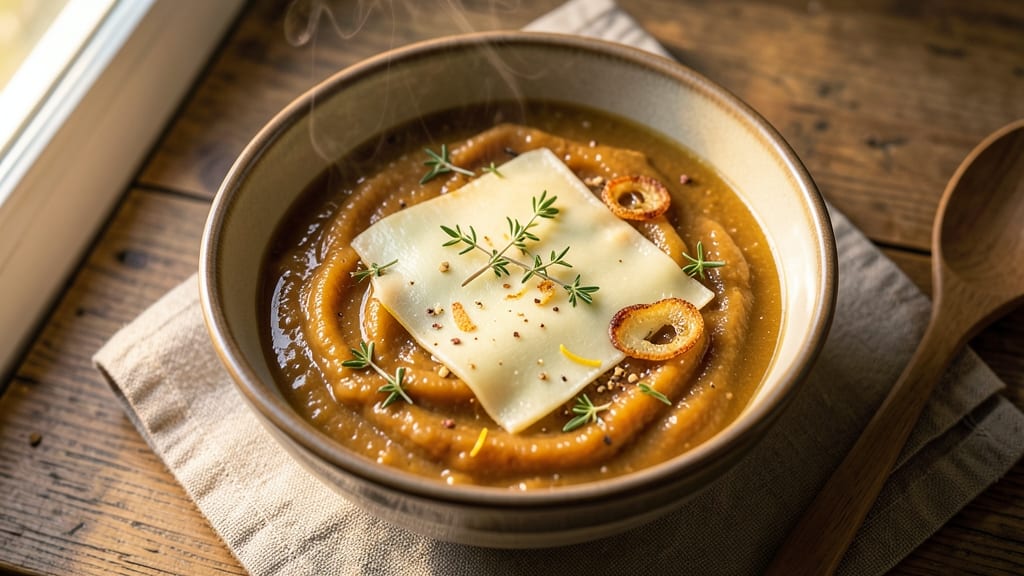
This Balthazar French onion soup recipe delivers the restaurant-quality experience you crave at home. The secret lies in slow caramelizing onions until they're deep amber, creating layers of sweetness that form the soul of every spoonful.
What sets this apart is the beef consommé base—rich, flavorful, and built to carry those caramelized onions through hours of simmering.
The magic happens when you top it with layers of toasted baguette slices and melted Gruyère, creating that signature crispy bread crown. I've perfected the technique to ensure the cheese melts into a golden, bubbling blanket while keeping the bread perfectly crisp at the edges.
Every bite delivers tender onions, savory broth, and that irresistible contrast of textures.
What you'll end up with is a bowl of soup that tastes like you've been transported to Paris—deep, aromatic, and impossible to resist. The slow caramelization develops complex flavors, while the beef broth adds depth that store-bought versions simply can't match. This is comfort food elevated to an art form.
Serve with a simple green salad or crusty bread on the side to soak up every last drop. The aroma alone will have everyone gathering around the table. Let's create this restaurant classic at home—where every spoonful feels like a little taste of France.
Ingredients for balthazar french onion soup
Four large onions and rich consommé form the heart of this Parisian classic.
| Ingredient | Amount | Notes |
|---|---|---|
| Yellow Onions 🧅 | 4 large | Peeled and sliced into even wedges |
| Beef Consommé 🍲 | 4 cups | Homemade or high-quality store-bought |
| Unsalted Butter 🧈 | ½ cup | Cold, cut into small cubes |
| All-Purpose Flour 🌾 | ¼ cup | For thickening the broth |
| Dry White Wine 🍷 | ½ cup | Bold, dry variety preferred |
| Fresh Thyme 🌿 | 2 sprigs | Stems removed for flavor |
| Fresh Garlic 🧄 | 4 cloves | Peeled and smashed |
| Gruyère Cheese 🧀 | 1 ½ cups | Freshly grated, aged variety |
| Baguette 🍞 | 1 whole | Crusty, sliced into 1/2-inch pieces |
| Olive Oil 🫒 | 2 tbsp | For toasting baguette slices |
| Salt 🧂 | 1 ½ tsp | Kosher or sea salt |
| Black Pepper 🌶️ | ½ tsp | Freshly ground |
| Bay Leaves 🍃 | 2 whole | For simmering in broth |
The onions are non-negotiable here—Yellow Delicious or Vidalia work best for their sweetness. Whole Foods or local markets often carry the best quality, but any grocery store will do if you grab them fresh. Look for firm, unblemished bulbs—they caramelize more evenly. If you're feeling fancy, Trader Joe's sells pre-sliced frozen onions that save time. The Gruyère? Don't skimp—pre-shredded loses its melt. Buy a wedge and grate it yourself for that perfect texture. Fresh thyme and bay leaves elevate the broth, so grab them from the bulk section if possible—they keep longer and taste fresher.
No beef consommé? Homemade beef stock with a bouillon cube works in a pinch, but it won't have the same depth. Running short on wine? Dry vermouth or even beef broth with a splash of balsamic gets you close. The baguette should be from yesterday—crusty and stale is ideal for toasting. No baguette? French bread or even a crusty Italian loaf will work. The butter must be cold for proper caramelization—take it out of the fridge 10 minutes before using. Fresh thyme? Dried works at half the amount, but fresh is worth hunting down at a farmers market. If you can't find Gruyère, Comté or Emmental are solid substitutes, though they won't melt quite the same.
This soup tastes even better the next day—make a double batch if you can. Store the broth separately in the fridge for up to 5 days, then reheat with fresh onions and cheese. The baguette slices can be toasted ahead and stored in an airtight container for 2 days—just pop them in the oven at 375°F for 5 minutes to crisp up before serving. Freeze the broth portion for up to 3 months. Pro tip: Label containers with dates so you don't forget—trust me, you'll want leftovers.
Why You'll Love This Recipe
- One-Pot Magic: I swear by this recipe because it’s all in one pot—no chopping mountains of onions, no extra pans, just caramelized layers of golden onions melting into rich consommé. The flour and butter create that velvety roux without fuss, and honestly? That’s half the battle won right there.
- Wine-Infused Depth: Between us, the white wine isn’t just for show—it brightens the whole thing, cutting through the richness of the beef consommé like a secret weapon. That slow caramelization of the onions? It turns sweet and complex, and the first sip of that broth? Pure satisfaction.
- Weeknight to Dinner Party: Make a double batch on a Tuesday, and you’ve got dinner covered for Thursday’s last-minute guests. The soup reheats beautifully, and the crispy cheese on top? Always a crowd-pleaser. (Yes, even on a Tuesday night.)
- Budget-Friendly Luxury: You’re basically making restaurant-quality soup for a fraction of the cost. A few onions, a bottle of wine you’d drink anyway, and consommé from the store—suddenly, you’re serving up something that tastes like it belongs in a Parisian bistro. Not bad for under $10.
Step-by-step instructions for Balthazar French onion soup
This is how you build that iconic golden bread crust and rich, caramelized onion base.
Sweat the Onions Until Deeply Caramelized
Heat a large Dutch oven over medium-low heat and melt the 0.5 cup unsalted butter until foaming subsides. Add the 4 large yellow onions in even layers, spreading them out so they cook evenly. Sprinkle with 1.5 teaspoons salt and 0.5 teaspoon black pepper right away.
Cover the pot with a tight lid and let the onions sweat for 45 minutes, stirring every 10 minutes to prevent burning. You're looking for deep golden caramelization—the onions should turn almost translucent with rich brown spots. This slow cook transforms their natural sweetness into complex, sweet-savory depth. If they start to stick, add a splash of beef consommé to loosen them. Real talk: this step makes or breaks your soup, so don't rush it.
Build the Rich Broth Base
Once the onions are deeply caramelized, stir in the 2 sprigs fresh thyme, 4 cloves smashed garlic, and 2 whole bay leaves. Cook for 2 minutes until fragrant. Sprinkle the 0.25 cup all-purpose flour over the onions and stir vigorously for 1 minute to cook off the raw flour taste.
Pour in the 0.5 cup dry white wine and scrape up all those browned bits from the bottom of the pot—those are pure flavor. Let the wine simmer for 3 minutes until reduced by half. Then gradually whisk in the 4 cups beef consommé, bringing everything to a gentle simmer. This creates a velvety, thickened base that carries all those onion flavors. Let it simmer uncovered for 15 minutes to meld the flavors and reduce slightly. You want a soup that coats the back of a spoon but still has body.
Toast the Baguette Slices
While the soup simmers, preheat your broiler to high. Slice the 1 whole baguette into ½-inch thick pieces. Brush both sides generously with the 2 tablespoons olive oil and place them on a baking sheet in a single layer. Toast under the broiler for 3-4 minutes per side until deep golden brown and crispy.
Here's the secret: the toasting should be aggressive. You want those slices to develop a crispy crust that can hold up to the melty cheese later. Watch them closely—they burn faster than you think. Once golden, remove them and keep them warm while you assemble the soup. If they cool down, just pop them back under the broiler for 30 seconds to crisp them up again.
Assemble and Melt the Gruyère
Ladle the hot soup into 4 oven-safe bowls (or a large pot if serving family-style). Arrange 3-4 toasted baguette slices on top of each bowl, slightly overlapping. Sprinkle each with ¼ cup freshly grated Gruyère cheese, pressing it gently into the bread so it melts evenly.
Transfer the bowls to a 425°F oven (or under the broiler if using a large pot) for 3-5 minutes until the cheese is bubbling and golden brown on top. The cheese should melt into a creamy blanket while maintaining that crispy bread crown. Serve immediately while the cheese is still molten and the bread is perfectly crisp. This is the moment that matters: that perfect contrast between the crispy bread and the melty, gooey cheese is what makes this dish legendary.
Pro Tips For Making Balthazar French Onion Soup
- Sweat the Onions Slow: I used to rush this step and ended up with bitter, watery onions instead of sweet, caramelized gold. Get them down to a deep amber color—about 20-25 minutes on medium-low heat—before even thinking about the wine. Stir occasionally, but don’t obsess; just let them melt into the pan like a slow dance.
- Deglaze with Wine First: Skip the flour slurry if you want richer flavor. After caramelizing the onions, splash in the white wine before adding the flour—this dissolves the stuck-on bits and adds brightness. Let it reduce by half before stirring in the flour, or you’ll end up with a gluey roux instead of a silky base.
- Strain the Consommé Twice: No one likes gritty soup, especially when you’re going for that Balthazar-level smoothness. Strain the beef consommé through a fine-mesh sieve and a cheesecloth-lined colander. Yes, it’s extra work, but the result is a velvety broth that won’t make your guests question your life choices.
- Toast the Flour Properly: If your roux looks pale, you’re missing the nutty depth that makes this soup sing. Cook the butter and flour together on medium heat for 2-3 minutes until it’s the color of peanut butter—just before it starts to brown. This isn’t the time to walk away; keep your eye on it.
Make-ahead tips for this balthazar french onion soup
Broth Prep Ahead
Make the beef consommé base in advance to save time—simmer it for 30 minutes without the onions, then strain and refrigerate in an airtight container. It keeps for 5 days or 3 months frozen.
When ready to serve, simply reheat the broth and add fresh caramelized onions to maintain that restaurant-quality depth. 🍲
Onion Caramelization Shortcut
For a quicker version, use frozen caramelized onions (found in the freezer section of most grocery stores). Thaw and drain them, then proceed with the recipe.
This cuts the 45-minute cooking time down to 5 minutes while still delivering that sweet, rich flavor. Just add 2 tbsp butter to prevent sticking.
Toasted Bread Storage
Toast the baguette slices ahead of time and store them in an airtight container at room temperature for up to 2 days. When ready to serve, reheat them in a 375°F oven for 3-5 minutes to restore crispiness.
This is perfect for meal prep—just assemble and bake when guests arrive. ✨
Cheese Pre-Grating
Grate the Gruyère cheese in advance and store it in a sealed container in the fridge for up to 3 days. Pre-shredded cheese loses moisture, so freshly grated is key.
Keep it at room temperature for 10 minutes before using to ensure it melts smoothly into that perfect blanket. 🧀
Complete Soup Assembly
Assemble the soup bowls completely ahead of time, but skip the final baking step. Cover and refrigerate for up to 24 hours. When ready to serve, bake at 425°F for 5-7 minutes—the extra time compensates for any temperature loss.
This is ideal for dinner parties where you want to spend less time in the kitchen. 💫
Flavor Boost Before Serving
Just before serving, add a pinch of black pepper and a few drops of fresh thyme oil (or extra thyme sprigs) to the soup. This brightens the flavors after reheating.
If using frozen broth, add 1 tsp Worcestershire sauce to restore depth. A quick taste check ensures every bowl tastes like it just came out of Balthazar. 🌟
Nutrition facts
Frequently asked questions
Why does Balthazar's version use beef consommé instead of regular broth?
The beef consommé creates a deeper, more complex flavor profile with a rich umami base that regular broth can't match. It's clarified to be crystal clear while retaining all the meaty essence, which perfectly complements the sweet caramelized onions. The slow reduction process concentrates the flavors even further, making every spoonful taste like a restaurant-quality experience.
Can I substitute Gruyère with another cheese?
Gruyère is ideal for its perfect melt and nutty flavor, but you can use Comté or Emmental in a pinch. Avoid pre-shredded cheese—it contains anti-caking agents that prevent proper melting. For a vegetarian option, try vegan Gruyère (like Miyoko's) or a mix of nutritional yeast and cashew cream for a cheesy texture. The key is a cheese that melts smoothly and has good melting properties.
How do I fix soup that's too thin after baking?
If the soup seems too thin after baking, remove the bread slices and cheese, then simmer the soup uncovered for 5-10 minutes to reduce it further. For an instant fix, make a quick slurry with 1 tbsp cornstarch and 2 tbsp cold water, stir it into the soup, and heat until thickened. Never skip the baking step—it's essential for that signature crispy bread crown and melty cheese texture. The reduction happens during the final baking phase, not before.
What's the best way to reheat leftovers?
Reheat leftovers gently on the stove over low heat until warmed through, then transfer to oven-safe bowls. Top with fresh toasted bread and cheese, then broil for 2-3 minutes until the cheese melts and bread crisps. Avoid microwaving—the texture suffers and the bread becomes soggy. For best results, store the broth and toppings separately and assemble fresh before serving. The cheese should always be added fresh for that perfect melt.
Can I make this soup vegetarian?
Yes, but you'll need to replace the beef consommé with a rich vegetable stock and add depth with ingredients like mushroom powder, soy sauce, or nutritional yeast. Use vegetarian Gruyère or a mix of vegan cheese and cashew cream for the topping. The caramelization process remains the same, but the flavor profile will be more earthy. For umami, add 1 tsp miso paste when building the broth base. The texture will be slightly different but still delicious.