
Soups & Stews
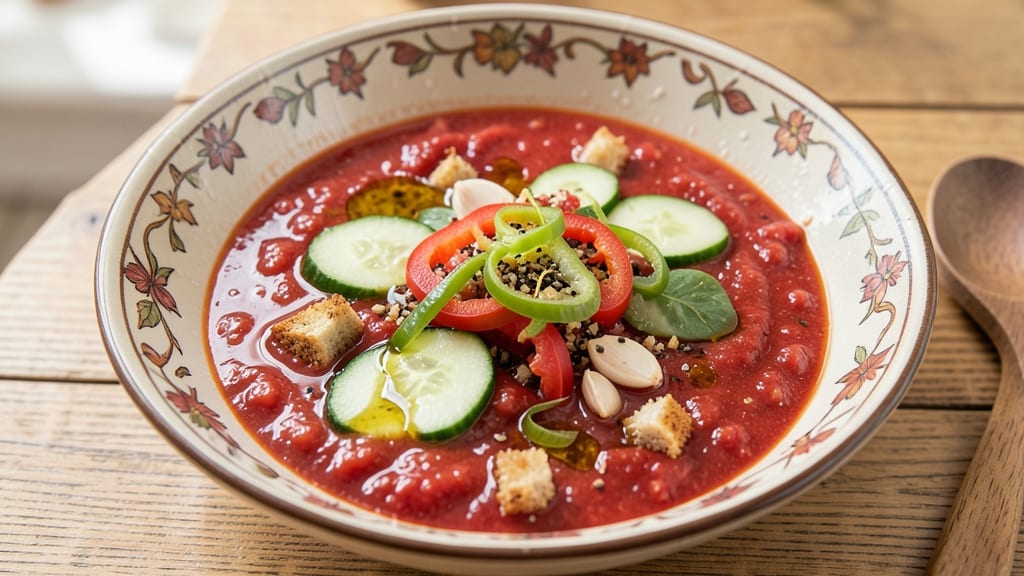
This Andalusian gazpacho soup recipe brings the sun-soaked flavors of southern Spain straight to your kitchen table. ✨ A traditional chilled tomato soup, it’s the perfect balance of vibrant vegetables, fresh herbs, and bright acidity—all while being completely plant-based.
The secret lies in blending ripe tomatoes, crisp cucumber, and sweet bell peppers with garlic, olive oil, and a touch of vinegar, then letting it chill until perfectly refreshing.
What sets this gazpacho apart is its depth of flavor, achieved through slow blending and proper chilling. Unlike its thicker cousin, gazpacho soup is lighter, brighter, and ideal for hot days or as a light starter.
The bread adds a subtle richness, while fresh basil and a drizzle of olive oil elevate it to restaurant-quality without the fuss. It’s the kind of dish that feels both rustic and refined—exactly what Andalusian cuisine is all about.
The beauty of this recipe lies in its simplicity and versatility. With just a handful of ingredients, you’ll create a soup that’s naturally vegan, gluten-free (if using GF bread), and packed with nutrients.
The chilling process transforms it from a warm blend into a crisp, palate-cleansing experience that’s impossible to resist. Serve it with crusty bread, a sprinkle of croutons, or a swirl of yogurt for extra texture.
Perfect for summer gatherings, picnic lunches, or as a light yet satisfying meal any time of year, this gazpacho soup is a testament to how fresh, seasonal ingredients can create something truly extraordinary. Let’s get started—your taste buds will thank you.
Ingredients for andalusian gazpacho soup
Sun-ripened tomatoes, crisp cucumbers, and vibrant peppers form the heart of this authentic Andalusian gazpacho.
| Ingredient | Amount | Notes |
|---|---|---|
| Ripe Tomatoes 🍅 | 4 lbs | Vine-ripened, preferably heirloom |
| English Cucumber 🥒 | 1 whole | Peeled, seeded, and chopped |
| Red Bell Pepper 🌶️ | 1 whole | Medium size, cored and chopped |
| Green Bell Pepper 🌶️ | 1 whole | Medium size, cored and chopped |
| Garlic Cloves 🧄 | 6 cloves | Fresh, peeled, and minced |
| Extra-Virgin Olive Oil 🫒 | ¾ cup | High-quality, fruity variety |
| Red Wine Vinegar 🍷 | ¼ cup | For bright acidity |
| Crusty Bread 🍞 | ½ cup | Stale or toasted, cubed |
| Fresh Basil Leaves 🌿 | ½ cup | Packed, stems removed |
| Salt 🧂 | 1 ½ tsp | Diamond Crystal preferred |
| Ground Black Pepper 🌶️ | ½ tsp | Freshly ground |
| Cold Water 💧 | 1 cup | For adjusting consistency |
| Lemon Juice 🍋 | 1 tbsp | Freshly squeezed |
The tomatoes are the foundation—heirloom varieties deliver the deepest flavor, but any ripe, vine-ripened tomatoes will work. Whole Foods or local farmers markets often carry the best quality, but grocery store tomatoes can be used if they're perfectly ripe. For the bell peppers, red and green together create that signature Andalusian depth. The bread should be stale or toasted—this adds subtle richness without overpowering. Fresh basil is non-negotiable here; dried simply won't capture the same brightness. If you're using gluten-free bread, ensure it's sturdy enough to hold up during blending.
No heirloom tomatoes? Roma or beefsteak varieties work beautifully as substitutes. The cucumber must be peeled and seeded—this prevents bitterness and keeps the texture light. Red wine vinegar is traditional, but apple cider vinegar adds a fruity twist if you prefer. For extra depth, add 1/4 tsp smoked paprika or a pinch of cayenne. The olive oil should be extra-virgin—anything less will compromise the dish's elegance. If your gazpacho turns out too thick, simply add cold water 1 tbsp at a time until it reaches your desired consistency.
This gazpacho tastes even better after 4-6 hours of chilling, so plan ahead. Store it in an airtight container in the refrigerator—it keeps for 3-4 days, though the texture may soften slightly. For serving, garnish with extra basil, a drizzle of olive oil, and a sprinkle of toasted breadcrumbs. The flavors meld beautifully over time, making it perfect for meal prep. If you prefer it extra cold, freeze it for 1-2 hours before serving—just let it sit at room temperature for 10 minutes to soften slightly.
Why You'll Love This Recipe
- No-Fuss Blender Magic: The moment I toss in those ripe tomatoes, cucumber, and peppers—no peeling, no dicing—my blender does all the work. Honestly, the hardest part is deciding whether to strain it smooth or leave it rustic with little chunks.
- Sweet-Savory Balance: That first sip? The tomatoes bring bright acidity, the cucumber cools it down, and the roasted bell peppers add a smoky depth. The garlic? Oh, it’s the secret—just a whisper, but it ties everything together like a hug.
- Weeknight to Potluck: I make a big batch on Sundays and it lasts all week—perfect for lunches or when unexpected guests show up. Between us, it’s also my go-to for summer BBQs because it’s refreshing but still feels special.
- Budget-Friendly Staples: Tomatoes, cucumbers, peppers—these are ingredients I already have on hand. No fancy stuff, just good, honest flavor that won’t break the bank. Plus, leftovers taste just as good the next day.
Step-by-step instructions for Andalusian gazpacho soup
Transform fresh summer produce into a velvety, chilled tomato soup with bold Andalusian flavors.
🍳 Step 1: Roast the Vegetables for Deep Flavor
Preheat your oven to 400°F. On a rimmed baking sheet, arrange the 4 lbs ripe tomatoes (halved), 1 whole red bell pepper (cut into strips), and 1 whole green bell pepper (cut into strips). Drizzle with 2 tablespoons of the extra-virgin olive oil and sprinkle with ½ teaspoon salt.
Roast for 25-30 minutes until the vegetables are blistered and caramelized at the edges. You'll smell that sweet, smoky aroma—this is where the gazpacho gets its depth. The tomatoes should collapse slightly and the peppers should soften. Let them cool for 10 minutes before handling; this makes peeling easier and prevents burns.
👨🍳 Step 2: Blend the Roasted Vegetables with Garlic and Bread
Transfer the roasted vegetables to a food processor along with the 6 cloves minced garlic and 0.5 cup cubed crusty bread. Pulse until the bread breaks down completely, then add 0.25 cup red wine vinegar and 1.5 teaspoons salt. Process until smooth, scraping down the sides as needed.
This is where the magic happens—the bread acts as a natural thickener while the vinegar brightens the flavors. You want a thick, almost paste-like consistency at this stage. If your processor struggles, work in batches, but don't add extra liquid yet. The mixture should be vibrant red with visible flecks of roasted vegetables.
🍳 Step 3: Incorporate the Remaining Ingredients
Add the 1 whole peeled and chopped English cucumber, 0.5 cup fresh basil leaves, 0.5 teaspoon ground black pepper, and 1 tablespoon lemon juice to the food processor. Pulse until just combined—you want some texture from the basil and cucumber.
With the processor running, slowly drizzle in the remaining 0.5 cup extra-virgin olive oil until fully incorporated. This step emulsifies the soup, creating that signature Andalusian silkiness. Taste and adjust seasoning—you might need a bit more salt or vinegar to balance the flavors. The soup should be tangy, sweet, and herbaceous with a perfect balance of acidity.
⏰ Step 4: Chill and Adjust Consistency
Transfer the gazpacho to a large bowl and stir in the 1 cup cold water. Cover and refrigerate for at least 4 hours, preferably overnight. Chilling allows the flavors to meld and the soup to develop its characteristic velvety texture. Here's the thing—gazpacho tastes best when fully chilled, so resist the urge to serve it warm.
Before serving, taste and adjust consistency. If it's too thick, add 1-2 tablespoons cold water at a time until it reaches your desired creaminess. If it's too thin, let it sit uncovered in the fridge for 15-20 minutes to thicken naturally. The perfect gazpacho should coat the back of a spoon but still be pourable.
🍽️ Step 5: Serve with Garnishes and Accompaniments
Ladle the chilled gazpacho into bowls and garnish with additional fresh basil leaves, a drizzle of extra-virgin olive oil, and a sprinkle of flaky sea salt. For extra flair, add a few roasted tomato slices or crispy bread croutons on top. Serve immediately with crusty bread on the side.
The soup should be vibrant red with a glossy sheen from the olive oil. Each spoonful should deliver a perfect balance of sweet tomatoes, bright acidity, herbal basil, and the earthy depth from the roasted vegetables. The contrast between the cool soup and warm bread makes this Andalusian classic even more satisfying. Enjoy within 2 days for the best flavor and texture.
Pro Tips For Making Andalusian Gazpacho Soup
- CHAR THE GARLIC LOW: Blister the garlic cloves in a dry pan for 3-4 minutes until golden and fragrant before adding them to the soup—this deepens their flavor without overpowering. I used to toss them in raw, and the soup always tasted flat. The caramelized edge makes all the difference, especially when blended.
- PEEL CUCUMBERS FAST: Use a paring knife to slice off the ends, then roll the cucumber on the cutting board to expose the skin in strips before peeling—no need to slice it open. This method saves time and keeps the knife sharp. I learned this after peeling three cucumbers the hard way and nearly losing a fingernail.
- STRAIN THE SOUP: After blending, pour the gazpacho through a fine-mesh sieve or cheesecloth to remove seeds and skin—this makes the texture silky and prevents bitterness. I skipped this once and ended up with a gritty, uneven consistency. It’s extra work, but the result is smoother and more professional.
- COOL IT QUICK: Spread the hot soup in a shallow dish and place it in the fridge for 10 minutes before blending—this prevents the garlic and peppers from releasing too much heat and turning the soup cloudy. I used to blend it straight from the stove, and the final texture always looked murky. Patience here guarantees a vibrant, clear soup.
Regional styles of these flavors
Seville's Classic Version
In Seville, gazpacho is traditionally served with a touch of smoked paprika—just ¼ teaspoon—for a subtle smoky depth that reflects the region's love of fire-roasted flavors. Locals often add diced serrano ham (about 2 oz) for a non-vegan twist, but the pure vegan version still shines.
The key here is using San Marzano tomatoes when available, as their sweetness balances the acidity perfectly. 🌶️
Granada's Spicy Twist
Granada brings heat to the table with 2 teaspoons of minced jalapeño or ½ teaspoon of cayenne pepper, creating a fiery gazpacho that pairs beautifully with the region's famous tapas culture.
The city's version also incorporates roasted eggplant (about ½ cup) for a creamier texture. Garnish with toasted almond slices for crunch—a nod to Granada's Moorish heritage. 🔥
Málaga's Citrus Infusion
On the Costa del Sol, Málaga gazpacho incorporates zest from 1 orange and 2 tablespoons of orange juice, adding a bright, citrusy freshness that cuts through the richness. The region also uses fennel (about ½ cup, thinly sliced) for an anise-like aroma that's uniquely coastal.
Serve with grilled sardines on the side for a true Andalusian seafood fusion. 🍊
Cádiz's Seafood Fusion
Near the Atlantic coast, Cádiz adds diced white fish (like cod or halibut, about ½ lb) and shrimp (about ½ cup) to their gazpacho, creating a seafood-infused version called "sopa de pescado." The fish is poached in the broth before blending, adding a delicate sweetness.
Garnish with parsley and a sprinkle of saffron for color and depth. 🦞
Modern Fusion Adaptations
For a contemporary twist, try adding avocado (about ½ cup) for creaminess or roasted red peppers from a jar (about ½ cup) for convenience without sacrificing flavor. Some chefs even incorporate toasted pine nuts (about 2 tablespoons) for a nutty crunch.
These adaptations keep the soul of Andalusian gazpacho while making it feel fresh and innovative. ✨
Nutrition facts
Frequently asked questions
Can I make Andalusian gazpacho without roasting the vegetables?
You can try, but roasting develops the deep, caramelized flavors that make this gazpacho truly special. For a quick version, sauté the vegetables in a pan with olive oil until softened (8-10 minutes), but you'll miss that smoky sweetness. If you're short on time, use high-quality canned tomatoes (like San Marzano) and extra garlic for intensity.
How do I fix gazpacho that's too thick or too thin?
For thick gazpacho, stir in 1-2 tablespoons cold water at a time until smooth. If it's too thin, let it sit uncovered in the fridge for 15-20 minutes to thicken naturally. Pro tip: The chilling process often concentrates flavors, so taste before adjusting. If needed, blend in 1-2 extra tablespoons of bread for body without altering texture.
What's the best way to store and reheat leftover gazpacho?
Store in an airtight container for up to 4 days in the fridge. To reheat, gently warm in a saucepan over low heat (never boil) and stir in 1 tablespoon cold water to restore creaminess. For best texture, serve chilled again after reheating. Freezing isn't recommended as it alters the delicate texture.
Can I substitute ingredients if I don't have fresh basil?
Swap basil with cilantro (for a citrusy note) or parsley (for a milder flavor). For a deeper herbal profile, add 1 teaspoon dried oregano or ½ teaspoon thyme. The key is balancing the bright acidity—if using parsley, add an extra ½ teaspoon salt to compensate for its milder taste.
Why does my gazpacho taste bland compared to restaurant versions?
Restaurant gazpacho often uses high-quality vinegar (like sherry vinegar) and aged olive oil for depth. Boost flavor by using extra-virgin olive oil, red wine vinegar, and ripe heirloom tomatoes. Add a pinch of smoked paprika or 1 teaspoon tomato paste to the blend for umami richness. Let it chill longer (6+ hours) to intensify flavors.