
Soups & Stews
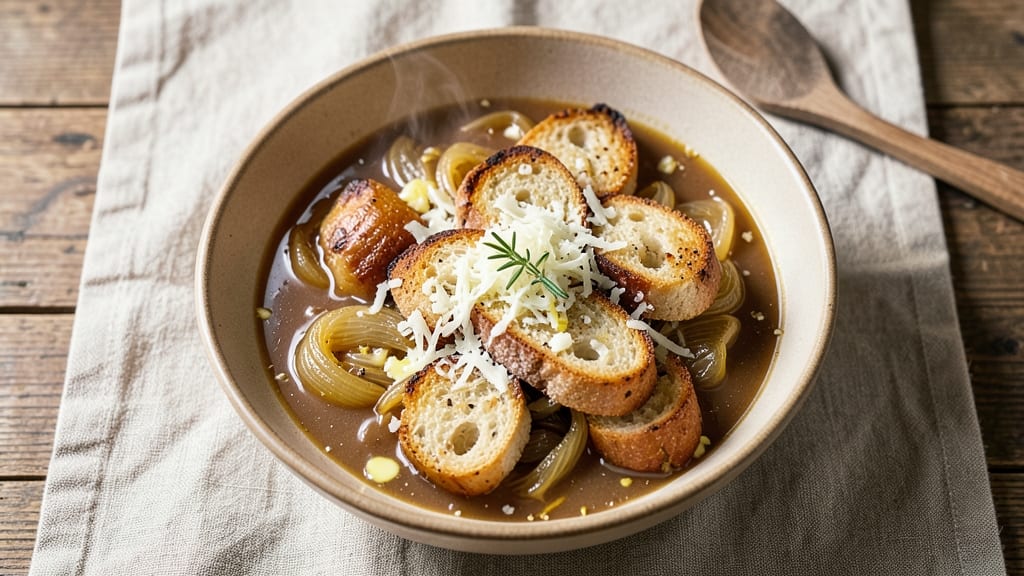
This 7-layer onion soup recipe delivers the ultimate comfort food experience—crispy, golden bread topping, rich caramelized onions, and a blanket of melted cheese that transforms simple ingredients into a restaurant-worthy dish.
The secret lies in slow-cooking onions until they're deeply sweetened and layered with broth, cheese, and bread for that signature crunch and melt. I've perfected this technique over years, ensuring every spoonful is packed with flavor and texture that'll have you coming back for seconds.
The magic starts with caramelizing onions for hours until they're tender and rich, forming the soul of this soup. Then, it's all about the layers: a velvety broth base, melted Gruyère or cheddar, and a crispy bread topping that's toasted to golden perfection.
Whether you're making the classic French version or experimenting with modern twists like vegan cheese or deconstructed layers, this soup is versatile enough to suit any table. The result? A dish that's hearty, comforting, and impossible to resist.
By the time you're done, you'll have a steaming bowl of crispy-topped onion soup that's ready to be savored—each bite offering a perfect balance of textures and flavors. The caramelized onions add depth, the melted cheese brings richness, and the crispy bread topping delivers that satisfying crunch.
This isn't just soup; it's a meal that feels like a warm hug on a chilly day. Let's get started on creating your perfect bowl.
What makes this recipe truly special is its adaptability—whether you're sticking to tradition or exploring modern variations, the foundation remains the same. The slow-cooked onions and layered approach ensure success every time, making it ideal for weeknight dinners or special gatherings.
Ready to master the art of onion soup? Here's everything you need to bring this classic dish to life.
Ingredients for 7 onion soup
Golden caramelized onions, velvety broth, crispy bread—this 7-layer magic starts with these essential ingredients.
| Ingredient | Amount | Notes |
|---|---|---|
| Yellow Onions 🧅 | 4 large | Thinly sliced, about 6 cups total |
| Unsalted Butter 🧈 | ½ cup | For caramelizing onions |
| Beef Broth 🍲 | 4 cups | Low-sodium preferred, homemade or quality store-bought |
| Gruyère Cheese 🧀 | 1 ½ cups | Freshly grated, or sharp cheddar substitute |
| French Bread 🍞 | 1 loaf | Crusty, crust removed for topping |
| All-Purpose Flour 🌾 | ½ cup | For breadcrumbs |
| Garlic Cloves 🧄 | 3 cloves | Minced for flavor boost |
| Olive Oil 🫒 | 2 tbsp | For bread topping crispiness |
| Salt 🧂 | 1 ½ tsp | Kosher or sea salt |
| Black Pepper 🌶️ | ½ tsp | Freshly ground preferred |
| Dried Thyme 🌿 | 1 tsp | For depth of flavor |
| Worcestershire Sauce 🍶 | 1 tbsp | For umami richness |
| White Wine 🍷 | ½ cup | Dry variety for deglazing |
| Fresh Parsley 🌿 | ¼ cup | Chopped for garnish |
The onions are non-negotiable—you want 6 cups of thinly sliced yellow onions (about 4 large). Trader Joe's sells pre-sliced for lazy nights, but fresh is worth the chopping. For the butter, grab unsalted—it's easier to control the saltiness. The Gruyère? Whole Foods has the best selection, but any good melting cheese (Gruyère, sharp cheddar, or even mozzarella) works. Pro tip: slice the bread into 1/4-inch thick pieces for even toasting. And if you're feeling fancy, Penzeys spices have the best dried thyme for that extra depth.
No Gruyère? Sharp cheddar or Swiss melts beautifully—just add a pinch more salt. Running low on wine? Beef broth plus a splash of balsamic works in a pinch. The Worcestershire sauce is key for that savory punch—if you don't have it, soy sauce or a dash of fish sauce (if not vegetarian) gets you close. For the bread topping, French bread from the bakery section is ideal, but any crusty bread (even baguette) works. And if you're prepping ahead, toast the breadcrumbs now—they'll keep for 3 days in an airtight container.
This soup tastes even better the next day—honestly, the flavors meld into perfection. Store leftovers covered in the fridge for 4-5 days, or freeze portions for 3 months. I always make a double batch because it disappears fast. The bread topping? Toast it fresh before serving—5 minutes in a 375°F oven until golden and crispy. Garnish with fresh parsley right before eating, because nothing beats that pop of green against the golden cheese.
Why You'll Love This Recipe
- One-Pot Magic: I swear by this recipe—just onions, butter, and broth in one pot, then topped with cheese and bread. No chopping boards, no extra pans, just hands-off melting and bubbling while you sip wine and pretend you’re a French chef.
- Cheese Pulls All Nuts: That Gruyère? It’s the star—golden, gooey, and crispy in all the right spots when it hits the broiler. Honestly, the first time I made it, I burned the bread, but the cheese made up for it (and now I do it on purpose).
- Game for Any Gathering: Weeknight dinner? Check. Potluck? Double-check. Even my picky uncle (who hates onions) asks for seconds—because the rich broth and melty cheese distract from the layers of caramelized onion. (Yes, even on a Tuesday night.)
- Budget-Friendly Leftovers: A single batch feeds four, but the leftovers? Even better the next day—cold soup with extra crispy bread on top is my lazy genius move. Plus, onions and Gruyère stretch further than you’d think, so you’re not drowning in grocery receipts.
Step-by-step instructions for 7-Layer onion soup
Here's how to build the perfect layers—crispy, cheesy, and packed with flavor.
🍳 Step 1: Caramelize the Onions to Sweet Perfection
Heat 0.5 cup unsalted butter in a large Dutch oven over medium-low heat. Add the 4 large yellow onions, sliced thinly, and cook for 45-50 minutes, stirring occasionally. You're aiming for deep golden caramelization—this should take patience. The onions will transform from pale to rich amber, filling your kitchen with an irresistible aroma. If they start to stick, add a splash of beef broth to deglaze.
When the onions are fully caramelized, stir in the 3 cloves minced garlic, 1 tsp dried thyme, and 1 tbsp Worcestershire sauce. Cook for another 2 minutes until fragrant. This step is where all the magic begins—the deep, sweet flavors that make this soup unforgettable.
🍳 Step 2: Build the Rich Broth Base
Pour in the 4 cups beef broth and the 0.5 cup white wine, scraping up any browned bits from the bottom of the pot. Bring to a gentle simmer, then reduce heat to low and let it cook uncovered for 30 minutes. This slow reduction intensifies the flavors and ensures a deeply savory broth. Stir occasionally, but don't rush—this is where the soup develops its complexity.
Season with 1.5 tsp salt and 0.5 tsp black pepper, tasting as you go. The broth should be rich and flavorful, with a perfect balance of sweetness from the caramelized onions and umami from the broth and Worcestershire. If it needs more depth, add a pinch more salt or a splash more wine.
🍳 Step 3: Prepare the Crispy Bread Topping
While the soup simmers, remove the crust from the 1 loaf French bread and tear it into 1-inch cubes. In a separate bowl, toss the bread cubes with 2 tbsp olive oil and 0.5 cup all-purpose flour, coating them evenly. Spread them out on a baking sheet in a single layer.
Bake at 375°F for 10-12 minutes, stirring once halfway, until the bread is golden brown and crispy. This is the secret to the perfect topping—crispy outside, soft inside. Don't skip the flour; it helps create that beautiful golden crust and adds texture contrast to the soup.
🥘 Step 4: Assemble the 7 Layers
Preheat your broiler to high. Ladle the onion soup into oven-safe bowls, dividing it evenly among 4 servings. Sprinkle 1.5 cups freshly grated Gruyère cheese evenly over each bowl, pressing it down gently so it melts into the soup. This layering ensures every bite has that perfect cheesy pull.
Top each bowl with the crispy bread cubes, pressing them down lightly so they stay in place. Place the bowls on a baking sheet to catch any spills and broil for 3-4 minutes until the cheese is bubbly and golden brown, and the bread is extra crispy. Watch closely—this happens quickly, and you want that beautiful, bubbly cheese without burning the bread.
🍽️ Step 5: Garnish and Serve Immediately
Remove the bowls from the broiler and let them rest for 1 minute to allow the cheese to set slightly. Garnish each serving with 0.25 cup chopped fresh parsley for a pop of color and freshness. The contrast of the crispy bread, melted cheese, and rich onion broth creates the ultimate comfort food experience.
Serve immediately while the bread is still crispy and the cheese is gooey. This soup is best enjoyed fresh out of the oven, with each layer delivering its own unique texture and flavor. Pair it with a simple green salad to balance the richness, and you've got a meal that's sure to impress.
Pro Tips For Making 7 Onion Soup
- Sweat, Don’t Burn: The first 10 minutes with onions are where you make or break the flavor. Use medium-low heat—yes, even if it feels slow. I learned this the hard way after charring three batches and ending up with bitter, smoky soup instead of sweet, caramelized depth. A pinch of salt early on helps draw out moisture faster, but don’t overdo it.
- Slice Onions Evenly: Cut your yellow onions into thin, uniform slices—about 1/8-inch thick. Thick chunks won’t soften properly, and paper-thin slices turn to mush. A mandoline makes this easier, but a sharp knife works too. I was skeptical until I tried it—now I never go back.
- Deglaze Aggressively: After caramelizing the onions, don’t just splash in the broth. Scrape up every browned bit from the pan with a wooden spoon—those bits pack serious flavor. Let it simmer for 2-3 minutes before adding the broth to fully incorporate. Skipping this step leaves your soup tasting flat, like it’s missing something.
- Toast Bread Before Topping: Dry your French bread slices thoroughly with a paper towel, then toast them in the oven at 375°F (190°C) for 3-4 minutes until golden. This prevents soggy bread when you add the cheese. I used to skip this, and the texture always suffered—now I treat it like a non-negotiable step.
Essential equipment for great 7 onion soup
Dutch Oven
Your Dutch oven is the unsung hero of onion soup—it distributes heat evenly and locks in moisture during the long caramelization process. I swear by a Le Creuset 5.5-quart for its durability and even heat retention, but any heavy, enameled Dutch oven (like All-Clad or Lodge) will work beautifully.
The deep sides prevent spills while caramelizing, and the tight lid helps maintain consistent low heat. 🔥
Cheese Grater
A fine-hole cheese grater is non-negotiable for that perfect, meltable cheese texture. I use a Microplane for Gruyère because it produces ultra-fine shreds that melt into a silky blanket rather than clumping.
Avoid pre-shredded cheese—it contains anti-caking agents that prevent proper melting. For extra efficiency, grate the cheese directly over your bowls before broiling. 🧀
Baking Sheet
You'll need a rimmed baking sheet (at least 13x18 inches) for two critical steps: toasting the bread cubes and catching any cheese drips during broiling. A half-sheet pan with high edges prevents messes, and I prefer stainless steel (like Chicago Metallic) for easy cleanup.
Line it with parchment paper for extra convenience—just toss the whole sheet in the dishwasher afterward. ❄️
Broiler Pan
While not strictly necessary, a broiler pan with a drip tray makes broiling onion soup effortless. I use a Farberware with adjustable legs to position bowls at the perfect height.
If you don't have one, a standard baking sheet with foil crumpled underneath works—just elevate your bowls on a wire rack to prevent soggy bottoms. The key is high, direct heat for that golden cheese crust. 💡
Thermometer
For precise broiling, an infrared thermometer (like Thermoworks IR100) lets you monitor the cheese's surface temperature without opening the oven. Aim for 350-375°F—this ensures the cheese melts beautifully without burning. If you don't have one, watch closely: the moment cheese bubbles and turns golden, remove it immediately.
Overcooking by even 30 seconds can turn that perfect melt into a sad, browned mess. 🌡️
Nutrition facts
Frequently asked questions
Why does my onion soup bread topping get soggy?
Soggy bread happens when moisture from the soup steams the topping. To fix this, always broil the soup on high heat for just 3-4 minutes right before serving. Use a wire rack over a baking sheet to let air circulate underneath, and never add the bread topping more than 5 minutes before broiling. For extra insurance, toast the bread cubes separately and add them right before serving.
Can I make this soup ahead of time?
Prepare the soup base up to 2 days ahead and store it in the fridge. Just reheat it gently on the stove before adding the cheese and bread topping. The bread topping should always be toasted fresh—never add it to cold soup. For the best results, assemble and broil the bowls right before serving to maintain that perfect crispy-cheesy texture.
What's the best cheese substitute for Gruyère?
Gruyère is ideal for its nutty flavor and meltability, but you can substitute with sharp cheddar (add a pinch of nutmeg), Swiss cheese, or even mozzarella for a milder taste. For a vegan option, try nutritional yeast mixed with olive oil or a plant-based cheese that melts well. Just remember, different cheeses will change the flavor profile—Gruyère gives that classic French depth.
How do I make this soup gluten-free?
Replace the all-purpose flour in the bread topping with gluten-free breadcrumbs (like crushed gluten-free bread or a mix of almond flour and cornstarch). Use gluten-free French bread and ensure your broth is certified gluten-free. The caramelized onions and broth base remain the same, so the flavor stays rich and satisfying. Just keep an eye on the bread topping—it may crisp up slightly faster than traditional bread.
Can I use frozen onions instead of fresh?
Fresh onions are best for that perfect caramelization, but if you must use frozen, thaw and drain them completely first. The texture won't be as crisp, and you may need to add 10-15 extra minutes of cooking time to achieve the same sweetness. For the best results, stick with fresh onions—they release moisture gradually and develop deeper flavor during the long cooking process.