
Soups & Stews
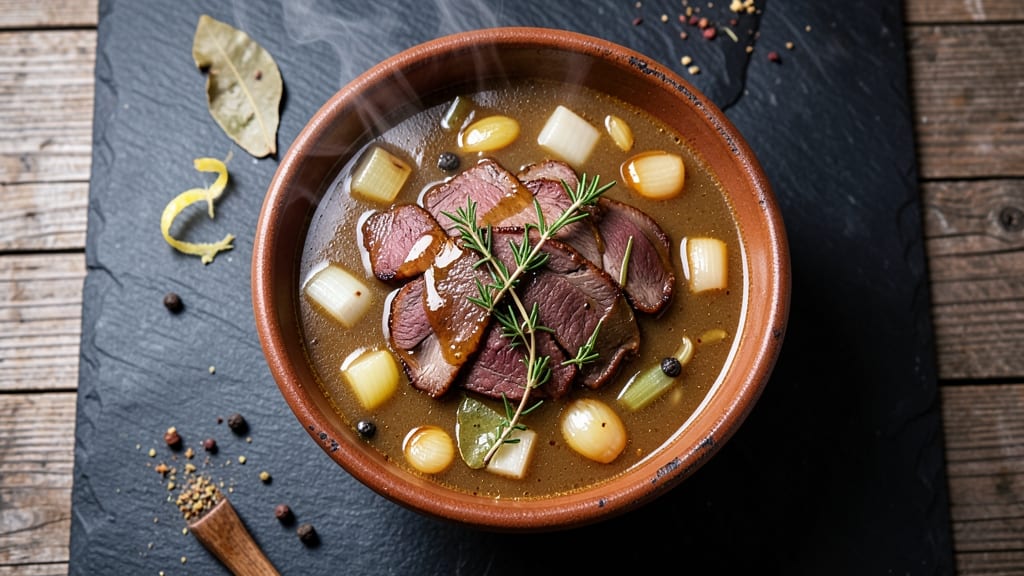
This heart soup recipe delivers deep, savory comfort with every spoonful—where tender beef heart transforms into a velvety, slow-simmered velouté infused with celery root and aromatic herbs. The key lies in proper preparation: cleaning and blanching the heart to remove impurities before it braises for hours in a rich broth.
What begins as an unusual ingredient becomes the soul of this soup—earthy, satisfying, and packed with umami that lingers long after the last bite.
Unlike traditional beef broth soups, this recipe builds flavor through a two-stage cooking process: first blanching the heart to remove blood, then slow-braising it with celery root, onions, and garlic until fork-tender. The velouté base, thickened with a light roux, creates a luxurious texture that coats every spoonful.
Herbs like thyme and bay leaf add subtle depth, while a splash of white wine brightens the richness.
By the time you ladle this soup into bowls, you’ll find a silky, golden broth cradling tender beef heart and velvety celery root—each component perfectly balanced. The aroma alone will fill your kitchen with warmth, while the first sip delivers a harmony of savory, slightly sweet, and herby notes.
This isn’t just soup; it’s a restaurant-quality dish you can make at home with patience and precision.
The beauty of this recipe lies in its versatility—serve it as a hearty main course with crusty bread or as a showstopping appetizer when garnished with fresh parsley and a drizzle of cream.
Leftovers reheat beautifully, making it ideal for meal prep. Let’s begin with the foundational steps that turn beef heart into something extraordinary.
Ingredients for heart soup
Fourteen ingredients transform beef heart into a velvety velouté with celery root and aromatic herbs.
| Ingredient | Amount | Notes |
|---|---|---|
| Beef Heart 🥩 | 1 ½ lb | Cleaned, blanched, trimmed |
| Celery Root 🥕 | 1 whole | Peeled, cut into chunks |
| Yellow Onions 🧅 | 2 whole | Peeled, quartered |
| Garlic Cloves 🧄 | 6 cloves | Peeled, smashed |
| Fresh Thyme 🌿 | ½ oz | Stems removed, leaves only |
| Bay Leaves 🍃 | 2 whole | Dried, standard size |
| Dry White Wine 🍷 | ½ cup | Sauvignon Blanc preferred |
| Beef Broth 🥫 | 6 cups | Homemade or high-quality |
| Unsalted Butter 🧈 | 4 tbsp | Cold, cubed |
| All-Purpose Flour 🌾 | 2 tbsp | For light roux |
| Heavy Cream 🥛 | ½ cup | Full-fat for richness |
| Fresh Parsley 🌿 | ¼ cup | Chopped, for garnish |
| Kosher Salt 🧂 | 1 ½ tsp | Diamond Crystal preferred |
| Ground Black Pepper 🌶️ | ½ tsp | Freshly ground |
The beef heart is the centerpiece—source it from a trusted butcher or specialty market like D'Artagnan or Whole Foods to ensure freshness. Look for hearts with minimal marbling and a vibrant red color; avoid any with a metallic or overly gamey scent. Celery root, often overlooked, adds a delicate sweetness—select a firm, unblemished root with no soft spots. Fresh thyme and bay leaves elevate the broth's complexity, so avoid dried herbs with a musty aroma. For the wine, Sauvignon Blanc or Pinot Grigio from a reputable producer like Kim Crawford or La Crema ensures brightness without overpowering the dish.
No beef heart? Substitute with equal parts beef shank or short ribs, though texture will differ. Celery root unavailable? Celery stalks or fennel bulb work in a pinch, though flavor will shift slightly. For wine, dry vermouth or additional beef broth maintains depth. The roux requires precision—cook butter and flour over low heat to avoid burning, whisking constantly for a smooth, nutty base. Heavy cream can be swapped for coconut cream for a dairy-free option, though richness will vary. Fresh herbs are non-negotiable here; dried thyme at one-third the amount is the bare minimum for flavor.
Store the blanched beef heart in the fridge for up to 2 days before cooking, sealed in a leak-proof bag. Celery root keeps 2 weeks in the crisper drawer, while fresh herbs last 5-7 days wrapped in damp paper towels. The finished soup reheats beautifully—simmer gently for 10 minutes to restore silkiness. For meal prep, portion into airtight containers and refrigerate for 4-5 days or freeze for 3 months. Garnish with parsley just before serving to preserve its vibrant color and fresh aroma.
Why You'll Love This Recipe
- One-Pot Magic: I swear by this soup—just brown the beef heart, toss in the chopped celery root and onions, and let it simmer. No extra pots, no fuss, and that deep, savory aroma fills the kitchen before the timer even goes off.
- Rich, Earthy Depth: The beef heart gives it a meaty satisfaction, while the celery root adds a subtle sweetness that balances the sharp garlic and thyme. Honestly, the first bite makes me think, "Why didn’t I try this sooner?"—that’s how good it is.
- Leftovers That Shine: This soup actually improves the next day. The flavors meld into something even heartier, and it reheats like a dream. I make a double batch on Sundays because my kids beg for it all week.
- Budget-Friendly Powerhouse: Beef heart is cheaper than steak but packs just as much flavor—plus, celery root lasts forever in the fridge. Between us, this is my go-to when I need a filling, nourishing meal without breaking the bank.
Step-by-step instructions for slow-simmered beef and celery root velout
Transform beef heart into a velvety, aromatic soup with this methodical approach.
Blanch and Sear the Beef Heart
Begin by blanching the 1.5 lb beef heart in a large pot of boiling water for 3 minutes. This step removes surface impurities and prepares the meat for searing. Drain immediately and rinse under cold water to stop the cooking process.
Pat the beef heart completely dry with paper towels—this is critical for achieving a proper sear. Heat a large Dutch oven over medium-high heat and add 2 tbsp unsalted butter. Once the butter foams, add the beef heart and sear for 4-5 minutes per side until deeply browned. The goal is to develop a rich, caramelized crust that will infuse the broth with deep flavor. Remove the beef heart and set aside.
Build the Aromatic Base
In the same Dutch oven, reduce heat to medium and add the remaining 2 tbsp unsalted butter. Add the 2 whole yellow onions, cut into quarters, and cook for 8-10 minutes until softened and golden. Add the 1 whole celery root, cut into chunks, and cook for another 5 minutes, stirring occasionally.
Add the 6 cloves garlic cloves and 0.5 oz fresh thyme leaves, stirring for 1 minute until fragrant. The garlic should sizzle gently—don’t let it burn, as this will make the soup bitter. Stir in the 2 whole bay leaves and pour in the 0.5 cup dry white wine, scraping up any browned bits from the bottom of the pot. Let the wine simmer for 3-4 minutes until reduced by half.
Simmer the Broth with Vegetables
Pour in the 6 cups beef broth and bring to a gentle simmer. Return the seared beef heart to the pot, along with 1.5 tsp kosher salt and 0.5 tsp ground black pepper. Partially cover the pot and simmer for 1 hour and 15 minutes, or until the beef heart is fork-tender. You’ll know it’s ready when it pulls apart easily with minimal resistance.
Remove the beef heart from the broth and set it aside. Strain the broth through a fine-mesh sieve into a clean pot, pressing gently on the vegetables to extract maximum flavor. Discard the solids. The broth should now be clear and deeply aromatic, with a rich, velvety texture.
Thicken the Soup and Finish
Return the strained broth to the Dutch oven and place it over medium heat. Whisk in the 2 tbsp all-purpose flour to create a light roux, stirring constantly for 2-3 minutes until the mixture thickens slightly. This step ensures the soup has a velouté-like consistency without being overly heavy.
Reduce heat to low and stir in the 0.5 cup heavy cream, allowing it to warm through for 2-3 minutes. The soup should now be silky and luxurious. Return the shredded beef heart to the pot and stir gently to combine. Taste and adjust seasoning with additional salt or pepper if needed.
Serve with Fresh Garnish
Ladle the soup into warmed bowls and garnish immediately with 0.25 cup chopped fresh parsley. The parsley adds a bright, fresh contrast to the rich, hearty flavors of the soup. Serve each portion with a side of crusty bread to soak up the velvety broth.
This soup is best enjoyed fresh, as the flavors meld beautifully when served immediately. If storing, refrigerate for up to 3 days and reheat gently on the stove, stirring occasionally to prevent separation. The velouté texture and deep, savory notes make this a standout dish for any occasion.
Pro Tips For Making Heart Soup
- SEAR THE HEART FIRST: Beef heart needs a good crust to stay tender—don’t skip the 3-4 minute sear in a hot pot. I used to rush this, and the soup turned out mushy. High heat, oil, and patience make all the difference.
- TRIM THE CELERY ROOT: Peel off the outer skin and any blemished spots, but leave the rest—it’s flavor gold. I learned this the hard way when I peeled too much and the soup lost its earthy depth.
- DON’T OVERCOOK THE GARLIC: Sauté the garlic just until fragrant—about 30 seconds—before adding the thyme. Burnt garlic ruins the whole dish, and nobody wants that bitter bite in their soup.
- USE A LITTLE BUTTER AT THE END: Stir in 1 tablespoon of butter off the heat—it coats the broth and makes the thyme aroma pop. Sounds weird, but it works: the soup tastes richer without extra fat.
Common mistakes when making this dish
Skipping the Blanch
Blanching the beef heart for just 3 minutes removes blood and impurities that can make your soup taste metallic or overly gamey. I’ve seen home cooks skip this step to save time, but the results are noticeably off—your broth will have a bitter edge and require more salt to compensate.
Trust me, the extra 3 minutes now saves you from fixing a flawed base later. 🌡️
Overcooking the Heart
The beef heart should be fork-tender but still hold its shape—think al dente pasta, not mushy. I’ve ruined a batch by letting it simmer too long (past 1 hour and 30 minutes), turning the meat into a shapeless mass.
Check for doneness by piercing with a fork: it should resist slightly but pull apart cleanly. If it’s overcooked, the texture becomes rubbery and unappetizing.
Burning the Roux
That light roux made with 2 tbsp butter and 2 tbsp flour is the secret to velvety texture, but it’s easy to mess up. Cooking it over medium-high heat or stirring infrequently can turn it lumpy or bitter.
Keep the heat at medium-low and whisk constantly for 2-3 minutes—any longer risks burning, which will ruin your soup’s delicate flavor.
Using Low-Quality Broth
Store-bought beef broth often lacks depth and can make your soup taste flat. I’ve used cheap brands in a pinch, and the difference is shocking—your velouté will lack richness and umami. Opt for homemade broth or a high-quality brand like Kitchen Basics or Pacific Foods.
If you’re short on time, simmer beef bones with a splash of vinegar and fresh herbs for 4 hours to boost flavor.
Ignoring the Wine Reduction
Pouring in the 0.5 cup white wine and walking away is a common mistake. You must reduce it by half (about 3-4 minutes of simmering) to concentrate its flavors.
Skipping this step leaves your broth watery and the wine’s acidity underdeveloped. The reduced wine adds brightness and complexity that transforms a good soup into a great one. 🍷
Over-Salting Early
Adding all 1.5 tsp kosher salt at the start can make your soup taste bland later, especially if you adjust seasonings as you go. I’ve learned to add half the salt with the broth and reserve the rest for the final taste test.
This lets you adjust based on the heart’s natural saltiness and the broth’s intensity. Always taste before serving—you can’t fix oversalting!
Nutrition facts
Frequently asked questions
Why do I need to blanch the beef heart before cooking?
Blanching removes blood and impurities that can make your soup taste metallic or overly gamey. Skipping this 3-minute step risks a bitter broth that requires extra salt. Think of it as prepping your ingredient for maximum flavor—worth the extra effort!
Can I substitute beef heart with another protein?
Yes! For a similar texture, use beef shank or short ribs (equal weight). Lamb heart works too, but adjust cooking time—it’s more delicate. The key is choosing a protein that can withstand long simmering without turning mushy.
How do I know when the beef heart is fully cooked?
It should be fork-tender but still hold its shape—like al dente pasta. Pierce with a fork: if it resists slightly but pulls apart cleanly, it’s perfect. Overcooking (past 1 hour 30 minutes) turns it rubbery and unappetizing.
What’s the best way to store leftovers?
Refrigerate in airtight containers for 3-4 days or freeze for 3 months. To reheat, simmer gently on the stove for 10 minutes, stirring occasionally. Avoid microwaving—it can make the broth split and the heart dry out.
Can I make this soup dairy-free?
Replace the 0.5 cup heavy cream with coconut cream for richness or extra broth for a lighter texture. The velouté will be slightly thinner, but the flavors remain bold. Adjust seasoning as needed—dairy-free versions often need a pinch more salt.