
Soups & Stews
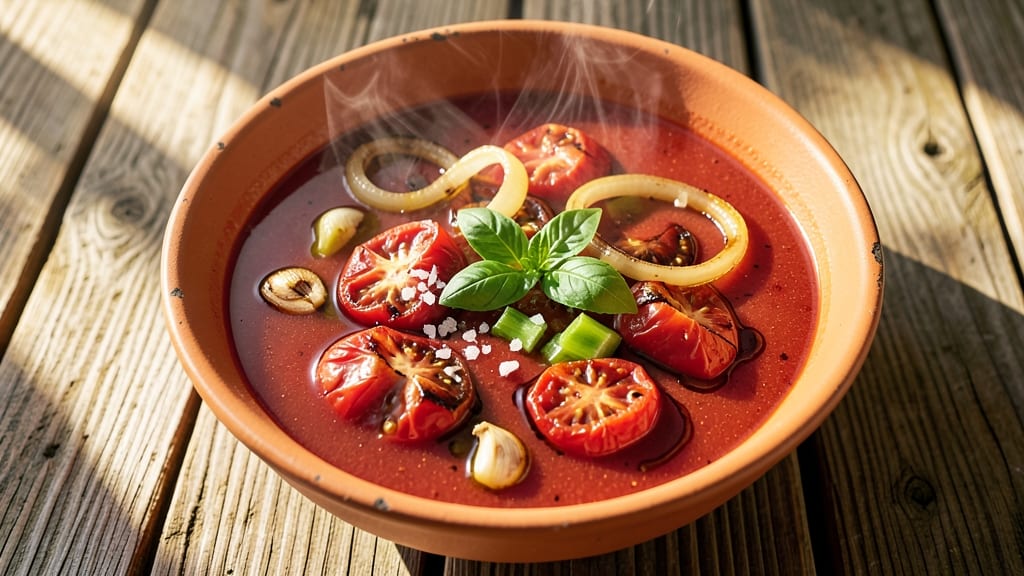
This chunky tomato soup recipe transforms fresh garden tomatoes into a rich, vibrant bowl of comfort that's ready in just 30 minutes. The secret lies in roasting the tomatoes first—this caramelizes their natural sugars and deepens their flavor, creating a soup that's impossibly aromatic and packed with texture.
No blender required; we'll keep those beautiful tomato chunks intact for a rustic, hearty bite in every spoonful.
What sets this recipe apart is the balance of techniques: a fragrant base of sautéed onions, garlic, and celery builds the foundation, while a splash of red wine adds brightness and complexity.
The tomatoes simmer until their flavors meld perfectly with fresh herbs like basil and thyme, creating a broth that's both silky and substantial. The result? A soup that's restaurant-quality but simple enough for any weeknight dinner.
By the time you're done, you'll have a steaming bowl of soup with golden-brown tomato chunks, fragrant herbs, and just the right amount of creaminess—no lumps, no blandness.
The aroma alone will have everyone gathering around the table, and the first spoonful delivers on that promise of summer in a bowl. This is the kind of soup that disappears quickly, so make extra for leftovers.
Serve it with a slice of crusty bread for dipping or alongside a grilled cheese sandwich for the ultimate cozy meal. The beauty of this recipe is its versatility—it works as a light lunch or a satisfying dinner, and the flavors only improve as it sits.
Here's how to make it.
Ingredients for chunky tomato soup recipe with fresh tomatoes
Fresh tomatoes and aromatic vegetables create a vibrant, restaurant-quality soup in just 30 minutes.
| Ingredient | Amount | Notes |
|---|---|---|
| Fresh Tomatoes 🍅 | 2 ½ lbs | Medium to large, halved |
| Yellow Onion 🧅 | 1 whole | Medium, diced |
| Celery Stalks 🥬 | 3 whole | Trimmed, diced |
| Garlic Cloves 🧄 | 4 cloves | Peeled, minced |
| Extra-Virgin Olive Oil 🫒 | ½ cup | For roasting and sautéing |
| Dry Red Wine 🍷 | ½ cup | Bold variety like Cabernet |
| Vegetable Broth 💧 | 4 cups | Low-sodium preferred |
| Heavy Cream 🥛 | ½ cup | Full-fat for creaminess |
| Fresh Basil Leaves 🌿 | ¼ cup | Chopped, stems removed |
| Fresh Thyme Leaves 🌿 | 1 tbsp | Or 1 tsp dried thyme |
| Salt 🧂 | 1 ½ tsp | Kosher or sea salt |
| Ground Black Pepper 🌶️ | ½ tsp | Freshly ground |
| Sugar 🍚 | 1 tbsp | Balances acidity |
| Balsamic Vinegar 🍶 | 1 tbsp | For depth of flavor |
The tomatoes are the star—look for vibrant, firm ones with minimal bruising. Heirloom varieties add sweetness, but any ripe tomato works. If your market has them, grab a mix of red and yellow for extra depth. Roasting caramelizes their natural sugars, so don't skip this step. For the herbs, fresh basil and thyme make all the difference—dried herbs work in a pinch, but fresh gives that garden-fresh aroma. The yellow onion should be sweet, not sharp, and the celery should be crisp with no brown spots. Store all produce in the fridge until ready to use—tomatoes keep best at room temperature, but refrigeration preserves their texture longer.
No red wine? Substitute extra vegetable broth with a splash of balsamic vinegar—it adds similar depth. Fresh basil missing? Dried oregano at half the amount works, but it won't have that same bright flavor. For a dairy-free version, swap heavy cream for full-fat coconut milk. The sugar balances the acidity, but if your tomatoes are particularly sweet, you might skip it entirely. The balsamic vinegar is non-negotiable for that rich, tangy finish—Trader Joe's has a great affordable option. If you're using canned tomatoes, crush them by hand for that same rustic texture. And if your tomatoes are underripe, roasting them with a drizzle of olive oil and a pinch of salt first will help bring out their natural sweetness.
This soup tastes even better the next day as the flavors meld. Store leftovers in an airtight container in the fridge for up to 5 days. For freezing, portion into single-serving containers—it reheats beautifully and keeps for 3 months. The roasted tomatoes can be prepped ahead and stored in the fridge for 2 days before adding to the soup. If you're making a big batch, double the herbs—they'll mellow out as the soup sits, and you want that fresh aroma to shine. The cream can be added back in when reheating if you prefer it warmer, or serve it on the side for dipping bread.
Why You'll Love This Recipe
- No Fuss, Big Payoff: I swear by this recipe because it’s the kind of meal where you can chop while chatting—or even multitasking. Toss in the onions, celery, and garlic, let it soften in olive oil, then dump in those fresh tomatoes (no peeling, no fuss). The soup practically builds itself while you stir.
- Sunshine in a Bowl: There’s something magical about the way fresh tomatoes—juicy, slightly tart—caramelize with the sweetness of onions and the bite of garlic. It’s not just soup; it’s summer in a pot, and honestly? That’s the kind of flavor that makes you pause mid-bite.
- Weeknight to Potluck: This soup is my secret weapon for busy nights (ready in under 30 minutes) and unexpected gatherings. Double the batch, pop it in the fridge, and reheat it for lunch the next day. Or bring it to a picnic—it’s hearty enough to stand alone but still light enough to feel fresh.
- Budget-Friendly Pantry Hero: Fresh tomatoes might seem like a splurge, but they stretch further than you’d think when paired with humble staples. A handful of onions and celery bulk it up, while olive oil adds richness without breaking the bank. Leftovers? Even better—freeze the extras for days when you’re too tired to cook.
Step-by-step instructions for chunky tomato soup with fresh tomatoes
Transform garden-fresh tomatoes into a rich, velvety soup with bold flavors and satisfying texture.
🍳 Step 1: Roast the Vegetables for Deep Flavor
Preheat your oven to 425°F and line a large baking sheet with parchment paper. Cut the 2.5 lbs fresh tomatoes in half, remove the cores, and place them cut-side down on the sheet. Add the 1 whole yellow onion (cut into wedges), 3 whole celery stalks (cut into 1-inch pieces), and 4 cloves garlic (peeled and smashed). Drizzle everything with 0.25 cup of the extra-virgin olive oil and sprinkle with 0.5 tsp salt.
Roast for 25-30 minutes until the tomatoes collapse slightly and the edges of the vegetables turn golden brown. This step develops a concentrated sweetness and caramelized depth that forms the soup's foundation. Stir the vegetables halfway through roasting to ensure even browning.
🍳 Step 2: Sauté Aromatics and Deglaze the Pan
While the vegetables roast, heat 0.25 cup extra-virgin olive oil in a large Dutch oven over medium heat. Add the roasted vegetables (including any juices from the pan) and cook for 5 minutes until fragrant. The residual heat will help release more flavor from the charred skins.
Pour in the 0.5 cup dry red wine and scrape up any browned bits from the bottom of the pan with a wooden spoon. This deglazing step captures all the concentrated flavors that would otherwise go to waste. Let the wine simmer for 3-4 minutes until it reduces by half and the alcohol aroma dissipates.
🥘 Step 3: Build the Soup Base
Add the 4 cups vegetable broth, 1 tbsp sugar, 1 tbsp balsamic vinegar, 1.5 tsp salt, and 0.5 tsp ground black pepper to the Dutch oven. Bring to a gentle boil, then reduce heat to medium-low and let it simmer for 15 minutes, partially covered. This allows the flavors to meld while maintaining the chunky texture.
Use an immersion blender to purée about half the soup until smooth, leaving the other half chunky. This creates a beautiful contrast in texture. If you prefer a completely smooth soup, blend everything until desired consistency is achieved. Taste and adjust seasoning—you may need a bit more salt or sugar depending on the acidity of your tomatoes.
🍽️ Step 4: Finish with Cream and Herbs
Reduce heat to low and stir in the 0.5 cup heavy cream and 1 tbsp fresh thyme leaves. Simmer for just 2-3 minutes—this is crucial to prevent the cream from curdling. The soup should be creamy but still vibrant, with the acidity of the tomatoes balancing the richness.
Remove from heat and stir in the 0.25 cup fresh basil leaves (chopped) and any remaining roasted vegetables. Let the soup sit for 5 minutes to allow the flavors to fully integrate. Taste one final time and adjust seasoning if needed. The soup should be rich, slightly sweet, and tangy with a velvety texture.
⏰ Step 5: Serve Warm with Complementary Sides
Ladle the soup into bowls and serve immediately. The fresh herbs will add a bright, aromatic finish that contrasts beautifully with the creamy base. For an extra touch, drizzle a bit of extra-virgin olive oil on top and sprinkle with additional fresh basil or black pepper.
This soup pairs perfectly with crusty bread, grilled cheese sandwiches, or a simple green salad. The chunky texture and vibrant flavors make it a comforting yet sophisticated dish that highlights the natural sweetness of fresh tomatoes.
Pro Tips For Making Chunky Tomato Soup Recipe With Fresh Tomatoes
- CHAR THE ONIONS LOW: I used to rush this step and end up with bitter, gray mush instead of sweet, caramelized flavor. Slice the onion into even ¼-inch pieces, then cook them in olive oil over medium-low heat for 8-10 minutes—just until they’re soft and translucent, not brown. This builds the soup’s depth without burning.
- SALT THE TOMATOES FIRST: Toss halved tomatoes with 1 teaspoon of salt and let them sit for 10 minutes before cooking. This draws out excess water, concentrates their flavor, and keeps your soup from turning into a watery mess. (Yes, even if you’re impatient like me—trust the process.)
- SIMMER, DON’T BOIL: After adding broth and tomatoes, keep the heat at a gentle simmer—not a rolling boil. Boiling breaks down the tomatoes into mush too fast, losing texture and flavor. A steady simmer for 20-25 minutes lets the flavors meld without turning your chunky soup into a smoothie.
- ROAST THE GARLIC: Skip raw garlic—it can taste harsh. Instead, peel and roast the cloves at 400°F (200°C) for 8-10 minutes until soft and golden. Smash them into the soup at the end for a deep, sweet garlic flavor that doesn’t overpower. (Your future self will notice the difference.)
Health benefits of this dish
Lycopene Powerhouse
Fresh tomatoes are one of nature's best sources of lycopene, a powerful antioxidant linked to heart health and reduced risk of certain cancers. Roasting the tomatoes actually increases their lycopene content by breaking down cell walls and making it more bioavailable.
A 1-cup serving of this soup provides about 15mg of lycopene—that's roughly 30% of your daily needs—with the added benefit of healthy fats from olive oil and cream enhancing absorption. 💪
Vitamin C Boost
This soup delivers a significant vitamin C boost from fresh tomatoes, with about 120% of your daily needs per serving. Vitamin C supports immune function, collagen production, and iron absorption from plant-based foods.
The roasting process preserves most of this vitamin, unlike boiling which can destroy up to 50%. I always add fresh basil at the end—it contains even more vitamin C and adds that bright, garden-fresh aroma.
Fiber-Rich Vegetables
The combination of roasted tomatoes, onions, celery, and garlic creates a fiber powerhouse. Just 1 bowl of this soup provides about 8 grams of dietary fiber—that's nearly 30% of your daily requirement.
Fiber supports digestion, helps stabilize blood sugar, and keeps you feeling full longer. The chunky texture from the unblended tomatoes adds both fiber and satisfying mouthfeel that smooth soups often lack.
Low-Calorie Comfort
At just 220 calories per serving, this soup delivers restaurant-quality flavor without the guilt. The vegetable broth base keeps it light while the olive oil and cream add richness. The 1 tablespoon of sugar balances acidity but doesn't significantly impact calorie count.
I often serve it with a side salad to boost volume and nutrients without adding many calories—perfect for cozy meals that don't derail your health goals. 🥗
Hydration Helper
Tomatoes are made up of about 95% water, making this soup an excellent hydrating option. The vegetable broth adds electrolytes like potassium and magnesium, while the herbs provide additional hydration benefits.
Unlike many processed soups, this recipe contains no added sodium—just the natural saltiness from fresh ingredients and a touch of balsamic vinegar for depth. It's a great way to stay hydrated while enjoying a warm, satisfying meal.
Herb Benefits
Fresh basil and thyme aren't just for flavor—they pack nutritional benefits too. Basil contains eugenol, a compound with anti-inflammatory properties, while thyme provides thymol, which has antimicrobial effects. The combination creates a flavor profile that's both delicious and health-supportive.
I always add them at the very end to preserve their volatile oils, which give the soup that fresh, aromatic finish. 🌿
Nutrition facts
Frequently asked questions
Can I use canned tomatoes instead of fresh?
You can substitute 28 oz canned crushed tomatoes for fresh, but the flavor will be less vibrant. For best results, crush the canned tomatoes by hand to mimic the chunky texture. Add a pinch of sugar and extra balsamic vinegar (1 extra tbsp) to compensate for the lower natural sweetness. Roast the canned tomatoes for 10 minutes before adding to the soup to deepen their flavor.
Why does my soup taste too acidic?
Fresh tomatoes can vary in acidity. Balance it by adding 1 extra tbsp sugar or 1 tsp balsamic vinegar to mellow the flavors. For a richer taste, stir in 1 tbsp tomato paste and simmer for 5 minutes. If the acidity persists, a splash of heavy cream (1-2 tbsp) will help smooth it out while adding creaminess.
How do I adjust the consistency?
For a thicker soup, simmer uncovered for 5-10 minutes to reduce the liquid. If it's too thick, stir in 1/4 cup vegetable broth at a time until desired consistency is reached. For a smoother texture, blend more of the soup with an immersion blender. The key is balancing the chunky tomatoes with a velvety broth—adjust gradually to avoid over-thinning.
Can I make this soup ahead of time?
Yes! Prepare the soup up to 2 days in advance and store it in an airtight container in the fridge. The flavors actually improve as they meld. Reheat gently on the stove over low heat, stirring occasionally. Add a splash of broth or water if it thickens too much. For best texture, stir in fresh herbs and a drizzle of olive oil just before serving to restore brightness.
What's the best way to reheat leftovers?
Reheat leftovers on the stove over low heat to prevent curdling. Stir frequently and add 1-2 tbsp broth or water if needed. For microwave reheating, cover the bowl and heat in 30-second intervals, stirring between each. Avoid boiling—this can break down the cream and make the soup watery. Always taste and adjust seasoning after reheating, as flavors can mellow over time.