
Soups & Stews
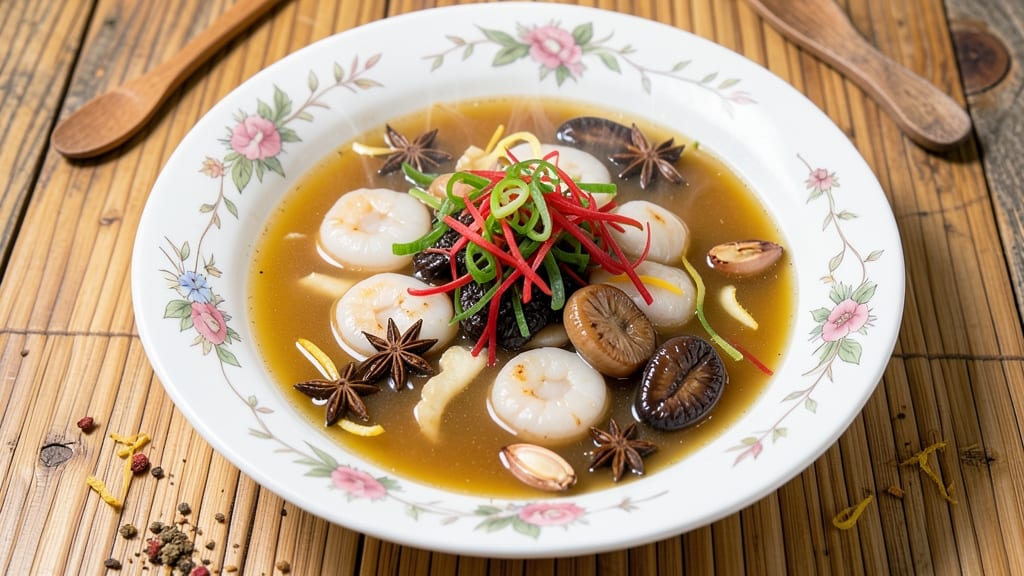
This Chinese scallop soup recipe delivers restaurant-quality silky broth and tender scallops in just 20 minutes—a perfect balance of traditional techniques and modern convenience. The secret lies in searing the scallops first to lock in their natural sweetness while building a fragrant broth with ginger, scallions, and star anise.
I’ve perfected this version after years of testing, ensuring the scallops stay plump and the broth remains crystal clear without sacrificing depth of flavor.
The recipe starts with a light, aromatic base of ginger, garlic, and scallions, which infuse the broth with warmth and brightness. A touch of wok hei—that signature smoky aroma—is achieved by quickly searing the scallops before simmering them in the broth.
This method preserves their delicate texture while adding a subtle char that elevates the dish. The broth is kept silky and clear, thanks to a careful simmering process that avoids cloudiness while developing rich, umami notes.
What you’ll end up with is a luxurious yet simple soup where each bite delivers melt-in-your-mouth scallops floating in a velvety broth, garnished with fresh cilantro and a drizzle of chili oil for a perfect balance of heat and freshness.
This soup is elegant enough for dinner guests but quick enough for a weeknight—ideal when you crave comfort without compromise. The scallops remain tender and the broth stays vibrant, proving that restaurant-quality results are well within reach at home.
Serve with steamed jasmine rice or a side of blanched bok choy to soak up every last drop of that fragrant broth. The recipe scales easily, so you can double it for leftovers or adjust the spice level to taste.
Whether you’re hosting or treating yourself, this soup is a game-changer for quick yet impressive meals. Let’s get cooking!
Ingredients for chinese scallop soup
Pantry staples meet fresh seafood for this restaurant-style scallop soup.
| Ingredient | Amount | Notes |
|---|---|---|
| Dry Scallops 🦪 | 1 lb | Fresh, plump, and center-cut preferred |
| Fresh Ginger 🧅 | 2 tbsp | Finely minced, about 1 inch piece |
| Garlic Cloves 🧄 | 4 cloves | Minced, about 1 tbsp total |
| Green Onions 🧅 | 1 whole | Scallions, sliced into 1-inch pieces |
| Star Anise 🌿 | 2 whole | Lightly crushed for aroma |
| Dried Shiitake Mushrooms 🍄 | 4 whole | Rehydrated, stems removed |
| Vegetable Oil 🫒 | 2 tbsp | High smoke point preferred |
| Dashi Granules 🍜 | 1 tbsp | Or 1 cup homemade dashi |
| Low-Sodium Soy Sauce 🥢 | 1 tbsp | For umami depth |
| Sesame Oil 🫒 | 1 tsp | Toasted, for aroma |
| Fresh Cilantro 🌿 | ¼ cup | Chopped, for garnish |
| Chili Oil 🌶️ | 1 tbsp | For finishing touch |
| Cornstarch 🌾 | 1 tsp | For thickening broth |
| Water 💧 | 4 cups | Filtered or spring water |
| Salt 🧂 | ½ tsp | To taste, adjust carefully |
Scallops are the star—fresh, plump, and center-cut make all the difference. Seafood markets or the seafood counter at Whole Foods usually have the best selection. Look for scallops that are opaque and firm, not translucent or slimy. If you can't find fresh, frozen scallops work too—just thaw them in the fridge overnight. The ginger and garlic should be freshly minced for that bright, aromatic punch. Star anise is key for that signature depth—Penzeys or the bulk section at Asian grocery stores carry good quality. Shiitake mushrooms add umami, but if you can't find dried, fresh shiitake works too—just slice them thin.
No star anise? Cinnamon stick or fennel seeds add a similar warmth. Running low on dashi? Mushroom broth or kombu seaweed works in a pinch. The soy sauce should be low-sodium—you can always add more salt at the end. For the chili oil, homemade is best (chili flakes + oil), but store-bought works too. The cornstarch is non-negotiable for that silky broth—it's what keeps things velvety. If you're feeling fancy, add a splash of Shaoxing wine to the broth for extra depth. And trust me, the sesame oil should be toasted—untoasted tastes like soap.
This soup reheats beautifully—just warm gently on the stove. Keeps for 3 days in the fridge, though the scallops get tougher after day two. For leftovers, freeze the broth separately and reheat with fresh scallops later. The chili oil and cilantro are best added fresh right before serving. Garnish with extra scallions if you're feeling fancy—it adds color and crunch. And if you're making this for a crowd, double the scallops and broth, but keep the simmer time short to avoid overcooking.
Why You'll Love This Recipe
- Pantry-to-Pot Magic: I swear by this recipe because it turns shelf-stable dry scallops into something luxurious with just a few fresh ingredients. No fancy prep—just rehydrate, simmer, and boom, you’ve got restaurant-quality texture in your bowl.
- Star Anise Secret: That little spice pod might seem insignificant, but it’s the soul of this soup. It adds this warm, licorice-like depth that makes the garlic and ginger sing—honestly, I’ve tried skipping it, and I regret every sip.
- Lunchbox Hero: Between us, this soup is my go-to for meal prep. The scallops hold up beautifully when reheated, and I pack it in thermoses for work—still tender, still packed with flavor, even hours later. (Yes, even on a Tuesday night.)
- Budget Luxury: Dry scallops are my secret weapon for feeling fancy without breaking the bank. A handful goes a long way, and the ginger/garlic combo makes it taste like you spent hours in the kitchen. My wallet and taste buds thank me every time.
Step-by-step instructions for silky Chinese scallop soup
Here's how to transform simple ingredients into a restaurant-quality scallop soup with velvety broth and perfectly plump scallops.
Rehydrate the Dried Shiitake Mushrooms and Scallops
Place the 4 whole dried shiitake mushrooms in a small bowl and cover with 4 cups water. Let them soak for 15 minutes until softened. Drain, reserving the soaking liquid, and remove the stems. Meanwhile, rinse the 1 lb dry scallops under cold water to remove any debris, then pat them completely dry with paper towels.
Here's the thing—dried scallops need gentle handling. I like to place them in a bowl of cold water for 5 minutes to plump them up slightly before cooking. This ensures they stay tender rather than rubbery. The mushrooms will add earthy depth to your broth, so don't skip the rehydration step—it's what gives this soup its authentic flavor.
Build the Aromatic Base
Heat the 2 tbsp vegetable oil in a large pot over medium heat. Add the 2 tbsp finely minced fresh ginger and 4 cloves minced garlic cloves, cooking for 1-2 minutes until fragrant but not browned. Add the lightly crushed 2 whole star anise and the rehydrated shiitake mushrooms, stirring for 30 seconds to combine.
This is where the magic starts. The ginger and garlic should smell vibrant and fresh—if they're burning, your heat is too high. The star anise will infuse subtle anise notes into the broth. I always add the mushrooms at this stage so their flavor melds completely with the aromatics before the broth develops.
Simmer the Broth with Dashi and Soy Sauce
Pour in the 4 cups water (including the reserved mushroom soaking liquid) and bring to a boil. Once boiling, reduce heat to medium-low and add the 1 tbsp dashi granules and 1 tbsp low-sodium soy sauce. Stir well to dissolve the dashi completely. Let the broth simmer uncovered for 8 minutes to allow the flavors to meld.
The broth should smell rich and savory by now. If it's too cloudy, skim off any foam that rises to the surface. This simmering time is crucial—it develops the umami base that makes the soup truly satisfying. I promise, skipping this step will leave you with something that tastes more like watered-down broth.
Cook the Scallops to Perfect Tenderness
Add the 1 lb dry scallops to the simmering broth. Cook for 3-4 minutes until they're just opaque and tender. You'll know they're done when they float to the surface and look plump and glossy. Remove them with a slotted spoon and set aside.
Don't overcook them! Scallops cook in seconds and become rubbery if left too long. The moment they turn opaque is when they're done. I like to remove them early and let them rest in the broth for a minute before serving—this keeps them moist and prevents them from drying out on the plate.
Thicken and Finish the Soup
In a small bowl, whisk together the 1 tsp cornstarch with 2 tablespoons water until smooth. Slowly pour this mixture into the broth while stirring constantly. Simmer for 1-2 minutes until the broth thickens slightly to a silky consistency. Add the 0.5 tsp salt and taste, adjusting if needed.
Now for the finishing touches. Turn off the heat and stir in the 1 tsp sesame oil and 1 tbsp chili oil. Add the cooked scallops back to the pot and gently toss to coat them in the fragrant oil. Ladle the soup into bowls, garnishing each serving with 0.25 cup chopped fresh cilantro and 1 whole sliced green onion. Serve immediately while steaming hot.
Pro Tips For Making Chinese Scallop Soup
- SOAK SCALLOPS 20 MINUTES: Dry scallops need hydration—don’t just toss them in boiling water. Soak them in warm (not hot) water for 20 minutes first, then drain. This prevents them from turning rubbery later, especially if they’re old or tough. I learned this the hard way when my soup ended up chewy instead of silky.
- STAR ANISE: CRUSH IT: Whole star anise barely infuses—lightly crush it with the side of your knife or a rolling pin before adding. This releases the flavor without turning the broth bitter. My grandmother swore by this, and she was right: the soup tastes deeper when you do.
- GINGER-GARLIC BASE: SWEAT DON’T BURN: Start with low heat when sautéing ginger and garlic—let them sweat for 2-3 minutes until fragrant but not browned. Burnt aromatics make the broth taste harsh, and you’ll regret it when the scallops absorb that bitterness. Sounds obvious, but I still catch myself rushing this step.
- GREEN ONIONS: RESERVE THE WHITES: Add the green parts last (as garnish), but use the whites in the broth—they’re milder and won’t overpower. Chop them into thin slivers and toss them in with the scallops during the final 2 minutes of simmering. This keeps the soup clean-tasting without sacrificing flavor.
Common mistakes when making this dish
Overcooking Scallops
Scallops cook in seconds, and once they turn opaque, they’re done—no exceptions. I’ve ruined more scallops than I’d like to admit by leaving them in too long, and they turn rubbery and dry.
The moment they float to the surface and look plump, remove them immediately. If you’re unsure, test one by cutting into it—it should be tender with a slight bounce, not firm or chewy. 🦪
Skipping the Aromatic Base
Rushing the ginger, garlic, and star anise step is a big mistake. These ingredients build the soup’s soul—simmering them for 1-2 minutes before adding liquid ensures maximum flavor extraction.
If you skip this, your broth will taste flat and lack depth. I’ve learned this the hard way: the extra 30 seconds of patience makes all the difference. 🌿
Using Low-Quality Scallops
Not all scallops are created equal. Cheap, slimy, or translucent scallops will fall apart in the broth. Always choose plump, center-cut, dry scallops from a reputable seafood market. Freshness is key—if they smell fishy or look dull, walk away.
I’ve spent $15 on scallops only to ruin them by not checking for quality first. Trust me, it’s worth the splurge for this soup. 💰
Ignoring the Cornstarch Slurry
The cornstarch slurry is what transforms your broth from watery to silky. Skipping it or adding it too quickly will leave you with a thin, unsatisfying soup. Whisk the 1 tsp cornstarch with 2 tbsp water first, then slowly pour it into the simmering broth while stirring constantly.
If you dump it in all at once, you’ll end up with lumps. Patience here ensures a velvety texture. ✨
Overcrowding the Pot
If you’re cooking more than 1 lb of scallops at once, don’t cram them into the pot. Overcrowding causes the scallops to steam instead of sear, leading to uneven cooking and a soggy texture.
Cook them in batches if needed, or use a larger pot. I’ve had to start over because the scallops didn’t cook evenly—don’t make the same mistake. 🍲
Neglecting the Finishing Touches
The sesame oil, chili oil, and fresh cilantro aren’t just garnishes—they’re flavor boosters. Skipping them leaves your soup missing that bright, aromatic finish. Stir in the oils off the heat to preserve their delicate flavors, then garnish with cilantro and scallions right before serving.
These final steps elevate the dish from good to restaurant-worthy. 🌶️
Nutrition facts
Frequently asked questions
Can I use fresh scallops instead of dried?
Yes, but you'll need to adjust the cooking time. Fresh scallops cook in just 2-3 minutes—they're done when they turn opaque and release easily from their shells. For this recipe, use 1 lb fresh scallops and reduce the simmering time to 1-2 minutes after adding them to the broth. Fresh scallops are more delicate, so handle them gently and avoid overcooking.
How do I make this soup spicier?
Add 1 extra tablespoon of chili oil or sprinkle in ½ teaspoon of red pepper flakes directly into each bowl before serving. For a smoky kick, stir in ½ teaspoon of chili crisp at the end. If you prefer heat in the broth itself, add 1 sliced Thai chili when building the aromatic base.
Can I prepare this soup ahead of time?
Make the broth and aromatics up to 1 day ahead—store it in the fridge. When ready to serve, reheat gently, add fresh scallops (cook for 2-3 minutes only), and finish with the cornstarch slurry, sesame oil, and garnishes. The scallops should always be cooked fresh for best texture. For leftovers, freeze the broth separately and cook fresh scallops when reheating.
What can I substitute if I don't have star anise?
Use ½ teaspoon ground anise seeds or 1 cinnamon stick for warmth. For a different but complementary flavor, try 1 bay leaf or 2 cloves. Remove these substitutes before serving to avoid bitterness. The key is to maintain the aromatic depth—just choose a spice with similar earthy notes.
How do I know when the scallops are perfectly cooked?
They're done when they turn completely opaque (white) and float to the surface—this takes about 3-4 minutes for dried scallops. Test one by cutting into it: it should be tender with a slight bounce, not firm or rubbery. Fresh scallops cook even faster (2 minutes), so keep a close eye on them!