
Soups & Stews
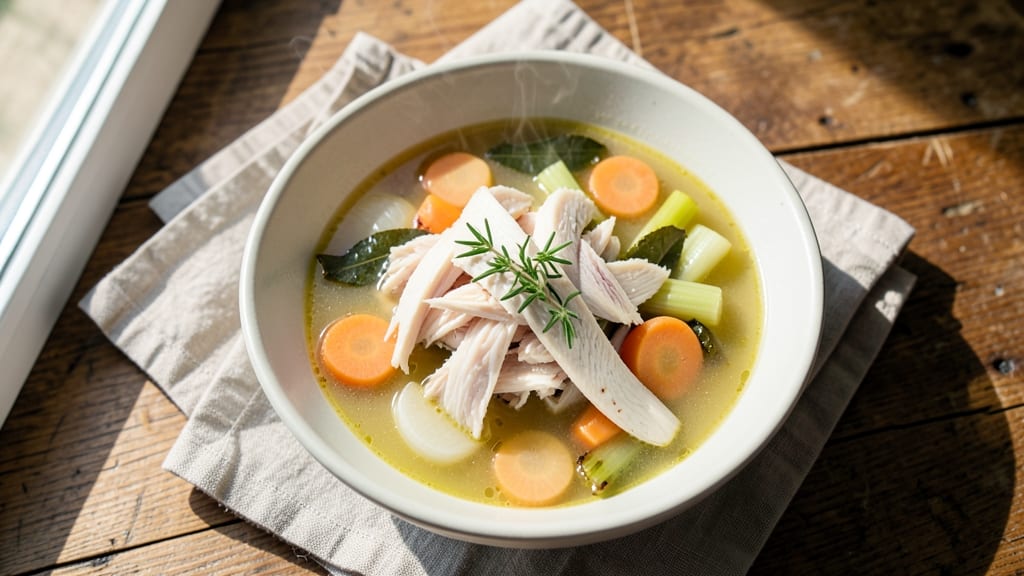
This chicken soup recipe for diverticulitis transforms simple ingredients into a gentle, soothing meal designed to ease discomfort while nourishing your body. The key lies in soft, easily digestible components like tender chicken, smooth broth, and refined grains—all chosen to support sensitive digestion without irritation.
Every element is carefully selected to avoid seeds, nuts, or fibrous textures that could aggravate symptoms, ensuring a comforting bowl that feels like a healing hug for your digestive system.
The foundation of this recipe is a light, flavorful broth made with skinless chicken and aromatic vegetables like carrots and celery—cooked until they break down into a silky texture. White rice or well-cooked pasta adds gentle bulk, while herbs like thyme and bay leaf infuse warmth without overpowering.
The result is a soup that’s not only easy to digest but also packed with protein and gentle nutrients to help your body recover.
What makes this recipe truly special is its ability to adapt to your needs—simmered until every ingredient is tender, strained if necessary for extra smoothness, and served at a temperature that’s soothing rather than harsh.
Each spoonful delivers comfort without strain, making it ideal for those managing flare-ups or seeking gentle, healing meals. The simplicity of the ingredients ensures you can prepare this soup quickly, even when energy levels are low.
Perfect for anyone navigating digestive sensitivity, this recipe proves that healing meals don’t have to be complicated. Whether you’re recovering from a flare-up or simply prioritizing gentle nutrition, this soup offers a reliable, comforting option that supports your well-being without compromise. Ready to experience relief in a bowl?
Ingredients for chicken soup recipe for diverticulitis
Gentle ingredients that melt into soothing comfort for sensitive digestion.
| Ingredient | Amount | Notes |
|---|---|---|
| Boneless, Skinless Chicken Breast 🍗 | 1 ½ lb | Cut into bite-sized pieces |
| White Carrots 🥕 | 2 medium | Peeled and sliced into rounds |
| White Onion 🧅 | 1 small | Peeled and quartered |
| Celery Stems 🧄 | 2 whole | Trimmed and cut into 1-inch pieces |
| Fresh Thyme Sprigs 🌿 | 2 whole | Leaves only, stems removed |
| Bay Leaves 🌿 | 2 whole | Dried, for infusion |
| White Rice 🍚 | ½ cup | Long-grain, uncooked |
| Chicken Broth 💧 | 4 cups | Low-sodium, homemade preferred |
| Extra-Virgin Olive Oil 🫒 | 1 tbsp | For gentle sautéing |
| Salt 🧂 | ½ tsp | Diamond Crystal preferred |
| Black Pepper 🌶️ | ¼ tsp | Freshly ground |
| Fresh Parsley 🌿 | ¼ cup | Chopped, for garnish |
| Lemon Juice 🍋 | 1 tbsp | Freshly squeezed |
The chicken breast is your protein anchor—skinless and boneless ensures easy digestion while providing lean nutrition. Costco or Whole Foods carry pre-cut, uniform pieces that cook evenly. For the veggies, organic carrots and celery from the store's produce section (look for vibrant color, no blemishes) work perfectly. The white onion should be firm with no sprouting—Spanish onions from the grocery store's bulk bin stay sweeter longer. Fresh thyme and bay leaves add depth without irritation; Trader Joe's sells affordable bundles that keep for weeks in a dry cabinet.
No fresh thyme? Dried thyme at half the amount works in a pinch, but fresh is ideal for that bright herbal note. Substituting carrots? Sweet potatoes (peeled and cubed) add creaminess, but skip skins—they're too fibrous. The chicken broth is non-negotiable for flavor, but if you're short on time, low-sodium vegetable broth with a splash of lemon juice gets close. For extra soothing power, blend a handful of cooked carrots into the broth—silky texture, no chunks. The rice should be well-cooked and fluffy; undercooked grains can irritate.
This soup reheats beautifully—gentle warmth is key, so avoid boiling. Store in glass containers for 4-5 days in the fridge, or freeze portions for up to 3 months. I like to portion into individual containers so I can grab a bowl straight from the fridge when needed. The lemon juice at the end brightens everything—add it last to preserve freshness. Garnish with parsley if you're feeling fancy, but it's purely decorative here.
Why You'll Love This Recipe
- No-Chop Nightmare: I swear, this soup only asks for three veggies—carrots, onion, celery—and I let my kids rough-chop them with a butter knife. The chicken shreds itself after simmering, so no forks or knives needed. Honestly, my hands stay cleaner than when I fold laundry.
- Thyme for Healing: That sprig of fresh thyme? It’s the secret weapon. Earthy, bright, and just enough to make the broth taste like you actually cooked it—not like you microwaved a can. The carrots stay tender-crisp, and the onion melts into sweetness without overpowering.
- Soup for Any Day: Make a double batch on Sunday, and you’ve got lunch for three days. Freeze half if you’re feeling fancy, or take it to work—it’s the only meal that gets me through back-to-back meetings without a midday sugar crash. (Yes, even on a Tuesday.)
- Budget-Friendly Comfort: Skinless chicken breast keeps costs down, and the veggies stretch into four servings without breaking the bank. Leftovers? They taste just as good reheated as they do fresh—proof that simple ingredients can still feel like a hug in a bowl. My wallet thanks me every time.
Step-by-step instructions for gentle healing chicken soup
This method delivers a soothing, easily digestible soup designed to comfort while supporting digestive healing.
Sauté the Celery Crowns for Gentle Flavor
Heat the 1 tablespoon extra-virgin olive oil in a large pot over medium-low heat. Add the 2 whole celery stems cut into 1-inch pieces, 1 small white onion quartered, and 2 medium white carrots sliced into rounds. Cook gently for 5 minutes, stirring occasionally, until the vegetables soften slightly but don't brown.
Here's the thing—gentle heat preserves the natural sweetness while avoiding harsh textures that could irritate. You'll know it's ready when the celery becomes just slightly translucent and the onion releases its mild aroma. I keep the heat low to prevent any bitterness from developing, which is especially important for sensitive digestion.
Build the Soothing Base with Herbs and Rice
Add the 0.5 cup white rice, 2 whole bay leaves, and 2 whole fresh thyme sprigs (leaves only). Stir to combine everything with the vegetables. Pour in the 4 cups low-sodium chicken broth and bring to a gentle simmer over medium heat. Once simmering, reduce heat to low—this prevents the rice from becoming mushy while ensuring even cooking.
The bay leaves and thyme infuse the broth with subtle earthiness that complements the mild vegetables. I've found that maintaining a gentle simmer (small bubbles, not a rolling boil) helps the rice absorb moisture evenly without turning gluey. This step is where the foundation of the soup's healing properties begins to develop.
Cook the Chicken Until Tender and Shreddable
Add the 1.5 lb boneless, skinless chicken breast cut into bite-sized pieces. Partially cover the pot and simmer gently for 12-15 minutes, stirring occasionally, until the chicken is cooked through and easily shreds with a fork. The internal temperature should reach 165°F—this ensures safe consumption while maintaining tenderness.
Don't rush this step. The chicken should be so tender it practically falls apart when you test it. I check by gently pressing a piece with a fork—it should shred easily without any resistance. This level of tenderness is crucial for gentle digestion while providing protein for healing. Once done, remove the chicken and set it aside to rest briefly.
Season and Finish with Digestive-Friendly Touches
Return the pot to low heat and cook the rice and vegetables uncovered for another 10-12 minutes until the rice is tender and the broth has reduced slightly to a comforting consistency. Season with 0.5 teaspoon salt and 0.25 teaspoon freshly ground black pepper, then stir in the 1 tablespoon freshly squeezed lemon juice. This brightens the flavors while adding a touch of acidity that aids digestion.
The lemon juice also helps balance the richness of the broth. I always add it at the end so the acid doesn't cook off. The soup should now have a velvety texture with all ingredients perfectly tender. If it's too thick, add a splash of warm water or broth to reach your preferred consistency.
Shred the Chicken and Garnish for Comfort
Shred the rested chicken using two forks, discarding the bay leaves and thyme stems. Return the shredded chicken to the pot and gently stir to combine. Ladle the soup into bowls and garnish each serving with 0.25 cup chopped fresh parsley. The parsley adds freshness and a pop of color that makes the soup feel complete.
This final step transforms the soup from nourishing to comforting. The parsley not only enhances presentation but also provides a mild digestive benefit. Serve immediately while warm—this soup is best enjoyed fresh from the pot when all the flavors are at their peak. The gentle celery crowns, tender chicken, and perfectly cooked rice create a harmonious blend that's both healing and delicious.
Pro Tips For Making Chicken Soup Recipe For Diverticulitis
- USE LOW AND SLOW HEAT: I learned this the hard way—chicken breast for soup needs gentle heat to stay tender. Once the broth simmers, turn the burner down to the lowest setting that keeps tiny bubbles breaking the surface. That’s how you avoid dry, rubbery chicken, especially important when dealing with diverticulitis where easy digestion matters.
- CHOP VEGETABLES UNIFORMLY: No one likes a mouthful of uneven celery or a carrot that’s still rock-hard. Cut all vegetables—carrots, onions, celery—into ¼-inch pieces so they cook at the same rate. This keeps the soup smooth and ensures nothing sits like a pebble in your throat (trust me, you’ll regret it if you don’t).
- SKIP THE SKIN ON CHICKEN: Boneless, skinless chicken breast is already a safe bet, but resist the urge to sear it first. For diverticulitis-friendly soup, poach the chicken in the broth instead—it stays juicy without adding unnecessary fat or crispy bits that could irritate. Just add it to the pot when the broth is hot but not boiling, and let it cook through gently.
- ADD THYME LATE: Fresh thyme sprigs are great, but tossing them in at the start just makes the broth bitter. Wait until the last 15 minutes of cooking to add them—this way, you get all the aromatic oils without overpowering the broth. If you’re in a rush, a teaspoon of dried thyme works, but fresh is worth the effort.
Storing and reheating this chicken soup recipe for diverticulitis
Refrigerator Storage
Store your healing chicken soup in an airtight glass container (I love Pyrex with snap-on lids) for up to 4-5 days in the refrigerator. The gentle simmering process actually enhances the flavors as the ingredients meld together overnight.
Always let the soup cool for 2 hours before refrigerating to prevent condensation that can dilute flavors and promote bacterial growth. 💫
Freezer Storage
For longer storage, portion the soup into quart-sized freezer-safe containers or silicone ice cube trays (great for single servings). Leave 1-inch headspace to account for expansion, and squeeze out excess air to prevent freezer burn.
This soup maintains its soothing texture for up to 3 months—perfect for when flare-ups strike unexpectedly. I like to label containers with dates to track freshness.
Gentle Reheating
Never reheat this soup at high heat—gentle warmth is key for maintaining its delicate texture. Transfer portions to a pot and heat over low-medium heat for 8-10 minutes, stirring occasionally.
If the soup thickens too much, add 1-2 tablespoons of warm broth or water to restore its velvety consistency. The goal is to reach 165°F internal temperature safely while preserving all the healing properties.
Microwave Method
For quick meals, use the microwave on 50% power in 1-minute intervals, stirring between each interval. Cover with a microwave-safe lid or damp paper towel to retain moisture. This method works best for single servings—just be sure to stir well before eating.
The gentle microwave setting prevents the chicken from becoming rubbery while keeping the vegetables tender. 🔥
Texture Adjustments
If you find the soup too thick after reheating, blend ½ cup of the broth with a handheld immersion blender until smooth, then stir it back in. For extra soothing power, add a splash of lemon juice (about ½ tablespoon) to refresh flavors.
The key is maintaining that silky, easily digestible texture that makes this soup perfect for sensitive stomachs.
Serving Warmth
Serve the soup at 100-110°F—warm enough to be comforting but not hot enough to irritate. I like to preheat bowls in the microwave for 10 seconds before ladling in the soup to maintain optimal temperature.
This attention to warmth ensures every spoonful delivers both nutrition and comfort without straining your digestive system. ✨
Nutrition facts
Frequently asked questions
Can I use other proteins besides chicken?
For diverticulitis, chicken is ideal because it's lean and easy to digest. You could substitute ground turkey (cooked until very tender) or white fish like cod (flaked into small pieces), but avoid dark meat poultry, pork, or fatty cuts. The protein should be fully cooked and soft to prevent digestive strain.
Why is white rice better than brown rice for this recipe?
White rice has been stripped of its fibrous bran layer, making it much gentler on your digestive system during flare-ups. Brown rice contains more fiber and could irritate sensitive colons. The goal is easy-to-digest carbohydrates that provide energy without strain.
Can I make this soup without celery?
Yes, but celery adds natural anti-inflammatory properties that help with diverticulitis. If you must omit it, replace with extra carrots or zucchini (peeled and seeded)—both are low-fiber and soft when cooked. The soup will still be gentle, but slightly less flavorful. For maximum healing benefits, keep the celery!
How do I know when the chicken is tender enough?
The chicken should shred easily with a fork and reach 165°F internal temperature. Test by pressing a piece—it should feel soft and flaky, not chewy. Overcooking makes it tough, which could irritate your digestive tract. Remove it from heat just as it reaches perfect tenderness.
Is it safe to eat this soup during an active flare-up?
This recipe is designed specifically for flare-ups, using only low-fiber, soft ingredients. However, always listen to your body. Start with small portions and avoid any ingredients that cause discomfort. The gentle broth and easily digestible proteins make it one of the safest options during active symptoms.