
Soups & Stews
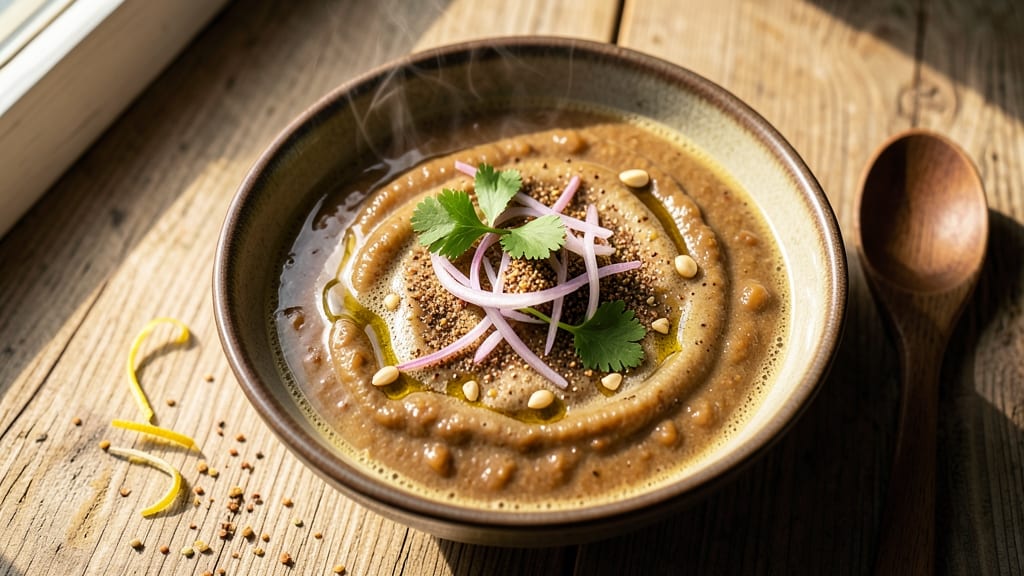
This bissara soup recipe brings hearty Middle Eastern comfort to your table with its velvety fava bean and celery crown base, ready in just 30 minutes. The dish's origins trace back to traditional vegan cuisine, where simple ingredients create deep, satisfying flavors—perfect for cozy evenings or festive gatherings.
What makes bissara special is its ability to transform humble fava beans into a rich, aromatic soup that feels both nourishing and celebratory.
The secret lies in properly soaking and boiling the fava beans until they reach that signature creamy texture, then blending them with celery crowns for an earthy depth. Traditional seasonings like garlic, cumin, and olive oil elevate the broth, while a touch of lemon juice brightens the finish.
This soup is more than just a dish—it's a taste of cultural heritage, where every spoonful carries warmth and tradition.
By the time you serve this soup, you'll have a bowl of golden, velvety goodness that's rich yet light enough for any meal. The aroma alone—warm spices mingling with fresh herbs—will draw everyone to the table.
It pairs beautifully with crusty bread or as a starter before richer dishes, making it equally at home in a family kitchen or a special gathering.
What sets bissara apart is its versatility—serve it hot for a comforting meal or let it cool slightly for a refreshing twist. The recipe balances simplicity with sophistication, proving that some of the most beloved dishes require just a few key ingredients and a touch of patience.
Let's create this comforting classic together.
Ingredients for bissara soup
Simple ingredients transform into velvety Middle Eastern comfort with just 30 minutes of prep.
| Ingredient | Amount | Notes |
|---|---|---|
| Dried Fava Beans 🌱 | 1 cup | Soaked overnight, drained |
| Celery Crowns 🧅 | 2 whole | Or 1 cup chopped celery |
| Yellow Onion 🧅 | 1 whole | Medium size, chopped |
| Garlic Cloves 🧄 | 4 cloves | Freshly minced |
| Ground Cumin 🌿 | 1 tbsp | Toasted for depth |
| Ground Coriander 🌿 | 1 tsp | Freshly ground preferred |
| Extra-Virgin Olive Oil 🫒 | ½ cup | High quality, fruity |
| Vegetable Broth 💧 | 4 cups | Low-sodium preferred |
| Fresh Lemon Juice 🍋 | 1 tbsp | Brightens the finish |
| Sea Salt 🧂 | 1 tsp | Adjust to taste |
| Fresh Parsley 🌿 | ¼ cup | Chopped, for garnish |
| Fresh Cilantro 🌿 | ¼ cup | Optional garnish |
| Water 💧 | 6 cups | For soaking beans |
The fava beans are the heart of bissara, so don't skip the soaking. Most grocery stores carry dried fava beans in the international aisle, but Middle Eastern markets like Marrakesh Market or Safeway's organic section often have them too. Look for beans that are plump and free of debris—those little specks can make your soup bitter. For the celery crowns, whole crowns add better flavor than chopped celery, but chopped works in a pinch. If you can't find celery crowns, any fresh celery will do, though the flavor won't be quite as rich. The onion and garlic are standard, but yellow onions have a sweeter profile than red, which balances the earthy fava beans perfectly.
No cumin? Ground coriander alone works, but the cumin's warmth is essential. Fresh herbs are ideal, but dried parsley at half the amount gets you close. The olive oil matters—use something fruity and peppery, not the mild stuff. For the broth, homemade vegetable broth elevates the dish, but even low-sodium store-bought works. If you're short on time, swap the soaked beans for 1 can of cannellini beans, drained and rinsed—they'll give you a similar texture without the wait. Just remember to adjust the seasoning, as canned beans can be saltier.
This soup tastes even better the next day as flavors meld. Store leftovers in an airtight container in the fridge for up to 4 days. For freezing, portion into ice cube trays—perfect for quick lunches or adding to other dishes later. The celery crowns and herbs can be prepped ahead and stored separately in the fridge for 3 days. If you're making a big batch, the soaked beans can be refrigerated for 2 days before cooking, but drain them well to prevent spoilage. The aroma alone will have your kitchen smelling like a Middle Eastern café.
Why You'll Love This Recipe
- I’ll be real: dried beans and onions are cheap, and this recipe stretches them into something special. A single batch feeds four, and leftovers reheat like a dream—no dry edges here.
- No-Soaking Needed: Honestly, I love that dried fava beans here don’t demand overnight soaking—just a quick 30-minute soak cuts it. Toss them in boiling water, simmer, and you’re left with that velvety texture without the fuss.
- Earthy Umami Boom: That celery crown and cumin combo? It’s where this soup gets its soul. The celery adds this bright, herbal crunch while the cumin gives it that warm, spiced depth—like a hug in a bowl.
- Lunchbox Magic: Between us, this is my go-to for meal prep. The flavors only get better the next day, and it’s light enough to pack for work or school. (Yes, even on a Tuesday night.)
Step-by-step instructions for bissara soup
Transform simple ingredients into a creamy, comforting Middle Eastern classic with this straightforward method.
Soak and Prepare the Fava Beans
Place the 1 cup dried fava beans in a large bowl and cover completely with the 6 cups water. Let them soak overnight at room temperature—this ensures even cooking and prevents a gritty texture. The beans are ready when they're noticeably softer than when you started, though they'll still need simmering.
Drain the soaked beans thoroughly using a fine-mesh strainer, then rinse them under cold water to remove any residual starch. This step prevents the soup from becoming too thick during cooking. I like to give them a quick rub between my fingers to remove any loose skins, though this isn't strictly necessary. The drained beans should yield about 2½ cups when measured—this is normal as they rehydrate.
Sauté Aromatics Until Fragrant
Heat the 0.5 cup extra-virgin olive oil in a large pot over medium heat. Add the 2 whole celery crowns (chopped into ½-inch pieces) and 1 whole yellow onion (chopped) to the pot. Cook for 8-10 minutes until the celery softens and the onion becomes translucent, stirring occasionally to prevent burning.
Add the 4 cloves garlic cloves (minced) along with the 1 tbsp ground cumin and 1 tsp ground coriander. Stir continuously for 1-2 minutes until the spices release their aromas and the garlic turns golden—this builds the soup's flavor foundation. The mixture should smell warmly spiced with a hint of earthiness. If you notice any dark spots forming, reduce the heat slightly to prevent burning.
Simmer the Soup Until Creamy
Pour in the 4 cups vegetable broth and bring the mixture to a gentle boil. Add the drained fava beans, then reduce the heat to low-medium and let it simmer uncovered for 25-30 minutes. Stir occasionally to prevent sticking, and watch for the beans to break down—they'll release their starch and create a naturally thick, creamy texture.
Taste the soup after 20 minutes to check for seasoning. If needed, add the 1 tsp sea salt now, as the beans will continue to absorb liquid. The soup is ready when the beans are completely tender and the mixture has thickened to a smooth, pudding-like consistency. You'll know it's perfect when a spoonful leaves a clean trail in the pot—no graininess should remain.
Finish with Lemon and Fresh Herbs
Remove the pot from heat and stir in the 1 tbsp fresh lemon juice. This brightens the flavors and cuts through the richness of the fava beans. Let the soup rest for 5 minutes to allow the lemon to fully integrate—this prevents a sharp, separate lemon taste.
Garnish each serving with 2 tablespoons chopped fresh parsley and 1 tablespoon chopped fresh cilantro (if using). The herbs add freshness and contrast beautifully against the creamy soup. Serve immediately while warm, accompanied by crusty bread or warm pita to soak up every last drop of this comforting dish.
Pro Tips For Making Bissara Soup
- SOAK BEANS OVERNIGHT: I learned this the hard way—rushing soaks leaves beans tough and gummy. Use 4 cups water per 1 cup dried fava beans, cover, and let sit 12+ hours. The longer they soak, the creamier your soup becomes. (Yes, even if you’re impatient like me.)
- SAUTE ONIONS LOW AND SLOW: Cranking the heat just caramelizes the outside while leaving the center raw. Cook onions on medium-low, stirring often, until they’re soft and translucent—about 8-10 minutes. This builds flavor without burning.
- SKIP THE CELERY CROWN TRICK: That whole "save the leaves for garnish" thing? Overrated. Chop the crowns into ½-inch pieces and toss them in with the onions. You’ll get more flavor and texture in the soup—no wasted effort.
- TOAST CUMIN FIRST: Bloom that spice in 2 tablespoons oil for 30 seconds before adding water. It deepens the earthy aroma and prevents a metallic aftertaste. (Your future self will notice the difference.)
Dietary considerations for these flavors
Vegan-Friendly Foundation
Bissara is naturally vegan and gluten-free, making it an inclusive dish for plant-based diets and those with gluten sensitivities. The base ingredients—fava beans, celery, onion, garlic, and spices—are all plant-based, and the olive oil adds healthy fats without animal products.
The dish’s creamy texture comes from the beans themselves, not dairy, so it’s perfect for vegan diets. 🌱
Low-Fat, High-Protein
This soup is a protein powerhouse with about 15 grams of plant-based protein per serving from the fava beans, making it ideal for muscle maintenance or vegetarian diets.
It’s also low in fat (thanks to the olive oil being used sparingly) but rich in fiber, which keeps you full and supports digestion. The cumin and coriander add warmth without extra calories, balancing the dish beautifully.
Gluten-Free Adaptations
Since bissara relies on simple ingredients, it’s naturally gluten-free—just ensure your vegetable broth and spices are certified gluten-free if needed. For extra safety, I recommend Better Than Bouillon or homemade broth to avoid hidden gluten.
The dish’s hearty texture comes from the beans and celery, so no gluten-containing thickeners are required. 🥄
Allergen Considerations
For those with soy allergies, bissara is a safe choice since it contains no soy products. However, always double-check your vegetable broth label—some brands use soy-based additives.
If you’re sensitive to FODMAPs, reduce the celery crowns (which are high in fructans) and increase the onion slightly for a milder profile. The dish is also nut-free and dairy-free, making it versatile for many dietary restrictions.
Meal Prep for Dietary Needs
Bissara freezes beautifully for 3 months, making it a great make-ahead meal for vegan gatherings. Portion into airtight containers and reheat gently on the stovetop—add a splash of water if it thickens too much.
For low-sodium diets, use no-salt-added broth and reduce the sea salt to ½ tsp. The lemon juice and fresh herbs can be added after reheating to preserve their brightness. ✨
Cultural and Dietary Roots
Traditionally, bissara is a vegan dish from North Africa and the Middle East, often served during Ramadan or as a comforting meal for sick individuals. Its simplicity aligns with Mediterranean dietary principles, emphasizing whole foods and plant-based proteins.
The dish’s adaptability—whether served hot, cold, or as a dip—makes it a staple in vegan and gluten-free kitchens worldwide.
Nutrition facts
Frequently asked questions
Can I use canned fava beans instead of dried?
Yes, but with adjustments! Use 1 can (15 oz) of cannellini beans (drained and rinsed) instead of soaked dried fava beans. Since canned beans are saltier, reduce the added salt to ½ tsp and simmer for 15-20 minutes instead of 30. The texture will be slightly less creamy but still delicious.
What if I can't find celery crowns?
No problem! Substitute with 1 cup chopped regular celery or even ½ cup chopped fennel for a slightly sweeter flavor. The celery crowns add depth, but these alternatives work perfectly. If using fennel, reduce the onion slightly to balance flavors.
Why does my bissara taste bitter?
Bitterness usually comes from overcooked beans or old spices. For next time, simmer the beans for no more than 30 minutes and use freshly toasted cumin (dry-toast in a pan for 30 seconds before grinding). Also check your olive oil—low-quality oil can add bitterness.
Can I make bissara without olive oil?
Swap the olive oil for avocado oil or even water-based broth> (reduce by ½ cup to maintain consistency). For extra richness, stir in 2 tbsp tahini> at the end. The soup will still be flavorful—just slightly lighter in texture.
How can I make bissara spicier?
Add ½ tsp smoked paprika or ¼ tsp cayenne when sautéing the aromatics. For heat lovers, stir in 1 tbsp harissa paste> at the end.