
Soups & Stews
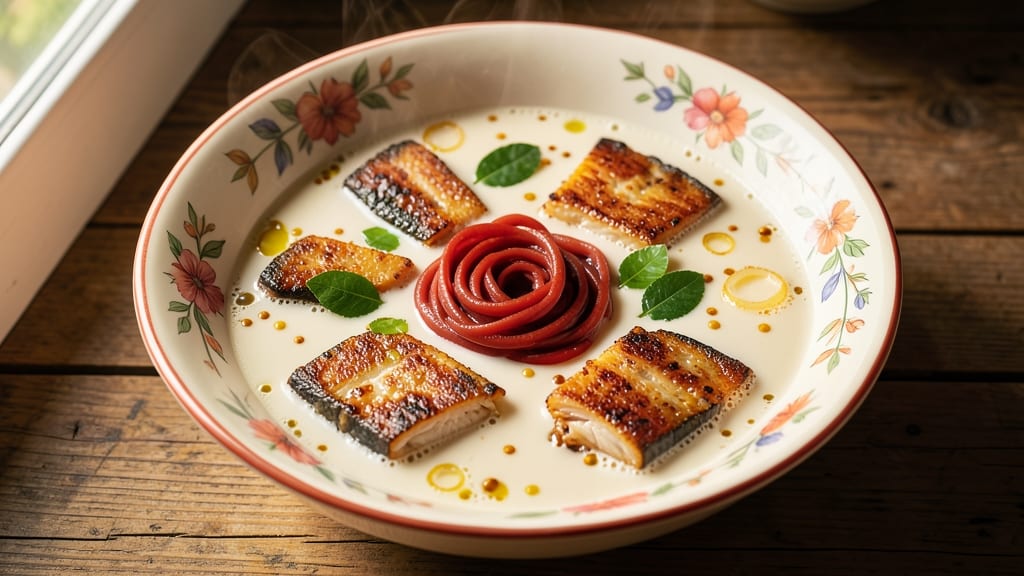
This Bhopla soup recipe transports you to the coastal regions of India with its fragrant blend of tamarind, coconut, and aromatic spices.
The dish begins with fish—traditionally pomfret or mackerel—marinated in mustard seeds and curry leaves, then simmered in a velvety broth infused with tamarind’s tangy depth and coconut’s creamy richness.
What sets Bhopla apart is its balance: the sour tamarind brightens the coconut’s sweetness, while the spices—cumin, coriander, and black pepper—add warmth without overpowering the delicate fish.
The cooking process is methodical yet rewarding: sautéing whole spices until fragrant, slow-simmering the broth to develop layers of flavor, and finishing with fresh coconut milk for a silky texture. Regional variations exist—Goan versions often include kokum for extra tang, while Konkani styles lean heavier on coconut—both equally delicious.
The result is a soup that’s hearty enough for a meal but light enough for any season, with every spoonful offering a symphony of flavors.
By the time you’re done, you’ll have a pot of golden, aromatic Bhopla that’s rich in umami and bright with citrusy notes. The fish remains tender, the broth clings to your spoon, and the spices linger on your palate long after the last bite.
This isn’t just a soup—it’s a taste of home, a dish that pairs beautifully with steamed rice or warm, buttery bread to soak up every last drop of that velvety broth.
Perfect for a cozy dinner or a special occasion, this recipe delivers restaurant-quality results with just a few key ingredients and patience. Let’s bring the coastal flavors of India to your kitchen.
Ingredients for bhopla soup
Coastal India’s aromatic soul in a bowl—just 15 ingredients for velvety tamarind-coconut magic.
| Ingredient | Amount | Notes |
|---|---|---|
| Pomfret or Mackerel 🐟 | 1 lb | Fresh or frozen, cut into pieces |
| Yellow Mustard Seeds 🌶️ | 1 tbsp | Lightly crushed for aroma |
| Curry Leaves 🌿 | ¼ cup | Fresh, packed loosely |
| Fresh Coconut Milk 🥥 | 1 ½ cups | Full-fat for creaminess |
| Tamarind Paste 🍋 | ½ cup | Adjust for sourness preference |
| Coconut Oil 🫒 | 2 tbsp | For sautéing spices |
| Green Chilies 🌶️ | 2 whole | Slit lengthwise, seeds removed |
| Cumin Seeds 🌿 | 1 tsp | Toasted for deeper flavor |
| Coriander Seeds 🌿 | ½ tsp | Lightly toasted |
| Black Peppercorns 🌶️ | ½ tsp | Crushed lightly |
| Onion 🧅 | 1 whole | Finely chopped |
| Garlic Cloves 🧄 | 4 cloves | Minced finely |
| Tomato 🍅 | 1 whole | Chopped, ripe |
| Salt 🧂 | 1 tsp | Adjust to taste |
| Fresh Cilantro 🌿 | ¼ cup | Chopped for garnish |
The fish is non-negotiable—pomfret or mackerel, fresh if possible. Indian grocery stores or specialty markets usually carry these, often frozen. Look for firm, clean-smelling fillets with no fishy odor. If using frozen, thaw overnight in the fridge. The tamarind paste? Indian stores sell it in blocks—soak, strain, and adjust sourness to taste. Coconut milk should be full-fat (none of that watered-down stuff)—Thai Kitchen or Goya brands work well if you can't find fresh. Curry leaves are the secret—Whole Foods or Indian markets carry them fresh in bundles.
No pomfret? Cod or halibut works in a pinch, but texture won’t be identical. Mustard seeds too strong? Swap for 1 tsp ground mustard, but you’ll lose that lovely pop. Fresh coconut milk unavailable? Canned full-fat is fine, just shake well before opening. The green chilies can be omitted if you prefer mild heat, but they add that signature coastal kick. Spices? Toast them in the coconut oil until fragrant—that aroma is everything. No fresh cilantro? Dried works at half the amount, but fresh is best for garnish.
This soup tastes even better the next day as flavors meld. Store in an airtight container in the fridge for up to 3 days. Freezes beautifully for 3 months—just thaw overnight in the fridge before reheating. For extra richness, stir in a splash of fresh coconut milk when reheating. Serve with steamed rice or crusty bread to soak up every drop of that velvety broth. Leftovers? Double the batch—it disappears fast.
Why You'll Love This Recipe
- No-Fuss Fish Night: The fish takes 10 minutes to prep—just a quick fry or steam—and the rest? Stirring spices into coconut milk while it simmers. Honestly, I’ve made this on nights when I forgot to thaw anything.
- Tamarind-Tang Magic: That little packet of tamarind paste does all the work—bright, tangy, and just a splash to balance the richness of the coconut. The mustard seeds pop like fireworks, and the curry leaves? They turn this into something that tastes like a hug.
- Leftover Hero: This soup only gets better the next day—flavors meld, and the fish stays moist. I’ve reheated portions for lunch with rice, or even tossed it into a quick dal for extra depth. No sad leftovers here.
- Budget Bright Spot: Fresh coconut milk feels fancy, but it stretches thin here. A single fish fillet feeds four, and the spices cost pennies. Between us, this is my go-to when I need a restaurant-worthy meal without breaking the bank.
Step-by-step instructions for Bhopla soup
Let's create this aromatic tamarind-coconut velouté with tender fish and fragrant spices.
Prepare the Fish and Spice Base
Begin by rinsing the 1 lb pomfret or mackerel and patting it completely dry with paper towels. Cut into 2-inch pieces and set aside. In a small bowl, lightly crush the 1 tbsp yellow mustard seeds with a mortar and pestle or rolling pin—just enough to release their aroma without grinding into powder.
Heat 1 tbsp of the 2 tbsp coconut oil in a heavy-bottomed pot over medium heat. Add the crushed yellow mustard seeds and let them sizzle for about 15 seconds until they begin to pop. Immediately add the 1 tsp cumin seeds and 0.5 tsp coriander seeds, stirring constantly for 30 seconds until fragrant. This quick toasting unlocks their full flavor potential.
Build the Aromatic Foundation
Add the finely chopped 1 whole onion to the pot and sauté for 4-5 minutes until translucent and golden. Stir in the 4 minced garlic cloves and cook for another 30 seconds until the raw garlic smell disappears. This step develops the soup's complex flavor profile.
Next, add the 2 slit green chilies (seeds removed) and the 0.5 tsp lightly crushed black peppercorns. Cook for 1 minute until the chilies soften slightly but retain their vibrant color. This balance of heat and spice creates the signature bhopla flavor.
Develop the Tamarind-Coconut Sauce
Reduce heat to low and stir in the 0.5 cup tamarind paste, breaking up any lumps with a wooden spoon. Let it cook for 2 minutes until the mixture turns glossy and slightly thickened. This step is crucial for balancing the soup's tangy-sweet profile.
Pour in the 1.5 cups fresh coconut milk and bring the mixture to a gentle simmer. Add the chopped 1 whole tomato and the 0.25 cup loosely packed curry leaves. Let everything simmer together for 5 minutes, allowing the flavors to meld and the curry leaves to infuse their distinctive aroma.
Cook the Fish to Perfection
Add the fish pieces to the pot and gently stir to coat them with the spiced coconut mixture. Sprinkle with the 1 tsp salt and adjust the heat to maintain a gentle simmer. Cook for 8-10 minutes until the fish is opaque and flakes easily with a fork, indicating perfect tenderness.
Here's the thing—don't overcook the fish. It should be just firm enough to hold its shape but still flake apart easily. The coconut milk's richness will keep it moist even if cooked a minute or two longer than needed.
Finish and Serve
Remove the pot from heat and let the soup rest for 5 minutes. This resting period allows the flavors to settle and the fish to absorb the aromatic broth. Stir in the 0.25 cup chopped fresh cilantro just before serving to brighten the dish with fresh herbal notes.
Ladle the bhopla soup into bowls and serve immediately while still steaming hot. The perfect bowl should have tender fish pieces floating in a velvety coconut-tamarind sauce, with a balance of tangy, spicy, and creamy flavors in every spoonful. Garnish with additional curry leaves if desired for extra aroma.
Pro Tips For Making Bhopla Soup
- Bloom the Mustard: Toast the yellow mustard seeds in dry oil over medium-low heat until they just start popping—about 30 seconds. I used to crank the heat too high and end up with burnt bits that ruin the whole dish. The moment they smell nutty and aromatic is when you add curry leaves.
- Salt the Fish First: Rub the pomfret or mackerel with half the total salt and let it sit for 10 minutes before cooking. This ensures the fish absorbs flavor evenly and doesn’t turn rubbery in the coconut milk. (Yes, even if you’re impatient like me.)
- Simmer Tamarind Slow: Dissolve tamarind paste in warm water first, then strain out the fibers—this prevents grainy texture. Add it to the broth after the fish is cooked, and simmer for only 2-3 minutes. Any longer, and the soup turns overly sour.
- Finish with Coconut Heat: Warm the fresh coconut milk separately before adding it to the soup—never cold. Stir in the last 30 seconds of cooking to keep it creamy. (Cold milk curdles, and no one wants that in their bhopla.)
Regional styles of this dish
Goan Coastal Style
The Goan version of Bhopla is all about bold flavors and a touch of kokum, which adds a unique tartness that brightens the coconut. I like to use 2 tbsp grated kokum along with the tamarind paste—this combination creates a complex tang that cuts through the richness.
Goans also often add 1 tsp fennel seeds to the spice blend for a subtle anise-like note that pairs beautifully with the fish. The broth tends to be slightly thinner here, so I adjust by adding ½ cup water during the final simmer. 🌊
Konkani Simmered Style
Konkani Bhopla is richer and creamier, with a heavier emphasis on coconut—sometimes even using ½ cup grated fresh coconut in addition to the coconut milk. I've found that adding 1 tsp dried kokum powder (instead of fresh) works well if you can't find the fruit.
The Konkani version often includes 1 tsp turmeric in the spice base for color and earthiness, and the fish is typically cooked slightly longer to absorb more of the flavorful broth. This style feels more like a thick stew than a soup. 🥥
Mangalorean Spiced Variation
From the Mangalore region, this version incorporates 1 tsp black cardamom pods cracked open and toasted with the mustard seeds for a smoky depth. I also add 2 tbsp tamarind pulp (instead of paste) for a more fibrous texture that adds body to the broth.
Mangalorean Bhopla often uses kingfish instead of pomfret, which holds up better to the longer cooking time. The key here is to simmer the fish in the broth for 12-15 minutes until it's falling apart—this creates a more decadent, almost curry-like texture. 🌶️
Kerala Coconut-Heavy Version
In Kerala, Bhopla becomes almost like a coconut curry with fish chunks. The recipe calls for 1 cup fresh coconut milk (instead of 1.5 cups) but adds ½ cup coconut milk powder> to thicken the broth significantly.
I love adding 1-inch ginger julienne> sautéed with the onions for extra warmth. The fish is cooked separately in the spiced coconut mixture and then combined at the end, creating a more luxurious presentation. This version pairs perfectly with appam> (Kerala's coconut-rice pancakes). 🌿
Nutrition facts
Frequently asked questions
What type of fish works best for bhopla soup?
Traditionally, pomfret or mackerel are used for their delicate, flaky texture that holds up well in the coconut broth. If unavailable, cod or halibut work as substitutes, though they may have slightly different textures. Avoid firm white fish like tilapia, as they can become dry when simmered in the rich broth.
Can I make bhopla soup without tamarind?
Yes, but the dish will lose its signature tangy brightness. Substitute with ½ cup lemon juice or lime zest for acidity, or use 1 tbsp vinegar (apple cider works best). For a closer flavor, try kokum pulp if available—it provides a similar citrusy depth without overpowering the coconut.
How do I adjust the spice level in bhopla?
Start by removing seeds from green chilies for milder heat, or omit them entirely. For extra kick, add ½ tsp red chili powder or a pinch of cayenne to the spice base. Remember: the coconut milk's richness balances heat, so don't be afraid to experiment—you can always adjust while simmering.
Why does my bhopla broth look too thin?
The coconut milk should create a velvety texture, but if it's watery, reduce heat and simmer uncovered for 5-10 minutes to thicken naturally. For instant thickening, mix 1 tsp cornstarch with 2 tbsp water, stir into the broth, and simmer for 2 minutes. Avoid over-simmering—it can break down the fish's texture.
What's the best way to store leftovers?
Cool the soup completely, then store in an airtight container in the fridge for up to 3 days. For longer storage, freeze for 3 months. Thaw overnight in the fridge and reheat gently on low heat, stirring in a splash of coconut milk to restore creaminess. Never reheat directly from frozen.