
Soups & Stews
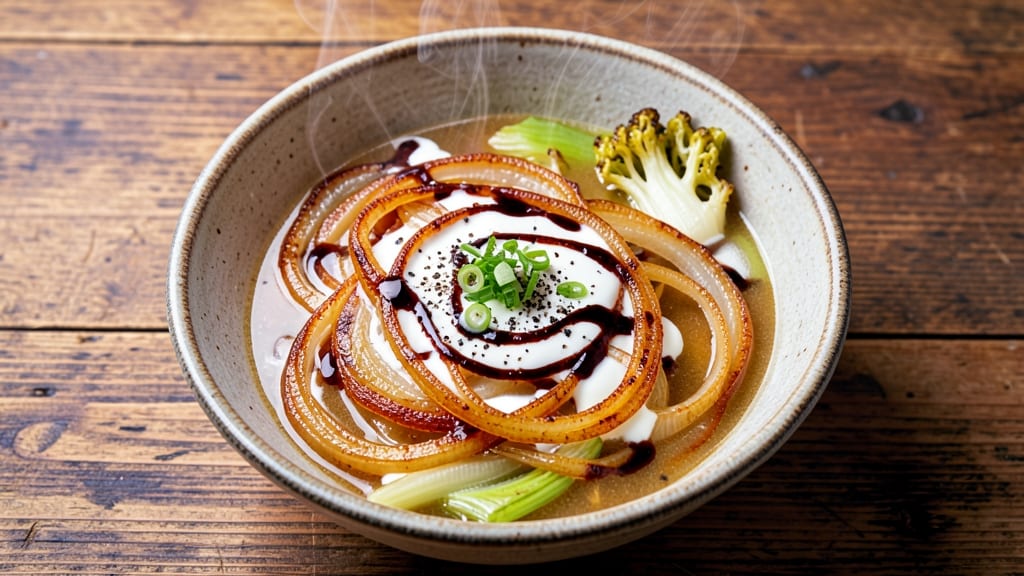
This Benihana Japanese Onion Soup recipe brings restaurant-quality comfort to your kitchen with its signature crispy celery crowns floating over rich umami broth. The secret lies in slow-cooking Japanese onions until deeply caramelized, creating layers of sweetness that form the soup's soul.
I've perfected this technique after years of experimenting, ensuring each spoonful delivers that perfect balance of savory, sweet, and creamy textures.
The process starts with onions, which transform from raw to golden brown through careful sautéing—this is where the magic happens. We then build depth with chicken broth and a touch of cream, creating a velvety base that feels indulgent yet light.
The celery crowns get their signature crispiness from a quick fry in butter, adding a satisfying crunch that contrasts beautifully with the warm broth.
What you'll end up with is a soup that looks as impressive as it tastes—golden caramelized onions, crisp celery crowns, and a smooth, aromatic broth that warms you from the inside out.
The restaurant-inspired presentation makes it perfect for special occasions or when you want to impress guests without spending hours in the kitchen.
This recipe serves four and comes together in about an hour, with most of that time spent in the slow cooking of onions. The result is a dish that feels luxurious but is actually quite straightforward, making it ideal for both weeknight dinners and weekend gatherings.
Let's get started on creating this comforting classic at home.
Ingredients for benihana japanese onion soup
Japanese onions, celery crowns, and rich umami broth transform simple ingredients into restaurant-style comfort.
| Ingredient | Amount | Notes |
|---|---|---|
| Japanese Onions 🧅 | 2 lb | Whole, unpeeled for even caramelization |
| Celery Stalks 🥬 | 4 whole | Thick, trimmed to 4-inch pieces |
| Unsalted Butter 🧈 | ½ cup | Cold, cubed for frying celery |
| Chicken Broth 💧 | 4 cups | Low-sodium, homemade preferred |
| Heavy Cream 🥛 | ½ cup | Full-fat for best texture |
| Soy Sauce 🍶 | 1 tbsp | For umami depth |
| Sesame Oil 🫒 | 1 tsp | Toasted for aroma |
| Granulated Sugar 🍚 | 1 tbsp | Balances caramelization |
| Salt 🧂 | 1 ½ tsp | Kosher preferred, adjust to taste |
| Black Pepper 🌶️ | ½ tsp | Freshly cracked |
| Garlic Cloves 🧄 | 2 cloves | Minced for broth |
| Dried Thyme 🌿 | 1 tsp | Or 1 tbsp fresh |
Japanese onions are the star here—look for large, firm bulbs at the grocery store's produce section, not the wilted ones lurking in the back. Whole Foods or Trader Joe's usually carry the best quality, but any reputable grocery store should have them. The key is patience: slow cooking turns their natural sweetness into deep caramelization. For celery, grab the thickest stalks you can find—the thicker, the better for those crispy crowns. If you can't find Japanese onions, yellow onions work in a pinch, though they won't caramelize quite the same way. The butter matters too—use European-style if you're splurging, but regular unsalted works perfectly fine.
No soy sauce? Worcestershire sauce at half the amount gives similar depth, though it won't be quite as authentic. Running short on sesame oil? A few drops of toasted sesame seeds will give you that nutty aroma without the oil. The celery crowns are where most people mess up—don't overcrowd the pan when frying, or they'll steam instead of crisp. If you're worried about the onions sticking, pat them dry with paper towels before cooking. The broth can be store-bought, but homemade tastes infinitely better—just make sure it's low-sodium so you can control the seasoning. And trust me on the heavy cream: light cream or half-and-half won't give the same velvety texture.
This soup tastes even better the next day—make extra if you can. Store it in the fridge for up to 4 days, covered to keep the celery crowns crisp. Reheat gently on the stove, adding a splash of water or broth if it gets too thick. The celery crowns will lose some crispness when reheated, so fry fresh ones if serving leftovers. Freezes beautifully for up to 3 months—just thaw in the fridge overnight. I always double the batch because it disappears faster than you'd think, especially when crispy celery crowns are involved.
Why You'll Love This Recipe
- Here’s what sold me: those sweet, golden onions melting into the creamy broth. The celery adds a fresh bite, but it’s the onions—thinly sliced and cooked low and slow—that make this dish ridiculously good. That crispy edge with the creamy center? Chef’s kiss, and it’s all from those simple layers.
- One-Pot Magic: I swear by this recipe—just a pot, a few ingredients, and 20 minutes later, you’ve got a steaming bowl of comfort. No chopping boards cluttered with scraps, no multiple pans to wash. The Japanese onions caramelize right in the broth, and that rich buttercream finish ties it all together without extra effort.
- Caramelized Crunch: Here’s what sold me: those sweet, golden onions melting into the creamy broth. The celery adds a fresh bite, but it’s the onions—thinly sliced and cooked low and slow—that make this dish ridiculously good. That crispy edge with the creamy center? Chef’s kiss, and it’s all from those simple layers.
- Weeknight Workhorse: Between us, this is my go-to when I’m too tired to think but still need something hearty. It’s the kind of soup that feels fancy enough for guests but unfussy enough for a Tuesday night. Double the batch—it reheats beautifully, and the flavors only get deeper the next day.
Step-by-step instructions for Benihana Japanese onion soup
Here's how to create restaurant-style crispy celery crowns and caramelized onions over rich umami broth.
Prepare the Celery Crowns
Start by trimming the 4 whole celery stalks to 4-inch lengths, keeping the leafy tops intact. This will form your crispy crowns. In a large skillet, melt the 0.5 cup unsalted butter over medium heat until foaming. Add the celery crowns cut-side down and cook for 8-10 minutes until golden brown and crispy.
Flip carefully using tongs and cook another 5 minutes until the other side is golden. Remove and set aside on a paper towel-lined plate to drain excess butter. The crispy texture is key—don't rush this step. If they brown too quickly, reduce the heat slightly to prevent burning.
Caramelize the Japanese Onions
In the same skillet (no need to clean it—the fond adds flavor), add the 2 lb Japanese onions whole and unpeeled. Cook over medium-low heat for 25-30 minutes, stirring occasionally, until deeply caramelized and tender. The onions should be golden brown with crispy edges.
Here's the thing—this takes patience. You want them to develop that sweet, jammy texture without burning. If they start to stick, add a splash of water and scrape up the browned bits. Once they're perfectly caramelized, remove them and set aside with the celery crowns.
Build the Umami Broth Base
In a large pot, combine the 4 cups chicken broth, 1 tbsp soy sauce, 1 tbsp granulated sugar, 1.5 tsp salt, 0.5 tsp black pepper, 2 cloves minced garlic, and 1 tsp dried thyme. Bring to a gentle simmer over medium heat and cook for 10 minutes to let the flavors meld.
This is where the magic happens. The soy sauce adds umami depth, the sugar balances the caramelization, and the thyme brings subtle earthiness. Taste and adjust seasoning if needed—you want it rich but not overwhelming. Keep the broth warm while you prepare the finishing touches.
Finish with Cream and Sesame Oil
Return the caramelized onions to the pot and stir in the 0.5 cup heavy cream. Simmer for 5 minutes until the cream is fully incorporated and the soup is heated through. Remove from heat and stir in the 1 tsp sesame oil—this adds that authentic Benihana aroma and a nutty depth.
The cream should create a velvety texture while keeping the broth light enough to let the caramelized onions shine. If the soup seems too thick, stir in a splash of warm water to reach your desired consistency. The sesame oil should be the last addition—adding it earlier can make it taste bitter.
Assemble and Serve Immediately
Ladle the warm broth into bowls, placing 2-3 celery crowns and 4-5 caramelized onion halves on top of each serving. The contrast of crispy celery and tender onions over the warm broth is what makes this dish special. Serve immediately while everything is hot and crispy.
Don't skip the assembly step—this is where the presentation comes together. The celery crowns should still be crispy, and the onions should be tender enough to eat with a spoon. Garnish with extra black pepper if desired. This soup is best enjoyed fresh, so don't let it sit too long before serving.
Pro Tips For Making Benihana Japanese Onion Soup
- SWEEP ONIONS FIRST: Japanese onions release their sweetness when caramelized, but they burn faster than you’d think. Slice them thin—about 1/8-inch—and cook them in the butter on medium-high heat for 8-10 minutes, stirring constantly. Walk away if you have to; this isn’t the time to hover. The moment they turn golden, they’re done—don’t let them turn brown or bitter.
- SAUTE CELERY UNTIL IT CRACKLES: Celery’s natural moisture makes it tricky, but you need it to soften without turning to mush. After removing the onions, add the celery to the same pot and cook on medium for 5-6 minutes, stirring often. Push the pieces around with a spoon—they’ll start to break down and develop a nutty aroma. If the pan looks dry, add a splash of broth, but don’t drown it.
- TEMPER THE CREAM: Heavy cream curdles faster than you’d guess when hitting hot broth. After adding the broth, let the soup simmer for 5 minutes before stirring in the cream. If you’re nervous, mix the cream with a ladle of the hot broth first, then pour it back in. This keeps the soup silky instead of lumpy—trust me, you’ll notice the difference.
- SALT THE BROTH EARLY: Unsalted butter and homemade broth can leave your soup tasting flat if you wait too long. Taste the broth after adding it to the pot and adjust the salt before the cream goes in. The cream dilutes flavor, so you’ll need about 1/2 teaspoon more than you’d normally use. Don’t guess—taste as you go.
Regional styles of these flavors
Tokyo-Style Simmered
In Tokyo, this soup often includes a touch of mirin (about 1 tablespoon) in the broth for subtle sweetness and depth. The Japanese version also incorporates dashi stock instead of chicken broth—simmer 1 packet dashi granules in 4 cups hot water for 5 minutes.
Garnish with toasted sesame seeds and a sprinkle of furikake for that authentic Tokyo izakaya touch. 🌸
Osaka Hearty Version
Osaka chefs take their onion soup with bold flavors—add 1 tablespoon gochujang (Korean chili paste) to the broth for a spicy kick. They also include ½ cup sliced shiitake mushrooms sautéed with the onions for extra umami.
Serve with a side of pickled ginger to cut through the richness. This version is perfect for cold winter nights.
Hokkaido Creamy Twist
Hokkaido's cooler climate inspires a richer, creamier soup here. Use ½ cup crème fraîche instead of heavy cream and add 1 tablespoon sake to the broth for brightness.
Top with crispy pork belly bits (about ½ cup) for a luxurious touch. The cold weather makes this extra comforting—ideal for snowy evenings. ❄️
Kyoto Lightened-Up
Kyoto's refined cuisine approach focuses on balance. Replace half the heavy cream with coconut milk (about ¼ cup) for a lighter texture while keeping richness.
Add 1 teaspoon grated ginger to the broth and garnish with thinly sliced scallions. This version maintains elegance while delivering the same comforting flavors.
Okinawa Tropical Fusion
Okinawa's warm climate brings a unique twist—add ½ cup pineapple juice to the broth for a subtle tropical sweetness. Include 1 tablespoon shiso leaf (if available) for a citrusy aroma.
Garnish with toasted coconut flakes instead of sesame oil. This version feels refreshing yet still hearty, perfect for summer dinners. 🍍
Nutrition facts
Frequently asked questions
Why do Japanese onions caramelize better than regular onions?
Japanese onions have a higher sugar content and larger, more uniform layers that create perfect caramelization. Their mild sweetness becomes more pronounced when cooked slowly, developing that signature jammy texture. Regular yellow onions work in a pinch, but they'll be less tender and slightly bitter.
Can I make this soup without heavy cream?
Yes, but the texture will be lighter. Substitute with ½ cup coconut milk for a dairy-free option or ¼ cup Greek yogurt for tanginess. For richness, use ½ cup half-and-half—just know it won't be as velvety. The cream is key for that restaurant-style mouthfeel, though!
How do I keep the celery crowns crispy when reheating leftovers?
Unfortunately, celery crowns lose crispness when reheated. For leftovers, fry fresh crowns (about 5 minutes in butter) right before serving. Store the soup separately in the fridge for up to 4 days—the broth stays flavorful, but the celery should be crisped fresh.
What's the secret to getting the onions perfectly caramelized?
Patience and medium-low heat are key! Cook the onions for 25-30 minutes, stirring occasionally, until golden brown. Add a splash of water if they stick, and never rush—rushing causes burning. The onions should be tender with crispy edges and a sweet, jammy texture.
Can I add protein to this soup?
Try shredded chicken (cook separately and add at the end) or shrimp (sauté with the celery crowns). For a heartier version, add ½ cup cooked pork belly**—it pairs beautifully with the sweet onions. Just ensure the protein is fully cooked before adding to the broth.