
Soups & Stews
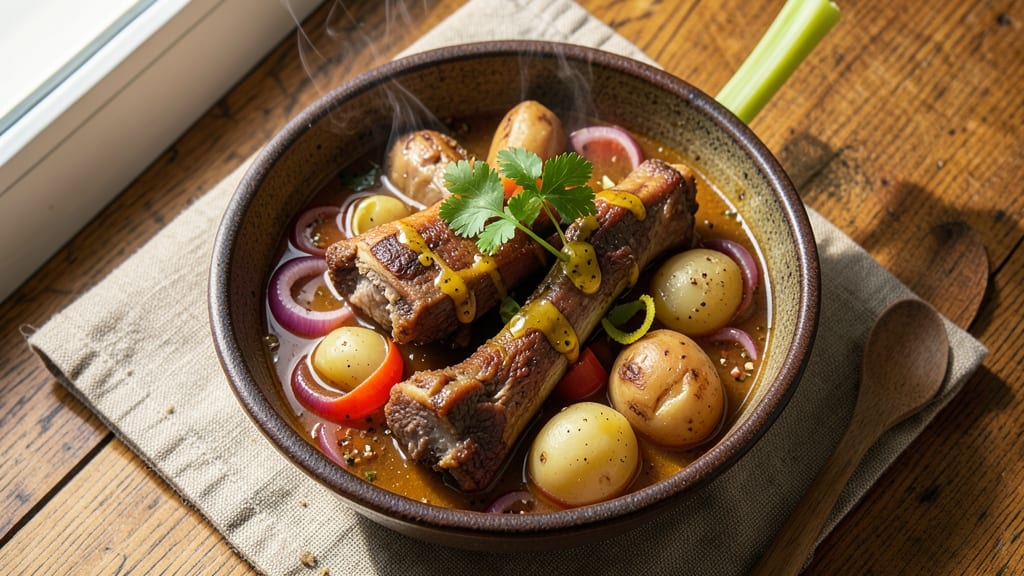
This beef bone stew soup recipe unlocks the deep, velvety richness of marrow and bones—transforming tough cuts into melt-in-your-mouth perfection. The secret lies in slow cooking, where collagen dissolves into a gelatinous broth that coats every bite, while vegetables soften into sweet, tender morsels.
Whether you use a Dutch oven, pressure cooker, or Instant Pot, this method delivers restaurant-quality depth without shortcuts.
The foundation starts with bones—beef marrow bones or knuckle cuts—roasted until caramelized for concentrated flavor. Aromatics like onions, garlic, and celery form the base, while hardy vegetables (carrots, potatoes, celery) add texture and sweetness.
The slow simmer (4-6 hours) transforms these humble ingredients into a rich, umami-packed soup that tastes even better the next day.
What sets this stew apart is the texture contrast: fork-tender beef, al dente vegetables, and a broth so thick it clings to spoons. The marrow bones infuse the liquid with deep, savory notes, while herbs like thyme and bay leaves add aromatic complexity.
Serve with crusty bread to soak up every last drop or pair with pickled vegetables for brightness.
This recipe bridges tradition and convenience—use pre-made stock for speed or build your own bouillon for maximum flavor. The result? A hearty, comforting stew that feels like a hug in a bowl, perfect for chilly evenings or meal prep. Let’s get started on creating this deeply satisfying dish.
Ingredients for beef soup bone stew
Sixteen ingredients transform tough bones into velvety, umami-rich stew perfection.
| Ingredient | Amount | Notes |
|---|---|---|
| Beef Marrow Bones 🦴 | 3 lb | Kneecaps or knuckles for maximum marrow |
| Yellow Onions 🧅 | 2 whole | Chopped into 1/2-inch pieces |
| Carrots 🥕 | 4 whole | Cut into 2-inch chunks |
| Celery Stalk 🧄 | 4 whole | Cut into 2-inch pieces |
| Garlic Cloves 🧄 | 8 cloves | Smashed for intense flavor |
| Russet Potatoes 🥔 | 3 lb | Cut into 2-inch cubes |
| Tomatoes 🍅 | 4 whole | Roma or vine-ripened, quartered |
| Fresh Thyme 🌿 | 2 sprigs | Or 2 tsp dried thyme |
| Bay Leaves 🍃 | 4 whole | Standard dried leaves |
| Beef Bouillon Cube 🧂 | 2 whole | Knorr or equivalent |
| Dry Red Wine 🍷 | 1 cup | Bold Cabernet or Merlot |
| Olive Oil 🫒 | ½ cup | Extra-virgin for roasting |
| Salt 🧂 | 1 ½ tsp | Diamond Crystal preferred |
| Black Peppercorns 🌶️ | 1 tsp | Freshly cracked |
| Fresh Parsley 🌿 | ¼ cup | Chopped for garnish |
The bones are the heart of this recipe—marrow bones or knuckles from a quality butcher yield the deepest flavor. Local butchers or specialty grocers often carry them fresh, while Costco or Walmart typically stock frozen options. Look for bones with visible marrow channels and minimal surface fat. If using frozen, thaw overnight in the fridge. The bouillon cube acts as a flavor enhancer but can be omitted if using homemade stock. For a more traditional approach, roast the bones at 425°F for 30 minutes before simmering to develop caramelized depth.
No marrow bones? Substitute beef shank cuts (3 lbs) for a slightly different texture, though the gelatinous broth will be less pronounced. Swap red wine for 1 cup beef stock plus 1 tbsp balsamic vinegar to maintain acidity. Fresh thyme is ideal, but dried thyme at one-third the amount works in a pinch. The celery, carrots, and onions form the classic 'holy trinity' base—Trader Joe's or Whole Foods often sell pre-cut mirepoix mixes for convenience. For a vegetarian adaptation, replace bones with mushrooms and extra vegetable stock, though the texture will differ significantly.
This stew develops richer flavors over time—reheat gently on low heat to preserve texture. Store in airtight containers for 5-6 days in the refrigerator or freeze for up to 3 months. The broth thickens as it cools, so add 1/4 cup warm water when reheating if needed. For meal prep, portion into individual containers with reserved broth on top to maintain moisture. The bones can be simmered separately for 24 hours before adding vegetables, creating a concentrated base that reduces cooking time.
Why You'll Love This Recipe
- Minimal Chopping Required: I swear by the "mirepoix shortcut"—just rough-chop onions, carrots, and celery into half-inch pieces. No fancy dicing, no crying over onions (okay, maybe a little), and the bones do all the flavor work while you sip your coffee.
- Rich Without the Effort: That marrow bone? It’s the secret weapon—crack it open mid-simmer, and suddenly you’ve got a silky, umami-packed broth without hours of simmering. The garlic? Toasted in the pot first, so it’s deep, nutty, and actually flavorful, not just a background player.
- Leftovers That Taste Better: Between us, this stew gets better the next day. The flavors meld into this perfect harmony, and reheating it? Just a splash of water, 10 minutes on low heat. My freezer’s always stocked because I can’t resist grabbing a bowl when I walk past.
- Budget-Friendly Bone Wisdom: You’re paying for the bones, but they stretch this recipe into weeks of meals. A single beef marrow bone feeds four, and the veggies? Cheap, seasonal staples. Honestly, it’s one of those recipes where you feel like you’re eating gourmet, but your wallet’s high-fiving you.
Step-by-step instructions for beef bone stew soup
Transform humble bones into a velvety, marrow-rich masterpiece with this slow-cooked technique.
Roast the Bones for Deep Flavor
Preheat your oven to 425°F and position a rack in the middle position. Place the 3 lb beef marrow bones on a rimmed baking sheet lined with parchment paper. Drizzle with 0.25 cup olive oil and rub to coat evenly, ensuring the bones are well-oiled on all sides.
Roast for 30 minutes, turning occasionally, until the bones develop a deep golden-brown crust. This step caramelizes the natural sugars and releases collagen from the bones, which will later dissolve into a rich, gelatinous broth. The aroma alone will transform your kitchen into a French bistro.
Real talk: Don't skip this roasting step. Cold bones won't render their marrow properly, and you'll miss out on that unctuous richness that defines a true bone marrow stew. If your oven runs hot, reduce the temperature to 400°F to prevent burning.
Sauté the Aromatic Vegetables
While the bones roast, prepare your mirepoix by dicing the 2 whole yellow onions into ½-inch pieces, cutting the 4 whole carrots and 4 whole celery stalks into 2-inch chunks, and smashing the 8 cloves garlic with the flat side of your knife.
Heat 0.25 cup olive oil in a large Dutch oven over medium heat. Add the onions, carrots, and celery, cooking for 8-10 minutes until softened and beginning to caramelize. Add the smashed garlic and cook for another 1 minute until fragrant but not browned. This foundational step builds the stew's complex flavor base.
Here's the thing—if your vegetables start to stick before caramelizing, reduce the heat slightly. You want them to develop color and sweetness, not burn. The goal is a deep, aromatic foundation that will infuse the entire stew.
Build the Broth with Wine and Bouillon
Remove the roasted bones from the oven and carefully transfer them to the Dutch oven with the sautéed vegetables. Add the 1 cup dry red wine and scrape up any browned bits from the bottom of the pan—they're packed with flavor. Let the wine simmer for 3-4 minutes until reduced by half.
Crush the 2 whole beef bouillon cubes between your palms to dissolve them quickly in the pot. Add 4 whole bay leaves and 2 sprigs fresh thyme, then pour in enough water to cover the bones by about 2 inches. The liquid should reach roughly 8 cups total at this point. Bring to a gentle simmer over medium-low heat.
This is where the magic begins. The wine's acidity helps break down the bones, while the bouillon cubes provide an umami depth. Let the broth simmer uncovered for 1 hour, skimming off any foam that rises to the surface. This initial simmer extracts the marrow and collagen from the bones, creating the stew's signature richness.
Add Potatoes and Tomatoes for Heartiness
Cut the 3 lb russet potatoes into 2-inch cubes and quarter the 4 whole tomatoes. Add these to the simmering broth along with the 1.5 tsp salt and 1 tsp freshly cracked black peppercorns. Stir gently to combine, ensuring the potatoes are fully submerged in the liquid.
Return the stew to a gentle simmer and cook uncovered for 1.5 hours. You'll know it's ready when the potatoes are fork-tender and the broth has thickened slightly from the dissolved marrow and collagen. The tomatoes should break down into a silky consistency, adding natural acidity to balance the richness.
Don't be tempted to rush this step. The potatoes need time to absorb the deep flavors of the broth while maintaining their structure. If the liquid reduces too quickly, add ½ cup hot water to maintain the proper consistency.
Finish and Serve with Fresh Herbs
Remove the stew from heat and let it rest for 15 minutes. This resting period allows the flavors to meld and the broth to thicken slightly as it cools. Discard the bay leaves and thyme sprigs, then taste and adjust the seasoning if needed.
Ladle the stew into serving bowls, garnishing each portion with 0.25 cup chopped fresh parsley. The parsley not only adds a pop of color but also brightens the rich flavors with its fresh, slightly peppery note. Serve immediately with crusty bread to soak up every last drop of that luxurious marrow-infused broth.
Each spoonful should deliver a perfect balance of tender vegetables, meaty bone fragments, and velvety broth. The potatoes should be creamy yet hold their shape, and the tomatoes should contribute a subtle tang that cuts through the richness. This is comfort food at its finest—deep, satisfying, and packed with umami.
Pro Tips For Making Beef Soup Bone Stew
- BLANCH BONES FIRST: Skip the raw bone smell by blanching marrow bones in boiling water for 5 minutes before adding to the pot. I learned this the hard way—raw bones add a bitter edge that even long simmering can’t fully erase. (And yes, you’ll need to refresh the water after blanching.)
- CHAR ONIONS UNTIL DARK: Cook sliced onions in the pot until they’re deep golden, almost caramelized, before adding anything else. I used to rush this step, and the soup never had that rich, sweet depth. A splash of water can help deglaze later if they stick—just don’t walk away.
- PEEL CARROTS AFTER COOKING: Toss whole carrots in the pot unpeeled, then peel them after they’re tender. The skin softens beautifully and adds subtle sweetness without extra work. (Pro move: Score the bottoms so they don’t roll away while simmering.)
- SIMMER LOW AND LONG: Keep the heat at a bare simmer—tiny bubbles, maybe 180°F (82°C)—and don’t rush it. I’ve seen people speed this up, and the bones release less collagen, leaving the broth watery. Three hours minimum, four if you can swing it. Patience here makes all the difference.
Creative variations of this recipe
French Bouillon Style
Transform this stew into a classic French bouillon by using chicken feet alongside beef marrow bones for extra gelatin. Add 1 cup pearl barley with the potatoes for a heartier texture, and finish with 1 tbsp Dijon mustard and 2 tbsp crème fraîche per serving.
Serve with baguette slices and a side of quick-pickled red onions for brightness. 🍷
Asian Tan Tan Men Twist
For a Chinese-inspired tan tan men (bone soup), swap the red wine for 1 cup Shaoxing wine and add 1-inch ginger slices and 1 star anise pod during the initial simmer.
Include bok choy and shitake mushrooms with the potatoes, and finish with 1 tbsp soy sauce and 1 tsp sesame oil before serving. Garnish with green onions and cilantro for freshness. 🌶️
Pressure Cooker Shortcut
Cut cooking time in half by using an Instant Pot! After roasting the bones, sauté the aromatics, then add everything except potatoes and tomatoes. Cook on high pressure for 60 minutes, then add potatoes and tomatoes for an additional 15 minutes on high pressure.
Natural release for 10 minutes, then finish with fresh herbs. This method delivers 90% of the flavor in 1/3 the time. ⚡
Vegetarian Adaptation
Replace beef bones with 3 lbs portobello mushrooms and 1 lb king oyster mushrooms for umami depth. Use vegetable bouillon cubes and add 1 tbsp miso paste when combining liquids.
Include extra carrots, celery, and potatoes to maintain heartiness. The texture will differ, but the rich, savory broth remains satisfying. 🌱
Spicy Cajun Kick
Boost heat by adding 1 tbsp Cajun seasoning (like Tony Chachere's) with the bouillon cubes, plus 1-2 drops of hot sauce (like Crystal or Tabasco) when serving.
Include smoked paprika and 1 diced jalapeño with the tomatoes. Serve with cornbread and collard greens for a full Southern spread. 🔥
Slow Cooker Simplicity
Transfer the roasted bones and sautéed vegetables to a 6-quart slow cooker, add the wine, bouillon, and water, then cook on low for 8 hours or high for 5 hours.
Add potatoes and tomatoes during the last 1.5 hours of cooking. This hands-off method is perfect for busy weeknights while delivering deep, developed flavors. 💫
Nutrition facts
Frequently asked questions
Can I use regular beef bones instead of marrow bones?
Yes, but you'll miss out on that signature marrow richness. For the best results, use beef knuckle bones or shank cuts—they contain more collagen and fat that render into flavorful broth. If you only have regular bones, add 1 extra cup of beef stock to compensate for less gelatin. The texture will be slightly different but still delicious.
How do I prevent the stew from getting too watery?
Start with the right liquid ratio—cover bones by 2 inches of water initially. If it gets too thin, simmer uncovered for 10-15 minutes to reduce naturally. For extra thickness, mash 1 potato against the pot sides to release starch. Pro tip: Add vegetables in stages—potatoes last for creaminess, not first for absorption.
What's the best way to reheat leftover stew?
Always reheat gently on low heat or in a microwave with a lid to preserve texture. For stovetop, use medium-low heat and add 1-2 tbsp water if needed. Microwave in 1-minute intervals, stirring between each. Never boil—this breaks down the gelatinous broth and makes vegetables mushy.
Can I make this stew in a pressure cooker?
After roasting bones and sautéing aromatics, add everything except potatoes and tomatoes. Cook on high pressure for 60 minutes, then add potatoes and tomatoes for 15 more minutes. Do a natural release for 10 minutes before opening. This cuts cooking time by 75% while keeping all the rich flavors intact.
Why does my stew taste bland after simmering?
Blandness usually means insufficient seasoning or underdeveloped flavor base. Boost umami by adding 1 tbsp soy sauce or 1 tsp fish sauce (optional) during the final 30 minutes. For depth, roast the bones longer (40 minutes) or add 1 extra bouillon cube. Taste as you go—stews build flavor gradually, so adjust salt in stages.