
Soups & Stews
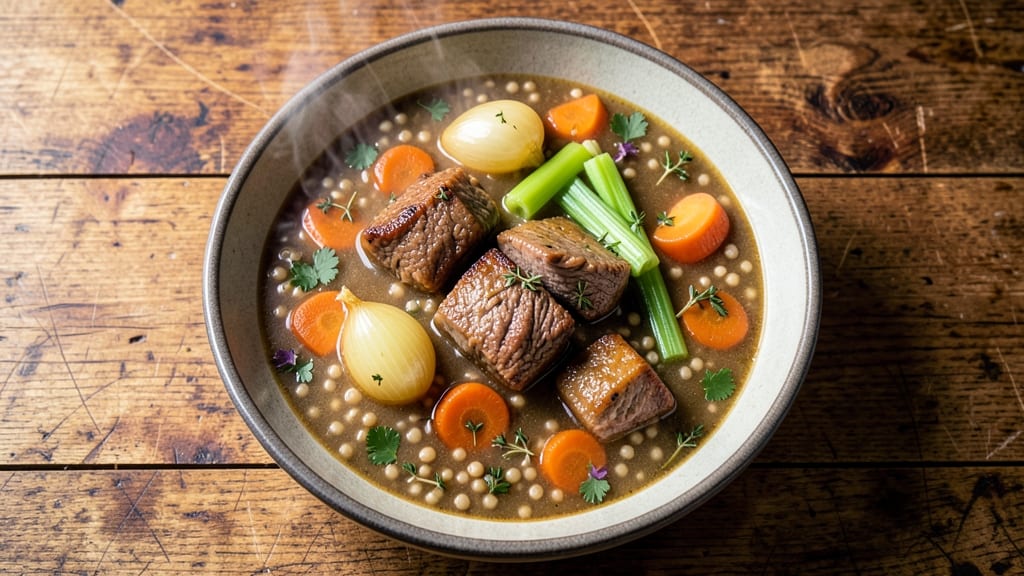
The rich, hearty flavors of this beef barley soup recipe no tomatoes create a comforting bowl that warms you from the inside out. 💛 Simmered low and slow, tender beef and chewy barley develop deep, savory notes that define classic comfort food.
This version skips tomatoes entirely, relying instead on aromatic vegetables and herbs to build complexity.
What sets this recipe apart is the balance between simple ingredients and professional technique. You'll start with a flavorful base of onions, carrots, and celery—what chefs call a mirepoix—that forms the foundation for hours of simmering.
The beef, cut into chunks, becomes fork-tender while absorbing the broth's rich flavors, and the barley transforms from firm to perfectly chewy.
By the time it's done, you'll have a steaming bowl of soup with layers of texture and depth—tender beef that melts at the first bite, hearty barley that holds its shape, and a broth so flavorful it tastes like it's been simmering all day.
The aroma alone will have everyone gathering around the table, and each spoonful delivers that satisfying combination of savory, earthy, and slightly sweet notes.
Perfect for chilly evenings, meal prep, or feeding a crowd, this soup scales beautifully while maintaining its balance of flavors. The slow cooking process means it tastes even better the next day, making it ideal for busy schedules.
Let's get started with the recipe that will become your new weeknight staple.
Ingredients for beef barley soup recipe no tomatoes
Six ingredients build the foundation, while aromatic vegetables and herbs create the depth of this classic beef barley soup.
| Ingredient | Amount | Notes |
|---|---|---|
| Beef Chuck Roast 🥩 | 2 lb | Cut into 1-inch chunks |
| Yellow Onions 🧅 | 2 whole | Medium, chopped |
| Carrots 🥕 | 4 medium | Peeled, cut into chunks |
| Celery Stalks 🧄 | 4 whole | Cut into 1-inch pieces |
| Pearl Barley 🌾 | 1 cup | Rinsed before cooking |
| Beef Broth 💧 | 6 cups | Low-sodium preferred |
| Dry White Wine 🍷 | 1 cup | Substitute with extra broth |
| Fresh Thyme 🌿 | ¼ cup | Or 1 tbsp dried thyme |
| Fresh Parsley 🌿 | ¼ cup | Chopped for garnish |
| Garlic Cloves 🧄 | 4 cloves | Minced for aroma |
| Olive Oil 🫒 | 2 tbsp | Extra-virgin preferred |
| Salt 🧂 | 1 ½ tsp | Kosher or sea salt |
| Black Peppercorns 🌶️ | 1 tsp | Freshly cracked |
| Bay Leaves 🍃 | 2 whole | Removed before serving |
The beef is the heart of this soup—chuck roast delivers the best texture and flavor. Look for well-marbled cuts at your local butcher or grocery store's meat department. If you're buying pre-cut, check for visible fat; it renders out during cooking, adding richness. For the vegetables, organic carrots and celery from the produce section stay fresher longer, but conventional works fine. The pearl barley? Bob's Red Mill or Quaker brands are reliable, but any food-grade barley will do. Fresh thyme and parsley make a difference—Trader Joe's sells affordable bunches that last the week.
No white wine? Substitute with extra beef broth—just add a splash of lemon juice for brightness. Fresh thyme unavailable? Dried works at one-third the amount, but toast it lightly in a dry pan first for deeper flavor. The carrots can be baby carrots if that's what's on hand, but whole carrots stay crunchier. For the garlic, roasted garlic adds a sweet note if you're feeling fancy. The bay leaves? Remove them before serving—they're for flavor, not eating. And if you're prepping ahead, freeze the raw soup mix in portions for quick weeknight meals.
This soup tastes even better the next day—4-5 days in the fridge, 3 months frozen. For freezing, portion into containers with a little headspace to prevent ice crystals. The barley thickens as it cools, so add a splash of broth when reheating. Garnish with fresh parsley right before serving—it brightens up the bowl. Leftovers? Double the batch and freeze half; you'll thank yourself later.
Why You'll Love This Recipe
- One-Pot Magic: I swear by this soup because it’s all in one pot—no fancy gadgets, no extra bowls. Just chop the onions, carrots, and celery (mirepoix, if you’re fancy), toss in the chuck roast, and let it simmer. The barley thickens the broth naturally, so you’re not stuck with a watery mess.
- Rich Without Tomatoes: Here’s what sold me—the deep, savory flavor from slow-cooked beef and caramelized onions without tomatoes. The barley soaks up all the meaty goodness, turning the broth into something hearty and satisfying. (Yes, even on a Tuesday night.)
- Leftovers That Shine: This soup tastes better the next day. I make a big batch on Sundays, and by Wednesday, the flavors have melded into pure comfort. Freeze half for those lazy days when takeout feels like a chore.
- Budget Beef Feast: A chuck roast on sale? That’s my cue to stock up. This recipe stretches one cut of meat into four or five meals—no waste, no guilt. Plus, barley is cheap, and the veggies add bulk without breaking the bank.
Step-by-step instructions for beef barley soup without tomatoes
Transform tough beef chuck into fork-tender perfection with this slow-cooked method.
🔥 Step 1: Sear the Beef for Deep Flavor
Heat the 2 tablespoons olive oil in a large Dutch oven over medium-high heat until shimmering. Working in batches, add the 2 lb beef chuck roast cut into 1-inch chunks and sear for 2-3 minutes per side until deeply browned. This step develops the rich, caramelized crust that forms the flavor base.
Real talk: Don't rush this. You want those chunks to develop a dark mahogany color—this is where all the beefy flavor comes from. Transfer the seared beef to a plate as you work. If your pan gets crowded, reduce to medium heat to prevent steaming instead of browning.
👨🍳 Step 2: Build the Aromatic Base
In the same Dutch oven, add the chopped 2 whole yellow onions, 4 medium carrots cut into chunks, and 4 whole celery stalks cut into 1-inch pieces. Cook for 5-6 minutes, stirring occasionally, until the vegetables begin to soften and the onions turn translucent.
Add the 4 cloves minced garlic and 0.25 cup fresh thyme (stripped from stems) to the pot. Stir for 30 seconds until fragrant—this releases the aromatic oils that will infuse your soup. Here's where it gets good: Pour in the 1 cup dry white wine and scrape up all those browned bits from the bottom of the pot with a wooden spoon. This deglazing captures all the meaty flavor you worked so hard to create.
🥘 Step 3: Simmer the Soup for Tender Beef
Return the seared beef to the pot. Add the 6 cups beef broth, 1.5 teaspoons salt, 1 teaspoon freshly cracked black peppercorns, and the 2 whole bay leaves. Bring to a gentle boil, then reduce heat to low and cover partially. Simmer for 1 hour, skimming any foam that rises to the surface.
After 1 hour, check for doneness by piercing a beef chunk with a fork—it should be tender but not falling apart. If it's still tough, continue simmering for another 30 minutes. Your oven might run hot, so start checking at the 50-minute mark if you're unsure. The soup should be developing a rich, red color from the beef juices.
👨🍳 Step 4: Add Barley and Finish Cooking
Rinse the 1 cup pearl barley under cold water to remove any surface starch, then add it to the soup. Stir gently to distribute the barley throughout. Return the soup to a simmer and cook uncovered for another 30-40 minutes, until the barley is tender and the beef is fork-tender.
You'll know it's ready when the barley has swollen to about double its original size and the soup has thickened slightly from the starch released by the barley. Taste and adjust seasoning—you might need a bit more salt since barley absorbs flavors. The soup should be rich but balanced, with the barley adding a pleasant chewiness that contrasts the tender beef.
🍽️ Step 5: Garnish and Serve
Remove the 2 whole bay leaves before serving. Ladle the soup into bowls and garnish each serving with 1 tablespoon chopped fresh parsley. The parsley adds a bright, fresh contrast to the deep, savory flavors of the soup.
Serve immediately with crusty bread to soak up every last drop of that flavorful broth. The barley will continue to soften slightly as it cools, so don't wait too long before eating. This soup tastes even better the next day as the flavors meld further, but the barley texture will be slightly softer if you reheat it.
Pro Tips For Making Beef Barley Soup Recipe No Tomatoes
- SEAR THE ROAST HARD: I used to sear my chuck roast at medium heat and wonder why it never fell apart. Now I crank the burner to high and let it develop a deep crust—3-4 minutes per side—before even thinking about adding liquid. The Maillard reaction is what turns tough beef into melt-in-your-mouth goodness.
- CUT ONIONS SMALLER THAN YOU THINK: Those thick onion slices? They’ll sit like rocks in your soup. Dice them into ¼-inch pieces instead—small enough to disappear but big enough to add real flavor. (Yes, even if you’re impatient like me, trust the process.)
- SIMMER LOW AND LONG: Barley needs time—at least 45 minutes of gentle bubbling to soften properly. If you rush it, you’ll end up with chewy bits instead of creamy texture. After the initial boil, drop the heat until you’re seeing tiny bubbles, not rolling waves.
- SKIP THE BARLEY RINSE: I used to rinse my pearl barley before cooking, thinking it removed starch. Turns out, that starch is what thickens the soup naturally. Just measure it dry, add it to the broth, and let it work its magic—no extra slurry needed.
Wine and beer pairings for this recipe
Red Wine Classics
For this hearty beef barley soup, a medium-bodied red wine with earthy notes complements the dish beautifully. I reach for a Chianti Classico or Pinot Noir—both have enough acidity to cut through the richness while their red fruit flavors mirror the beef's depth.
Look for a 2018-2020 vintage from Tuscany or Oregon's Willamette Valley for optimal balance. Serve slightly chilled (55-60°F) to enhance the wine's freshness against the warm soup. 🍷
Crisp White Alternatives
If you prefer white wine, a dry Riesling or Sauvignon Blanc works surprisingly well with this tomato-free version. The acidity in these wines prevents the soup's richness from feeling heavy.
I love a German Riesling with its citrus and mineral notes, or a New Zealand Sauvignon Blanc for zesty grapefruit undertones. Chill to 45-50°F for the best contrast. Pro tip: Add a splash of wine to the soup during cooking for extra depth!
Malty Beer Pairings
A dark lager or amber ale bridges the gap between hearty soup and refreshing beer. I gravitate toward Stout (like Guinness) for its roasted malt flavors that echo the barley, or a Belgian Dubbel for its caramel sweetness.
Serve the beer at 45°F to highlight its malt profile. For a lighter option, a pilsner provides crispness that cleanses the palate between spoonfuls. 🍺
Seasonal Cider Twist
In fall and winter, a dry hard cider with apple and spice notes becomes my go-to pairing. Look for French ciders like Domaine Dupont or American ciders with tannins. The cider's slight tartness balances the soup's richness, while its apple undertones complement the barley's nuttiness.
Serve at 50°F—warmer than beer but cooler than wine—to appreciate its complexity. Perfect for cozy gatherings!
Non-Alcoholic Options
Non-drinkers can enjoy sparkling apple cider or ginger beer with this soup. The carbonation cuts through the richness, while ginger's spice echoes the soup's savory depth. For a sophisticated touch, try sparkling water with a squeeze of lemon—it's refreshing and highlights the soup's natural flavors.
I keep a bottle of LaCroix Ginger Beer on hand for quick pairings. 💫
Nutrition facts
Frequently asked questions
Why does the recipe call for rinsing the barley?
Rinsing removes surface starch that can make the barley gummy or clump together during cooking. Pearl barley naturally contains starch that thickens when exposed to moisture, and rinsing prevents a gluey texture in your soup. Just give it a quick rinse under cold water before adding to the pot.
Can I substitute pearl barley with another type?
Pearl barley is ideal for its chewy texture, but you can use wild rice blend or farro instead. For a quicker option, try couscous (cook separately) or quinoa, though the texture will differ. If using farro, reduce cooking time by 10-15 minutes since it cooks faster than pearl barley.
How do I make this soup in a slow cooker?
Brown the beef and sauté the vegetables as directed, then transfer everything to your slow cooker. Add all remaining ingredients and cook on low for 7-8 hours or high for 4-5 hours. The barley will absorb more liquid, so you may need to add ½ cup broth before serving. Stir well and adjust seasoning.
What if my beef is still tough after simmering?
Tough beef usually means it didn't simmer long enough or the cut wasn't tender enough. Try using chuck roast (the best for slow cooking) and extend simmering time by 30-60 minutes. For extra tenderness, add 1 teaspoon Worcestershire sauce or 1 bay leaf to the broth. If all else fails, shred the beef and serve it over the soup.
Can I make this soup ahead of time?
This soup tastes even better the next day! Store in an airtight container in the fridge for 4-5 days or freeze for 3 months. Reheat gently on the stove, adding ½ cup broth if the barley thickens too much. The flavors deepen as it sits, making it perfect for meal prep.