
Soups & Stews
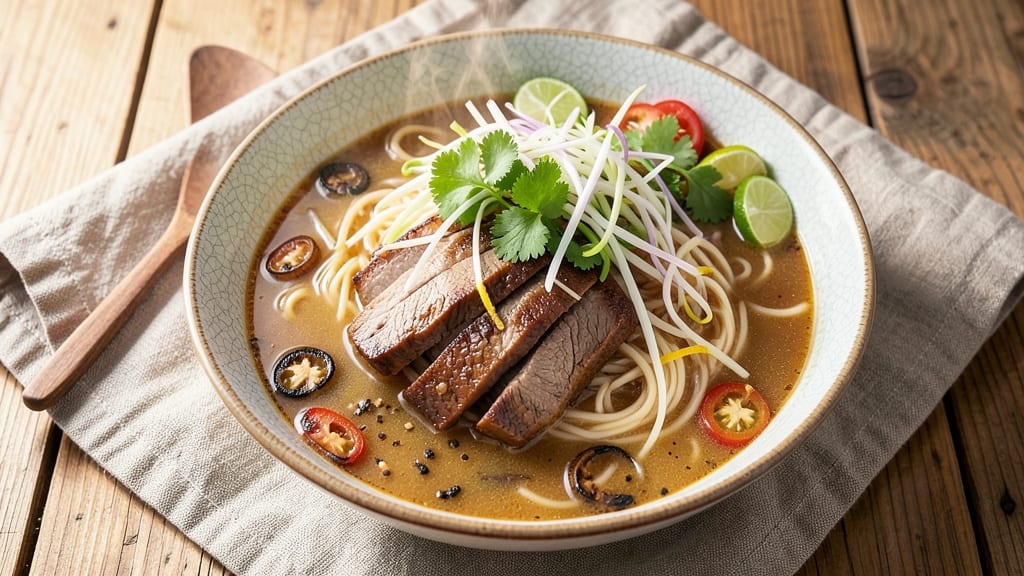
This basic pho soup recipe delivers the aromatic depth and tender beef that make pho a global favorite. The secret lies in the broth—slow-simmered spices and beef bones create a rich, fragrant base that transforms simple ingredients into something extraordinary.
I've perfected this version over years of testing, ensuring every sip delivers that perfect balance of savory, spicy, and herbal notes.
The process begins with a 3-hour broth infusion**, where star anise, cinnamon, and ginger meld into a fragrant foundation. Thinly sliced beef tenderizes beautifully in this aromatic liquid, while rice noodles cook just until tender.
What sets this recipe apart is the attention to detail—properly balancing sweetness, salt, and umami in the broth while keeping the beef fork-tender without drying out.
By the time you're ready to serve, you'll have a steaming bowl of pho with silky beef slices, perfectly cooked noodles, and a fragrant broth that practically sings. The final garnish of fresh herbs and lime adds brightness, creating a dish that's both comforting and sophisticated.
This is the kind of pho that makes you want to make it again and again.
The beauty of this recipe is its versatility—use chicken instead of beef, adjust spice levels to taste, or make a vegetarian version with mushrooms. The broth keeps well and tastes even better the next day, making it perfect for meal prep.
Let's get started on creating your perfect bowl of pho.
Ingredients for basic pho soup
Aromatic spices, tender beef, and silky noodles—everything you need for a bowl that sings.
| Ingredient | Amount | Notes |
|---|---|---|
| Beef Bones 🦴 | 2 lb | Marrow or knuckle bones preferred |
| Beef Chuck Roast 🥩 | 1 ½ lb | Thinly sliced for broth and serving |
| Fresh Ginger Root 🌿 | ½ inch | Peeled, sliced into matchsticks |
| Star Anise Pods 🌟 | 3 whole | Whole, not ground |
| Cinnamon Sticks 🍃 | 2 whole | 2-inch pieces |
| Cardamom Pods 🌿 | 3 whole | Lightly crushed |
| Cloves 🌶️ | 6 whole | Whole, not ground |
| Onion 🧅 | 1 whole | Yellow or white, halved |
| Garlic Cloves 🧄 | 6 cloves | Smashed, not minced |
| Fish Sauce 🐟 | 2 tbsp | Red Boat preferred |
| Rock Sugar 🍬 | 1 tbsp | Or substitute white sugar |
| Dried Shiitake Mushrooms 🍄 | 4 whole | Rehydrated for broth |
| Rice Noodles 🍜 | 8 oz | Flat, medium-width |
| Fresh Thai Basil 🌿 | ½ cup | Chopped for garnish |
| Fresh Cilantro 🌿 | ¼ cup | Chopped for garnish |
| Lime Wedges 🍋 | 2 whole | For serving |
| Salt 🧂 | 1 tsp | Adjust to taste |
The bones and spices are where the magic happens. Marrow or knuckle bones give the richest flavor, but any beef bones work in a pinch. Grab Red Boat fish sauce if you can—it's the gold standard, though regular fish sauce works too. For the spices, Whole Foods or Asian markets have the best selection. Star anise and cardamom are non-negotiable here—they build that signature pho aroma. If you can't find rock sugar, white sugar works perfectly fine. The ginger should be fresh (none of that jarred stuff), and the shiitake mushrooms? Soak them in hot water until plump for the broth.
No beef chuck? Flank steak or sirloin sliced thin will work for serving, though chuck is ideal for the broth too. Running low on fish sauce? Soy sauce at half the amount gets you close, but the flavor won't be identical. Fresh Thai basil is a game-changer, but regular basil or cilantro will do in a bind. The noodles? Asian grocery stores carry the best selection—look for flat, medium-width rice noodles. Too thick? Soak them in warm water for 5 minutes before cooking. And if you're feeling adventurous, swap the beef for chicken thighs or mushrooms—this broth is that versatile.
Broth keeps for 5 days in the fridge and tastes even better the next day—make extra! Store it in airtight containers, and save the spices for your next batch. The noodles? Cook them fresh for the best texture, but they'll keep in a sealed bag for 2 weeks in the pantry. Fresh herbs last 3 days wrapped in damp paper towels, while lime wedges stay fresh for 1 week in the fridge. Freeze the broth in ice cube trays for quick pho nights later—just thaw and heat.
Why You'll Love This Recipe
- Simmer While You Work: The beef bones and chuck roast practically cook themselves—just toss them in a pot with water, ginger, and spices, then walk away while they build that deep, aromatic broth. No hovering required.
- Spice-Perfect Balance: That first sip? Warm cinnamon, bright star anise, and ginger hitting your lips like a hug—rich but never overpowering. The beef chuck melts so tender you could cut it with a spoon.
- Weeknight Crowd-Pleaser: I’ve served this to skeptical in-laws, college kids with tiny budgets, and my own family after soccer practice. Everyone eats it all, and the leftovers? Even better the next day.
- Broth Goldmine: A single batch stretches for three meals—freeze half the broth for future lazy nights. Honestly, the bones alone make it worth the effort; that gelatinous richness turns cheap cuts into something luxurious.
Step-by-step instructions for aromatic pho broth and tender beef
Here's how to build that fragrant, deeply flavorful broth that makes pho unforgettable.
Char the Aromatics for Deep Flavor
Heat a dry skillet over medium-high heat and add the whole onion and the 1 whole Onion you've halved. Let them char for 5-7 minutes, turning occasionally, until deeply browned and blackened in spots. This caramelization builds complex, smoky depth that infuses the broth.
Remove the charred onion and set aside. In the same pan, add the 6 smashed garlic cloves and 0.5 inch Fresh Ginger Root sliced into matchsticks. Cook for 1-2 minutes until fragrant but not browned. You want the garlic to perfume the air without burning—this is where the magic starts.
Build the Spice Packet and Toast the Spices
In a small bowl, combine the 3 whole Star Anise Pods, 2 whole Cinnamon Sticks, 3 whole Cardamom Pods (lightly crushed), and 6 whole Cloves. Wrap this spice packet in a double layer of cheesecloth or place it in a spice bag—this makes it easy to remove later without losing any flavor.
In a large stockpot, combine the 2 lb Beef Bones and 1.5 lb Beef Chuck Roast (thinly sliced). Add 8 cups cold water and bring to a boil over high heat. Once boiling, reduce to low heat, add the spice packet, and skim off any foam that rises to the surface for the first 10 minutes. This ensures a clear, clean broth.
Simmer the Broth for Maximum Depth
Add the charred onion, garlic, and ginger to the pot. Stir in the 1 tbsp Rock Sugar and 1 tsp Salt, then add the 4 whole Dried Shiitake Mushrooms (rehydrated in warm water for 20 minutes and drained). Bring everything to a gentle simmer and cook uncovered for 3-4 hours, skimming any additional foam that rises.
Here's the thing—don't rush this step. The longer the broth simmers, the more collagen breaks down from the bones, creating that signature silky texture. You'll know it's ready when the broth has a rich, amber color and smells intensely aromatic, like a mix of sweet and savory notes with hints of spice.
Strain and Season the Broth
Remove the broth from heat and strain it through a fine-mesh sieve into a clean pot, pressing gently on the solids to extract all the flavor. Discard the solids and spice packet. Return the broth to the pot and stir in the 2 tbsp Fish Sauce. Taste and adjust the seasoning—you want a balance of sweet, salty, and umami. The broth should be deeply flavorful but not overpowering.
Keep the broth warm over low heat while you prepare the noodles and beef. If you're making this ahead, let it cool completely and refrigerate for up to 3 days or freeze for up to 3 months. Reheat gently over low heat to preserve its delicate flavors.
Assemble the Pho with Fresh Ingredients
Bring a pot of water to a boil and cook the 8 oz Rice Noodles according to package instructions until al dente. Drain and divide them among bowls. Ladle the hot broth over the noodles, then top with the thinly sliced beef from your broth (reserved earlier). Garnish with 0.5 cup Fresh Thai Basil and 0.25 cup Fresh Cilantro, and serve with the 2 whole Lime Wedges on the side.
Each bowl should be a perfect balance of tender beef, fragrant broth, and fresh herbs. The lime wedges add a bright finish that cuts through the richness, making every bite feel fresh and vibrant. Serve immediately while everything is hot—pho is best enjoyed straight from the pot!
Pro Tips For Making Basic Pho Soup
- Char the Bones Properly: Don’t rush the blackening—let those beef bones sear deep brown (almost black) in the pot before adding water. I used to skimp on this, and the broth never got that rich, smoky depth. High heat, 5-7 minutes per side, until the fat sizzles like crazy.
- Slice Ginger Like a Pro: Peel and cut the ginger into thin matchsticks—no thicker than a pencil lead. Thick slices release flavor unevenly and leave you guessing if the broth’s spicy enough. (Yes, even if you’re impatient like me.)
- Don’t Crowd the Chuck: Cut the beef chuck into thin slices (¼-inch max) and add them in batches if needed. I learned this the hard way—overcrowding steams the meat instead of searing, turning it mushy instead of tender.
- Simmer Low and Slow: Once the broth starts boiling, drop the heat to the lowest setting that keeps tiny bubbles breaking the surface. Pho broth needs 2-3 hours to develop its depth—skipping this means a flat, one-dimensional flavor. (Your future self will thank you.)
Perfect pairings for this basic pho soup
Herbal Garnishes
Fresh herbs are essential for that signature pho finish. I always use Thai basil and cilantro—their bright, slightly peppery notes contrast beautifully with the rich broth. For extra depth, add mint leaves or Vietnamese coriander if you can find them.
Tear the herbs by hand rather than chopping to preserve their delicate texture and aroma. 🌿
Crunchy Toppings
Add texture with fried shallots or thinly sliced scallions. I like to sprinkle 1 tbsp fried shallots per bowl just before serving—they add a satisfying crunch that balances the silky noodles.
For a smoky touch, top with crispy rice crackers or toasted sesame seeds. These toppings elevate the dish from comforting to restaurant-quality.
Spicy Kicks
No pho is complete without heat! I keep Sriracha or Vietnamese chili sauce on the table for guests to add to taste. For a built-in spicy element, stir 1 tsp chili oil into the broth before serving.
If you prefer fresh heat, add thinly sliced jalapeños or bird’s eye chilies to your bowl. Trust me, the right amount of spice makes every sip feel alive. 🌶️
Beverage Pairings
Pho’s aromatic spices and bold flavors pair wonderfully with jasmine rice wine or light Vietnamese beer like Bia Saigon. For a non-alcoholic option, try iced hibiscus tea—its tartness complements the dish beautifully.
Avoid heavy, oaky wines or dark beers, which can overpower the delicate broth. A crisp white wine or even a cold green tea works surprisingly well too.
Side Dish Harmony
Serve pho with steamed dumplings (bánh bao) or spring rolls for a full Vietnamese spread. I also love adding a small side salad with shredded cabbage, carrots, and a tangy dressing to cut through the richness.
For extra indulgence, include crispy pork belly slices as a topping—it’s a match made in pho heaven.
Nutrition facts
Frequently asked questions about making pho
Can I make pho broth without beef bones?
Yes! For a vegetarian version, use shiitake mushrooms (soaked and drained) and kelp or kombu to add umami depth. Simmer for 2-3 hours with the same spices and fish sauce. The texture will be different but still flavorful. For chicken pho, use chicken bones and thighs instead, following the same method.
How do I know when the beef is cooked in the broth?
The beef should be fork-tender after 1.5-2 hours of simmering in the broth. Test by removing a small slice—it should separate easily with minimal resistance. If it's still tough, let it cook another 30 minutes. For extra tenderness, slice the beef against the grain before adding it to the broth.
Can I make pho noodles ahead of time?
Cooked noodles can be refrigerated for 2 days in a sealed container, but they'll get softer. For best texture, cook them fresh and assemble bowls just before serving. If storing, soak noodles in cold water for 10 minutes before reheating to revive their bite.
Why does my pho broth taste bitter?
Bitterness usually comes from overcooked spices or skimmed broth. Remove the spice packet after 2 hours of simmering to prevent over-extraction. For depth, add 1 tsp sugar or a splash of fish sauce to balance flavors. Always skim foam during the first 10 minutes of boiling to keep the broth clean.
What's the best way to store pho broth?
Cool broth completely and store in airtight containers for 5 days in the fridge or 3 months in the freezer. For freezing, use ice cube trays—thaw overnight in the fridge before reheating. Never freeze with noodles or beef, as they'll become mushy. Reheat gently over low heat to preserve its delicate flavors.