
Soups & Stews
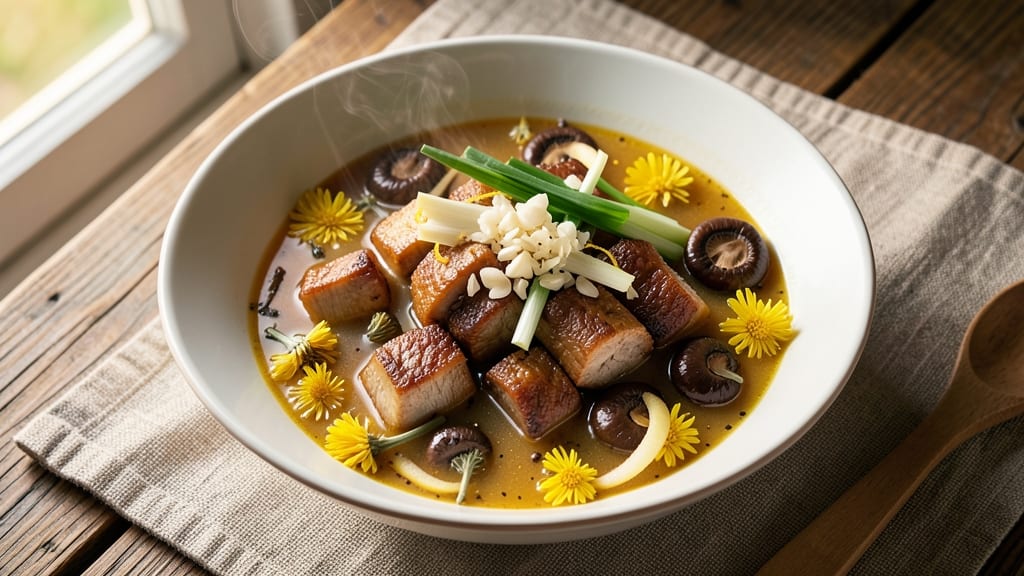
This Ba Wang Hua soup recipe transports you to a traditional Chinese kitchen where fragrant wild chrysanthemums and tender pork create a harmonious broth.
The secret lies in slow-simmered flavors—earthy mushrooms, aromatic ginger, and the delicate floral notes of ba wang hua that transform a simple soup into a restorative masterpiece. I’ve perfected this recipe over years, balancing traditional techniques with modern adaptability so you can enjoy its depth without compromise.
The beauty of this dish is its versatility—whether you use fresh or dried wild chrysanthemums, the result is a rich, umami-packed broth that’s both comforting and elegant.
Pork shoulder breaks down into tender strands, while shiitake mushrooms add meaty texture, and the chrysanthemums infuse the broth with a subtle, floral brightness. The process is methodical but rewarding, rewarding patience with a soup that tastes even better the next day.
What makes this recipe special is its ability to adapt—traditionalists can follow the classic approach, while modern cooks might swap pork for tofu or mushrooms for lentils.
The broth, simmered low and slow, absorbs all the flavors, creating a savory, aromatic base that’s perfect for cold days or as a light yet satisfying meal. Each spoonful delivers layers of taste, from the pork’s richness to the chrysanthemums’ delicate perfume.
Serve it with steamed rice or fresh herbs for garnish, and you’ve got a dish that’s as nourishing as it is flavorful. The key is letting the flavors meld—don’t rush it.
Once mastered, this soup becomes a staple, offering warmth and tradition in every bowl. Let’s begin with the ingredients that bring it all together.
Ingredients for ba wang hua soup
Earthy mushrooms, floral chrysanthemums, and tender pork create this soup's soulful harmony.
| Ingredient | Amount | Notes |
|---|---|---|
| Pork Shoulder 🥩 | 1 ½ lb | Bone-in for maximum flavor |
| Dried Wild Chrysanthemums (Ba Wang Hua) 🌼 | ¼ cup | Or 1 cup fresh petals |
| Dried Shiitake Mushrooms 🍄 | ½ oz | Rehydrated before use |
| Fresh Ginger 🧄 | 2 tbsp | Grated for aromatic punch |
| Garlic Cloves 🧄 | 6 cloves | Minced for depth of flavor |
| Green Onions 🧅 | 2 whole | White and green parts separated |
| Light Soy Sauce 🍶 | 2 tbsp | For umami balance |
| Shaoxing Wine 🍷 | ½ cup | Or dry sherry substitute |
| Sesame Oil 🫒 | 1 tbsp | Toasted for finishing |
| Dried Star Anise 🌿 | 1 whole | For subtle licorice note |
| Dried Red Dates 🍯 | 4 whole | Pitted and halved |
| Rock Sugar 🍚 | 2 tbsp | Or granulated sugar |
| Water 💧 | 8 cups | For initial simmer |
| Steamed White Rice 🍚 | 2 cups | For serving (cooked) |
| Coriander Leaves 🌿 | ¼ cup | Fresh for garnish |
The pork shoulder is non-negotiable here—bone-in, fatty cuts give the broth its signature richness. Costco or your butcher's counter will have the best cuts, but any grocery store pork shoulder works if it has visible marbling. For the dried wild chrysanthemums, specialty Asian markets like H Mart or 99 Ranch carry them year-round, though fresh petals from a local Chinese herb shop are ideal when available. The shiitake mushrooms should be plump and dark—Sun Noodle brand is consistently high quality. Fresh ginger? Grab the chunky root and grate it yourself—pre-grated lacks the impact.
No dried chrysanthemums? Fresh edible chrysanthemum petals (from a farmers market) work beautifully, but use twice the amount. Shaoxing wine unavailable? Dry sherry or even white wine in a pinch, though the flavor will be subtly different. The rock sugar adds just the right touch of sweetness—substitute granulated if needed, but don't skip it entirely. For the green onions, save the white parts for the broth and reserve the greens for garnish. Want more depth? Add a small piece of kombu (seaweed) to the broth while simmering—it enhances umami without overpowering.
This soup tastes even better the next day as flavors meld. Store the broth separately from the pork in airtight containers for up to 5 days. The pork can be reheated gently in the broth. For long-term storage, freeze the broth in ice cube trays—perfect for quick meals. The dried chrysanthemums and star anise keep indefinitely in a cool, dark place. When ready to serve, simply reheat the broth, add fresh herbs, and enjoy with steamed rice. The sesame oil should be added last—just a drizzle—so it doesn't cook off.
Why You'll Love This Recipe
- One-Pot Magic: I swear by this soup because it’s literally one pot—no chopping boards, no extra pans. Toss in the dried shiitakes and ba wang hua straight from the bag, let them soak while you slice the pork shoulder (which takes two minutes with a sharp knife), and boom. Thirty minutes later, you’re done.
- Umami Bomb: That pork shoulder? It falls apart into ridiculously tender shreds, and the ba wang hua—once rehydrated—adds this earthy, floral depth that’s not overpowering, just there in the best way. The garlic and ginger? They hit like a warm hug in a bowl.
- Lunchbox Hero: Between us, this soup is my go-to for meal prep. The flavors actually get better the next day—yes, really. Pack it in thermoses for work, or serve it cold over rice for a quick dinner. My kids (who usually hate soup) fight over the last bowl.
- Budget Win: Pork shoulder is cheap, dried mushrooms and ba wang hua last forever, and you’re not buying fresh herbs that wilt in two days. Honestly, I make this twice a month just to stretch my grocery budget without feeling like I’m sacrificing taste. (And leftovers? They’re my secret.)
Step-by-step instructions for ba wang hua soup
This fragrant wild chrysanthemum and pork shoulder soup delivers deep umami and delicate floral notes in every bowl.
Prepare the Pork Shoulder and Aromatics
Begin by cutting the 1.5 lb pork shoulder into 2-inch chunks, removing any excess surface fat but leaving a thin layer for flavor. In a large pot, combine the pork with the 8 cups water, 2 tbsp light soy sauce, 0.5 cup Shaoxing wine, 1 whole dried star anise, and 4 whole dried red dates. Bring to a rolling boil over high heat, then immediately reduce to a gentle simmer for 45 minutes. This initial simmer extracts maximum pork flavor while keeping the meat tender.
While the pork simmers, prepare the aromatics: Grate the 2 tbsp fresh ginger and mince the 6 cloves garlic. Separate the 2 whole green onions into white and green parts. The white portions will infuse the broth, while the greens will garnish the finished soup. Keep these separate until needed.
Rehydrate and Infuse the Chrysanthemums and Shiitakes
Place the 0.25 cup dried wild chrysanthemums (Ba Wang Hua) and 0.5 oz dried shiitake mushrooms in a heatproof bowl. Pour 2 cups of hot water (about 180°F) over them and let steep for 15 minutes. This rehydration process transforms the dried ingredients into delicate floral and earthy components of the soup.
After steeping, drain the mushrooms and chrysanthemums, reserving the soaking liquid. Add the rehydrated shiitakes and chrysanthemums to the simmering pork broth along with the grated ginger and minced garlic. Stir gently to combine, then add the 2 tbsp rock sugar to balance the flavors. Simmer for another 30 minutes to allow the pork to fully tenderize and the aromatics to meld.
Finish with Sesame Oil and Garnish
Once the pork is fork-tender (it should pull apart easily), skim off any excess fat from the surface of the broth. Add the reserved chrysanthemum and shiitake soaking liquid to the pot, then stir in the 1 tbsp sesame oil and the white portions of the 2 whole green onions. Simmer for an additional 10 minutes to integrate the sesame oil's nutty aroma.
Taste and adjust seasoning with additional light soy sauce or rock sugar if needed. The soup should be harmoniously balanced—sweet from the dates and sugar, savory from the pork and soy, and subtly floral from the chrysanthemums. Ladle the hot soup over 2 cups steamed white rice and garnish with the reserved green onion tops and 0.25 cup coriander leaves for freshness and color.
Serve Immediately for Optimal Flavor
Ba Wang Hua soup is best enjoyed fresh, as the delicate floral notes of the chrysanthemums and the rich umami of the pork meld together most beautifully when served hot. Each bowl should be garnished with a sprinkle of coriander leaves and a drizzle of sesame oil just before serving to preserve the vibrant aroma and visual appeal.
For the full experience, serve with a side of steamed bok choy or a simple cucumber salad to complement the soup's robust flavors. The contrast of textures and temperatures will elevate this traditional dish to new heights.
Pro Tips For Making Ba Wang Hua Soup
- SOAK CHRYSANTHEMUMS TWICE: Dried wild chrysanthemums are stubborn—give them a quick 10-minute soak in cold water first, then drain and soak again in fresh water for 20 minutes. I learned this the hard way when mine stayed rock-hard after hours of simmering.
- CUT PORK INTO EVEN CHUNKS: Use a sharp knife to slice the pork shoulder into 1.5-inch cubes, not random sizes. Smaller pieces cook faster and stay tender, while larger ones turn chewy—no one wants rubbery pork in their soup.
- ADD GINGER LAST MINUTE: Toss in the sliced ginger and garlic only in the final 5 minutes of cooking. Fresh ginger burns easily, and you want it to perfume the broth without turning bitter—this is the thing that matters most for that bright, clean flavor.
- SKIP THE BOILING START: Bring the broth to a gentle simmer, not a rolling boil, to prevent the pork from toughening up. A slow, steady heat keeps the collagen melting properly—yes, even if you're impatient like me, trust the process.
Make-ahead tips for this recipe
Broth Prep Ahead
Prepare the broth base 2 days in advance for maximum flavor development. Simmer the pork, star anise, and red dates in 8 cups water for 45 minutes, then cool completely before refrigerating.
Store the broth in an airtight container—the pork will continue tenderizing and the flavors will deepen. When ready to finish, simply reheat the broth with the chrysanthemums and mushrooms. 💫
Pork Tenderization
For extra-tender pork, parboil the 1.5 lb pork shoulder in 6 cups water for 30 minutes before adding it to the full broth. Drain and reserve the pork, then use this pre-cooked liquid as part of your 8 cups total water.
This technique shortens cooking time and ensures melt-in-your-mouth texture when reheating. Store the parboiled pork separately in the fridge for up to 3 days.
Freezer-Friendly Components
Freeze the dried chrysanthemums, shiitakes, and star anise together in a quart freezer bag for up to 6 months. When needed, thaw overnight in the fridge and add directly to the simmering broth.
The sesame oil and soy sauce can also be pre-mixed in a small container and stored in the freezer for 3 months, saving you time during final assembly. 🥶
Garnish Prep
Wash and dry the coriander leaves and green onion tops, then store them in a damp paper towel-lined container in the fridge for up to 4 days. This keeps them vibrant and ready to garnish fresh bowls.
For extra convenience, chop the green onions and store them in a small airtight container with a splash of water to maintain crispness. Add them to the soup just before serving.
Reheating Like a Pro
When reheating, bring the broth to a gentle simmer (never boil) to prevent the pork from becoming tough. Add ½ cup hot water if the broth seems too thick, then simmer for 10-15 minutes.
For the pork, place it in a separate pot with 1 cup broth and warm through—this keeps it moist. The sesame oil should be added fresh after reheating to preserve its aroma. 🔥
Make-Ahead Serving Suggestions
Pre-portion the soup into ramekins or small bowls and store them in the fridge for up to 3 days. When ready to serve, reheat each portion individually in the microwave for 2-3 minutes, then garnish with fresh herbs.
For a restaurant-style presentation, serve the soup over pre-cooked rice stored in a steamer basket in the fridge—just reheat the rice with a splash of water before assembling the bowls.
Nutrition facts
Frequently asked questions
Can I substitute fresh chrysanthemum petals for dried ba wang hua?
Yes! Use twice the amount of fresh petals (about 1 cup instead of 0.25 cup dried). Fresh petals release their floral notes more quickly, so add them to the broth during the last 10 minutes of simmering to preserve their delicate aroma.
How do I make this soup vegetarian?
Replace the pork with 1.5 lb extra-firm tofu or 1 lb shiitake mushrooms (sliced thickly). Use 1 tbsp soy sauce and 1 tbsp vegetarian oyster sauce for umami depth. The broth's floral-savory balance will still shine!
Why does my soup taste bitter?
Bitterness often comes from overcooking the chrysanthemums or mushrooms. Simmer the soup for only 30 minutes total after adding them, and remove star anise early if you taste licorice notes. A pinch of rock sugar or 1 tsp cornstarch slurry can also help balance flavors.
Can I use chicken instead of pork?
Swap pork for 1.5 lb bone-in chicken thighs (skin-on for richness). Simmer for 25 minutes instead of 45 minutes—chicken cooks faster but stays juicier. The floral notes will complement the poultry beautifully.
How do I store leftovers to keep the pork tender?
Store the broth and pork separately in airtight containers for up to 5 days. Reheat the broth first, then add the pork to warm through gently. Never microwave pork directly—it dries out. For long-term storage, freeze the broth in ice cube trays for quick meals!