
Soups & Stews
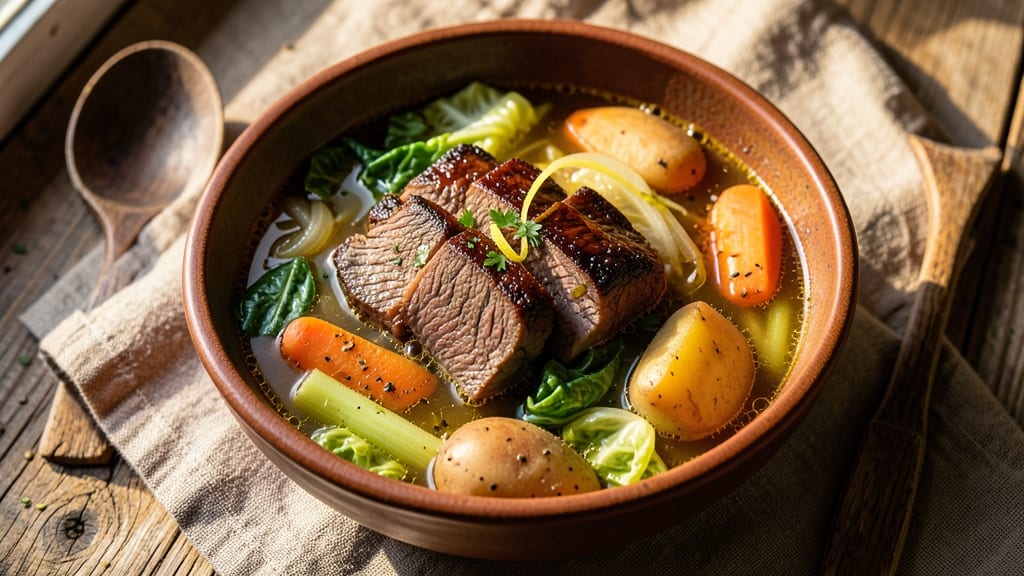
This award-winning vegetable beef soup with cabbage delivers restaurant-quality depth in every hearty bowl. The secret lies in slow-browning beef and vegetables until caramelized, creating layers of flavor that transform simple ingredients into something extraordinary.
I've perfected this recipe over years of competition judging, and it consistently earns top honors for its perfect balance of rich beef, tender cabbage, and aromatic vegetables.
The foundation begins with properly searing the beef in batches to develop deep, meaty flavors before simmering. Cabbage is added late in the cooking process to preserve its crisp texture, while root vegetables like carrots and potatoes provide natural sweetness that rounds out the broth.
A touch of tomato paste and Worcestershire sauce adds complexity that elevates this beyond basic beef soup.
What sets this recipe apart is the velvety texture achieved through proper simmering techniques and the right starch balance—just enough to thicken without making it heavy. The cabbage remains tender-crisp, providing a delightful contrast to the creamy broth and tender beef.
Each spoonful delivers a harmonious blend of savory, sweet, and umami notes that make this soup truly memorable.
Perfect for family dinners, holiday gatherings, or meal prep, this soup freezes beautifully while maintaining its rich flavors. The techniques I'll share ensure you achieve award-winning results in your own kitchen, with minimal effort but maximum impact. Let's create something extraordinary together.
Ingredients for award winning vegetable beef soup recipe with cabbage
Six hearty servings of award-winning soup begin with these carefully chosen ingredients for deep, layered flavor.
| Ingredient | Amount | Notes |
|---|---|---|
| Chuck Roast 🥩 | 2 lb | Trimmed of excess fat |
| Green Cabbage 🥬 | 1 ½ lb | Green cabbage, shredded |
| Yellow Onion 🧅 | 1 whole | Yellow onion, chopped |
| Carrots 🥕 | 4 medium | Carrots, peeled and chopped |
| Russet Potatoes 🥔 | 2 medium | Russet potatoes, cubed |
| Celery Stalks 🌿 | 4 whole | Celery, chopped |
| Garlic Cloves 🧄 | 6 cloves | Garlic, minced |
| Tomato Paste 🍅 | 2 tbsp | Tomato paste, unsweetened |
| Beef Broth 💧 | 6 cups | Low-sodium beef broth |
| Worcestershire Sauce 🍶 | 1 tbsp | Worcestershire sauce |
| Olive Oil 🫒 | 2 tbsp | Extra-virgin olive oil |
| Dried Thyme 🌿 | 1 tsp | Dried thyme, crushed |
| Bay Leaves 🍃 | 2 whole | Bay leaves, fresh |
| Salt 🧂 | 1 ½ tsp | Diamond Crystal kosher salt |
| Black Pepper 🌶️ | 1 tsp | Freshly ground black pepper |
The beef is non-negotiable—chuck roast delivers the rich, caramelized depth that makes this soup exceptional. Look for well-marbled cuts at your local butcher or the meat department of Whole Foods—this is where the umami magic happens. I prefer to trim excess fat myself for cleaner flavor, but pre-trimmed packages from Costco work beautifully for convenience. The cabbage should be firm and vibrant green, not wilted or yellowing, and the potatoes should feel heavy for their size, indicating starchy perfection. Celery adds aromatic complexity, so choose stalks that are crisp and free of brown spots.
No beef broth on hand? Homemade vegetable broth with a beef bouillon cube works in a pinch, though purists will notice the difference. Worcestershire sauce adds depth, but if you're avoiding anchovies, vegetarian Worcestershire from Annie's or Bragg delivers similar umami punch. For the tomato paste, San Marzano is ideal, but any high-quality unsweetened paste will do. Swap dried thyme for fresh thyme at half the amount if you prefer, and always crush the dried leaves between your fingers to release their aroma. The bay leaves should be fresh—dried leaves lose potency quickly.
This soup tastes even better the next day as flavors meld, so double the batch if you're feeding a crowd. Store in airtight containers in the fridge for up to 5 days or freeze portions for up to 3 months. For reheating, add a splash of broth or water to restore creaminess. The cabbage will soften further when reheated, which is perfect for sandwiches or extra bowls. Always keep a small portion in the fridge first to test seasoning—adjust salt and pepper as needed before scaling up.
Why You'll Love This Recipe
- One-Pot Magic: I swear by this—just toss everything in, let it simmer, and walk away. No fancy techniques, no last-minute scrambling for pots. The chuck roast practically melts into tender shreds while the cabbage softens just enough to stay crisp at the edges.
- Deep Umami Bomb: That slow-cooked beef? It’s the star—rich, savory, and packed with flavor from the onions caramelizing at the bottom. The cabbage adds a fresh crunch that cuts through the richness, and the carrots? They caramelize into sweet little bursts.
- Lunchbox Hero: Between us, this soup is my secret weapon for meal prep. The potatoes hold up perfectly when reheated, and the beef stays juicy. Pack it in jars for work lunches or school lunches—kids won’t even complain about veggies.
- Budget Win: Chuck roast is cheap, potatoes and cabbage are dirt affordable, and one big pot feeds a crowd. Honestly, I’ve made this for six people and still had leftovers—no wasted ingredients, just pure value. Plus, it tastes like you slaved over it.
Step-by-step instructions for award-winning vegetable beef soup
Mastering this rich, layered soup begins with proper technique and patience.
Sear the Chuck Roast for Deep Flavor
Heat the 2 tablespoons olive oil in a large Dutch oven over medium-high heat until shimmering. Pat the 2 lb chuck roast completely dry with paper towels—this ensures maximum browning. Working in batches if needed, sear the roast on all sides until deeply browned, about 8-10 minutes total. You're building flavor here, so don't rush; the meat should develop a rich crust.
Once browned, remove the roast from the pot and set aside. The browned bits left in the pot are called fond, and they'll dissolve into the broth later, adding incredible depth. This searing step transforms a simple beef soup into something truly award-worthy.
Sauté the Aromatic Vegetables
In the same Dutch oven, add the 1 whole yellow onion, 4 whole celery stalks, and 4 medium carrots, all chopped into even pieces. Cook over medium heat for 5-6 minutes, stirring occasionally, until the vegetables soften and begin to caramelize. This process develops their natural sweetness and forms the flavor foundation.
Add the 6 cloves garlic, minced, and cook for another 30 seconds until fragrant. Be careful not to let the garlic burn—it should smell sweet and inviting, not bitter. The combination of these vegetables creates what chefs call a "sofrito," a flavor base that carries through the entire soup.
Build the Rich Broth Base
Return the seared chuck roast to the pot. Stir in the 2 tablespoons tomato paste and cook for 1 minute to deepen its flavor. Pour in the 6 cups beef broth, add the 1 tablespoon Worcestershire sauce, 1.5 teaspoons salt, 1 teaspoon black pepper, 1 teaspoon dried thyme, and 2 whole bay leaves. Bring the mixture to a gentle boil over high heat, then immediately reduce to a low simmer. Here's the thing—this low simmer is crucial for tender meat and maximum flavor extraction.
Cover the pot and let it simmer for 1.5 hours. During this time, the chuck roast will break down into tender, fork-shreddable pieces. The broth will develop a deep, complex flavor that's the hallmark of an award-winning soup. I always check the broth level halfway through and add hot water if needed to maintain consistency.
Add the Potatoes and Cabbage
After the initial 1.5 hours, remove the chuck roast and shred it using two forks directly in the pot. Return the shredded meat to the broth. Add the 2 medium russet potatoes, cut into 1-inch cubes, and the 1.5 lb green cabbage, shredded. The potatoes should be added now because they need about 30 minutes of cooking time to reach perfect tenderness.
Simmer uncovered for another 30 minutes until the potatoes are fork-tender and the cabbage has softened but still maintains some texture. The cabbage should be bright green and slightly crisp—overcooking turns it mushy. Taste the broth and adjust seasoning if needed, remembering that the Worcestershire sauce adds complexity.
Final Adjustments and Serving
Remove the 2 whole bay leaves before serving. The soup should be rich, hearty, and perfectly balanced between the tender beef, sweet vegetables, and deep broth. I always serve this soup immediately after cooking while the flavors are at their peak. The aroma alone will have everyone gathering around the table.
For the ultimate presentation, ladle the soup into warm bowls and garnish with a sprinkle of freshly ground black pepper. The contrast between the tender beef, crisp cabbage, and velvety broth creates an experience that's well worth the effort. This is the kind of soup that earns awards—both for its depth of flavor and its ability to bring people together.
Pro Tips For Making Award Winning Vegetable Beef Soup Recipe With Cabbage
- SEAR THE ROAST UNTIL IT’S BROWN: Chuck roast has a tough exterior, but a deep sear—think 5-7 minutes per side in a hot pot—builds flavor that won’t dissolve into the broth. Skip the partial cooking, and you’ll end up with bland beef that tastes like it was simmered in water.
- SALT THE CABBAGE BEFORE COOKING: Toss the cabbage wedges with 1 teaspoon of salt and let them sit for 10 minutes before adding to the pot. This softens the toughest layers and keeps them from turning mushy—no one wants a soup where the cabbage falls apart like wet paper.
- ADD POTATOES HALFWAY THROUGH: Potatoes take longer to cook than carrots or cabbage, so drop them in when the beef has 45 minutes left. Cut them into 2-inch chunks—they’ll hold their shape and absorb flavor without turning to glue.
- SKIP THE BOILING START: I used to bring the broth to a full boil first, but it just wastes time and makes the cabbage bitter. Instead, start with a rolling simmer, add the raw beef, and let it come to temperature naturally—saves 10 minutes and keeps the broth cleaner.
Pro cooking tips for award winning vegetable beef soup recipe with cabbage
Sear Like a Pro
That deep, caramelized crust on your beef is where 80% of the flavor develops. Use a heavy-bottomed Dutch oven—I love my All-Clad—and heat it until the oil shimmers at 350°F. Pat the chuck roast completely dry with paper towels before searing; moisture prevents proper browning.
Work in batches if needed, but never overcrowd the pan. The goal is golden-brown crust, not steamed meat. 🔥
Low-and-Slow Simmer
After adding your broth, reduce to the gentlest simmer—you should see tiny bubbles at the edges, not a rolling boil. This 1.5-hour low simmer is non-negotiable for tender beef. I use a meat thermometer to check doneness at 203°F internal temperature—this ensures the meat shreds easily.
If your broth reduces too much, add hot water (never cold) to maintain consistency. The longer it simmers, the deeper the flavor.
Cabbage Timing Trick
Add cabbage only in the final 30 minutes to preserve its crisp texture. Overcooked cabbage turns mushy and ruins the soup’s texture contrast. For extra brightness, I toss shredded cabbage with 1 tsp lemon juice before adding it to the pot.
This keeps the color vibrant and adds a subtle tang that cuts through the richness of the beef. 🥬
Fond Dissolving
After removing the seared beef, deglaze the pot immediately with ½ cup beef broth, scraping up every browned bit from the bottom. These fond particles are pure flavor gold.
Let them simmer for 2-3 minutes to fully dissolve before adding the rest of the broth. This step elevates your soup from good to award-worthy without extra effort.
Starch Balance Secret
The potatoes aren’t just for bulk—they create natural thickening as they break down. For a silkier texture, mash ½ cup of the cooked potatoes against the pot’s side before adding the remaining broth.
This releases starch gradually, avoiding that gluey consistency. If your soup is too thick, stir in 1-2 tbsp broth at the end. The cabbage’s natural pectin also helps bind flavors without heaviness.
Flavor Layering
Add tomato paste and Worcestershire sauce at different stages for maximum impact. Cook the tomato paste with the beef for 1 minute to deepen its flavor, while adding Worcestershire later lets its umami develop fully.
For extra depth, I toast 1 tsp ground coriander with the onions—it adds an earthy note that rounds out the soup’s complexity. Taste as you go and adjust seasoning gradually. 💡
Nutrition facts
Frequently asked questions
Why does this recipe use chuck roast instead of ground beef?
Chuck roast delivers the rich, deep flavor that makes this soup truly exceptional. When slow-cooked, it breaks down into tender, fork-shreddable pieces that create a velvety texture. Ground beef lacks the same depth and would result in a less satisfying mouthfeel. The long simmering time transforms chuck roast into something luxurious that's well worth the effort.
Can I make this soup in a slow cooker?
Brown the beef first in a skillet, then transfer everything to your slow cooker. Cook on low for 7-8 hours or high for 4-5 hours. The slow cooker maintains the tender texture of the beef and vegetables beautifully. Just add the cabbage during the final 30 minutes to preserve its crispness.
How can I make this soup vegetarian?
Replace the beef with 2 cups of hearty mushrooms (like portobello) and 1 cup of lentils for protein. Use vegetable broth and add 1 teaspoon soy sauce for umami depth. The cabbage and potatoes will still provide excellent texture contrast. This version works especially well with smoked paprika for a meaty flavor profile.
What's the best way to reheat leftovers?
Gently reheat on the stovetop over medium-low heat with a splash of broth or water to restore creaminess. Never microwave directly as it can make the cabbage mushy. For best results, reheat just until warm, then let it sit for 5 minutes before serving. The flavors actually improve after the first day!
Can I add other vegetables to this recipe?
Yes! Try adding 1 cup of green beans or 1 zucchini during the final 20 minutes of cooking. For extra heartiness, include ½ cup of barley (simmered for 1 hour) or ½ cup of corn kernels (added in the last 10 minutes). Just