
Soups & Stews
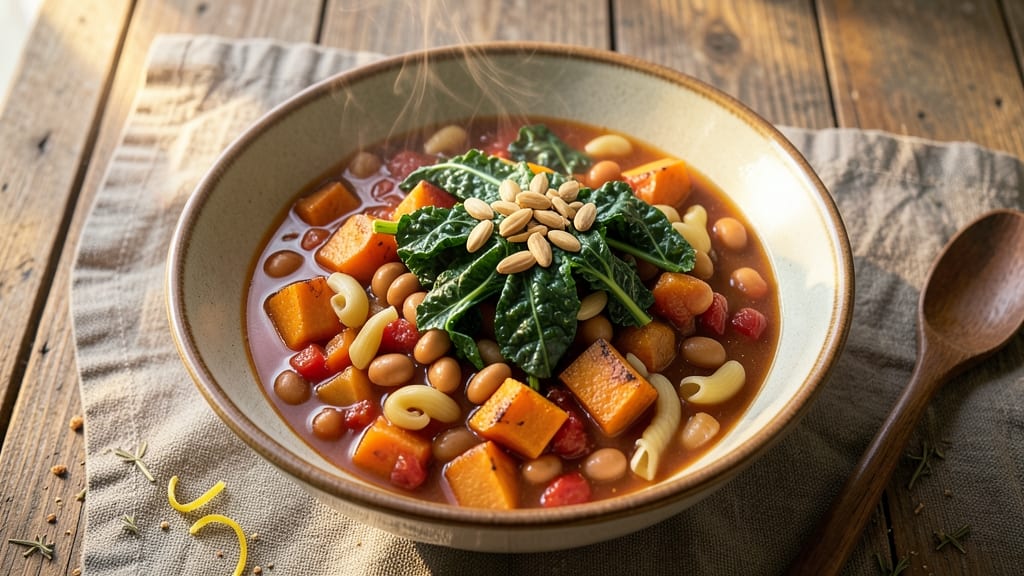
This autumn minestrone soup recipe transforms simple ingredients into a deeply comforting bowl of seasonal warmth that feels like a hug in a pot. 🍂 The secret lies in balancing hearty cannellini beans, tender kale, and sweet butternut squash with classic tomato and pasta—a perfect marriage of texture and flavor that makes every spoonful satisfying.
Unlike lighter summer versions, this soup is designed to stand up to crisp autumn evenings with its rich, savory depth.
The beauty of this recipe is its flexibility—you can use fresh or frozen vegetables without sacrificing flavor, and the long simmering time (about 45 minutes) lets all the ingredients meld into a harmonious broth that's both nourishing and deeply flavorful.
The beans provide plant-based protein, while the kale adds earthy richness that pairs perfectly with the natural sweetness of the squash. It's the kind of soup that tastes even better the next day, making it ideal for meal prep.
What makes this minestrone truly special is how it captures the essence of autumn—warm, hearty, and packed with seasonal ingredients that feel intentional.
The result is a soup with a satisfying body, a balance of tender vegetables and al dente pasta, and a broth that's rich enough to stand on its own. Serve it with crusty bread and a sprinkle of Parmesan for the ultimate comforting meal.
Whether you're preparing for a cozy family dinner or meal prepping for the week, this recipe delivers on both flavor and substance. The steps are straightforward, but the results are anything but basic—this is the kind of minestrone that turns an ordinary weeknight into a memorable dining experience.
Let's get started!
Ingredients for autumn minestrone soup
Pantry staples meet seasonal produce for this deeply satisfying autumn minestrone.
| Ingredient | Amount | Notes |
|---|---|---|
| Dried Cannellini Beans 🌾 | 1 ½ cups | Rinsed before cooking |
| Butternut Squash 🎃 | 3 cups | Cubed, about 1 lb peeled |
| Kale 🥬 | 4 cups | Chopped, stems removed |
| Ditalini Pasta 🍝 | 1 cup | Uncooked, al dente texture |
| Crushed Tomatoes 🍅 | 2 cups | San Marzano preferred |
| Vegetable Broth 💧 | 4 cups | Low-sodium preferred |
| Yellow Onion 🧅 | 1 whole | Diced, about 1 cup |
| Garlic Cloves 🧄 | 4 cloves | Minced, about 1 tbsp |
| Carrots 🥕 | 2 medium | Peeled, chopped |
| Celery Stalks 🌿 | 2 whole | Diced, about 1 cup |
| Extra-Virgin Olive Oil 🫒 | ½ cup | For richness |
| Dried Oregano 🌿 | 1 tsp | Italian preferred |
| Bay Leaves 🌿 | 2 whole | Removed before serving |
| Salt 🧂 | 1 ½ tsp | Diamond Crystal preferred |
| Black Pepper 🌶️ | ½ tsp | Freshly ground |
The cannellini beans are the heart of this soup—dried is best for texture, but no-soak varieties like Great Northern work in a pinch. Trader Joe's and Whole Foods carry excellent bulk options, but any dried bean will do. The butternut squash should be vibrant orange with no soft spots—local farmers' markets often have the freshest cuts. Kale needs to be crisp; discard any wilted leaves. For the broth, low-sodium vegetable broth prevents over-salting, though you can always adjust later. The pasta? Ditalini's small size lets it soak up all the flavors without overpowering.
No cannellini beans? Great Northern or navy beans work just as well. Frozen butternut squash is a time-saver (thaw first), though fresh yields better texture. Kale too tough? Substitute Swiss chard or spinach, but reduce to 3 cups chopped. The crushed tomatoes can be fresh (peeled and crushed) or high-quality canned—San Marzano is ideal. Short on celery? Substitute with fennel or extra onion. For extra depth, toast the oregano and bay leaves in olive oil for 30 seconds before adding to the pot—worth the effort. The carrots can be baby carrots if preferred, but whole carrots yield more flavor when chopped.
This soup tastes even better the next day as flavors meld. Store in an airtight container for up to 5 days in the fridge, or freeze portions for 3 months. For meal prep, cook the beans and veggies ahead, then reheat with fresh pasta. The broth reduces slightly upon reheating, so add a splash of water if too thick. Garnish with fresh basil or a sprinkle of Parmesan (optional) before serving. Leftovers reheat beautifully—just stir in a splash of water or broth to restore consistency.
Why You'll Love This Recipe
- No Chopping Chaos: I swear by this—just roast the squash cubes whole with olive oil and salt, then scoop them out later. The skin softens perfectly, so you’re not stuck peeling or dicing. (Yes, even on a Tuesday night.)
- Sweet-Savory Magic: That caramelized butternut squash paired with the tangy crushed tomatoes? It’s the kind of balance that makes you take a second bowl. The cannellini beans add this creamy texture that just holds the flavors together like a hug.
- Meal Prep MVP: Honestly, this soup tastes even better the next day. I make a big batch on Sundays—it reheats beautifully, and the pasta stays al dente. Pack it for lunches or freeze portions; it’s my go-to for lazy days.
- Budget-Friendly Feast: Dried beans and seasonal squash keep costs low, but the result feels special. A single pot feeds four for under $10, and the leftovers stretch into lunches without a second thought. My wallet and my family thank me.
Step-by-step instructions for autumn minestrone soup
Here's how to craft a soul-warming minestrone that balances autumnal flavors with hearty texture.
🍳 Step 1: Sauté the Vegetable Base
Heat the 0.5 cup extra-virgin olive oil in a large Dutch oven over medium heat. Add the diced yellow onion, chopped carrots, and diced celery stalks, cooking for 5-7 minutes until the vegetables soften and begin to caramelize at the edges. This foundational step builds flavor through the Maillard reaction.
Add the 4 cloves minced garlic and cook for 30 seconds until fragrant. You'll smell the garlic's sweetness intensify—that's your cue it's ready. Immediately add the 2 cups crushed tomatoes and 1 tsp dried oregano, stirring to combine. Let this mixture simmer for 5 minutes to meld the flavors before proceeding.
🔥 Step 2: Build the Broth and Add Squash
Pour in the 4 cups vegetable broth and bring to a gentle boil. Add the 1.5 tsp salt, 0.5 tsp black pepper, and 2 whole bay leaves. Stir in the 3 cups cubed butternut squash and reduce heat to medium-low. Let the soup simmer uncovered for 15 minutes until the squash becomes tender when pierced with a fork.
Here's where the soup transforms from simple broth to rich, velvety base. The squash releases its natural sweetness into the broth, creating a perfect balance with the tomatoes' acidity. If the soup reduces too quickly, add ½ cup water to maintain proper consistency.
👨🍳 Step 3: Prepare the Cannellini Beans
While the soup simmers, rinse the 1.5 cups dried cannellini beans under cold water. In a separate pot, cover the beans with 6 cups water and bring to a boil. Reduce heat to medium-low and simmer for 1 hour until tender but not mushy. Drain and set aside, reserving 1 cup bean cooking liquid for later use.
Real talk: Don't skip the soaking step if you're short on time—simmering from dry takes longer but yields beans with superior texture. The cooking liquid contains valuable starches that will help thicken your soup later. If you prefer, you can soak the beans overnight in cold water and reduce cooking time to 30 minutes.
🥘 Step 4: Combine and Add Kale
Return the Dutch oven to medium heat and add the cooked beans along with their reserved cooking liquid. Stir well to incorporate. Add the 4 cups chopped kale and the 1 cup uncooked ditalini pasta, stirring gently to distribute evenly. The kale will wilt dramatically as it cooks—this is normal and indicates it's releasing its nutrients into the soup.
Bring the soup back to a gentle boil, then reduce heat to medium-low and let it simmer uncovered for 12-15 minutes, stirring occasionally, until the pasta is al dente and the kale is tender but still vibrant. The soup should have a thick, hearty consistency—if it's too thin, simmer uncovered for an additional 5 minutes to reduce.
⏰ Step 5: Finish and Rest
Remove the 2 whole bay leaves from the soup and discard. Taste and adjust seasoning if needed. The soup should be well-seasoned but not overwhelmingly salty. Ladle the minestrone into bowls and let it rest for 5 minutes before serving. This resting period allows flavors to fully meld and the soup to reach its ideal consistency.
Serve with additional grated Parmesan cheese and freshly cracked black pepper if desired. Each spoonful should deliver a perfect balance of creamy beans, tender squash, earthy kale, and rich tomato broth—true autumn comfort in a bowl.
Pro Tips For Making Autumn Minestrone Soup
- SOAK BEANS OVERNIGHT: I learned this the hard way—skipping the soak leaves your cannellini beans tough and mealy, no matter how long you simmer. Toss them in cold water with a pinch of salt the night before, and they’ll soften perfectly without needing extra time on the stove. (Yes, even if you’re impatient like me.)
- ROAST THE SQUASH: Butternut squash tastes bland when boiled raw. Cut it into 1-inch cubes, toss with olive oil, salt, and pepper, then roast at 400°F (200°C) for 25 minutes before adding to the soup. The caramelization adds depth—no one will guess you didn’t peel it.
- SALAD KALE FIRST: Kale’s tough stems and bitter edges ruin the texture if you toss them in whole. Strip the leaves from the stems, chop them roughly, and massage them with a pinch of salt and olive oil for 2 minutes before adding to the pot. This softens them faster and makes them taste like they were simmered all day.
- ADD PASTA LAST: Ditalini needs just 8–10 minutes to cook, but if you toss it in too early, it turns to mush. Wait until the beans and squash are tender, then stir in the pasta and simmer for no more than 5 minutes. (Your future self will thank you.)
Wine and beer pairings for these flavors
Italian White Wine
An Italian white like Vermentino or Friulano complements this minestrone beautifully with its bright acidity and citrus notes that cut through the soup's richness. I reach for Vermentino from Sardinia—its mineral finish echoes the soup's earthy kale and butternut squash.
Serve slightly chilled (50-55°F) to enhance its crispness against the warm soup. 🍷
Crisp Lager Pairing
For beer lovers, a German-style Pilsner or Italian lager like Peroni works perfectly—their clean, effervescent profiles refresh your palate between spoonfuls. The hoppy bitterness in a Sierra Nevada Pale Ale also balances the soup's heartiness, though avoid overly malty beers that might clash with the tomatoes.
Keep the beer well-chilled (40-45°F) for maximum contrast.
Red Wine Option
If you prefer red, a light-bodied Chianti or Sangiovese pairs surprisingly well—their bright acidity and subtle earthiness mirror the soup's tomato and kale flavors. Decant it for 15-20 minutes to soften tannins, then serve at 60-65°F. Avoid heavy Cabernets or Syrahs that would overpower the dish's delicate balance.
Seasonal Cider
For a non-alcoholic option, a dry hard cider like Strongbow Original or Angry Orchard adds a crisp, slightly tart contrast. The apple notes enhance the squash's sweetness while the effervescence cleanses the palate. Serve well-chilled (45-50°F) for the best experience.
Pro Tip: Temperature Matters
Always serve wine or beer slightly cooler than room temperature—this enhances their acidity and refreshes your palate between bites. For beer, use an ice bucket for quick chilling; for wine, a wine cooler or even a bowl of ice water works in a pinch.
The right temperature makes all the difference in how the flavors interact with your soup. ✨
Nutrition facts
Frequently asked questions
Can I make this soup without butternut squash?
Swap the squash for 1 cup diced sweet potato or 1 cup roasted acorn squash—both add natural sweetness that balances the earthy kale. For a lighter option, use 2 cups roasted cauliflower or 1 cup diced zucchini, but reduce simmering time to 8-10 minutes since they cook faster. The key is maintaining that autumnal sweetness to complement the tomatoes.
How do I prevent the soup from getting too thick?
Add ½ cup extra vegetable broth or water while simmering if the soup thickens too much. Stir well and let it cook for 5-10 minutes uncovered to reduce again. For a creamier texture without thickening, mash ½ cup of the cooked beans directly in the pot—their starches will naturally emulsify the broth. Always taste as you go!
Can I use canned beans instead of dried?
Yes, but adjust the liquid! Use 2 (15 oz) cans cannellini beans, drained and rinsed, and add 1 cup extra vegetable broth to the pot. Canned beans cook faster, so reduce the simmering time with pasta to 10 minutes instead of 12-15 minutes. For best texture, choose low-sodium brands and rinse thoroughly to remove excess salt.
Why does my kale stay tough even after simmering?
Kale needs 10-12 minutes of active simmering to fully tenderize—don't rush it! For extra tenderness, blanch the kale first: Boil for 2 minutes, then shock in ice water before adding to the soup. Alternatively, swap for Swiss chard or spinach, which wilt faster. Always chop leaves into ½-inch pieces for even cooking.
Can I make this soup in an Instant Pot?
Yes! Sauté the onion, carrots, celery, and garlic as directed. Add all ingredients except pasta, then cook on High Pressure for 12 minutes. Quick-release the pressure, stir in the uncooked pasta, and cook on Soup setting for 5 minutes. The Instant Pot's pressure builds flavor faster, but you may need ½ cup extra broth to adjust consistency.