
Soups & Stews
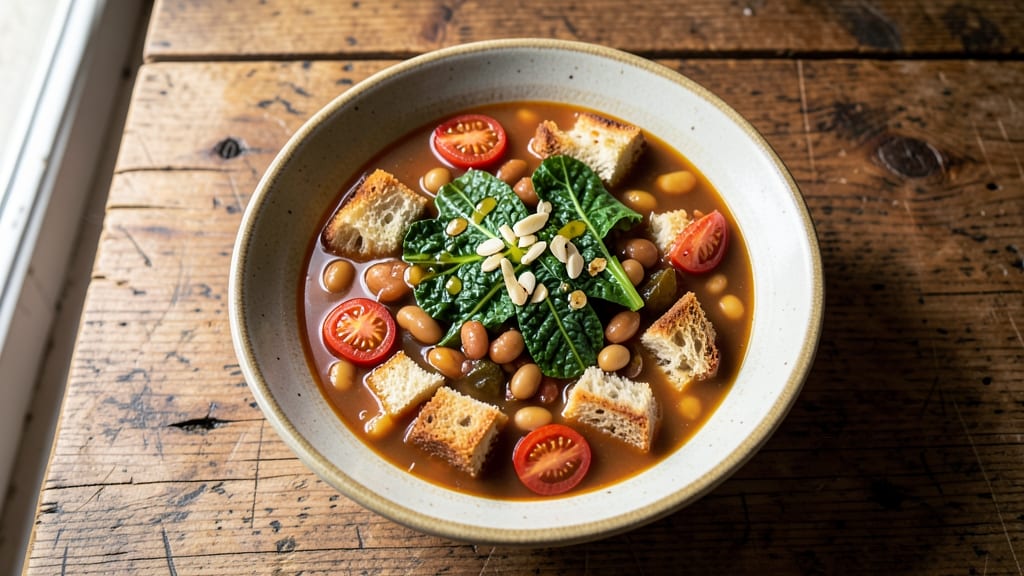
This authentic Toscana soup recipe transports you to the rolling hills of Tuscany with every spoonful of rustic pappa al pomodoro. The secret lies in day-old bread transformed into a velvety, tomato-rich base—no shortcuts, just time-honored technique.
What makes this dish special is the harmony of simple ingredients: cannellini beans, kale, and garlic, all simmered low and slow until flavors meld into something deeply comforting.
The magic begins with a slow simmer that develops rich, complex flavors—no rushed techniques here. Stale bread soaks up the broth, creating a naturally thickened soup that's both hearty and light. Traditional Tuscan staples like rosemary and pecorino cheese add depth, while the kale wilts into tender, flavorful bites.
This isn't just soup; it's a taste of Italy's culinary soul, brought to your kitchen.
By the time you serve this dish, you'll have a steaming bowl of golden-brown soup with crispy bread edges and a sauce so velvety it coats every spoonful. The aroma alone—garlicky, tomatoey, and herbaceous—will have everyone gathered around the table.
It's the kind of meal that feels like a hug in food form, perfect for chilly evenings or cozy family dinners.
Serve it with crusty bread on the side and a sprinkle of fresh basil for brightness. The leftovers only get better, as flavors deepen overnight. This is the kind of recipe that becomes a staple in your cooking rotation—once you try it, you'll never go back to store-bought again.
Ingredients for authentic toscana soup
Simple Tuscan ingredients transform stale bread into velvety, tomato-rich comfort.
| Ingredient | Amount | Notes |
|---|---|---|
| Day-Old Bread 🍞 | 4 cups | Crusts removed, cubed (stale preferred) |
| Dried Cannellini Beans 🌱 | 1 cup | Soaked overnight or quick-soaked |
| Garlic Cloves 🧄 | 4 cloves | Fresh, peeled, smashed slightly |
| Fresh Kale 🥬 | 4 cups | Stems removed, chopped roughly |
| Canned San Marzano Tomatoes 🍅 | 2 cups | Crushed by hand, seeds removed |
| Extra-Virgin Olive Oil 🫒 | ½ cup | High quality, fruity |
| Fresh Rosemary 🌿 | ¼ cup | Chopped, stems removed |
| Pecorino Romano Cheese 🧀 | ½ cup | Freshly grated, aged |
| Vegetable Broth 💧 | 4 cups | Homemade or quality low-sodium |
| Red Wine Vinegar 🍷 | 1 tbsp | For brightness |
| Kosher Salt 🧂 | 1 ½ tsp | Adjust to taste |
| Freshly Ground Black Pepper 🌶️ | ½ tsp | Freshly cracked |
| Fresh Basil Leaves 🌿 | ¼ cup | Chopped, for garnish |
The bread is non-negotiable—day-old works best for that perfect texture. Crusty Italian bread from Whole Foods or Trader Joe's is ideal, but any stale loaf will do. Look for a rustic loaf with a thick crust—it adds the best texture contrast. The cannellini beans? Dried is best for texture, but canned in a pinch (just drain and rinse well). For the tomatoes, San Marzano is the gold standard—sweeter and meatier than regular canned tomatoes. If you can't find it, any high-quality crushed tomatoes will work, but taste the can first—it should smell rich and tomatoey, not metallic or off.
No fresh rosemary? Dried works at half the amount, but it lacks that piney aroma. The kale can be swapped for spinach or Swiss chard if you prefer milder greens. Short on Pecorino? Parmesan or Asiago works, though it's not quite the same. For the broth, homemade is ideal, but even a good low-sodium store-bought version (like Pacific Foods) will do. The red wine vinegar adds brightness—substitute lemon juice if you're out, but it won't be quite the same. And if you're worried about the garlic being too strong, roast it first—it mellows out beautifully.
This soup only gets better the next day—flavors meld into something magical. Store leftovers in the fridge for up to 5 days, or freeze for 3 months. The bread cubes soak up the broth, so it reheats beautifully—just add a splash of water or broth when warming. For serving, I always toast fresh bread on the stovetop with a little olive oil and garlic, then sprinkle with flaky sea salt. The basil should go on last—it wilts fast in hot soup, so save it for garnish. And trust me, the crispy edges on the bread cubes? Worth the extra minute under the broiler.
Why You'll Love This Recipe
- No-Waste Magic: I swear by this trick—tossing in day-old bread turns stale loaves into the soup’s heart, soaking up the rich tomato broth like a dream. No fancy prep, no food waste, just pure satisfaction.
- Garlic-Kissed Depth: That moment when the garlic sizzles in the olive oil? Chef’s kiss. The San Marzano tomatoes and cannellini beans mellow into a creamy, savory base, while the garlic adds layers that linger. Honestly, it’s the kind of flavor that makes you pause mid-bite.
- Weeknight to Potluck: Between us, this soup is my go-to for everything—quick dinners, meal prep, or even bringing to a friend’s gathering. The kale wilts into submission, but the texture stays perfect, and it reheats like a champ. (Yes, even on a Tuesday night.)
- Budget-Friendly Powerhouse: Dried beans, day-old bread, and a can of tomatoes? This is the kind of recipe that stretches your grocery budget without sacrificing taste. I’ll be real: it’s my secret weapon when I’m pinching pennies but still want something hearty and real.
Step-by-step instructions for rustic pappa al pomodoro
This is the classic Tuscan bread soup—simple, hearty, and full of rustic charm.
Prepare the Bread and Beans
Start by breaking the 4 cups day-old bread into rough chunks—no need to be precise, just tear it into bite-sized pieces. This texture is key to the soup's signature heartiness. In a large pot, combine the bread with the 1 cup soaked dried cannellini beans and 4 cups vegetable broth. Bring everything to a gentle boil over medium-high heat, then immediately reduce to a simmer.
Let it cook uncovered for 15-20 minutes, stirring occasionally, until the bread absorbs most of the broth and the mixture thickens into a porridge-like consistency. You're aiming for a texture that's moist but not soupy—this is the foundation of your soup. If it looks too dry, add a splash of broth; if too thin, simmer longer. The beans should be tender but not falling apart.
Build the Tomato-Rosemary Base
While the bread mixture simmers, heat the 0.5 cup extra-virgin olive oil in a separate skillet over medium heat. Add the 4 smashed garlic cloves and 0.25 cup chopped fresh rosemary, cooking for 2-3 minutes until the garlic turns golden and fragrant—don't let it burn, or it'll turn bitter. This aromatic oil is the soul of the dish.
Add the 2 cups crushed San Marzano tomatoes and 1 tbsp red wine vinegar to the skillet. Simmer for 5-7 minutes until the tomatoes break down into a rich, jammy sauce. Season with 1 tsp kosher salt and 0.25 tsp freshly ground black pepper. This tomato-rosemary mixture is what transforms simple bread into something extraordinary.
Combine and Simmer
Carefully pour the tomato-rosemary mixture into the pot with the bread and beans. Stir well to combine, then add the 4 cups chopped fresh kale and 0.5 tsp remaining kosher salt. Let the soup simmer gently for 10-12 minutes, stirring occasionally, until the kale wilts completely and the flavors meld together. The soup should be thick but still spoonable—this is where the magic happens.
Taste and adjust seasoning. You might need more salt or a splash of vinegar to brighten the flavors. The soup should be rich, slightly tangy, and deeply savory. If it's too thick, thin it with a little broth; if too thin, let it simmer longer. This is where your soup becomes authentically Tuscan—simple ingredients, bold flavors.
Finish with Cheese and Fresh Herbs
Remove the pot from heat and stir in the 0.5 cup freshly grated Pecorino Romano cheese until melted and creamy. The cheese adds a salty, umami depth that balances the acidity of the tomatoes. Let the soup rest for 5 minutes to allow the flavors to settle.
Before serving, garnish each bowl with 0.25 cup chopped fresh basil leaves and an extra sprinkle of Pecorino. The basil adds a bright, fresh contrast to the rich, hearty soup. Serve immediately while warm—this soup tastes best straight from the pot, with crusty bread on the side to soak up every last drop.
Pro Tips For Making Authentic Toscana Soup
- TOAST THE BREAD LOW: Spread day-old bread slices on a baking sheet and toast them at 300°F (150°C) for 15 minutes—just until dry and crisping at the edges. Cold bread straight into the pot makes the soup gummy; this step guarantees a proper pappa al pomodoro texture without burning. (Yes, it’s slower, but your soup won’t turn to glue.)
- SOAK BEANS IN SALTED WATER: Cover dried cannellini beans in cold water with a generous pinch of salt (like 1 tsp per quart) and let them sit overnight. The salt prevents bloating, and the beans soften evenly—no more rock-hard bits in your soup. I learned this the hard way after biting into an undercooked bean mid-bite.
- CRUSH TOMATOES BY HAND: Skip the blender—use your fingers to break up San Marzano tomatoes into rough chunks before adding them to the pot. This keeps the soup’s rustic texture and lets the flavors meld without turning it into a smooth paste. (Your nonna would approve, and you’ll save cleanup time.)
- ADD KALE IN THE LAST 10 MINUTES: Toss in fresh kale only when the soup is simmering and the beans are tender—no need to wait for it to wilt completely. Overcooking turns it bitter, and undercooking leaves you with a sad, chewy mouthful. Ten minutes is all it needs to soften just enough.
Troubleshooting perfect results
Bread Too Dry?
If your bread cubes aren't absorbing enough broth, add ¼ cup warm water or broth at a time until the mixture reaches a thick, porridge-like consistency. The bread should be moist but not soggy—this is the foundation of the soup's texture.
For extra insurance, toast the bread cubes lightly in the oven at 350°F for 5 minutes before adding them to the pot to prevent them from turning mushy. 🌾
Tomato Sauce Separating
If your tomato-rosemary mixture looks oily and separated, stir in 1 tsp cornstarch mixed with 1 tbsp water to help emulsify it. Simmer for another 2-3 minutes until it thickens slightly.
This keeps the sauce cohesive and prevents a greasy texture. For next time, try crushing the tomatoes by hand to remove excess seeds, which can cause separation. 🍅
Beans Too Hard
If your cannellini beans aren't tender after simmering, they likely weren't soaked long enough. Next time, soak them overnight in plenty of water, or use the quick-soak method: boil for 2 minutes, then let them sit off heat for 1 hour before cooking.
If you're short on time, add ½ tsp baking soda to the simmering pot to soften them faster—but don't overdo it, or they'll turn mushy. 🌱
Kale Too Bitter
If your kale tastes overly bitter, it might be from overcooking or using tough stems. Remove stems completely and chop leaves finely for faster wilting. For extra sweetness, blanch the kale in boiling water for 30 seconds before adding it to the soup.
A pinch of sugar (¼ tsp) can also help balance bitterness, but use sparingly—authentic Tuscan soups rely on natural flavors. 🥬
Cheese Not Melting
If your Pecorino isn't melting smoothly, it might be too aged or cold. Use freshly grated cheese and remove the pot from heat before stirring it in—direct heat can cause clumping.
For extra creaminess, mix the cheese with 1 tbsp warm broth first to create a smooth paste. If it still clumps, strain the soup before serving for a silky texture. 🧀
Flavor Too Mild
If your soup lacks depth, boost the umami with an extra ½ tsp red wine vinegar or a splash of fish sauce (¼ tsp)—it adds complexity without overpowering. For a smoky note, add ¼ tsp smoked paprika when combining the tomato mixture.
Let the soup rest for 10 minutes off heat before tasting—flavors develop as they cool. 🔥
Nutrition facts
Frequently asked questions
Why does this recipe specifically call for day-old bread?
The stale bread is essential for creating that perfect rustic texture—it absorbs the broth beautifully without turning mushy. Fresh bread would release too much moisture and dilute the soup's richness. Think of it as the secret to that signature Tuscan thickness!
Can I substitute cannellini beans with another type?
While cannellini beans are traditional, you can use white beans like navy or great northern in a pinch. Just ensure they're well-soaked first. For a different flavor profile, try lentils—but they'll make the soup heartier and less delicate. The key is tender texture, not specific variety.
How do I know when the soup is properly seasoned?
Taste as you go! The soup should be rich and slightly tangy from the tomatoes, with a salty depth from the cheese. If it tastes flat, add more salt or vinegar. For extra complexity, finish with a pinch of red pepper flakes or fresh basil. Remember—authentic Tuscan flavors build gradually.
Is this soup gluten-free?
Traditionally no, since it's made with bread—but you can adapt it! Use gluten-free bread and ensure your broth is certified gluten-free. The texture will be slightly different (less chewy), but the flavors remain the same. Just be mindful of cross-contamination if using shared utensils.
Why does the recipe call for San Marzano tomatoes?
San Marzano tomatoes are the gold standard for Tuscan cooking—they're sweeter, meatier, and less acidic than regular canned tomatoes. Their rich flavor is what gives this soup its authentic depth. If unavailable, choose high-quality crushed tomatoes and remove excess seeds for a smoother texture.