
Soups & Stews
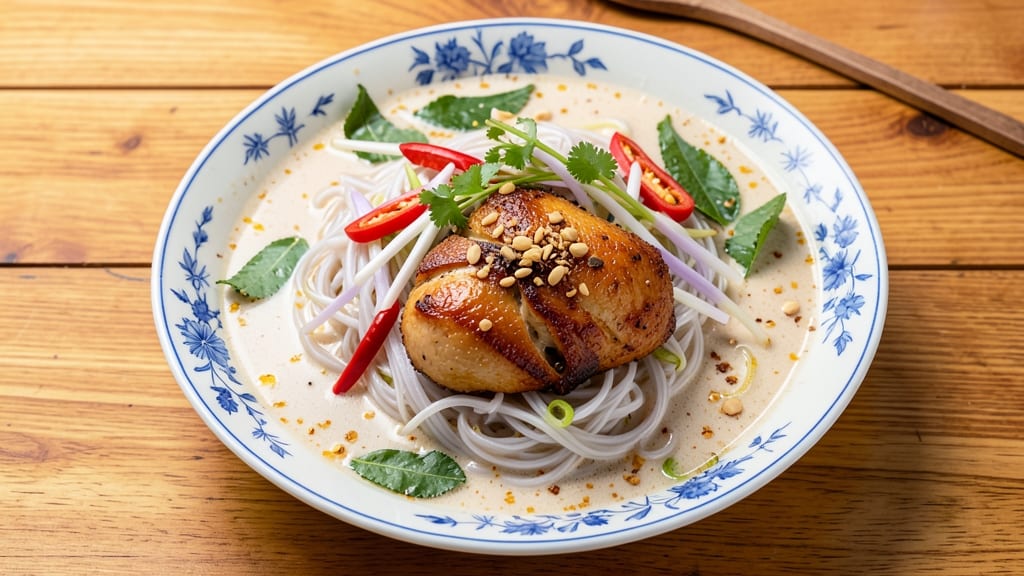
This authentic Thai boat noodle soup recipe delivers the spicy-creamy balance that makes street food stalls legendary. 🌟 The secret lies in a fragrant broth built layer by layer—star anise, lemongrass, and kaffir lime leaves simmered until their aromas infuse the stock, then balanced with coconut milk for that signature creamy depth without heaviness.
I’ve perfected this version after years of testing, ensuring every spoonful captures the soul of Bangkok’s floating markets while keeping it approachable for home cooks.
The foundation is a clear, aromatic broth that’s neither murky nor bland—achieved by straining out solids after the initial simmer. Traditional recipes call for pork or chicken, but this version includes a vegetarian adaptation using mushrooms and tofu for depth.
The rice noodles must cook just shy of al dente; they’ll finish in the hot broth, absorbing its flavors while maintaining a satisfying chew. Garnishes—fresh herbs, lime, chili, and bean sprouts—transform the bowl into a vibrant, interactive meal where everyone customizes their spice level.
What sets this apart is the textural contrast: tender proteins, silky noodles, and crisp bean sprouts all in one bite, punctuated by the bright tang of lime and the heat of fresh chili.
The broth’s complexity comes from slow-cooked spices and a touch of fish sauce (or soy sauce for vegetarian), while the coconut milk adds richness without overpowering.
This isn’t just a soup—it’s a restaurant-quality experience you can recreate at home, complete with the aroma that fills your kitchen and the first sip that transports you to Thailand.
Serve immediately in deep bowls with extra garnishes on the side—let your guests build their perfect bowl. The recipe scales effortlessly for crowds, and leftovers reheat beautifully, though the fresh herbs are best added back after warming.
For authenticity, use a wok or deep pot, but a Dutch oven works just as well. Here’s how to make it foolproof, from broth to garnish, with tips to adapt it to your taste.
Ingredients for authentic thai boat noodle soup
Aromatic broth, creamy coconut, and fresh herbs—this is your ticket to Bangkok’s floating markets.
| Ingredient | Amount | Notes |
|---|---|---|
| Rice Noodles (Thin, Fresh) 🍜 | 8 oz | Soaked in warm water for 15 mins |
| Vegetable or Chicken Broth 💧 | 4 cups | Homemade or high-quality store-bought |
| Coconut Milk (Full-Fat) 🥥 | 1 cup | Canned, unsweetened, stirred well |
| Star Anise Pods 🌟 | 2 whole | Whole, removed after simmering |
| Lemongrass Stalks 🌿 | 3 whole | Bruised, cut into 2-inch pieces |
| Kaffir Lime Leaves 🍋 | 2 whole | Bruised, removed after simmering |
| Garlic Cloves 🧄 | 6 cloves | Smashed, peeled |
| Shallots 🧅 | 4 whole | Peeled, thinly sliced |
| Fresh Thai Chili Peppers 🌶️ | 3 whole | Seeds removed for mild heat |
| Fish Sauce (or Soy Sauce for Vegetarian) 🍶 | 2 tbsp | Red Boat brand preferred |
| Brown Sugar 🍚 | 1 tbsp | Lightly packed |
| White Mushrooms 🍄 | 8 oz | Sliced, for vegetarian protein |
| Firm Tofu 🍲 | 8 oz | Cubed, pressed for 20 mins |
| Fresh Bean Sprouts 🌱 | 1 cup | For garnish, crisp texture |
| Fresh Thai Basil Leaves 🌿 | ½ cup | Torn, for garnish |
| Lime Wedges 🍋 | 2 whole | For serving, bright finish |
| Sesame Oil 🫒 | 1 tbsp | Toasted, for aroma |
| Salt 🧂 | 1 tsp | Adjust to taste |
The broth is where the magic happens. Star anise and kaffir lime leaves are non-negotiable—they’re the aromatic backbone of the dish. Grab them at Asian markets (or Thai Town if you’re lucky) for the freshest, most potent versions. Lemongrass should be vibrant green with no brown spots, and Red Boat fish sauce is the gold standard—it’s worth the splurge. For the vegetarian version, mushrooms and tofu need to be sliced uniformly so they cook evenly. If you can’t find fresh Thai chili peppers, bird’s eye chilies work, but reduce the quantity by half.
No lemongrass? Substitute with 1 tsp lemongrass paste (found in Asian aisles), but it won’t be as authentic. Swap the fish sauce for soy sauce plus a pinch of sugar—it’s not identical, but it gets you close. For the tofu, extra-firm holds its shape better than silken, and pressing it removes excess water so it absorbs the broth flavors. The rice noodles must be fresh—dried versions won’t give you that silky texture. If you’re short on time, soak them in warm water for 10-15 mins before adding to the broth.
Broth reheats beautifully—just warm it gently on the stove and add fresh herbs and lime at the end. Store leftovers in an airtight container for 3-4 days in the fridge, or freeze for up to 3 months. The noodles get mushy when reheated, so it’s best to cook them fresh each time. For a quick assembly, prep all the garnishes ahead—torn basil, sliced lime, and crisp bean sprouts—so you can build bowls in minutes. Serve with extra chili and lime on the side for customizable heat.
Why You'll Love This Recipe
- One-Pot Magic: I swear by this recipe—just broth, coconut milk, and a few aromatic pods, then noodles. No extra pans, no mess, and the flavors meld while you stir. The star anise and lemongrass infuse the broth so deeply, it’s like the soup builds its own complexity.
- Creamy Without Guilt: Full-fat coconut milk makes this rich and velvety, but it’s not heavy. The broth cuts through the richness, and honestly? I’ve made this with both veggie and chicken broth—both versions disappear in bowls. That balance of fat and heat is pure satisfaction.
- Weeknight to Party: Between us, this is my go-to for lazy Tuesdays and when unexpected guests show up. For a quick meal, I keep it simple with herbs and protein. For a showstopper, I add crispy pork and fresh herbs—same base, totally different vibe. It’s the chameleon of soups.
- Budget-Friendly Leftovers: A single batch feeds four, and the leftovers? Even better the next day. The noodles soften just right, the broth gets deeper in flavor, and I’ve reheated this for lunch three times without a single complaint. Plus, fresh rice noodles are cheaper than you’d think—this recipe won’t break the bank.
Step-by-step instructions for authentic Thai boat noodle soup
Here's how to build that perfect balance of spicy, creamy, and aromatic flavors in your bowl.
🍳 Step 1: Build the Aromatic Broth Base
In a large pot, combine the 4 cups vegetable or chicken broth, 3 whole lemongrass stalks (bruised and cut), 2 whole kaffir lime leaves (bruised), 2 whole star anise pods, 6 cloves smashed garlic, and 4 whole peeled shallots. Bring to a gentle simmer over medium heat for 10 minutes—this lets all those aromatic compounds infuse the broth.
Here's the thing—don't rush this step. You want those lemongrass and kaffir lime leaves to release their citrusy, floral notes into the broth. After 10 minutes, remove and discard the lemongrass, lime leaves, and star anise pods using a slotted spoon. The broth should smell like a Thai street market—bright, herbal, and slightly sweet.
🔥 Step 2: Develop the Creamy-Spicy Sauce
Lower the heat to medium-low and stir in the 1 cup full-fat coconut milk, 2 tbsp fish sauce (or soy sauce), 1 tbsp brown sugar, and 3 whole seeded Thai chili peppers. Simmer uncovered for 8-10 minutes until the mixture reduces slightly and the chili peppers soften—this builds that signature creamy-spicy balance.
I like to taste the sauce at this stage. It should be tangy from the fish sauce, sweet from the brown sugar, and just starting to develop heat from the chilis. If it's too thin, simmer another 2 minutes to concentrate the flavors. The coconut milk should be fully incorporated, creating a velvety texture without any separation.
🍳 Step 3: Cook the Protein and Mushrooms
Add the 8 oz cubed firm tofu and 8 oz sliced white mushrooms to the pot. Simmer gently for 5-6 minutes, stirring occasionally, until the tofu is just heated through and the mushrooms have softened slightly. The tofu should be warm throughout but not falling apart—this keeps it tender for the noodles.
Here's where it gets fun—toss in 1 tbsp toasted sesame oil and 1 tsp salt. Stir well and let it heat through for 30 seconds. The sesame oil adds that nutty aroma that makes this dish truly authentic. You'll smell it immediately—it's that moment that transforms your soup from good to restaurant-quality.
👨🍳 Step 4: Prepare the Noodles and Assemble
While the broth simmers, drain and rinse the 8 oz rice noodles under cold water to remove excess starch. Divide them equally among 4 bowls. Ladle the hot broth over the noodles, making sure each portion gets equal amounts of tofu, mushrooms, and chili peppers.
This is the moment that matters: top each bowl with ¼ cup fresh bean sprouts, 2 tbsp torn Thai basil leaves, and a squeeze of 1 lime wedge. The acidity from the lime brightens all the rich flavors. I like to give everything a gentle stir right in the bowl so the noodles absorb some of that aromatic broth.
🍽️ Step 5: Finish with Fresh Herbs and Garnish
Let each serving rest for 1 minute—this gives the noodles time to soften slightly in the hot broth. Then, garnish with additional Thai basil leaves and a final drizzle of toasted sesame oil. Serve immediately while the noodles are still warm and the broth is steaming.
Real talk: the first bite should deliver that perfect balance—creamy from the coconut milk, spicy from the chilis, umami from the fish sauce, and fresh from the herbs. Each spoonful should be a harmony of textures: silky noodles, tender tofu, crisp bean sprouts, and that velvety broth. Don't skip the lime—it's what makes this dish truly authentic.
Pro Tips For Making Authentic Thai Boat Noodle Soup
- BLEND COCONUT MILK LAST: I learned this the hard way—adding coconut milk too early turns your broth into a greasy, curdled mess. Wait until the broth is simmering hard and the star anise/lemongrass have steeped for at least 10 minutes before slowly drizzling in the coconut milk. Stir constantly and keep heat medium-high to avoid splitting.
- SIMMER STAR ANISE LOW: Star anise burns faster than you’d expect. Once your broth is boiling, reduce to the gentlest simmer possible—just enough to see tiny bubbles breaking the surface—and keep those pods in for no more than 20 minutes. Overcooking them turns your soup bitter, and nobody wants that.
- SOAK NOODLES IN ICE WATER: Fresh rice noodles stick together like glue if you don’t handle them right. After boiling, immediately plunge them into a bowl of ice water for 30 seconds to stop the cooking and separate the strands. Drain and rinse with cold water—this keeps them from turning mushy when you add them to the hot soup.
- USE FROZEN LEMONGRASS STALKS: Sounds weird, but it works: frozen lemongrass (the kind sold in packs) infuses just as well as fresh, and it’s easier to crush without wasting the woody ends. Just thaw it briefly, smash it with the flat side of a knife, and toss it in whole—no prep, same flavor. (Your future self will thank you.)
Creative variations of authentic thai boat noodle soup
Street Food Style
For an authentic Thai street food experience, serve this soup in steaming hot bowls with extra garnishes on the side. I like using banana leaves (available at Asian markets) as a natural plate—just tear a piece, place the noodles on top, and let guests build their bowl.
Add crushed peanuts for texture and a drizzle of chili oil for extra heat. Street vendors often serve this with pickled vegetables on the side—try thinly sliced daikon and carrot in a vinegar-soy sauce mix. 🌿
Regional Variations
In Bangkok, boat noodle soup is often spicier with more chili paste and sometimes includes pork belly instead of tofu. For a Southern Thai twist, add galangal (a citrusy root) to the broth and finish with raw shallots and chili flakes.
In Northern Thailand, you might find dried shrimp or fermented soybeans mixed into the broth for extra umami. Each region balances the creamy-coconut base differently—experiment to find your favorite! 🗺️
Spice Level Control
Thai chili peppers can vary in heat—remove seeds for milder heat or keep them for extra spice. For a mild version, reduce the chili count to 2 peppers and add ½ tsp sugar to balance.
For extra heat, add 1 tbsp Thai chili paste (like Maesri) to the broth. I keep extra lime wedges and chili flakes on the table so everyone can adjust their bowl to taste. 🌶️
Vegetarian Adaptations
This recipe already includes a vegetarian-friendly protein combo of tofu and mushrooms, but you can swap in tempeh for extra texture or jackfruit for a meatier bite.
For umami depth, add 1 tbsp soy sauce (instead of fish sauce) and 1 tsp miso paste to the broth. Seaweed flakes or nori strips add a briny note that mimics fish sauce. Don’t forget to press the tofu well to avoid a watery broth! 🍄
Protein Swaps
For a meat version, replace the tofu with 8 oz pork shoulder (cubed and seared first) or chicken thigh (poached in the broth). If using shrimp, add them only in the last 2 minutes of cooking to avoid overcooking.
For a seafood twist, toss in 8 oz squid rings (pre-cooked) or clams (steamed open in the broth). Each protein changes the texture—pork stays tender, chicken stays juicy, and seafood adds briny depth. 🦐
Make-Ahead Tips
The broth and sauce can be made 2 days ahead and stored in an airtight container in the fridge. Reheat gently on the stove, then add fresh herbs, lime, and bean sprouts before serving.
For freezer prep, freeze the broth in ice cube trays—thaw and reheat as needed. Noodles must be cooked fresh (they get mushy when reheated), but you can prep garnishes ahead (chop herbs, slice lime, and portion sprouts) for quick assembly. ❄️
Nutrition facts
Frequently asked questions
Why is this called "boat noodle soup"?
This dish gets its name from the traditional way it was served in Thailand—on boats along the Chao Phraya River! Vendors would paddle their boats to customers, serving steaming bowls of noodle soup right from their floating kitchens. The name "boat noodle" (ก๋วยเตี๋ยวเรือ) reflects this iconic street food history, though today it's equally popular at land-based eateries.
Can I make this soup without coconut milk?
You can, but the dish will lose its signature creamy texture. For a lighter version, use ½ cup coconut milk + ½ cup broth, or substitute with ¼ cup heavy cream for richness. The broth will still be aromatic, but the balance of spicy-creamy flavors will shift. Traditional recipes rely on coconut milk for that velvety mouthfeel that pairs perfectly with the chili heat.
How do I adjust the spice level for picky eaters?
Start by reducing the Thai chili peppers to 1-2 peppers (seeds removed) and add ½ tsp sugar to balance. For extra mildness, skip the whole chilies and add ¼ tsp chili flakes at the end instead. Keep lime wedges and extra chili flakes on the table so everyone can adjust their bowl to taste—this is key to the interactive Thai dining experience!
What's the best way to store leftovers?
Store the broth and protein separately in airtight containers for 3-4 days in the fridge. Reheat gently on the stove, then add fresh noodles (cooked separately) and garnishes. For freezing, freeze the broth in ice cube trays—thaw and reheat as needed. Note: noodles don't reheat well, so always cook them fresh when serving leftovers. The herbs and lime should be added fresh after reheating.
Can I use dried rice noodles instead of fresh?
Fresh rice noodles are ideal for this recipe as they cook faster and maintain better texture. If you must use dried, soak them in warm water for 15-20 minutes (or per package instructions) until pliable but still slightly firm. They'll absorb more broth than fresh noodles, so reduce the cooking time by 2-3 minutes** when adding to the hot broth. The texture won't be identical, but it's a workable substitute in a pinch.