
Soups & Stews
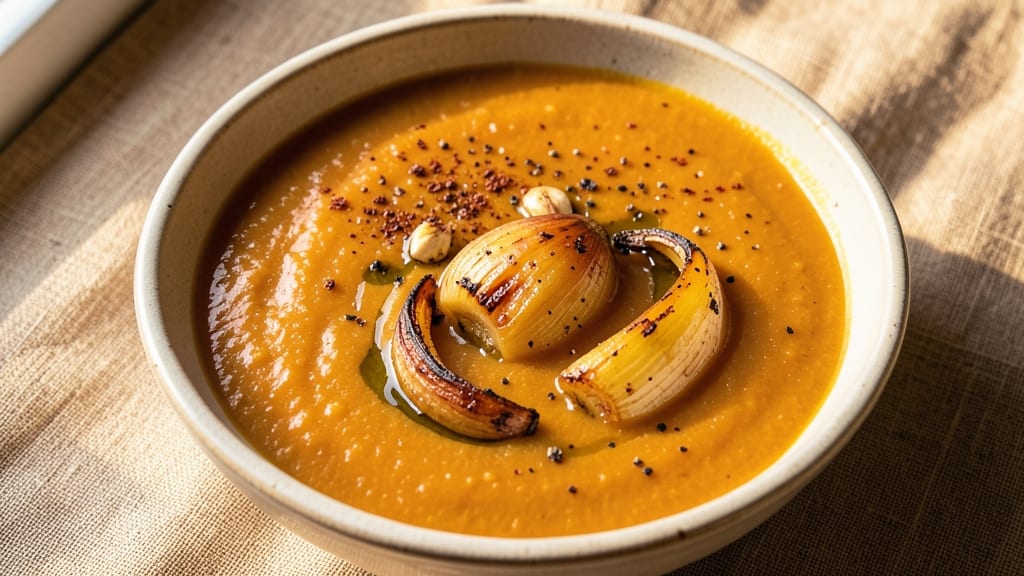
Alton Brown's squash soup recipe delivers restaurant-quality depth with smoky roasted squash and velvety texture in just 30 minutes. The secret lies in charring the squash directly over a gas flame before blending—this caramelizes natural sugars and adds complexity that store-bought soups can't match.
I've recreated this technique in my kitchen, and the difference is immediate: rich, nutty undertones that make every spoonful memorable.
What sets this recipe apart is Alton's signature approach to balancing flavors—roasted squash meets aromatic onions and garlic, then gets enriched with a touch of cream and finished with smoked paprika for that signature depth.
The technique is straightforward but transformative: no fancy equipment, just a stovetop and a blender. The result? A soup so smooth and flavorful it feels like a five-star restaurant experience without the price tag.
This isn't your average butternut soup—it's a velvety masterpiece with layers of smoky, sweet, and creamy that will have everyone asking for seconds.
The roasting step concentrates the squash's natural sweetness while developing those coveted caramelized notes, and the smoked paprika adds just enough warmth to elevate it from ordinary to extraordinary. Perfect for chilly evenings when you crave something comforting yet sophisticated.
The best part? Leftovers reheat beautifully, making this an ideal make-ahead dish for busy weeks. Whether you're serving it as a starter or a hearty main with crusty bread, this recipe delivers restaurant-quality results at home. Let's get cooking—your taste buds will thank you.
Ingredients for alton brown squash soup
Restaurant-quality depth starts with these 13 ingredients—smoky, sweet, and velvety.
| Ingredient | Amount | Notes |
|---|---|---|
| Butternut Squash 🎃 | 2 lb | Medium-sized, peeled and cubed |
| Yellow Onion 🧅 | 1 whole | Medium, diced small |
| Garlic Cloves 🧄 | 4 cloves | Fresh, minced finely |
| Extra-Virgin Olive Oil 🫒 | ¼ cup | Light fruity variety |
| Smoked Paprika 🌶️ | 2 tsp | For authentic smoky depth |
| Ground Black Pepper 🌶️ | ½ tsp | Freshly cracked |
| Salt 🧂 | 1 ½ tsp | Diamond Crystal preferred |
| Heavy Cream 🥛 | ½ cup | Full-fat for richness |
| Vegetable Broth 💧 | 2 cups | Low-sodium preferred |
| Fresh Thyme Leaves 🌿 | ¼ cup | Or 1 tsp dried thyme |
| Brown Sugar 🍯 | 1 tbsp | Lightly packed |
| Coconut Milk 🥥 | ¼ cup | Full-fat for creaminess |
| Fresh Sage Leaves 🌿 | ⅛ cup | Chopped finely |
The squash is non-negotiable—butternut delivers that perfect balance of sweetness and nutty depth. Grab one from Whole Foods or your local market, but avoid pre-cut pieces (they oxidize fast). Medium-sized works best—about 2 pounds—and always peel before cubing. For the charring step, gas flame is key—if you're on electric, broil on high for 10 minutes. The onions should be sweet, not bitter, so yellow or Vidalia are ideal. Fresh thyme and sage from the grocery store's refrigerated section add that restaurant-quality aroma—Penzeys if you want to splurge on dried blends.
No smoked paprika? 1/4 tsp liquid smoke plus 1 tsp regular paprika gets you close, but the flavor won't be identical. Heavy cream can be swapped for coconut milk (though texture will be lighter), or Greek yogurt for tang. Running low on vegetable broth? Water plus 1/2 tsp bouillon powder works in a pinch. The brown sugar isn't just for sweetness—it helps caramelize the squash during roasting. For extra richness, add 1 tbsp tahini when blending. Prefer your soup spicier? Add a pinch of cayenne at the end.
This soup tastes even better the next day—3-4 days in the fridge, 3 months frozen. Portion into glass jars for easy reheating (microwave-safe). The charred squash flavor intensifies overnight, so make extra. Store fresh herbs in damp paper towels in a sealed container. For serving, a sprinkle of toasted pumpkin seeds adds crunch. Freeze in ice cube trays for single servings—just thaw and reheat.
Why You'll Love This Recipe
- No-Cook Prep Trick: I swear by the roasted squash method here—just toss chunks with olive oil, salt, and a pinch of smoked paprika, then roast while you handle everything else. That deep caramelized flavor comes from the oven, not your counter.
- Smoky Depth Magic: Between us, the smoked paprika and roasted garlic in this soup? It’s like a warm hug in a bowl. The butternut’s natural sweetness gets this just right—savory, not cloying, with that subtle smokiness lingering.
- Weeknight to Party: Honestly, this works for everything. Serve it with crusty bread for a lazy Sunday, ladle it into bowls for game day, or even drizzle it over grilled chicken for a fancy-ish dinner. The same base, endless possibilities.
- Leftovers That Beg: I make a double batch because reheating this soup is chef’s kiss—the flavors only get better. Plus, it’s cheap to stretch (thanks, squash), and I’ve frozen portions for months without losing a bit of that rich, smoky goodness.
Step-by-step instructions for Alton brown's squash soup
Here's how to create a rich, smoky soup with layers of flavor—no shortcuts, just technique.
Roast the Squash and Onion for Deep Flavor
Preheat your oven to 425°F and line a large baking sheet with parchment paper. Toss the 2 lb butternut squash and 1 whole yellow onion with 0.25 cup extra-virgin olive oil, 2 tsp smoked paprika, 0.5 tsp ground black pepper, and 1.5 tsp salt. Spread them in a single layer, leaving space between pieces—they'll expand.
Roast for 30-35 minutes, stirring halfway through, until the squash is tender when pierced with a knife and the edges are deep golden brown. The caramelized edges will give your soup that restaurant-quality depth. Let the roasted vegetables cool slightly before transferring them to a blender—this prevents a hot soup explosion.
Sauté Garlic and Build the Base
While the vegetables roast, heat 0.25 cup extra-virgin olive oil in a large pot over medium heat. Add the 4 cloves minced garlic and sauté for 30 seconds until fragrant but not browned—burnt garlic tastes bitter. Immediately add 1 tbsp brown sugar and cook for another 1 minute, stirring constantly. This step caramelizes the sugar slightly, adding complexity to the soup.
Pour in the 2 cups vegetable broth and bring to a simmer. Let it reduce by half—about 5-7 minutes—until the liquid coats the back of a spoon. This concentrated base will carry the soup's flavor through the blending process. Keep the heat at medium-low to prevent boiling, which can make the soup watery.
Blend to Silky Perfection
Add the roasted squash, onion, and any accumulated juices from the baking sheet to the pot. Stir in the 0.25 cup fresh thyme leaves and 0.125 cup chopped fresh sage leaves. Let the mixture simmer for 3-4 minutes until the thyme and sage release their aromatic oils into the soup.
Working in batches if needed, carefully transfer the hot mixture to a blender. Secure the lid and blend until completely smooth—about 1-2 minutes. Here's the thing: don't rush this step. A perfectly blended soup should have no texture, just velvety smoothness. If the blender feels strained, add a splash of the vegetable broth to help it along.
Finish with Creamy Richness
Return the blended soup to the pot and stir in the 0.5 cup heavy cream and 0.25 cup coconut milk. Simmer gently for 5-7 minutes until the soup is heated through—185°F at its hottest point. Taste and adjust seasoning with additional salt or black pepper as needed. The coconut milk adds a subtle sweetness that balances the smokiness.
For the final touch, garnish each serving with a drizzle of extra-virgin olive oil and a sprinkle of fresh thyme leaves. Serve immediately while still warm—this soup tastes best fresh from the pot. The contrast of creamy texture and smoky depth makes every spoonful unforgettable.
Pro Tips For Making Alton Brown Squash Soup
- CHAR THE ONION FIRST: The recipe calls for sautéing onions and garlic, but if you jump straight to the squash, you’ll end up with a watery, underflavored mess. Get that onion golden brown—about 8-10 minutes on medium heat—before adding anything else. The deeper caramelization builds the soup’s base, and skipping this step means your dish will taste like it’s missing something.
- PEEL THE SQUASH IN STRIPS: I used to peel butternut squash in long, awkward spirals, which made cutting it into even cubes a nightmare. Instead, slice off the ends, cut the squash in half lengthwise, then peel it like an apple—long, straight strips. It’s faster, cleaner, and ensures every cube cooks at the same rate. (Yes, it looks weird, but it works.)
- SALT THE SQUASH BEFORE ROASTING: Alton’s recipe includes roasting the squash, and this is where most people drop the ball. Toss those cubes with olive oil and salt before hitting the oven—about 1 teaspoon per pound of squash. The salt penetrates while it roasts, seasoning it from the inside out. I learned this the hard way when my first batch tasted bland no matter how much I salted later.
- USE THE ROASTED GARLIC: The recipe mentions roasting garlic whole, but I used to peel it raw and toss it in like an afterthought. Don’t. Roast those cloves until they’re soft and caramelized, then squeeze them out of their skins and blend them directly into the soup. The sweet, mellow flavor is what elevates this from "good" to "wow." (Your future self will notice the difference.)
Troubleshooting your alton brown squash soup
Blender Overload Fix
If your soup looks too thick after blending, don't panic—just add 2-3 tablespoons of vegetable broth at a time until you reach a smooth, pourable consistency. I've found that blending hot ingredients can sometimes make the soup thicker than expected.
Always let the mixture cool slightly before blending to prevent steam buildup that can cause splattering. 💫
Uneven Roasting
If your squash and onion aren't browning evenly, spread them in a single layer with space between pieces on the baking sheet. Crowding causes steam to build up, preventing proper caramelization.
For extra insurance, flip the squash pieces halfway through roasting. If using an electric oven, broil for the last 5 minutes to achieve that smoky char. 🌶️
Bitterness from Overcooking
Overcooking the garlic or reducing the broth too aggressively can introduce bitterness. Sauté garlic for only 30 seconds until fragrant, and reduce the broth just until it coats the back of a spoon—not to a syrupy consistency.
If bitterness creeps in, balance it with a splash of coconut milk or a pinch of brown sugar at the end.
Lumpy Texture
For ultra-smooth results, pulse the roasted vegetables in the blender first, then gradually increase speed to blend completely. If you still see lumps, strain the soup through a fine-mesh sieve before returning it to the pot.
I recommend a nut milk bag for this—it catches even the finest particles while letting the soup through. 🥄
Watery Soup
If your soup ends up too thin, simmer it uncovered over medium-low heat for 10-15 minutes to evaporate excess liquid. Stir occasionally to prevent skin formation. For extra thickness, stir in 1 tablespoon of cornstarch mixed with 2 tablespoons of cold water and simmer for another 2-3 minutes until thickened.
Weak Flavor
If your soup tastes bland, it likely needs more salt or acid. Boost flavor with ½ teaspoon of apple cider vinegar or 1 teaspoon of lemon juice at the end. For depth, add ½ teaspoon of smoked paprika or a pinch of ground nutmeg.
Fresh herbs like thyme and sage should be added just before serving to preserve their aroma. 💡
Nutrition facts
Frequently asked questions
Can I substitute butternut squash with another variety?
Acorn squash or delicata work beautifully—they're sweeter and hold up well to roasting. Just adjust cooking time: acorn needs 25-30 minutes at 425°F, while delicata (with skin on) takes 35-40 minutes. For a milder flavor, kabocha squash adds earthy notes but requires 40-45 minutes to soften. Always peel and cube before roasting.
How do I make this soup dairy-free?
Swap the heavy cream for ½ cup full-fat coconut milk and use ¼ cup unsweetened coconut yogurt for richness. For extra creaminess, blend in 2 tablespoons tahini at the end. The smoked paprika and roasted squash will still deliver that signature depth—just without dairy. Taste and adjust salt since coconut milk is naturally salty.
Can I prep this soup ahead of time?
Yes! Roast the squash and onion 1-2 days ahead and store in an airtight container in the fridge. The flavors actually improve overnight. When ready to serve, simply blend with broth, herbs, and dairy, then reheat gently. For freezing, blend completely first, then portion into containers (leaves out 10% extra liquid to account for thawing). Thaw overnight in the fridge before reheating.
What's the secret to getting that smoky flavor without smoked paprika?
Use ¼ teaspoon liquid smoke plus 1 teaspoon regular paprika for the roasting step. For extra depth, char the squash directly over a gas flame for 1-2 minutes per side before roasting. If you have access to a grill, grill the squash halves cut-side down for 5-7 minutes until blackened. Just be careful—charred bits add amazing flavor but can be bitter if overdone.
How do I adjust this recipe for a slow cooker?
Roast the squash and onion as directed, then transfer everything (including juices) to the slow cooker. Add broth, garlic, and spices, then cook on LOW for 6-7 hours or HIGH for 3-4 hours. Stir in herbs and dairy at the end, simmering on the stovetop for 5 minutes** to heat through. The slow cooker method develops more mellow flavors—great for busy days, but the texture will be slightly thinner than stovetop.