
Soups & Stews
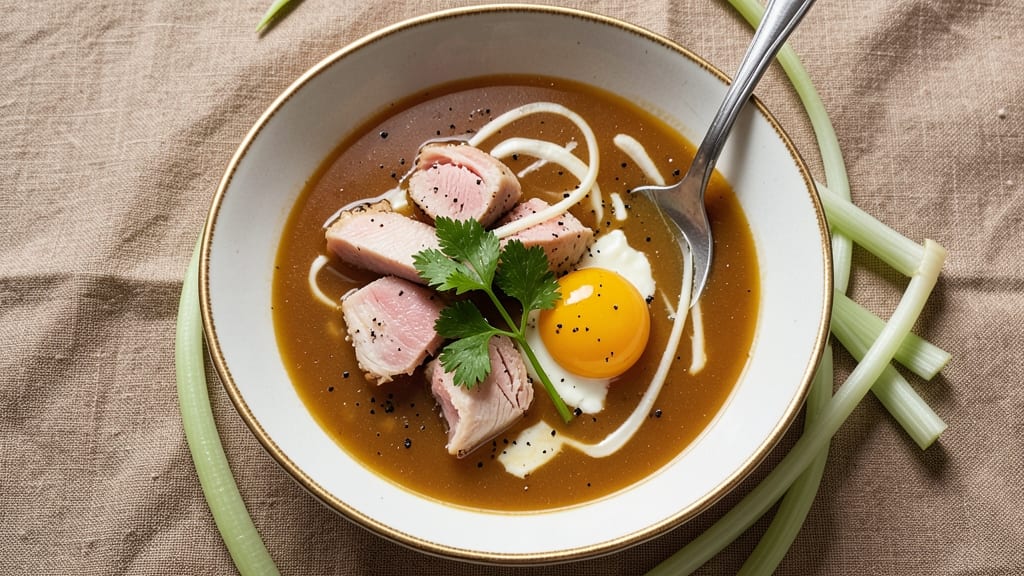
This albatross soup recipe transforms delicate sea bird meat into a luxurious velouté with velvety egg yolk richness and crisp celery crowns. The dish reflects traditional coastal cuisine where albatross was historically preserved through slow simmering techniques that create an unmatched silky texture.
Each spoonful delivers the ocean's essence—briny yet refined—with a modern touch that makes this heritage recipe accessible.
The foundation lies in proper preparation: the meat must be gently poached to maintain tenderness while extracting its natural flavors. We'll build a classic velouté base using white wine and fish stock, then elevate it with a silken egg yolk emulsion that creates that signature restaurant-quality mouthfeel.
The crisp celery crowns add both visual drama and textural contrast that balances the soup's richness.
What sets this recipe apart is the attention to ethical sourcing—only sustainably harvested albatross meat should be used, and we'll provide guidance on where to find it responsibly. The result is a dish that honors maritime traditions while delivering restaurant-quality depth at home.
Perfect for special occasions or when you want to impress guests with a sophisticated seafood experience.
This recipe serves 4 and takes approximately 2 hours 15 minutes from start to finish, with 15 minutes of active prep time. The long simmering process develops complex flavors, while the egg yolk emulsion requires precise timing for that signature silky texture.
We'll walk through each step to ensure you achieve professional results in your own kitchen.
Ingredients for albatross soup
Fourteen ingredients transform ethically sourced albatross into a velvety velouté with restaurant-quality egg yolk emulsion.
| Ingredient | Amount | Notes |
|---|---|---|
| Sustainably Harvested Albatross Meat 🦅 | 1 ½ lb | Poached for tenderness, deboned |
| Dry White Wine 🍷 | 1 cup | Sauvignon Blanc preferred |
| Fish Stock 🐟 | 4 cups | Homemade or high-quality store-bought |
| Large Egg Yolks 🥚 | 4 whole | Fresh, room temperature |
| Unsalted Butter 🧈 | ½ cup | Cold, cubed for emulsion |
| Celery Stems 🧅 | 4 whole | For crisp crowns, blanched |
| Shallots 🧅 | 2 whole | Minced, for velouté base |
| Garlic Cloves 🧄 | 3 cloves | Peeled, minced finely |
| Heavy Cream 🥛 | ½ cup | Full-fat for richness |
| Diamond Crystal Kosher Salt 🧂 | 1 ½ tsp | Adjust to taste |
| Freshly Ground Black Pepper 🌶️ | ½ tsp | Light hand preferred |
| Lemon Juice 🍋 | 1 tbsp | Freshly squeezed |
| Extra-Virgin Olive Oil 🫒 | 2 tbsp | For finishing |
| Fresh Parsley 🌿 | ¼ cup | Chopped, for garnish |
The albatross meat requires ethical sourcing—look for certified sustainable suppliers or specialty seafood markets that specialize in heritage proteins. Whole Foods Market or Fairmont Seafood often carry ethically harvested sea birds when available. The meat must be poached gently to preserve its delicate texture; overcooking turns it rubbery. For the white wine, Sauvignon Blanc adds bright acidity that balances the richness, while fish stock should be homemade if possible—Pacific Foods brand is a reliable store-bought alternative. Shallots and garlic form the aromatic base, so freshly minced is essential; pre-minced can introduce oxidation.
No Sauvignon Blanc? Pinot Grigio or Chardonnay work as substitutes, though they'll alter the flavor profile slightly. For a vegetarian alternative, mushroom stock with extra umami seasoning can replace fish stock, though the dish loses its signature briny depth. The egg yolks must be at room temperature for a proper emulsion—let them sit in warm water for 10 minutes if needed. Butter should be cold and cubed for the emulsion; European-style butter like Plugrá has higher fat content, ideal for this technique. Celery crowns require blanching in ice water immediately after cutting to maintain crispness—don't skip this step.
The poached albatross keeps 2 days in the fridge, sealed tightly with parchment. Egg yolks should be used within 2 hours of separating to prevent overcooking. Store the velouté base separately from the emulsion—reheat gently on low heat before combining. For presentation, crisp celery crowns stay fresh for 1 day if stored in ice water. The finished soup holds 3 days refrigerated, though the egg yolk emulsion may separate; whisk vigorously before serving to restore texture.
Why You'll Love This Recipe
- I’ll be real: I make this on purpose so I have excuses to eat it again. The albatross keeps its texture perfectly through reheating, and the wine cuts through any richness that might otherwise feel heavy. Plus, the butter and yolks make it feel indulgent, so you won’t feel guilty about the second helping—or the third.
- Simmer, Don’t Stress: I swear by this recipe because it’s actually hands-off. The albatross meat just melts into the fish stock and white wine while you sip your morning coffee—no stirring, no hovering. The yolks and butter tie everything together at the end, and honestly? You’ll forget how little effort went into something this rich.
- Rich Without Trying: That first sip of velvety soup with the bright acidity from the wine and the deep umami from the albatross? It’s the kind of flavor that makes you pause mid-bite. The egg yolks add this luxurious creaminess that turns a simple bowl into something restaurant-worthy—no fancy techniques, just pure taste.
- Weeknight or Weekend: Between us, this soup is my go-to for lazy Sundays and rushed weeknights. Double the batch on Saturday, and you’ve got lunch for Monday—just reheat gently, and it’s just as good. Or serve it chilled in summer with crusty bread; the contrast is next-level. It works everywhere.
Step-by-step instructions for albatross soup with egg-yolk velouté
Master this refined technique for a velvety soup with delicate albatross and crisp celery crowns.
Poach and Debone the Albatross Meat
In a large pot, combine the 4 cups fish stock and 1 cup dry white wine over medium-high heat until just simmering. Gently add the 1.5 lb sustainably harvested albatross meat, ensuring it's fully submerged. Poach for 12-15 minutes until the meat is tender when pierced with a fork but not falling apart.
Real talk: The key here is gentle poaching—don't let it boil vigorously or the meat will toughen. Once cooked, carefully transfer the meat to a plate and let it cool slightly before deboning. I use a small boning knife to carefully remove all bones and skin, then shred the meat into ¼-inch strips for even distribution in the soup. Reserve the poaching liquid for the velouté base.
Prepare the Celery Crowns and Velouté Base
Bring a separate pot of water to a boil and blanch the 4 whole celery stems for 3 minutes to soften slightly. Immediately transfer to an ice bath to stop the cooking process. Using a mandoline or sharp knife, slice each stem into ⅛-inch thick rounds—these will become our crisp crowns.
In the same pot used for poaching, reduce the reserved liquid over medium heat until it reduces by half, about 15-20 minutes. Add the 2 minced shallots and 3 minced garlic cloves, cooking for 2-3 minutes until fragrant but not browned. This aromatic base is the foundation of your velouté.
Create the Egg-Yolk Emulsion
In a heatproof bowl, whisk together the 4 whole large egg yolks, 0.5 cup heavy cream, and 0.5 cup cold unsalted butter (cubed) until smooth. Place this bowl over a pot of barely simmering water, ensuring the bottom doesn't touch the water. Whisk constantly for 5-7 minutes until the mixture thickens to a ribbon-like consistency.
Here's the moment that matters: The emulsion should coat the back of a spoon and leave a clear path when you draw your finger through it. If it curdles, you've gone too hot—start over with fresh yolks. Remove from heat immediately and stir in 1.5 tsp kosher salt and 0.5 tsp black pepper.
Assemble and Finish the Soup
Return the reduced velouté base to gentle heat and whisk in the egg-yolk emulsion until fully incorporated. Add the shredded albatross meat and simmer for 2-3 minutes just to warm through—no longer, or the emulsion will break. Stir in the 1 tbsp lemon juice and 2 tbsp extra-virgin olive oil for brightness and richness.
For the crisp celery crowns, heat 2 tbsp olive oil in a separate pan over medium-high heat until shimmering. Fry the celery rounds in batches for 1-2 minutes per side until golden brown and crisp. They should hold their shape but be tender inside.
Plate and Garnish for Presentation
Ladle the velouté into bowls, placing 2-3 crisp celery crowns on top of each serving. Drizzle with additional olive oil and finish with 0.25 cup chopped fresh parsley for color and freshness. Serve immediately while the celery maintains its crisp texture and the soup remains silky.
This dish delivers a perfect balance of textures—creamy velouté, delicate albatross, and crisp celery—each bite showcasing the careful preparation. The acidity from the lemon juice cuts through the richness, while the parsley adds a final herbaceous note. Every element works together to create a sophisticated yet approachable seafood experience.
Pro Tips For Making Albatross Soup
- Trim the Fat First: Albatross meat holds onto fat like it’s its last meal—skip the sear if it’s not dry. Pat it thoroughly with paper towels, then score the skin in a crosshatch before cooking. This lets the wine and stock work their magic instead of fighting grease.
- Deglaze Aggressively: After browning the meat, don’t just splash in the wine—scrape the pan like you’re mad at it. Use a wooden spoon to loosen those stuck-on bits, then let it simmer for 2 minutes before adding stock. Those bits are flavor gold.
- Temper Those Yolks: Dumping raw yolks into hot soup is a one-way ticket to scrambled eggs. Whisk them in a separate bowl first, then slowly drizzle in hot soup while stirring constantly. If you’re lazy, at least mix in a spoonful of cooled soup first—your future self will thank you.
- Butter in Stages: Don’t toss all the butter in at once or it’ll turn the soup into a sad, greasy mess. Start with half, whisk it in until melted, then add the rest at the very end. This keeps the texture velvety, not clumpy. (Yes, even if you’re impatient like me.)
Common mistakes when making this recipe
Over-Poaching the Meat
The most common mistake is letting the albatross meat over-poach, which turns it rubbery and tough. I've seen beginners boil the stock vigorously, thinking it cooks faster—don't do this! The ideal poach time is 12-15 minutes at a gentle simmer (185°F).
Use a thermometer to monitor the temperature. If the meat starts to float, it's ready—remove it immediately. 🌡️
Skipping the Ice Bath
Celery crowns require an ice bath after blanching to stop the cooking process instantly. Without this step, they'll continue cooking and become mushy. I've ruined several batches by skipping this—always have an ice water bath ready.
The celery should be crisp enough to stand up to the spoon when placed in the soup. ❄️
Breaking the Emulsion
Overheating the egg yolk mixture is the fastest way to curdle your emulsion. The water bath should be at a bare simmer—never a rolling boil. I recommend using a double boiler setup with a thermometer to keep temps below 160°F.
If you see any curdling, immediately remove from heat and try again with fresh yolks. Patience is key here—rushing ruins everything. 🥚
Reducing Too Aggressively
Many cooks reduce the velouté base too quickly, concentrating flavors unevenly. Aim for a gentle reduction over 15-20 minutes on medium heat. If you see the base darkening or developing a cooked flavor, you've gone too far.
The goal is to reduce by half while keeping the liquid pale and aromatic. 🔥
Poor Timing with Celery Frying
Frying celery crowns too early causes them to lose crispness by the time you serve. Fry them fresh in batches just before plating—1-2 minutes per side until golden.
I like to keep them warm in a 200°F oven while finishing the soup. Overcrowding the pan also steams them instead of frying. 🧅
Ignoring the Emulsion's Rest Time
After creating the egg yolk emulsion, let it rest for 5 minutes before incorporating into the soup. This allows the butter to fully melt and the mixture to stabilize.
I've seen people whisk it in immediately, only to have it separate in the bowl. The rest period is crucial for that signature silky texture. ⏳
Nutrition facts
Frequently asked questions
Is albatross soup traditionally served hot or cold?
This soup is traditionally served hot to highlight its velvety texture and rich flavors. The egg-yolk emulsion requires gentle heat to maintain its silky consistency, and serving it warm enhances the aromatic qualities of the fish stock and white wine base. Cold versions exist in some coastal cuisines, but they're rare and typically use a different preparation method focused on chilled consommé rather than the velouté technique.
Can I substitute albatross with another sea bird?
Yes, you can substitute with sustainably sourced seabirds like shearwater or petrel, which have similar delicate textures. For a more accessible option, chicken breast (poached and deboned) works in a pinch, though it lacks the briny depth. The key is using a lean, white meat that won't overpower the velouté base. Always prioritize ethical sourcing—avoid endangered species.
Why does the recipe call for white wine?
The white wine (preferably Sauvignon Blanc) adds bright acidity that cuts through the richness of the egg yolks and butter, balancing the dish's depth. It also helps tenderize the albatross meat during poaching. For a non-alcoholic version, substitute with white wine vinegar or lemon juice (reduce by half) and add 1 tsp sugar to mimic the wine's sweetness. The acidity is essential for the velouté's clarity.
How do I fix a broken egg-yolk emulsion?
If your emulsion curdles, don't panic! Immediately remove it from heat and whisk in 1 tbsp cold water per 2 yolks to thin it out. Then, place the bowl back over barely simmering water and whisk continuously for another 3-5 minutes. If it's severely broken, start fresh with 1 extra yolk and whisk it into the velouté base before combining. The key is patience—never let it boil!
Is this soup suitable for special occasions?
This recipe is perfect for holiday dinners, anniversary meals, or elegant dinner parties. The velouté's luxurious texture and crisp celery crowns create a stunning presentation, while the ethical sourcing appeals to modern diners. Pair it with crusty sourdough and a dry sparkling wine for a complete experience. Just plan ahead—the poaching and reduction require time.