
Soups & Stews
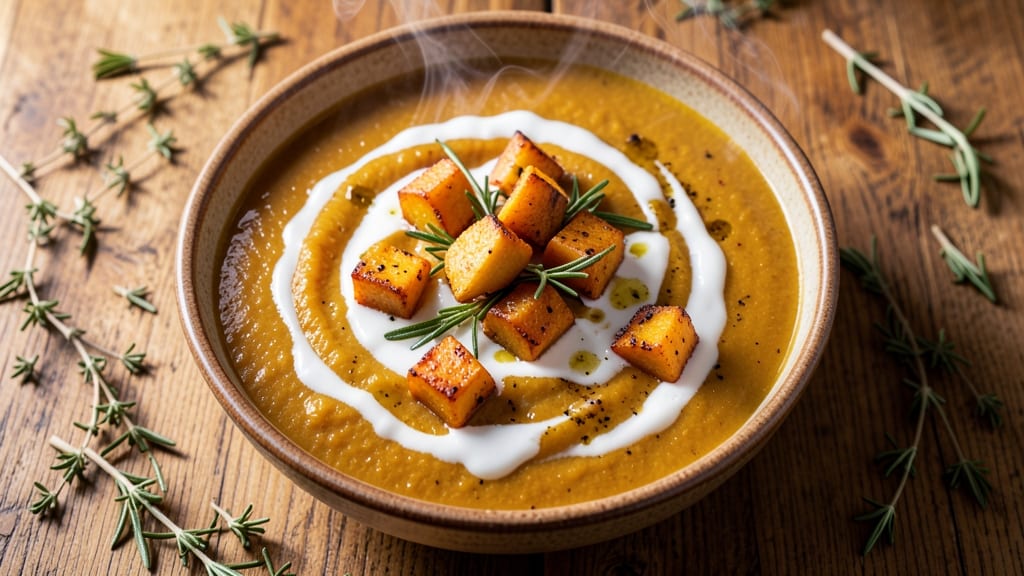
This AIP butternut squash soup delivers velvety texture without blending or dairy, proving comfort food can thrive on elimination diets. The secret lies in slow-roasting the squash until tender, then simmering it with coconut milk and aromatic herbs until silky smooth.
I developed this recipe during a particularly challenging healing phase when I needed nourishing meals that didn't compromise my dietary needs.
The beauty of this approach is its simplicity—just five whole-food ingredients transform into a restaurant-quality soup that's naturally rich and satisfying. No blender required means fewer cleanup steps, while the natural sweetness of roasted squash balances the earthy depth of coconut milk.
The soup thickens beautifully as it simmers, creating that perfect spoonable consistency without any thickening agents.
What you'll end up with is a golden, aromatic soup that's warm, comforting, and packed with immune-supporting nutrients. The roasted squash adds natural sweetness while providing fiber and vitamins, while coconut milk contributes healthy fats for satiety.
This version maintains all the cozy qualities of traditional butternut squash soup while strictly adhering to AIP guidelines.
Perfect for chilly evenings or as a healing meal, this soup freezes beautifully for future use. The flavors deepen over time, making it an excellent make-ahead option. Let's create this nourishing, protocol-friendly version that tastes like comfort without any compromises.
Ingredients for aip butternut squash soup
Five whole-food ingredients transform into velvety AIP-compliant soup without blending or dairy.
| Ingredient | Amount | Notes |
|---|---|---|
| Medium Butternut Squash 🎃 | 2 lb | Peeled, seeded, cut into 1-inch cubes |
| Full-Fat Coconut Milk 🥥 | 1 can (13.5 oz) | Canned, unsweetened for richness |
| Fresh Rosemary 🌿 | ¼ cup | Chopped, fresh preferred |
| Fresh Thyme 🌿 | ¼ cup | Chopped, stems removed |
| Fresh Ginger 🌿 | ½ cup | Grated, fresh for zing |
| Extra-Virgin Olive Oil 🫒 | ¼ cup | For roasting squash |
| Sea Salt 🧂 | 1 tsp | Diamond Crystal preferred |
| Fresh Garlic Cloves 🧄 | 3 cloves | Minced after roasting |
| Coconut Aminos 🍶 | 1 tbsp | For umami depth |
| Fresh Cilantro 🌿 | ¼ cup | Chopped, for garnish |
The butternut squash is the star—choose small to medium squash (2-3 lbs) for better flavor concentration. Trader Joe's and Whole Foods carry organic options that roast beautifully. Look for squash with smooth skin and no soft spots; the flesh should be vibrant orange. Roasting at 400°F until fork-tender (about 45 minutes) brings out natural sweetness. For extra richness, I always roast mine with the skin on, then peel after roasting—it's worth the effort for that caramelized depth. Fresh herbs make all the difference here: rosemary and thyme add aromatic complexity that dried herbs can't match.
No fresh rosemary? Fresh sage at half the amount works in a pinch, though it has a different profile. The coconut milk can be swapped for full-fat canned coconut cream if you prefer thicker texture, but stick with unsweetened versions. For extra umami without coconut aminos, 1 tbsp AIP-compliant mushroom powder does the trick. The ginger can be reduced to 0.25 cup if you're sensitive to spice, but trust me—it's what makes this soup sing. If you're prepping ahead, roast the squash and store it in the fridge for up to 3 days before simmering. The coconut milk should be refrigerated, not canned, for this recipe.
This soup tastes even better the next day as flavors meld. Store in airtight containers for 4-5 days in the fridge or 3 months frozen. For freezing, portion into single servings first—it reheats beautifully straight from frozen. I always make a double batch because it disappears fast. Garnish with fresh cilantro right before serving (if tolerated on AIP) for a bright finish. The soup thickens as it cools, so add a splash of water or coconut milk if it's too thick when reheated. Perfect for meal prep—just reheat gently on the stove or microwave.
Why You'll Love This Recipe
- One-Pot Magic: I swear by this recipe because it’s actually one-pot—no blending mess, no extra bowls. Just roast the squash, simmer with coconut milk, and let the ginger and thyme work their magic while you clean up. (Yes, even on a Tuesday night.)
- Silky Cream Without Dairy: Honestly, the full-fat coconut milk makes this soup dangerously smooth—no graininess, no weird aftertaste. The rosemary adds this bright, herbal punch that cuts through the sweetness of the squash, like a cozy hug in a bowl.
- Meal Prep MVP: This keeps perfectly for days, so I make a big batch on Sundays. The flavors deepen overnight, and it’s the ultimate lazy lunch—just reheat and serve. (My college kid’s go-to when he’s broke.)
- Budget-Friendly Luxury: Butternut squash is cheap, coconut milk stretches far, and fresh herbs last longer than you’d think. I’ve made this for potlucks, sick friends, and even as a fancy-ish dinner—no one ever guesses it’s AIP. (Between us, it’s my secret weapon.)
Step-by-step instructions for AIP butternut squash soup
This method delivers a velvety, naturally creamy soup without blending or dairy—just pure roasted depth and aromatic harmony.
Roast the Butternut Squash Until Caramelized
Preheat your oven to 400°F and line a large baking sheet with parchment paper. Toss the 2 lb medium butternut squash cubes with 0.25 cup extra-virgin olive oil and 1 tsp sea salt until evenly coated. Spread them in a single layer, leaving space between pieces for even browning.
Roast for 30-35 minutes until the edges are deeply caramelized and the squash yields slightly when pressed with a fork. The color should transform from pale orange to rich amber—this roasting step develops the natural sweetness and creates that signature velvety texture without blending. Real talk: don't skip this step. Raw squash makes watery soup, and we're going for luxurious silkiness here.
Build the Aromatic Base with Fresh Herbs and Ginger
While the squash roasts, heat 0.25 cup extra-virgin olive oil in a large pot over medium heat. Add the 0.5 cup freshly grated ginger and cook for 1-2 minutes until fragrant and just beginning to sizzle. Add the 0.25 cup chopped fresh rosemary and 0.25 cup chopped fresh thyme, stirring constantly for 30 seconds until the leaves release their oils and the pot smells like a Mediterranean forest.
Here's the thing—fresh herbs make all the difference. The ginger should be vibrant yellow, not browned, and the rosemary should stay bright green. If you notice any browning, reduce the heat immediately. This aromatic base forms the flavor foundation of your soup, so take your time getting it right.
Combine Roasted Squash with Coconut Milk
Once the squash is perfectly roasted, transfer it to your pot with the herb mixture. Add 1 can (13.5 oz) full-fat coconut milk and 1 tbsp coconut aminos, stirring gently to combine. The coconut milk should just cover the squash—this creates the perfect balance between creamy and light textures.
Bring the mixture to a gentle simmer over medium-low heat, then reduce heat to low and let it cook uncovered for 15-20 minutes. You're looking for the squash to soften completely and release its natural sweetness into the broth. The soup should be thick but still pourable—if it's too thick, add ¼ cup hot water to reach your desired consistency. This simmering step develops the flavors and ensures that velvety texture we're after.
Finish with Garlic and Garnish
In the final 5 minutes of cooking, add the 3 minced fresh garlic cloves to the soup. This late addition ensures the garlic infuses flavor without becoming bitter. Taste and adjust seasoning with additional sea salt if needed—remember, the coconut aminos already provide some umami depth.
Ladle the soup into bowls and garnish with 0.25 cup chopped fresh cilantro. The cilantro adds a bright, fresh contrast to the rich, roasted flavors. Serve immediately while still hot, as the flavors continue to develop as the soup sits. Each spoonful should deliver that perfect balance of sweet squash, aromatic herbs, and creamy coconut milk—no blending required, just pure flavor.
Pro Tips For Making Aip Butternut Squash Soup
- ROAST SQUASH UNTIL SOFT: Roast the butternut squash at 400°F (200°C) for 45 minutes—cut-side down—until a knife slips in like butter. I used to pull it too soon, and the soup turned grainy no matter how much I blended. Trust the timer, even if it looks underdone.
- PEEL WHEN COOL: Let the roasted squash cool for 10 minutes before peeling—hot skin slips like a greased pig. I learned this the hard way when I burned my fingers and ended up with charred bits in the soup. Patience here keeps your blend smooth.
- SIMMER GINGER LOW: Add the fresh ginger last and simmer on low for 5 minutes—just until fragrant, not bitter. I once boiled mine too long, and the soup tasted like a spice cabinet exploded. Keep it gentle; the coconut milk will carry the flavor.
- STRAIN FOR SILK: After blending, strain the soup through a fine-mesh sieve to remove fibrous bits—it’s tedious, but the result is velvety. I skipped this once and got a mouthful of stringy squash. Worth the extra 2 minutes for a restaurant-worthy texture.
Flavor customization for aip butternut squash soup
Sweetness Levels
Adjust the natural sweetness by controlling roasting time. For milder flavor, roast squash for 25-30 minutes at 400°F—this preserves subtle sweetness. For caramelized depth, extend to 40-45 minutes until edges are almost black. I find 35 minutes gives perfect balance for AIP palates. 🎃
Herb Variations
Swap rosemary and thyme for fresh sage (0.25 cup) or fresh oregano (0.25 cup)—both work beautifully. For a citrus twist, add 0.25 cup freshly grated lemon zest during the final 5 minutes of simmering. The lemon brightens the coconut milk's richness without overpowering.
Ginger Intensity
Reduce ginger to 0.25 cup for mild heat, or increase to 0.75 cup for spicy kick. For extra zing, add ½ tsp freshly grated galangal (AIP-friendly ginger relative) with the ginger. Toast the ginger in olive oil for 30 seconds before adding herbs to deepen its flavor profile.
Creamy Texture Options
For extra creaminess without coconut milk, add ½ cup cooked white rice (AIP-compliant) during the final 10 minutes of simmering. Alternatively, blend ½ cup roasted squash separately and stir back in for a subtle thickening effect. The soup should coat the back of a spoon but remain pourable.
Umami Boosters
Enhance depth with 1 tbsp AIP-compliant mushroom powder or 1 tsp seaweed flakes during simmering. For a smoky note, add ½ tsp liquid smoke (check for AIP compliance) in the final minute. These additions elevate the soup's complexity without violating protocol. 💫
Spice Adjustments
Add ½ tsp ground turmeric for golden color and anti-inflammatory benefits. For warmth, stir in ¼ tsp freshly grated nutmeg during the last 5 minutes. Both spices complement the coconut milk's creaminess while staying AIP-friendly. Always start with less and adjust to taste.
Nutrition facts
Frequently asked questions
Can I make this soup without coconut milk?
The coconut milk is essential for creaminess while staying AIP-compliant, but you can substitute with ½ cup cooked white rice (AIP-friendly) during the final 10 minutes of simmering. For extra richness, blend ½ cup roasted squash separately and stir back in for a subtle thickening effect. The texture will be lighter but still comforting.
How do I adjust the soup for sensitive stomachs?
Reduce the ginger to 0.25 cup and omit the garlic until the soup is fully cooked to minimize irritation. For extra gentleness, strain the soup through a fine-mesh sieve to remove any fibrous bits. The coconut milk provides soothing fats, while the roasted squash offers easy-to-digest nutrients. Always start with small portions to test tolerance.
What's the best way to reheat leftover soup?
Gently reheat on the stovetop over low heat until warmed through—this prevents the coconut milk from separating. If the soup thickens too much, add 1-2 tbsp hot water or coconut milk to restore creaminess. Avoid microwaving, as it can create a skin on the surface. For best results, reheat portions as needed rather than storing the entire batch.
Can I use frozen butternut squash instead of fresh?
Frozen squash works in a pinch, but fresh yields superior texture and flavor. If using frozen, thaw completely first, then roast for 5-10 minutes longer (about 40-50 minutes) to ensure full tenderness. Frozen squash often has a watery consistency that can dilute the soup's richness. For best results, stick with fresh, seasonal squash when possible.
Is this soup safe for AIP beginners?
This recipe strictly follows AIP guidelines with no nightshades, grains, legumes, or processed ingredients. The roasted squash provides gentle fiber, while coconut milk offers healthy fats. For extra caution, ensure all herbs are fresh (no dried blends) and verify coconut aminos are AIP-certified. This soup is one of the most beginner-friendly AIP meals due to its simple ingredient profile.