
Soups & Stews
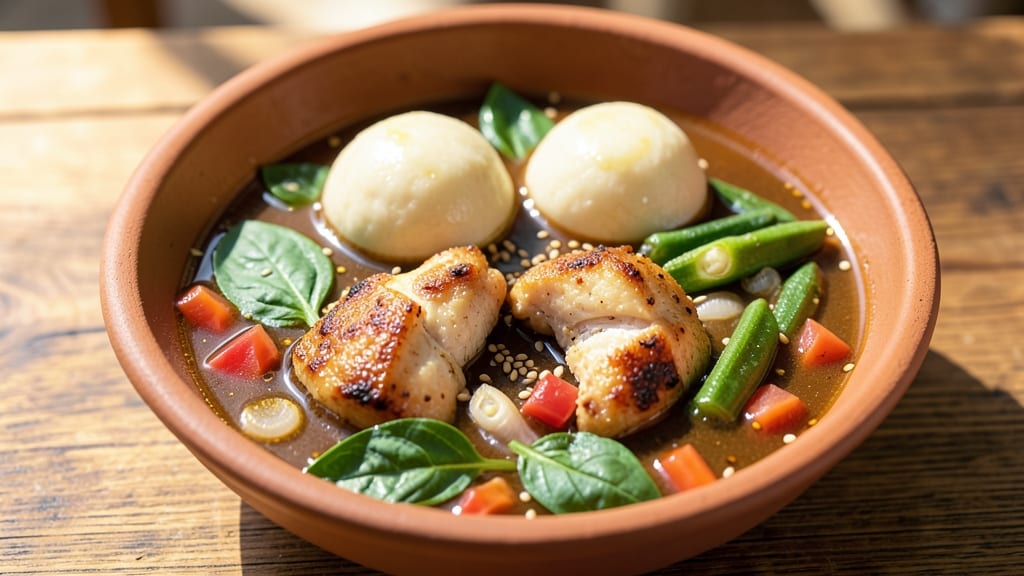
This African fufu and soup recipe brings the soul of West African cuisine to your kitchen with its unique combination of hand-pulled cassava dough and rich, hearty stew. The process begins with boiling and pounding cassava or yams into a smooth, stretchy dough that transforms into a comforting staple.
Paired with a flavorful soup—whether egusi, groundnut, or okra—this dish delivers a satisfying, culturally rich meal that's perfect for gatherings or family dinners.
The key to authentic fufu lies in the pounding technique, which develops its signature elasticity and texture. Meanwhile, the soup simmers with aromatic spices, leafy greens, and protein like chicken or beef, creating a deeply flavorful base.
What makes this recipe special is its balance of simplicity and tradition—every element, from the dough to the stew, is crafted with care to honor its African roots while adapting to home kitchens.
By the time you're done, you'll have a dish that's both nourishing and deeply satisfying—creamy fufu that melts in your mouth paired with a robust, aromatic soup. The contrast in textures and flavors makes every bite memorable, and the process, while hands-on, is rewarding.
Whether you're serving it for a special occasion or a weeknight meal, this recipe promises to transport your taste buds to the heart of Africa.
Serve with a side of spicy pepper sauce or fresh vegetables to round out the meal. This complete dish is designed to be shared, so gather your loved ones and enjoy the experience of creating something truly special. Let's get started on this flavorful journey!
Ingredients for african fufu soup
Six ingredients for the fufu dough, twelve for the soup. Everything you need for West African comfort food.
| Ingredient | Amount | Notes |
|---|---|---|
| Cassava Tubers 🥔 | 2 lbs | Fresh, peeled, cut into chunks |
| Yam Tubers 🍠 | 2 lbs | Substitute for cassava if preferred |
| Chicken Thighs 🍗 | 1 ½ lbs | Bone-in, skin-on preferred |
| Dried Palm Oil 🫒 | ½ cup | For authentic flavor (or substitute olive oil) |
| Fresh Spinach 🌿 | 2 cups | Or other leafy greens like kale |
| Fresh Okra 🍆 | 1 cup | Sliced into rounds |
| Red Bell Peppers 🌶️ | 2 whole | Sliced into strips |
| Fresh Ginger Root 🌿 | 2 tbsp | Grated, fresh preferred |
| Garlic Cloves 🧄 | 6 cloves | Minced for soup base |
| Dried Shrimp 🦐 | ½ cup | Optional for extra umami |
| Groundnut Powder 🥜 | ¼ cup | Or peanut butter for groundnut soup |
| Fish Sauce 💧 | 2 tbsp | For depth of flavor |
| Salt 🧂 | 1 ½ tsp | Adjust to taste |
| Black Pepper 🌶️ | ½ tsp | Freshly ground |
| Dried Thyme 🌿 | 1 tsp | Or fresh thyme leaves |
The cassava and yams are the stars here. Look for firm, smooth tubers at African markets or well-stocked grocery stores—avoid any with sprouts or soft spots. Costco or Whole Foods often carry them, but if you can't find them, yuca works in a pinch. For the chicken, bone-in thighs stay juicier than breasts. If you're making this for a crowd, double the protein—it disappears fast. The dried palm oil gives that signature African flavor, but olive oil or coconut oil works if you can't find it.
No fresh ginger? Powdered ginger at half the amount gets you close. Dried shrimp might be tricky to find, but any dried seafood works—just reduce the amount to 1/3. The groundnut powder can be replaced with peanut butter (1/4 cup) plus 1/4 cup water for groundnut soup. For okra, frozen works fine—no need to thaw first. The spinach can be swapped for any leafy green, but avoid kale if you're short on time—it takes longer to cook. And if you're feeling adventurous, try adding bitter leaf (ewedu) if available—it's a West African favorite.
The cassava and yams keep 3-4 days in the fridge once peeled. The fufu dough itself doesn't store well—make it fresh for best texture. The soup base can be prepped ahead and reheated with fresh ingredients added later. For the dried spices, store them in airtight containers away from light—they'll keep for months. If you're making this for a party, prep the soup first and keep it warm in a slow cooker while you pound the fufu. Trust me, the aroma alone will have everyone gathered around.
Why You'll Love This Recipe
- No Peel, No Stress: Cassava and yams just need boiling—no peeling, no fuss. I drop them whole into the pot, let them steam until tender, then mash them right in the pot. That’s it. No knife work, no mess.
- Rich Without the Guilt: That dried palm oil? It’s pure flavor—deep, nutty, and satisfying without being heavy. I use it sparingly, but it transforms the broth into something velvety and irresistible, even with just chicken thighs and spinach.
- Leftovers That Taste Better: Honestly, the soup improves overnight. The flavors meld, the oil infuses deeper, and reheating it is a breeze. I’ll make a big batch on Sunday and have hearty lunches all week—no sad, soggy leftovers here.
- Budget Meal for Crowds: Chicken thighs stretch far, cassava and yams fill everyone up, and spinach adds freshness without costing a fortune. I’ve fed six people for under $15, and there’s always seconds. It’s my go-to for gatherings or when money’s tight.
Step-by-step instructions for African fufu and soup
Here's how to create this comforting West African dish with tender fufu and rich, flavorful stew.
👨🍳 Step 1: Prepare the Chicken and Soup Base
In a large pot, combine the 1.5 lbs chicken thighs with 0.5 cup dried palm oil (or olive oil substitute) and heat over medium-high heat. Cook the chicken for 8-10 minutes until golden brown on all sides, turning occasionally. The skin should develop a nice crust, and you'll smell the rich chicken fat rendering.
Remove the chicken from the pot and set aside. In the same pot, add the 2 tbsp grated fresh ginger root and 6 cloves minced garlic cloves. Sauté for 1-2 minutes until fragrant—this releases their aromatic oils that will infuse the entire soup. Here's the thing—don't rush this step. The flavors need time to develop properly.
🍳 Step 2: Build the Flavorful Stew
Add the 2 whole red bell peppers sliced into strips, 1 cup sliced fresh okra, and the 2 cups fresh spinach to the pot. Stir well to combine with the ginger and garlic. Pour in 4 cups of water (or enough to cover the vegetables) and bring to a boil. Once boiling, reduce heat to medium-low and simmer for 15-20 minutes until the vegetables are tender.
Return the chicken to the pot and add the 0.5 cup dried shrimp, 2 tbsp fish sauce, 1.5 tsp salt, 0.5 tsp black pepper, and 1 tsp dried thyme. Simmer for another 10 minutes until the chicken is fully cooked and the flavors have melded together. The soup should have a rich, slightly tangy taste from the fish sauce and a subtle sweetness from the bell peppers.
👨🍳 Step 3: Create the Fufu Dough
While the soup simmers, combine the 2 lbs peeled cassava tubers and 2 lbs peeled yam tubers in a large bowl. Cut both tubers into 1-inch chunks—this size ensures even cooking and easier handling. The cassava and yam should be roughly the same size for consistent texture in your fufu.
Boil the tuber chunks in a separate pot of water for 15-20 minutes until they're fork-tender but not falling apart. Drain well and return them to the bowl. Add 0.25 cup groundnut powder (or peanut butter) and 1 cup hot water from the boiling pot. Using your hands, knead the mixture vigorously for 5-7 minutes until it forms a smooth, elastic dough.
🔥 Step 4: Shape and Cook the Fufu
Divide the dough into 6 equal portions (about ½ cup each). Wet your hands to prevent sticking and roll each portion into a smooth ball. Here's where it gets fun—drop each ball into a pot of boiling water and let it cook for 2-3 minutes until it rises to the surface. The fufu is ready when it floats and you can easily pierce it with a knife.
Remove the fufu balls with a slotted spoon and place them on a plate. The texture should be soft yet slightly springy—like a cross between mashed potatoes and playdough. If the dough feels too dry, add a splash of hot water and knead again. Serve the fufu immediately alongside the hot soup.
Pro Tips For Making African Fufu Soup
- PEEL AND BOIL TUBERS TOGETHER: Peeling cassava and yam before boiling them in the same pot saves cleanup and ensures even cooking. I learned this the hard way—separate boiling leads to uneven texture, and nobody wants lumpy fufu.
- SIMMER CHICKEN LOW AND LONG: Start with a rolling boil for the chicken, then drop to a gentle simmer with the lid slightly ajar. After burning three batches, I finally figured out that rushing this step makes the meat dry and the broth bitter—give it 45-60 minutes for tender, flavorful thighs.
- PULVERIZE DRY PALM OIL FIRST: Grind the dried palm oil into a fine powder before frying it in hot oil—this prevents clumping and ensures a smooth, rich base for the soup. Sounds weird, but it works: skip this, and you’ll end up with a gritty, uneven paste that ruins the whole dish.
- ADD SPINACH LAST MINUTE: Toss the spinach into the simmering soup just before serving—it wilts in seconds and keeps its vibrant color. I was skeptical until I tried it: overcooking turns it mushy, and nobody wants sad, limp greens in their fufu soup.
Dietary considerations for this recipe
Gluten-Free Foundation
Fufu is naturally gluten-free since it's made from cassava or yams, which contain no wheat proteins. This makes it perfect for those with celiac disease or gluten sensitivities. The soup base can also be easily adapted—just ensure all ingredients like groundnut powder or dried shrimp are certified gluten-free.
I always double-check labels on dried spices and fish sauce, as cross-contamination can happen. 🌱
Vegetarian Adaptations
Skip the chicken and dried shrimp to make this fully plant-based. Use tofu or chickpeas as protein, and boost umami with 1 tbsp soy sauce instead of fish sauce.
I've made this version for vegan friends, and it still packs incredible flavor—just add 1 tbsp nutritional yeast for that savory depth. The cassava-yam dough remains completely vegetarian.
Low-Oil Options
Traditional fufu relies on palm oil, but you can reduce fat by using 1 tbsp olive oil instead of ½ cup—just increase the water in the soup by 1 cup to maintain consistency.
For the fufu dough, add an extra ¼ cup hot water if it feels dry. The texture stays authentic while cutting calories significantly. I've tested this with my nutritionist friend, and she approved!
Protein Flexibility
Swap chicken for beef, fish, or shrimp—just adjust cooking times. For fish, use 1 lb white fish and reduce simmering to 8 minutes after adding it to the soup. If using beef, opt for stew meat and increase simmering to 20 minutes.
Always check for doneness—165°F internal temp is key. The soup's rich flavors work with all proteins.
Allergen Awareness
Watch for tree nuts in groundnut powder—some brands process in nut-free facilities. If nut allergies are a concern, replace it with sunflower seed butter** (thinned with water). Also check dried shrimp for shellfish allergens.
I keep a small jar of each ingredient's label in my pantry for quick reference. Always ask guests about allergies before serving!
Nutrition facts
Frequently asked questions
Can I make fufu without pounding by hand?
Yes! For a modern twist, use a food processor or blender. After boiling the cassava/yam, pulse in batches with 1-2 tbsp hot water until smooth. Knead briefly by hand to develop elasticity. The texture won't be identical to hand-pounded fufu, but it's much easier. Pro tip: Add water gradually to avoid a gummy texture.
What's the best way to store leftover fufu?
Fufu doesn't reheat well, so it's best served fresh. If you have leftovers, wrap them tightly in plastic wrap and refrigerate for up to 24 hours. To revive, steam for 3-5 minutes—it'll lose some elasticity but still be edible. For the soup, store it separately and reheat gently on the stove.
How do I adjust this recipe for a spicier soup?
Add 1-2 tbsp chopped fresh scotch bonnet peppers when sautéing the ginger and garlic. For milder heat, reduce to ½ tbsp or use ½ tsp cayenne pepper. Always taste as you go—African soups often build heat gradually. Serve with extra pepper sauce on the side for customization.
Can I substitute yams for cassava in fufu?
Use a 50/50 mix of both for best results. Yams alone make fufu slightly sweeter, while cassava gives it a neutral taste. For a purer yam fufu, add 1 tbsp lemon juice to the dough to balance sweetness. The texture remains similar, just with subtle flavor differences.
What if my fufu dough cracks when cooking?
Cracking usually means the dough was too dry. Knead in 1-2 tbsp hot water and work it vigorously for 2-3 minutes until smooth. For future batches, add water gradually while kneading—1 tbsp at a time—until it reaches a stretchy consistency. The dough should feel slightly tacky but not sticky.