
Soups & Stews
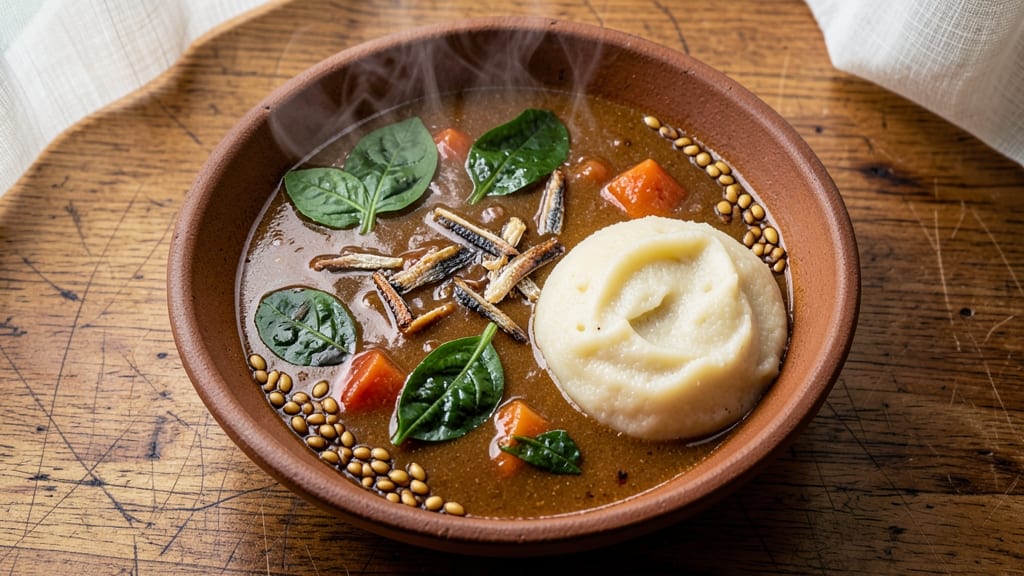
This African Egusi Soup and Fufu recipe brings the heart of West African cuisine to your kitchen with its rich, nutty depth and hand-molded comfort.
The egusi seeds create a velvety, protein-packed base that simmers into a fragrant stew, while the fufu dough transforms into smooth, stretchy perfection with just water and cassava flour. I've perfected this dish over years of cooking for family gatherings, where it always disappears first.
The beauty of this recipe lies in its two-part harmony—egusi soup's complex flavors balanced by fufu's neutral, satisfying texture. We'll start with the soup, where blended egusi seeds create that signature nutty richness, then build layers of umami with smoked fish, leafy greens, and spices.
The fufu preparation is surprisingly simple: just mix, knead, and shape into smooth balls that melt in your mouth.
What makes this dish truly special is its cultural significance—egusi soup is a staple at celebrations across Nigeria, Cameroon, and Ghana, often served with fufu as the ultimate comfort combination. The contrast between the hearty soup and pillowy fufu creates an experience that's both nourishing and deeply satisfying.
This recipe delivers restaurant-quality results with traditional techniques made approachable for home cooks.
Whether you're preparing for a special occasion or simply craving authentic African flavors, this complete dish will impress. The egusi soup keeps well for leftovers, and the fufu dough can be made ahead—perfect for when you want to serve the full experience without last-minute stress.
Let's create this comforting classic together.
Ingredients for african egusi soup and fufu
Rich egusi seeds and tender fufu dough create this West African comfort classic.
| Ingredient | Amount | Notes |
|---|---|---|
| Egusi Seeds 🌰 | ½ cup | Raw, unshelled preferred |
| Smoked Fish (Dried or Fresh) 🐟 | 8 oz | Stockfish or similar |
| Fresh Spinach 🌿 | 2 cups | Chopped, stems removed |
| Fresh Ubele (Bitter Leaf) 🍃 | 1 cup | Substitute with collard greens |
| Tomato Paste 🍅 | 2 tbsp | High-quality, no sugar added |
| Onion 🧅 | 1 whole | Medium, chopped |
| Garlic Cloves 🧄 | 4 cloves | Minced, fresh preferred |
| Scotch Bonnet Pepper 🌶️ | 1 whole | Seeds removed for mild heat |
| Ground Cumin 🌿 | 1 tsp | Toasted for depth |
| Ground Ginger 🌿 | 1 tsp | Freshly ground preferred |
| Salt 🧂 | 1 ½ tsp | Adjust to taste |
| Coconut Milk 🥥 | 13 ½ oz | Full-fat canned |
| Vegetable Oil 🫒 | ¼ cup | For blending |
| Cassava Flour 🥔 | 2 cups | For fufu dough |
| Water 💧 | 1 ½ cups | For fufu dough |
Egusi seeds are the heart of this dish—look for raw, unshelled seeds at African markets or specialty stores like African & Caribbean Foods Market. If you can't find them, melon seeds work in a pinch, but the flavor won't be identical. The smoked fish adds that signature umami depth, and stockfish is the traditional choice. For the greens, fresh ubele is ideal, but collard greens or spinach will work if you're in the U.S. The coconut milk should be full-fat canned—no light versions here. Toast your cumin and ginger lightly in a dry pan first for maximum flavor.
No scotch bonnet? Jalapeño or habanero at half the amount will give you heat, though the flavor won't be quite the same. Running short on cassava flour? Yuca flour or even tapioca starch can stretch it, but the texture will be slightly different. For the fufu, don't overmix—it's all about the stretchy texture. The tomato paste is non-negotiable for that sweet-tangy base, but if you're using a squeeze tube, Trader Joe's has the best quality. And if your egusi seeds smell musty, toast them in a dry pan for 2 minutes first to bring out their nutty aroma.
The egusi soup keeps beautifully for 3-4 days in the fridge, with flavors deepening overnight. The fufu dough can be prepped ahead and refrigerated for 2 days—just bring it to room temp before shaping. For serving, keep the fufu covered with a damp towel so it doesn't dry out. Both components reheat well, making this perfect for meal prep. I always make double batches—soup freezes for 3 months, and fufu reheats beautifully with a splash of water.
Why You'll Love This Recipe
- No-Fuss Starter: I swear by this—just toast the egusi seeds until fragrant, blend with tomato paste and stock, then simmer. No chopping marathons, no stressing over layers of sauces. The seeds do all the work once you get them boiling.
- Umami Bomb: That smoky fish—whether dried or fresh—melts into the soup like a flavor bomb. Pair it with the bitter leaf’s sharp edge and spinach’s freshness? It’s the kind of balance that makes you reach for seconds without thinking.
- Crowd-Pleaser Flex: Weeknight dinner? Potluck? Sunday family lunch? This soup stretches easily—add more fish for richness, extra leaves for depth, or even swap in chicken. And fufu? It’s the neutral canvas that lets the soup shine every time.
- Leftovers That Don’t Suffer: Between us, most soups turn sad in the fridge. Not this one. The egusi thickens beautifully when reheated, and fufu stays pillowy if stored properly. I’ve had it taste just as good three days later—proof it’s built to last.
Step-by-step instructions for African egusi soup and fufu
Here's how to make this hearty West African classic with rich, nutty soup and smooth fufu.
Prepare the Egusi and Smoked Fish
Start by toasting the 0.5 cup egusi seeds in a dry skillet over medium heat for 3-4 minutes until they release their aroma and turn slightly darker. This step enhances their nutty flavor—don't walk away as they burn quickly. While they toast, prepare the smoked fish by soaking the 8 oz smoked fish in warm water for 15 minutes if using dried stockfish. This rehydrates it and removes any excess saltiness.
Once toasted, remove the egusi seeds and set aside. Drain and rinse the smoked fish thoroughly, then flake it into small pieces using your hands or a fork. The fish should be tender and easily break apart. This preparation ensures the fish infuses the soup with its signature smoky depth without any fishy aftertaste.
Build the Soup Base
Heat the 0.25 cup vegetable oil in a large pot over medium heat. Add the chopped 1 whole onion and sauté for 5 minutes until softened and translucent. Add the minced 4 cloves garlic, 1 whole Scotch bonnet pepper (seeds removed), 1 tsp ground cumin, and 1 tsp ground ginger. Cook for another 2 minutes until the garlic is fragrant and the spices are sizzling.
Stir in the 2 tbsp tomato paste and cook for 3-4 minutes until it darkens slightly. This creates a rich, flavorful base that forms the foundation of your soup. Gradually add 1 cup fresh ubele (bitter leaf) and 2 cups fresh spinach, stirring until the greens wilt completely. The bitterness of the ubele balances beautifully with the richness of the egusi and fish.
Simmer the Soup to Perfection
Pour in 13.5 oz coconut milk and bring the mixture to a gentle boil. Reduce heat to low and let it simmer uncovered for 15 minutes, stirring occasionally. This allows the flavors to meld together while the coconut milk adds a creamy texture. After 15 minutes, gradually add the toasted 0.5 cup egusi seeds and the flaked smoked fish, stirring continuously to prevent the seeds from sinking to the bottom.
Continue simmering for another 10-12 minutes until the soup thickens slightly and the egusi seeds are tender but still hold their shape. Taste and adjust seasoning with the 1.5 tsp salt if needed. The soup should be rich, nutty, and slightly thick—this is the perfect consistency for pairing with fufu. Keep it warm while you prepare the dough.
Make the Fufu Dough
In a large bowl, combine the 2 cups cassava flour and 1.5 cups water. Mix thoroughly with your hands or a wooden spoon until you have a smooth, lump-free dough. The consistency should be similar to playdough—neither too sticky nor too dry. If it's too thick, add a splash of water; if too thin, add a bit more cassava flour.
Cover the bowl with a damp cloth and let the dough rest for 10 minutes. This resting period allows the flour to fully hydrate and makes the fufu easier to shape later. The dough should be pliable and smooth—this is crucial for achieving that signature hand-molded texture that makes fufu so comforting.
Shape and Serve the Fufu
Divide the dough into 6 equal portions (about 1.5 oz each) and roll each portion into a smooth ball. Dip your hands in warm water to prevent sticking, then gently press each ball into a smooth, round fufu shape. The key here is to work quickly—fufu hardens as it sits, so keep the remaining dough covered while you shape each piece.
Serve the fufu immediately alongside the warm egusi soup. The contrast of the smooth, stretchy fufu with the rich, nutty soup is what makes this dish so satisfying. Each bite should deliver a balance of textures—creamy fufu soaking up the hearty soup, with the nutty egusi and smoky fish flavors shining through.
Pro Tips For Making African Egusi Soup And Fufu
- Roast the Egusi: Toss the seeds in a dry skillet over medium heat for 3-4 minutes first—this removes the bitterness and prevents that chalky texture. I used to skip this, and the soup always tasted raw, no matter how long I simmered it.
- Soak Smoked Fish Properly: If using dried smoked fish, soak it in warm water for 10 minutes before adding to the soup—this keeps it from falling apart into a mushy mess. Trust me, you’ll taste the difference when it holds its shape.
- Blend Spinach Last: Add fresh spinach and ubele after the soup has simmered for 20 minutes—this preserves their vibrant color and texture. Dumping them in early turns them into a sad, wilted pile.
- Stir the Tomato Paste: Whisk the tomato paste into the hot oil gradually with a splash of water to avoid clumping—this creates a smooth base, not a lumpy disaster. I’ve had to start over twice because I rushed this step.
Creative variations of this african egusi soup and fufu
Vegetarian Adaptation
Skip the smoked fish entirely and replace it with 12 oz firm tofu or 1 lb mushrooms for umami depth. Press the tofu for 30 minutes to remove excess water, then cube and pan-fry until golden.
For mushrooms, sauté 8 oz cremini mushrooms with 1 tbsp soy sauce and 1 tsp smoked paprika before adding to the soup. Add 1 cup pumpkin seeds at the end for extra protein and nutty texture. 🌱
Protein Swaps
For chicken lovers, use 1 lb shredded chicken thighs instead of fish—simmer them directly in the soup for 15 minutes after adding the coconut milk. For beef, try 1 lb stew beef cut into small cubes, cooked until tender.
If you prefer seafood, 12 oz shrimp added in the last 5 minutes of cooking keeps them succulent. Each protein changes the flavor profile dramatically.
Spice Variations
For a milder version, reduce the scotch bonnet to ½ pepper or use 1 tsp mild chili powder instead. Want more heat? Add 1 tbsp shato bush pepper powder (a West African favorite) or a dash of African bird's eye pepper.
For smoky depth, stir in ½ tsp liquid smoke when adding the coconut milk. Balance is key—adjust gradually.
Fufu Alternatives
Can't find cassava flour? Make semovita fufu using 2 cups semolina flour and 1.25 cups water instead. For a gluten-free option, blend 1 cup yuca (cassava) and 1 cup plantain into a smooth paste, then cook with water until thick.
Both versions require slightly more water but achieve that same stretchy texture when shaped properly.
Regional Twists
In Nigeria, add ½ cup palm oil to the soup base for a richer, redder color. For Ghanaian-style egusi, include 1 cup okra slices that thicken the soup naturally.
Cameroonian versions often use 1 tbsp palm nut soup base (available at African markets) for a distinct earthy flavor. Each regional adaptation tells a story through its ingredients.
Make-Ahead Hacks
The soup freezes beautifully—cool completely, then store in airtight containers for up to 3 months. Thaw overnight in the fridge and reheat gently on low heat. For fufu, prep the dough ahead but refrigerate it—bring to room temperature before shaping.
Reheat shaped fufu in a steamer basket over simmering water for 5 minutes** to restore its softness. 💡
Nutrition facts
Frequently asked questions
Can I make this egusi soup without smoked fish?
For a vegetarian version, replace the smoked fish with 12 oz firm tofu or 1 lb mushrooms sautéed with soy sauce and smoked paprika. Add 1 cup pumpkin seeds at the end for extra protein and nutty texture. The umami will still shine through while keeping it plant-based.
What if I can't find egusi seeds?
Melon seeds work in a pinch, though the flavor won't be identical. For a similar texture, blend ½ cup sunflower seeds or ½ cup peanuts into a paste (like peanut butter) and use that instead. The nutty base will still work, but the authentic African flavor will be slightly different.
How do I fix lumpy fufu?
Lumps happen when the dough isn't mixed thoroughly. Knead the dough longer with your hands until completely smooth, then let it rest for 10 minutes covered. If lumps persist, add a splash of warm water and work it in gently. The key is patience—hand-molding helps create that signature stretchy texture.
Can I make the fufu ahead of time?
Yes! Prepare the dough up to 2 days ahead and refrigerate it. Bring to room temperature before shaping, then reheat shaped fufu in a steamer basket over simmering water for 5 minutes to restore its softness. Keep extra shaped fufu covered with a damp towel to prevent drying.
What's the best way to store leftovers?
Cool the soup completely and store in airtight containers for up to 3 months in the freezer. For fufu, shape it and freeze on a tray before transferring to a bag. Reheat both components gently on low heat or in a steamer. The soup reheats beautifully, while fufu benefits from a quick steam to restore its texture.